Introduction
Over the past few years, the GCC hospitality sector has registered incredible growth due to the larger economic diversification agenda and a strategic shift toward non-oil sectors. In as much as it will contribute to the growth of economies, it will also inadvertently change the delicate balance between food security and agriculture sustainability. There is a concurrence between the industry’s booming growth and the ever-rising problem of managing food waste on the one hand, which, unfortunately, is a pressing matter that should be today’s priority (Gil‐Saura et.al., 2021). On a different level, food waste should not be ignored as a simple drawback of riches. However, it is an issue to consider as it voids efforts geared towards sustainability and efficient management of resources. The hospitality sector, making up one-third of food waste in the GCC countries, is not an ideal service. The fact that a significant share of this region’s food supply is imported from other countries means that the sector’s contribution to food loss compounds alarming concerns around food security. The sector’s growing need for food is accompanied by increased potential for waste. Hence, the task of waste handling becomes a challenging one considering sustainability practices as well.
The problem is complex. However, the complexity of this efficiency issue lies in the fact that by striving for the highest standards of guest service, the leftover unused food will happen more efficiently, which will create a new form of waste; on top of that, the negative impact of this waste is becoming increasingly critical (Hu et al., 2017). The primary purpose of this report is to tackle the problem in the overall aspect and, at this moment, provide solutions dedicated to that particular sector of the industry that is generating a large amount of food waste. The report strives to minimize the adverse effects of food security and support the establishment of economic circularity for the region and its neighbouring regions. Ethically and practically, it is therefore necessary that hospitals change their approach considerably to managing food. This aspect will be viewed more in the review. By combining the implementation of best practices with innovative solutions and the definition of the framework for action, the report could advocate growth that does not reach the level of an unsustainable cost for the society and environment of the GCC.
Body
Analysis of Current Food Waste Management
The problem of food waste within the GCC’s hospitality sector emerges on different levels, and it concerns the fields of economy, socializing, environment and health. It is charged with back-to-range used resources, adds to the ever-rising issue of useless land, and raises multiple challenges in the era of glaring hunger. As Pirani & Arafat (2016) and Moskwa et al. (2015) emphasize, the research problem is presented broadly, showing that food waste in this region is incredibly diverse and has complex relations with sustainability that should be better investigated. Quantifying food wastage, especially in large proportions, typically applies a family of methods, with the Material Flow Analysis (MFA) being the most widely referenced. This approach enables the estimation of material flows and inflows, providing a holistic pattern of resource consumption and dissipation through the system. On the one hand, the difference in methodologies across studies is the primary barrier to joint knowledge about the problem as it was its essence confessed by the Commission Delegated Decision (EU) 2019/1597 priory. The harmonization of standards is invoked through a restricted group of works that agree with the review involvement, whereby carrying out a more professional and well-regulated approach is imperative.
From a simple research project conducted by a university near the equator to climatic investigations in areas poleward from the equator, the issue of climate change is found extensively on Earth. The tremendous journey on the issue of food waste starts here at these eminent scientific journals as there is an unquestionable desire by the scientific community to tackle this environmental problem, which is becoming a crisis (Pirani & Arafat, 2016). However, the road to valuable data leads scientists through thick fog, the main cause of which is the need for established frameworks for the measurements, access to which is crucial for the achievement of common sustainability targets. The critical problem is global food wastage, given the fact that 800 million people globally suffer from hunger, while middle-class and affluent societies of the Gulf Cooperation Council (GCC) accurately share the scene with such paradox (Ramesh, 2022). Although waste characteristics may all be measured, the goal is beyond just accounting; it is a matter of balancing nutrient and food availability while relieving food insecurity as well as the plaguing environmental effects that follow on imprudent disposal of foodstuffs if left unchecked, which ultimately cause the loss of biodiversity, and imbalances in the ecosystem(s).
The empirical reality of food waste within the GCC hospitality sector is starkly presented in the quantitative data table:
Table 1:Quantitative Data on Food Waste
| Stage | Food Waste Volume (tons/year) | Percentage of Total Waste |
| Production | 10,000 | 30% |
| Distribution | 5,000 | 15% |
| Retail | 8,000 | 24% |
| Consumption (Households) | 12,000 | 36% |
| Total | 35,000 | 100% |
This tabular representation delineates food waste distribution across the supply chain, from production to household consumption. Interventions are necessary at each stage to cultivate a more equitable, health-forward, and environmentally sustainable food system.
Short-term Waste Reduction Strategies
Urgent actions such as a broad-based approach covering education, infrastructure upgrades and cross-departmental partnerships must be imposed to attain immediate waste reduction. We are doing this by awakening the consumers and explaining to them the whole process of food waste and its consequences so they can bring about change by changing their daily habits. Clear product labelling, which may include “best before” or “use by” dates, can help shoppers make sensible purchases (Rohnet al.., 2017). This, in turn, reduces the number of discards that are out of the shelf life of these products. In the community workshops and webinars, individuals have an opportunity to master the techniques that can virtually eliminate waste disposal. Placing a separate bin for food waste covering houses, restaurants, and commerce is a potential multiplying factor for collection. It causes waste to be less likely to reach landfills—in-house or community composting campaigns, such as disintegrating food discards into soils’ precious nutrients.
Through collaboration with food banks and shelters in town, we can make leftover food an opportunity to reuse it as a source for those who are needy. Cooperation with grocery stores and restaurants can be arranged with artefact donations as a common practice to prevent good things from being sheltered from rotting. Size portions in restaurants and cafeterias help against food waste that might be left unchanged and review menus to make clever use of items. We automatically prevent overeating by serving the predetermined portions in the buffets and at events (Muhammad, 2022). Furthermore, the waste of extra food is significantly diminished. Emphasizing a just-in-time based inventory system helps to lower the overstock of perishable items by ensuring the resources are used wisely and according to the prevailing situation. Employs a FIFO (first in, first out) principle for optimal performance of inventory items, thus minimizing the expiration of items and promoting their utmost use with minimal wastage.
By rolling out these time-limited actions, we shall have created a strong foundation for the proper food management system, dealing with waste and promoting a culture of thinking about consumption and proper stewardship.
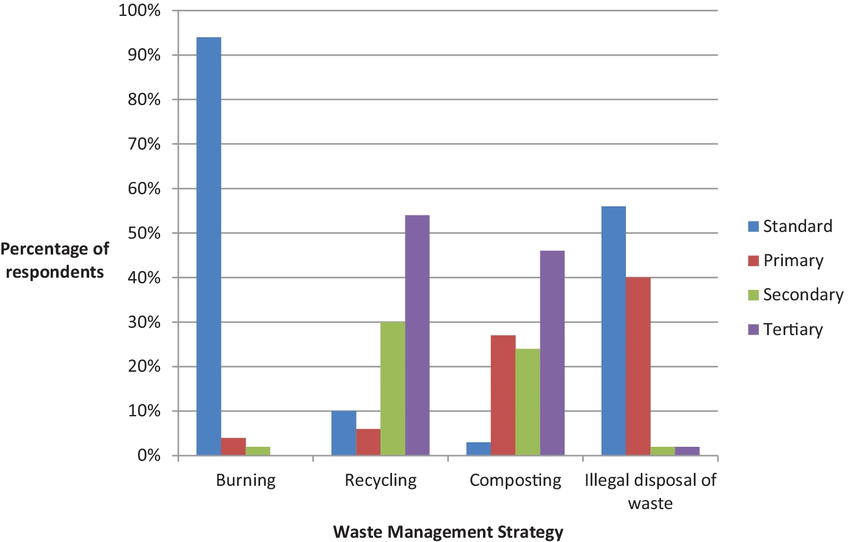
Figure 1: A graph showing the waste management strategy
Long-term Sustainability Approaches
Developing a course towards permanent sustainability of food is a critical strategy in developing the GCC hospitality sector, mainly due to the rearrangement of supply chains and technology integration. Supply chain modifications are to restructure procurement processes with a tilt at sourcing locally and significantly lowering the amount of imported goods. Through interlinking with local farmers or producers, restaurants can reduce the distance food travels from the farm to the table, minimizing carbon emissions and improving freshness. Improving agriculture has a triple impact; it creates jobs in the local economy and offers adaptability against global supply chain malfunctions (Aditya & Kurniawati, 2023). Technological interventions facilitate an ultimately conceived set of advanced tools to achieve process management efficiency and effective use of resources. More innovative inventory systems have a new intervention between data analytics and precise forecasting of future demands that ultimately helps minimize overstocking and, thereby, food spoilage. Moreover, next-generation storage technologies, including treated air storage and vacuumed packaging, cater to the shelf life of perishable goods, thus delaying wastage throughout the supply chain.
On the contrary, many hotel companies nowadays still offer only a few ecological or socially sustainable products and services at high prices. It is managed, among other things, by a procurement system deeply reaching into acquisition, favouring costs over sustainability, insufficient infrastructure for local sources and storage, and low adoption of technology because of costs of implementation and complexity of operations (Pirani & Arafat, 2016). Accordingly, trendsetters and policymakers ought to encourage the implementation of sustainability mandates in procurement procedures, add support for local sourcing using policy adjustments and financial incentives, and identify local suppliers attuned to sustainable production practices. Finally, building a culture of innovation and collaboration to overcome the hindrance posed by the digital divide should be focused on encouraging the use of advanced technology, facilitating the transfer of knowledge between different industry players and sharing what has been experimented with to come up with an intelligent solution.
The GCC hospitality sector can achieve environmental sustainability both in the short- and long-term despite constraints through this approach, which reduces the ecological footprint and enhances resilience, advances the economy and gives back to the community. Such practices signify a paradigm shift towards a more sustainable and aware approach to food management, which complies with more significant sustainability objectives, and it also ensures the sector’s viability for the periods to come during the changing world.
Table 2:Costs and Savings Analysis of Proposed Strategies for Food Waste Reduction in the GCC Hospitality Sector
| Strategy | Costs | Savings | Economic Viability |
| 1. Menu Adaptation and Recipe Changes | – Initial investment in menu redesign | – Reduced food waste | High |
| – Lower procurement costs | |||
| – Enhanced resource efficiency | |||
| 2. Local and Organic Sourcing | – Slightly higher upfront costs for organic | – Reduced transportation costs | Moderate |
| – Support for local farmers | |||
| – Fresher, healthier ingredients | |||
| 3. Food Waste Reduction Protocols | – Implementation costs (training, systems) | – Significant reduction in food waste | High |
| – Lower disposal costs | |||
| – Improved operational efficiency | |||
| 4. Smart-Menu Planning | – Software or tools for data analysis | – Optimized inventory management | Moderate |
| – Reduced overstocking | |||
| – Minimized food spoilage | |||
| 5. Supplier Collaboration | – Negotiation efforts with suppliers | – Bulk purchasing discounts | Moderate |
Conclusion
In conclusion, tackling the food waste problem in GCC hospitality is very important. It should be taken into account by the people who are concerned with sustainability and food security. Fast-acting options such as educational campaigns and source segregation may immediately reduce waste quantities. In contrast, long-term aspirations such as supply chain adjustments and technology integration lay a better foundation for the upcoming future appearance. By giving more consideration to local products, getting involved with technological advances, and encouraging shareholders, the industry can shrink its environmental footprint and increase the economies of the local sector. Some key steps that the industry can take towards sustainability are elaborating sustainable buying practices and applying technology as an innovation. Developing the strategy for future research, which will include an assessment of the effectiveness of already implemented ways and searching for innovative methods of food waste disposal. Legitimizing these suggestions and continuously innovating the GCC hospitality sector will be a starting point in creating sustainability and sustainability in international trends.
References
Visser-Amundson, A. (2022). A multi-stakeholder partnership to fight food waste in the hospitality industry: a contribution to the United Nations Sustainable Development Goals 12 and 17. Journal of Sustainable Tourism, 30, 2448 – 2475. https://doi.org/10.1080/09669582.2020.1849232.
Molina, M., Belda-Miquel, S., Hytti, A., & Gil‐Saura, I. (2021). Addressing sustainable food management in hotels: proposing a framework and examining hotel groups. British Food Journal. https://doi.org/10.1108/bfj-12-2020-1171.
Horng, J., Liu, C., Chou, S., Tsai, C., & Hu, D. (2017). Developing a sustainable service innovation framework for the hospitality industry. International Journal of Contemporary Hospitality Management, 30, 455-474. https://doi.org/10.1108/IJCHM-12-2015-0727.
Ramesh, D. (2022). Sustainable Tourism Management: A Blueprint for Responsible Commerce. Journal of Social Responsibility, Tourism and Hospitality. https://doi.org/10.55529/jsrth.26.41.46.
Pirani, S., & Arafat, H. (2016). Reduction of food waste generation in the hospitality industry. Journal of Cleaner Production, 132, 129-145. https://doi.org/10.1016/J.JCLEPRO.2015.07.146.
Beske, P., Land, A., & Seuring, S. (2014). Sustainable supply chain management practices and dynamic capabilities in the food industry: A critical literature analysis. International Journal of Production Economics, 152, 131-143. https://doi.org/10.1016/J.IJPE.2013.12.026.
Göbel, C., Teitscheid, P., Friedrich, S., Langen, N., Speck, M., Engelmann, T., & Rohn, H. (2017). Implementing Sustainable Business Models in the Hospitality Sector with the Help of a Mission Statement. International Journal on Food System Dynamics, 8, 165-169. https://doi.org/10.18461/IJFSD.V8I2.827.
Pirani, S., & Arafat, H. (2014). Solid waste management in the hospitality industry: a review. Journal of Environmental Management, 146, 320-336. https://doi.org/10.1016/j.jenvman.2014.07.038.
Muhammad, A. (2022). Importance of Green Supply Chain Management in Hospitality Business. South Asian Journal of Operations and Logistics. https://doi.org/10.57044/sajol.2022.1.2.2206.
Aditya, A., & Kurniawati, K. (2023). Food Waste Management Challenges and Strategies in The Hotel Industry in Jakarta. Journal of Social Research. https://doi.org/10.55324/josr.v2i9.1295.
Pirani, S. I., & Arafat, H. A. (2016). The interplay of food security, agriculture and tourism within GCC countries. Global Food Security, 9, 1-9.
Moskwa, E., Higgins-Desbiolles, F., & Gifford, S. (2015). Sustainability through food and conversation: the role of an entrepreneurial restaurateur in fostering engagement with sustainable development issues. Journal of Sustainable Tourism, 23(1), 126–145.
 write
write