Introduction:
Operations management in a globalized business environment is highly complex and involves resolving several issues. Among these challenges, three key management functions stand out: political risk management, ethical practice, and human resource management. This piece will explore the latest techniques used within international firms in this domain. Political risk management encompasses actions and strategies designed to overcome uncertainties associated with the regulatory environment and geopolitical dynamics (Johns & Lawton, 2017). Ethics lies at the core of corporate reputation and legitimacy in economic, cultural, and social environments. Staffing and diversity management fall into the domain of human resource management, especially in the international sphere. The interrelation of these functions mirrors the complicated landscape of foreign trade transactions. This essay examines how organizations deal with new strategies, changes, and interrelations by focusing on international business management. By synthesizing the academic articles and the corporate examples, this article gives insights into both present challenges and solutions to global management.
Managing International Political Risk
Political risk of international business is a term that means the possibility of undesirable outside actions or events, like a government’s actions or geopolitical factors, that affect firms’ ability to do business outside their countries. The investment involves a gamut of risks, including regulatory changes, geopolitical conflicts, political instability, expropriation of assets, and currency controls (Meissner, 2016). Considering the potential political risk to be intrinsic and unpredictable, world enterprises apply several strategies to minimize the effect.
The first step toward effective political risk management is pre-emptive political risk management, which entails preventive measures taken before the occurrence of danger. This approach may entail extensive political risk assessments, tracking of political developments, lobbying activities to sway government policies, and the diversification of operations in more than one country to spread risk (Diprose et al., 2008). For instance, Multinational companies (MNCs) may set up relations departments with governments and stakeholders for regulation forms shaping and minimization of unforeseen political actions.
However, proactive political risk management is about predicting and solving the risks, while reactive political risk management deals with the risks that arise and try to respond to them. It recognizes the implicit vagaries of global politics and opts to construct flexibility and resilience in the institution to deal with emergent situations accordingly. Proactive strategies could be adopted to include contingency plans, crisis management protocols, political risk insurance, and exit strategies in high-risk places. For instance, firms operating in politically volatile regions usually maintain resilient supply chains and executive decision-making mechanisms to adapt quickly to changing circumstances.
Moreover, they tend to operate either on a defensive or an integrative basis while interacting with the host governments. Defensible strategies comprise the active engagement of host governments whereby they lobby, partner with local entities, and conform to local regulations to help avert political risks (Moschieri et al., 2022). On the other hand, governance by indirect approaches means refusing to carry out direct talks with a host country’s government for not being involved in internal political dynamics. On the other hand, certain businesses might set a cap on their investments and activity in politically complicated regions to avoid being exposed to political risk.
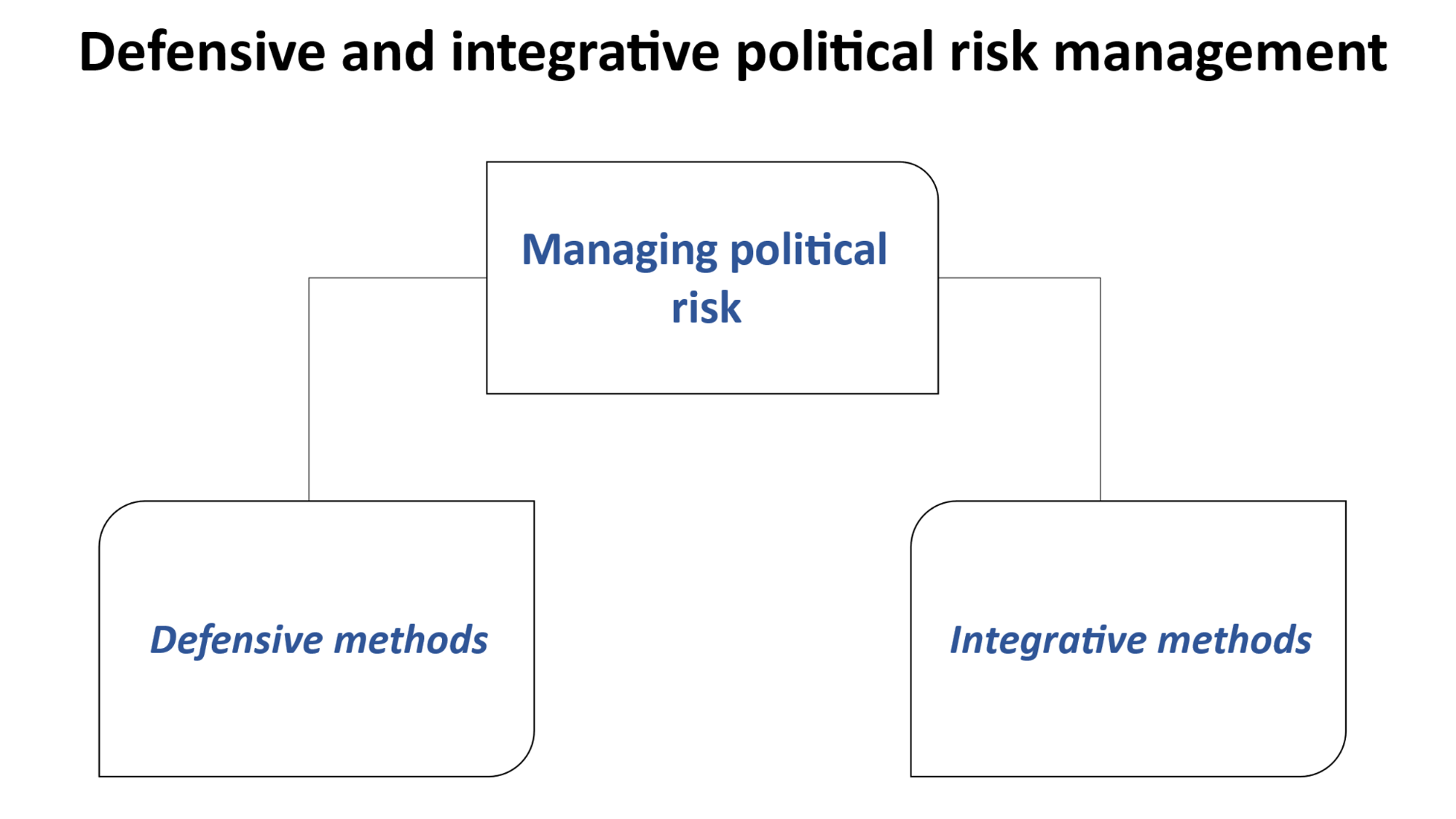
Figure 1: Illustrating defensive and integrative political risk management
The broad spectrum of company illustrations draws attention to different ways political risk management can be adapted. For example, a multinational corporation may spread its operations in other regions to deprive itself of dependency on a country’s market, which can be filled with political inconsistencies, and choose better markets from the rest. Similarly, a technology company may enact proactive government relations strategies to regulate legal framework and to allow access to the market in foreign countries. These illustrations stress the need for a customized plan to manage the turbulent context of political risk in global business.
Corporate Examples and Changes in Political Risk Management:
Case studies of firms effectively managing political risk in different regions:
ExxonMobil: with many footprints in the world oil and gas sector, ExxonMobil always labors under political instability. For instance, in countries like Nigeria, where political instability is a major concern, and the security risks are significant to operations, ExxonMobil has implemented active political risk management strategies that ensure the safety of its activities (Rahmanian et al., 2019). The company continues building cordial links with government officials and local communities. This is done through community development projects and social initiatives that benefit local communities and bring to the fore the question of goodwill and mitigation of potential risks. Furthermore, it also endeavors to diversify its operations from a geographical standpoint, which helps it limit exposure to any single market and, in so doing, improves its resilience against political disruptions. Through consolidating proactive involvement and risk diversification, ExxonMobil has demonstrated its ability to handle the associated political risks for projects on difficult terrain.
Coca-Cola: The politics that find expression in the operational areas of our multinational beverage company, Coca-Cola, vary according to the power structures in more than 200 countries. In areas with political instability or where regulation is unclear, such as part of Latin America and the Middle East, Coca-Cola implements a blended mix of political risk management strategies, between defensive and integrative ones. The company fosters cooperation and adherence to the host government laws that enable it to participate in the country’s local economic development plan (Margallo et al., 2019). On the other hand, it is noticeable that Coca-Cola’s supply chain and distributive networks stay flexible, making it possible to respond quickly to political upheavals. For this reason, the company uses its global brand reputation and CSR activities to get involved in controversies that could damage the corporate image due to political disputes. Coca-Cola has been prudent in meeting those risks through these endeavors; in effect, Coca-Cola has happily sustained its global operations with its markets unchanged.
Identification of new patterns or shifts in political risk management strategies:
In modern times, big corporations have been applying more and more technological tools to manage political risk problems. Now more than ever, with the wide use of data analytics and geopolitical intelligence platforms for firms, it is possible for them to sharpen their ability to anticipate and react to political risks immediately (C. Liu, 2018). Companies may utilize advanced analytics to track political events, evaluate their influence on capacity and operations, and consequently tweak the strategies to some extent. Additionally, machine learning algorithms and forecasting models provide for scenario planning ris,k anticipation, and preparedness actions toward risk reduction. Such a transition from just data-based political risk management to a situation in which agility and responsiveness rule underscores that geopolitics is a chaotic field and that only the ability to readjust to the changes quickly cannot be underestimated. Another dynamic is the increasing number of companies across the industry and the government trying to unite their efforts by sharing intelligence and risk management experiences. Organizations are better positioned to cope with the evolving political landscape and the international virtues at stake by being technologically savvy and building interdependence.
Academic Literature Support and Insights:
Political risk management has a multiple-faceted character, essentially a multidisciplinary area combining ideas from different academic fields such as international business, political science, and economics. Academic literature offers a structure and sets of theories that can be used to implement pragmatic risk management strategies in global business.
Luthans and Doh’s (2012) seminal text shows that MNCs should know the political environment and its implications while operating. The authors emphasize the fluid characteristic of political risk and suggest readiness campaigns to influence and prevent future risk. Likewise, Buckley et al. (2018) note the political dimension of international business, highlighting the importance of companies in this area for strategic adaptation, managing diverse regulatory environments and geopolitical dynamics.
Iankova and Katz (2003) are a part of the literature that looks into political risk management methods in the case of transition economies, including Bulgaria. Their investigation implies the necessity of adaptive measures tailored to the context, considering the constraints of the ongoing reforms and existing institutions. Additionally, John and Lawton (2017) provide a wide range of international political risk management perspectives, covering different approaches and developing agendas. The authors’ research shows the diverse pattern of political risk and the need for multinationals to make constant adjustments.
Academic studies equally ought to give meaning to the contribution of corporate political activity (CPA) in handling political risks. De Villa et al. (2018) examine the engagement strategies of MNCs with host governments by nominating defense or integration engagement tools. The paper’s research evaluates CPA strategies and their usefulness in alleviating political risk and the development of business-government relations.
Overall, the academic literature provides theoretical models, empirical evidence, and practical perspectives that shed more light on global business’s complex political risk management landscape. Through such an approach, organizations can be more impactful in surmounting the hurdles posed by the intricacies of the international political terrain.
Ethical Behavior in International Business
Ethical behavior is an inalienable aspect of corporate governance and worldwide reputation. Several ethical theories established different frameworks for debating and making difficult decisions in cross-border organizations (Tran, 2010). Two distinguished ethical theories, Utilitarianism and deontology, apply to international business.
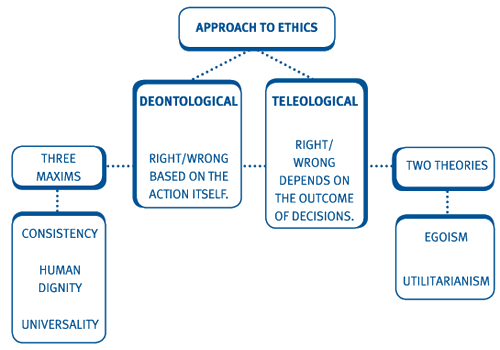
Figure 2; IllustratingDeontological and teleological/Utilitarianism approaches to ethics (https://www.google.com/url?sa=i&url=https%3A%2F%2Fkfknowledgebank.kaplan.co.uk%2Frisk-ethics-and-governa nce%2Fethics%2Ftheories-of-ethics&psig=AOvVaw1U14oeoM00aQzw42wdZeLV&ust=1712172629501000&source=images&cd=vfe&opi=89978449&ved=0CBIQjRxqFwoTCLC9kMeipIUDFQAAAAAdAAAAABAX)
Utilitarianism, which maximizes utility and happiness, believes that the actions evaluated morally depend on their consequences. From the side of Utilitarianism, the moral decisions to create the most general good for the greatest number of people should be prioritized over individual rights and duties (Udoudom, 2021). In the utilitarianism theory applied to international business, the actions that bring the greatest gain to the stakeholders are shareholders, employees, and the community this calls for. To illustrate, a multinational company may argue that transferring production to countries with low labor costs is good for profitability and efficiency as a result of the displacement of jobs or degradation of the environment.
Unlike deontology, which emphasizes duty, obligation, and moral principles, virtue ethics focuses on moral agents’ character. In deontological ethics, some actions are good or bad regardless of the result they produce. This method keeps implementing the general ethical principles or ‘categorical imperatives’ (such as honesty, fairness, and respect for human dignity) at the leading position. The deontological ethics may be demonstrated in decisions in which human rights, environment sustainability, and social justice assume priority ahead of short-term profitability, which can cover social challenges. In other words, a firm can choose social responsibility projects like maintaining labor standards in foreign factories, honesty in bribery practices, and spending more which could lead to reduced profit and growth.
Utilitarianism and deontology differ in their basic principles and ethical decision-making process. While Utilitarianism focuses on results and their consequences, deontology emphasizes duty and duty independent of consequence. In practice, the international corporate unit can combine both theories and give value to economic impacts and principles and obligations to make informed decisions that align with the organization’s values and people’s expectations.
Corporate Examples and Emerging Ethical Patterns
The recent international business operations associated with ethical challenges have proven to be thorny problems that need to be solved. For instance, multinational technology corporations such as Facebook and Google have unfairly faced criticism for data privacy violations, algorithmic bias, and censorship in various countries (Christodoulou & Iordanou, 2021). Organizations that operate around the principles of freedom of expression, users’ privacy, and compliance with different laws and regulations in various cultural and local environments experience a struggle. On top of that, pharmaceutical companies, including Pfizer and the Foundation of Johnson & Johnson, meet ethical difficulties like accessibility to essential medicines related to transparency of clinical trials and their pricing practices amongst developing countries.
Recent developments in the ethics sphere of different foreign corporations show a shift towards Investigating CSR, sustainability, and stakeholders’ contribution. Organizations are starting to see why the inclusion of ethics in their business strategy and operations will create intrinsic value and help them minimize or even abolish reputation risks (Reiche et al., 2019). Moreover, management is a crucial aspect of a company that ranges from accountability to transparency as the market moves forward. They indicate that ethical matters are dynamic phenomena that must be addressed strategically. This is much more important in the global market, where companies must strive to navigate these moral issues.
Academic Literature Support and Insights
Theoretical concepts and empirical data from scholarly research lay the groundwork for ethical decision-making in global business. Ethics of business studies offer ethical decision-making guidance, an understanding of ethical motives, and an evaluation of the effectiveness of ethical interventions in organizational settings. As a case in point, Crane and Matten (2010) thoroughly discuss ethical theories and their applicability in different organizational settings, including international business. Through their work, it becomes more apparent that one has to have a mindset that considers the cultural, legal, and institutional factors in ethical decision-making processes across borders.
Moreover, empirical studies highlight the ethical practices and ways multinational corporations work in different industries and areas. An article by Reiche et al. (2019) examines how CSR promotes organizational cultures, employee attitudes, and perceptions of stakeholders in global contexts. These results reflect the positive consequences of ethical leadership and CSR on a firm’s reputation, employee attitude, and job output. Furthermore, examples of ethical issues faced by corporations serve as a source of useful information about the complex processes of ethical resolution in business and give experience in successful ethical decision-making and risk management.
Finally, academic writing contributes to people’s understanding of ethical behavior in international business by providing theoretical frameworks, empirical evidence, and practical insights that guide ethical decision-making processes, enhance organizational effectiveness, and promote sustainability. By incorporating academic disciplines into their moral systems and practices, transnational businesses can create an atmosphere of sincerity, trust, and social responsibility, increasing competitiveness and long-term success in the world market.
Human Resource Management in International Contexts
In a multi-country framework, HRM is the area of human capital strategy related to recruitment, deployment, and staff management worldwide. MNCs adopt several staffing approaches to understand the reality of managers and workers in diverse cultural environments. This includes the ethnocentric, polycentric, and geocentric models.
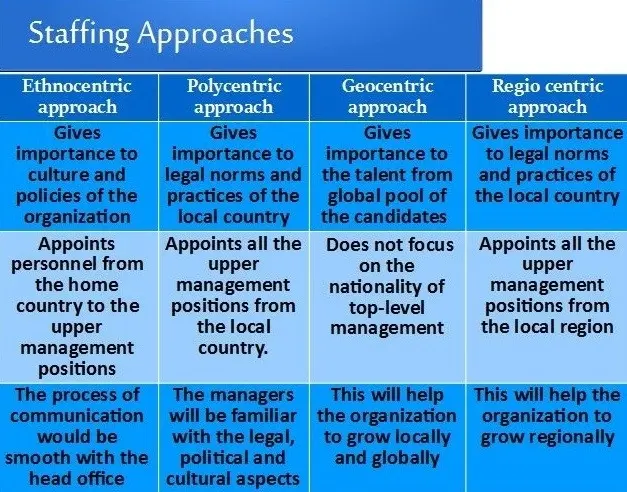
Table 1: Illustrating study note on the staffing approach
(https://www.google.com/url?sa=i&url=https%3A%2F%2Fbyjusexamprep.com%2Fugc-net%2Fugc-net-study-notes-on-staffing-approach&psig=AOvVaw0gY0mtXVnEYV7n3Tr-70uY&ust=1712174354793000&source=images&cd=vfe&opi=89978449&ved=0CBIQjRxqFwoTCJCx7tmopIUDFQAAAAAdAAAAABAQ)
Ethnocentric staffing: Ethnocentric staffing means when a company from the parent company’s home country primarily recruitsrecruitslectsselectsiemployees from the same country, and deploy deploys foreign subsidiary offices. This is reputed as more of a centralized authority and a notion of home country nationals on a higher echelon (Shen, 2006). Ethnocentric staffing can be a rational choice in the budding international campaigns of a parent organization when the desire to preserve a consistent corporate culture, values, and business operations prevails across global locations. Nevertheless, ethnocentric staffing might need more cultural sensitivity, in-depth local market knowledge, and opposition from local staff employees, which are the issues for the organization’s effectiveness and efficiency in local markets.
Polycentric staffing: However, the multi-center approach implies hiring and selecting host country citizens to fill positions of major importance in local offices and divisions of international branches. This approach, however, is decentralized, recognizing the potential of the company’s regional experts, cultural sensitivities, and market wisdom in delivering success. Multi-source recruitment will facilitate diversity, thus mirroring host country environments, achieving greater employee engagement and overall well-coordinated teamwork. Although polycentric staffing ensures the uniform distribution of resources and makes way for local decision-making, this kind of office layout may pose a lot of difficulties in communication, coordination, and integration between subordinate units and headquarters, as well as potential conflict between local and global corporate goals.
Geocentric staffing: The staffing that is in harmony with the geocentric system aims to merge the reliability of ethnocentrism and polycentrism by adopting global thinking and the internal mobility of talents. In the case of the geocentric staffing method, the employees are recruited based on their qualifications, national or otherwise, for the crucial positions that they can perform due to their skills, competencies, and fit with organizational requirements (Chinag et al., 2016). Such an assorted mentality of MNCs boosts talents, leads various knowledge transfers across the horizons, and ultimately allows multinational corporations to utilize the full force of their globally spread job networks. Geocentric employment policy involves allocating funds towards cross-cultural mentoring, talent retention programs, and leadership shifts to the global workforce, hence mobility and advancement in the career of expatriate employees. While geocentric staffing has the benefits of cultural barriers and immigration laws and worldwide integration and competitiveness, it can face pitfalls related to talent mobility (i.e., abundance and cost of globally mobile talent), immigration regulations, and cultural barriers.
Discussion on the Choice of Women Managers and Its Implications
In recent years, one can see the importance of gender differentiation and inclusion in international management. Women managers of global organizations represent the advancement of the company’s commitment to cultivating talent; these include diversity and gender equality. Women bring different perspectives, skills, and experiences concerning leadership, offering a critical nuance of views in decision-making processes, innovation, and organizational performance in multicultural settings. Additionally, it is demonstrated that the decision-making of gender-diverse leadership teams is improved. In turn, financial performance, the quality of corporate governance, and staff happiness are also achieved.
While women managers enjoy great opportunities riding on international assignments, they might unearth certain challenges and hassles, such as cross-cultural challenges, gender discrimination, and work-life balance. Female expatriates might need help establishing connections with other expatriates and their counterparts from the host society while making new friends and finding career progress, which is harder for women than men. On top of this, female managers could be expected to face even more serious challenges of having to prove themselves and break stereotypes and prejudices related to gender in male-dominated environments or regions.
The task to acknowledge these obstacles and make room for women’s career progress in international management can be efficiently and effectively accomplished with the help of some proactively oriented measures and support mechanisms organizing mentorship programs, leadership development programs, flexible arrangements of work schedule, and diversity training. The companies will be able to gain the attention of women leaders by creating inclusive and supportive environments in which they can draw in, retain, develop, and empower women’s leadership sense, thus enhancing their competitiveness and sustainability in the global market.
Corporate Examples and Shifting HR Practices
Corporate examples reviewed here highlight the implementation of diverse staffing models and the dynamic tendencies of contemporary international HR. For example, Procter & Gamble (P&G)—a multinational consumer goods company—uses a geocentric staffing approach to achieve more diversity and mobility worldwide. P&G emphasizes competency-based recruitment and imparts cross-culture training and development programs to its managers so that they can successfully cope with international assignments. With a mindset of geocentrism, P&G creates a culture of inclusion and collaboration so that personnel from different backgrounds can offer their full value to the company’s global enterprise.
On the other hand, in the same manner, a technology giant, Google, embraces a polycentric approach to staffing by acknowledging the role of local knowledge and expertise in driving innovation and market penetration. Unlike multinational corporations that usually make decisions centrally, Google gives more freedom to local subsidiaries and customizes products and services to fit the needs of specific markets. Thus, involving host-country nationals in leadership positions enables Google to create connections between employees and builds feelings of responsibility, stimulating engagement and productivity.
In the last several years, international HR practices have led to more thrust on diversity and inclusion. Companies like IBM or Accenture have integrated such initiatives as women’s representation in leadership and international assignments. These measures consist of selective recruitment, nurturing leaders, and work arrangements meant to facilitate the movement and advancement of women. By creating an inclusive work environment that values diversity, MNCs can draw, hold, and groom quality human resources, which is the foundation of innovation and sustainable growth.
Academic Literature Support and Insights
Academic research is important for international job credentials and gender variation in personnel policies that incorporate women. Collings and Scullion (2006) are a critical part of the theoretical underpinning and empirical knowledge of the utility of ethnocentric, polycentric, and geocentric staffing levels. Their practices focus on the issue of staffing policy’s ability to harmonize with organizational goals, market features, and cultural norms to ensure efficiency and competitiveness.
Besides that, academic literature also considers the challenges and openings of encouraging gender diversity in international assignments. A study by Chinag et al. (2016) investigates the kind of HRM techniques transferred and diffused within MNCs, with leadership commitment, organizational culture, and structural support seen as key factors in establishing gender-friendly workplace settings. On another note, Insch et al. (2008) and Shortland (2018) focus on what drives females to embark on an international career and what obstacles they attempt to overcome to become the firm’s top management.
Generally, academic literature is the source of ideas on how to solve staffing issues in multinational corporations. It provides theoretical frameworks, reliable evidence, and practical tools that can be used in diversity initiatives. A way to stimulate the HR practices of MNCs is by integrating knowledge from scholars. As a result, the MNCs will have diverse and inclusive teams that will be key in global advancement.
Conclusion
In conclusion, this essay has explored the nuances of managing modern international business dealings, emphasizing the ones related to political risk management, ethical conduct, and human resource management (HRM) in the context of multinational corporations (MNCs). The article started by introducing how proactive and reactive political risk management strategies work and ended with profound moral questions involving the ethics of Utilitarianism and deontology. This led the reader to the complexity of these ideas and practices. Recent corporate examples, from ExxonMobil’s political engagement in volatile regions to Google’s preference for a more knowledgeable and diverse local-centric approach, have provided concrete strategies to be followed. Furthermore, on the one hand, the HRM panel has targeted staffing problems and the impact of gender diversity, which shows the key role of talent mobility and inclusion in international contexts. Throughout the essay, academic literature support has integrated theoretical frameworks and empirical evidence into the essay, making the piece more comprehensive and enlightening for the reader regarding international management practices. Political risk management, ethical decision-making, and Human Resource Management are strongly and mutually interrelated and require creating and applying complex approaches in international operations. Even though challenges like volatile geopolitics and ethical issues still prevail, MNCs can innovate and develop sustainability if the strategies used are adaptive and the moral principles adopted are ethical. Accordingly, by applying a holistic approach and tapping into multifaceted approaches, international firms will be capable of dealing with challenges and grabbing from opportunities in today’s multiplying international market streams.
Reference
Buckley, P. J., Enderwick, P., & Cross, A. R. (Eds.). (2018). International business. Oxford University Press.
Chiang, F. F. T., Lemański, M. K., & Birtch, T. A. (2016). The transfer and diffusion of HRM practices within MNCs: lessons learned and future research directions. International Journal of Human Resource Management, 28(1), 234–258. https://doi.org/10.1080/09585192.2016.1246461
Christodoulou, E., & Iordanou, K. (2021). Democracy Under Attack: Challenges of addressing ethical issues of AI and big data for more democratic digital media and societies. Frontiers in Political Science, 3. https://doi.org/10.3389/fpos.2021.682945
COLLINGS, D. G., & SCULLION, H. (2006). Strategic motivations for international transfers: why do MNCs use expatriates?. In Global staffing (pp. 55-72). Routledge.
De Villa, M. A., Rajwani, T., Lawton, T. C., & Mellahi, K. (2018). To engage or not to engage with host governments: Corporate political activity and host country political risk. Global Strategy Journal, 9(2), 208–242. https://doi.org/10.1002/gsj.1205
Diprose, R., Stephenson, N., Mills, C., & Race, K. (2008). Governing the Future: The Paradigm of prudence in Political Technologies of Risk Management. Security Dialogue, 39(2–3), 267–288. https://doi.org/10.1177/0967010608088778
Iankova, E and Katz, J, (2003), Strategies for political risk mediation by international firms in transition economies: the case of Bulgaria, Journal of World Business, Vol.38, Issues 3, pp.182-203.https://www-sciencedirect-com.hallam.idm.oclc.org/science/article/pii/S109095160300018X
Insch, G. S., McIntyre, N., & Napier, N. K. (2008). The expatriate glass ceiling: the second layer of glass. Journal of Business Ethics (Print), 83(1), 19–28. https://doi.org/10.1007/s10551-007-9649-0
John, A, and Lawton, T. (2017). International political risk management: perspectives, approaches and emerging agendas, International Journal of Management Reviews, Vol.20, No.4, pp.847-879. https://onlinelibrary-wiley-com.hallam.idm.oclc.org/doi/10.1111/ijmr.12166
John, A., & Lawton, T. C. (2017). International Political Risk Management: Perspectives, approaches and emerging agendas. International Journal of Management Reviews, 20(4), 847–879. https://doi.org/10.1111/ijmr.12166
Liu, C. (2018, October 6). Navigating Global Turbulence: Strategies for Sustainable International Business Management. https://ijbmv.com/index.php/home/article/view/59
Luthans, F., & Doh, J. P. (2018). International management: Culture, strategy, and behavior. McGraw-Hill.
Margallo, M., Ziegler-Rodríguez, K., Vázquez‐Rowe, I., Aldaco, R., Irabien, Á., & Kahhat, R. (2019). Enhancing waste management strategies in Latin America under a holistic environmental assessment perspective: A review for policy support. Science of the Total Environment, 689, 1255–1275. https://doi.org/10.1016/j.scitotenv.2019.06.393
Meissner, H. (2016). State capture, political risks and international business: Cases from Black Sea Region Countries. Routledge.
Moschieri, C., Ravasi, D., & Huy, Q. N. (2022). Why do some multinational firms respond better than others to the hostility of host governments? Proximal embedding and the side effects of local partnerships. Journal of Management Studies. https://doi.org/10.1111/joms.12809
Rahmanian, N., Munive-Hernandez, J. E., & Abdi, M. R. (2019, November 1). Assessment of disruption risk in supply chain the case of Nigeria’s oil industry. http://hdl.handle.net/10454/17396
Reiche, S.B. Harzing, A.W, and Tenzer, H, (2019), International Human Resource Management, Sage, 5th Edition.
Shen, J. (2006). Factors affecting international staffing in Chinese multinationals (MNEs). International Journal of Human Resource Management, 17(2), 295–315. https://doi.org/10.1080/09585190500404739
Shortland, S. (2018). Female expatriates’ motivations and challenges: the case of oil and gas. Gender in Management: An International Journal, 33(1), 50–65. https://doi.org/10.1108/gm-02-2017-0021
Tran, B. (2010). International business ethics. Journal of International Trade Law and Policy, 9(3), 236–255. https://doi.org/10.1108/14770021011075491
Udoudom, M. (2021, May 24). The Value of Nature: Utilitarian perspective. https://gnosijournal.com/index.php/gnosi/article/view/100
 write
write