Introduction
The Art Nouveau is a highly expensive style that shaped the architectural sector within the 19th and 20th centuries with iconic expressive styles that gained much popularity in the United States and Europe. In buildings, Art Nouveau led to significant changes, as embraced by key architects who implemented the movement in their artwork, resulting in the most iconic Art Nouveau buildings that exist to date. Some of the key architects of Art Nouveau buildings include Antoni Gaudi, Paul Hankar, Victor Horta, Hector Guimard, Charles Rennie Mackintosh, Mikhail Eisenstein, and Casa Batlló. Despite applying various forms and styles of Art Nouveau in buildings distributed across various places, the architects presented artistic skills in their works that hold remarkable significance in the architecture. Therefore, the paper is set forth to compare and contrast Casa Batlló, designed by Antoni Gaudí, with the Hôtel Tassel, designed by Victor Horta.
Casa Batlló by Antoni Gaudí
Plan
The Casa Batllo was a convectional house that was built in 1877 and owned by Josep Batllo. Antoni Gaudi was hired by Josep Batllo to design a new home for him, which was the initial plan needed to bring down the building and construct a new one. On analyzing the building, Antonio Gaudi convinced his employer that he could renovate the building and submit to Josep Batllo the planning application in a timely manner hence was awarded the chance to renovate the building in 1904, completing the refurbishment in 1906 (Bosch Prat 76). The plan of the building was irregular and organic, which reflected Gaudi’s signature style influenced by the existing forms of nature, as seen in Figure 1. The building is divided into seven floors, with a height of 32 meters and 15.5 meters in width, and is located in Barcelona, Catalonia, Spain. The seven floors entail unique architectural features with a central lightwell, covered by a stunning skylight that illuminates natural light into the heart of the building (Radityasari 453).
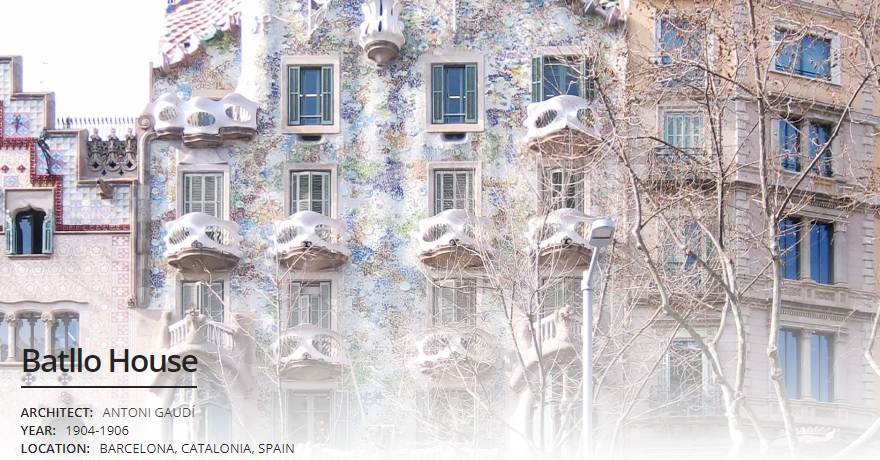
Figure 1. A photo of Battlo House.
Elevation
The view of the Casa Batllo from the front is a colorful and vibrant scene with whimsical shapes, which is presented by a wavy stone wall made of bright tiles that resemble the surface of a dragon. The look of the Casa Batllo has earned it the name “house of bones” as viewed by others, for the balconies of the building resemble skeletal structures done in curvy metal railings, as shown in figure 2.
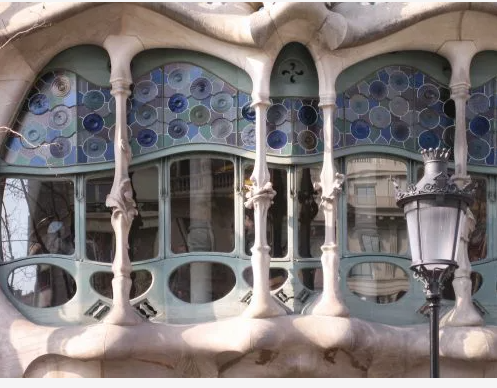
Figure 2. The balconies of the building resemble the skeletal structure
Details
Hôtel Tassel is regarded as one of the most iconic pieces of Art Nouveau that were used in the construction of the building. It paid great attention to craftsmanship, which is also evident in its luxurious materials, such as marble, wood, and stained glass interior features. Casa Batllo is the epitome of detailed ironwork, which is evident throughout the building along the staircase railing, door handles, and fixtures used in lighting.
Hôtel Tassel – Brussels, Belgium
Plan
On the other hand, Victor Horta also presents with him an iconic application of Art Nouveau in his works Hôtel Tassel, which is located in Brussels, Belgium. The building, which was completed in 1893, has a plan that exhibits Horta’s innovative approach to space and light as seen in the organization of the building; it is built around a central staircase and lightwell, hence allowing natural light to penetrate deep into the interior, as shown in figure 3.
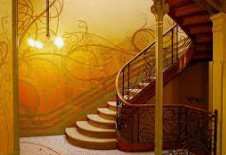
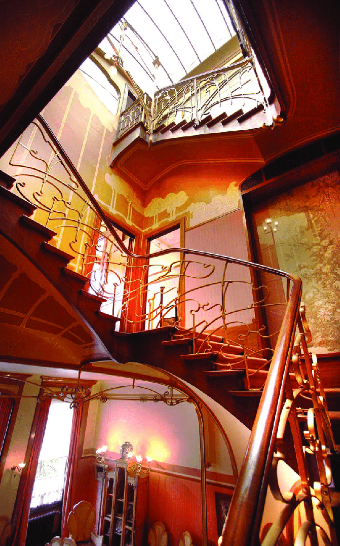
Figure 3. Hôtel Tassel stairscase
Elevation
From the front, the view of the Hôtel Tassel is evident, and the art and beauty of the building are characterized by its use of iron and glass, which presents a sense of transparency (Widera 2). The building has a great deal of the uses of ornate ironwork, which results in patterns of floral motifs and geometric design with large windows and a curved corner bay inviting more natural light, as shown in Figure 4.
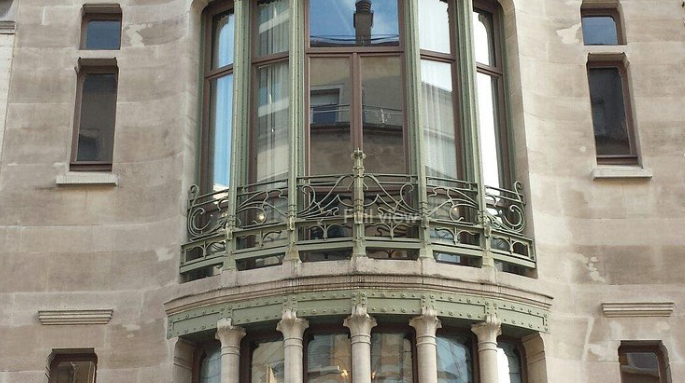
Figure 4. Hôtel Tassel has large windows and a curved corner bay (Widera 3).
Details
Hôtel Tassel holds its appraisals for its great craftsmanship in its interior features, which employs an intense use of luxurious materials such as marble, wood, and stained glass. The building is characterized by the detailed use of ironwork, which is evident along the staircase railing, door handles, and light fixtures (Van de Vijver 695).
Comparison and Contrast
Based on the analysis of the two architectural works, it is evident that both Casa Batllo Hôtel and Tassel exhibit a departure from traditional architectural forms, hence embracing innovative designs as employed in the 19th and 20th centuries, holding significant beauty to date. Both Casa Batllo Hôtel and Tassel are a great deal in illustrating art and architectural works in structural and decorative themes as they inspire the integration of nature and organic forms in their design.
Despite sharing various themes, both Casa Batllo Hôtel and Tassel differ in some essence. Casa Batlló features a more fantastical aesthetic by employing colorful designs and playful details, but the case is not the same for Hôtel Tassel, which is not very interested in elegance.
Conclusion
The application of Art Nouveau entails similarities and differences as applied by various architects such as Antoni Gaudí in his work Casa Batlló and Victor Horta in his work Hôtel Tassel. The highly international style of architecture and art was greatly inspired by forms of nature such as flower shapes, leaves, vines, and other forms of organic nature. The movement, which started as an architectural element, spread to other sectors such as interior design, poster illustration, glassware, and jewelry. Therefore, there is a vast application and lessons that can be obtained from the Art Nouveau movement.
Works Cited
Bosch Prat, Mireia, et al. “Plan Director de la Casa Batlló de Gaudí. Gestión y documentación.” Loggia-arquitectura y restauración 33 (2020): 76-97.
Radityasari, Raden Roro Putri, et al. “Review Penggayaan Bangunan Casa Batllo: Art Nouveau.” JURNAL SYNTAX IMPERATIF: Jurnal Ilmu Sosial dan Pendidikan 4.4 (2023): 453-459.
Van de Vijver, D. “Victor Horta and building construction. The written testimonies of the architect’s teachings and library.” History of Construction Cultures Volume 2. CRC Press, 2021. 695–702.
Widera, Barbara. “Colors Inspired by Nature Analyzed in Two Residential Buildings Designed by Victor Horta. Arts 10: 60.” 2021.
 write
write