Etsy, which is an online marketplace for hand-made and vintage products, is one of the standout platforms in the e-commerce sphere. The company possesses a robust digital marketing strategy that reaches out to crafters, collectors, and people who want something special. On the ever-changing terrain of digital marketing, ETSY.com shows itself as a massive player, providing an exclusive stage for artisans and makers to showcase their skills worldwide. Through its huge collection of hand-made, thrift, and unique products, ETSY.com has attracted a great deal of attention in the e-commerce field. ETSY.com’s digital marketing strategy encompasses social media, website design, SEO, email marketing, and Google Ads, which help in developing a dynamic digital marketplace, link craft persons internationally and generate ongoing growth in the fast-paced e-commerce industry.
Social media strategy across all platforms
Leveraging social media channels is an essential component of digital marketing for ETSY.com as it helps the company cultivate community participation, increase brand recognition, and escalate website traffic volumes. The company wisely uses Instagram, Facebook, Pinterest and Twitter platforms to engage with its sellers and buyers from different backgrounds and geo-locations (Etsy.com, 2024). One of its main strengths is the visual content that it uses on multiple platforms such as Instagram, Facebook, Pinterest, and Twitter. ETSY.com displays its products excitingly and imaginatively. Thus, it gains the attention of its target audience, beckoning their interaction. For instance, on Instagram, ETSY.com posts images of hand-made and eye-catching items with engaging captions and appropriate hashtags (see https://www.instagram.com/etsy/). This technique not only attracts followers but also produces user-generated content as shoppers share their purchases, which consequently helps increase the brand’s span and portrays itself as an authentic brand.

Fig 1. Displaying ETSY.com’s products on Instagram (Source: https://www.instagram.com/etsy/)
Additionally, ETSY.com shows its might in making community engaging and relationship-building via social media. The brand joins the discussion, replies to comments and questions promptly, and fosters a user-friendly environment. For instance, on Facebook, ETSY.com offers live streams, organizes seller and buyer groups so that they can interact, and shares user content that highlights successful customers (see https://www.facebook.com/reel/407663222209053). ETSY.com can foster dialogue and cooperation within its community, which, in turn, will increase brand loyalty and repeat purchases.

Fig 2: Pictures of ETSY.com’s products displayed on Facebook (Source: https://www.facebook.com/reel/407663222209053)
While ETSY.com’s social media strategy has many advantages, it has some weaknesses that need to be addressed to improve the company’s digital marketing strategy. For instance, the irregular posting frequency and content across the platforms. Although ETSY.com is seen as an active participant on the main social media platforms, the quantity and quality of the posts keep fluctuating, hence missing out on some chances for user interaction and visibility. Besides, the brand has to rely more on targeted ads and influencer collaborations that are aimed at the audience and lead to purchases.
The Company’s Website
ETSY.com’s website exemplifies excellent design and site functionality that is based on usability for both sellers and buyers. The platform consists of a clean and attractive interface with intuitive navigation, an effective search bar, and strategically located call-to-action buttons (See https://www.etsy.com/). Visitors are welcomed on the homepage with vivid photography illuminating a myriad of hand-made and vintage products, and it is immediately evident that the store is the ideal place to explore. For example, the use of large images and brief product descriptions on the homepage not only presents ETSY.com’s products but attracts visitors to navigate different categories or product listings.
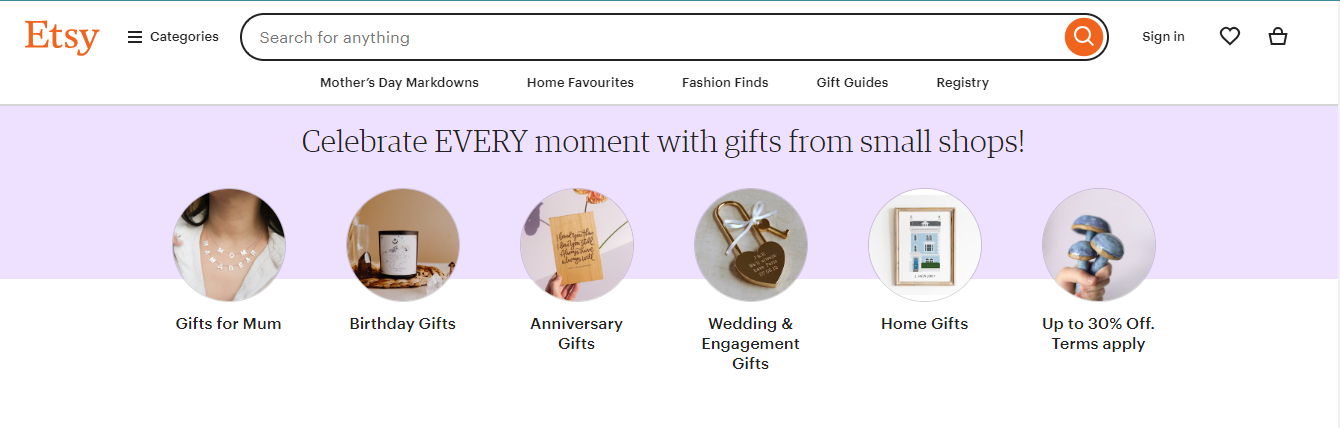
Fig 3: ETSY.com’s landing page (source: https://www.etsy.com/)
ETSY.com’s mobile responsiveness is one of its website design fundamentals, thus providing a convenient cross-device experience despite the variability of screen sizes. Whether accessed through a smartphone, a tablet, or a desktop, the website automatically adjusts to different screen resolutions without compromising the integrity and functionality of the layout. For example, on mobile screens, one can still enjoy the visual representation and ease of browsing product listings because of the responsive design principles. The fact that ETSY.com is solidly committed to mobile optimization speaks volumes about its dedication to serving the tech-savvy audience that increasingly seeks convenience and speed and ultimately drives user satisfaction and engagement.
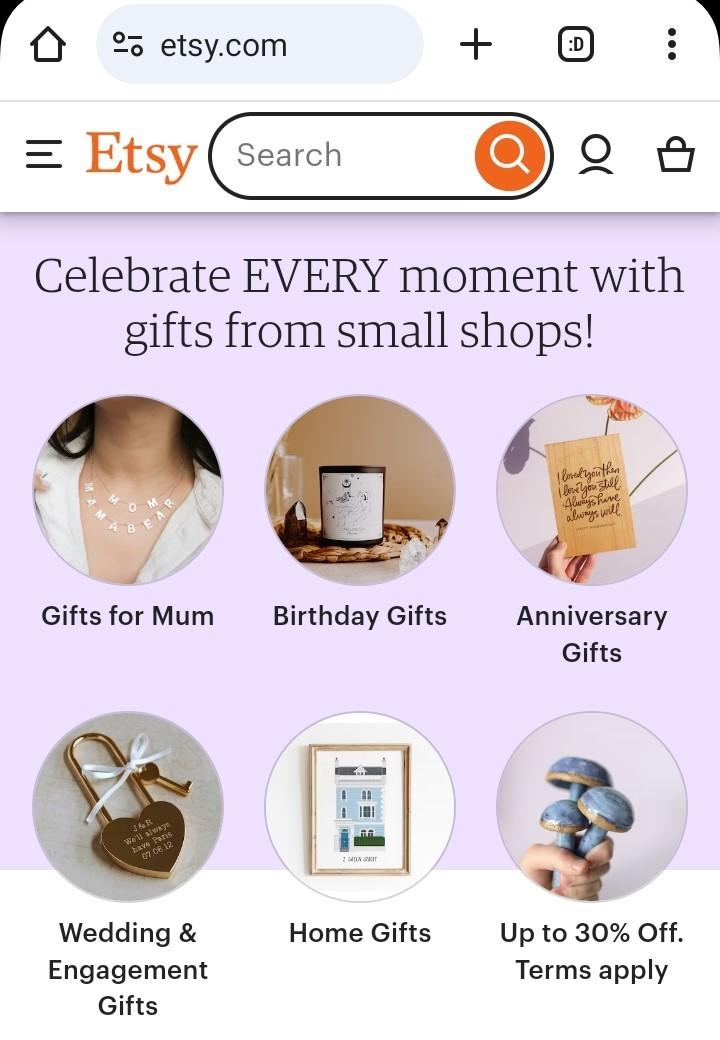
Fig 4: ETST.com mobile-friendly website (source: https://www.etsy.com/)
The checkout process on ETSY.com is intuitive and customer-centric, which helps prevent cart abandonment by simplifying and smoothing the checkout process. Customers are led through a progressive set of stages, from shopping cart additions to completing their purchase via the help of clear prompts and progress displays. Furthermore, the availability of a wide variety of payment options, secured transactions, and clear shipping information enhances buyers’ confidence. ETSY.com renders the website a virtual platform that seamlessly links customers with distinct and unique hand-made products by pursuing user experience and conversion optimization.
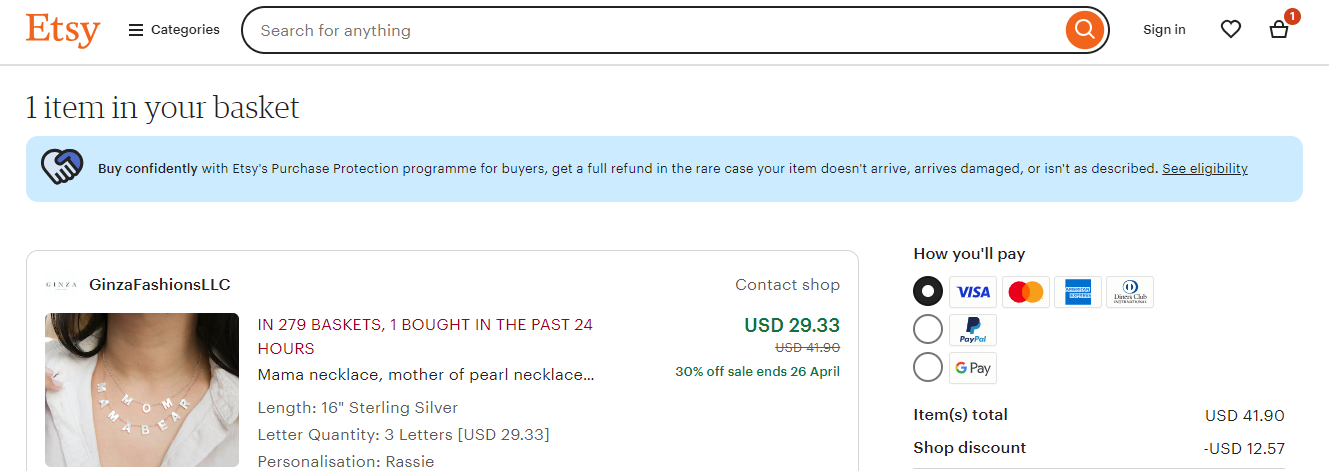
Fig 5: Different payment methods used on ETSY.com’s website (source: https://www.etsy.com/)
Nonetheless, like other websites, ETSY.com’s website is also associated with some challenges. For instance, its browsing experience can sometimes be complicated and cluttered, especially when manoeuvring through densely populated product categories (see here: https://www.etsy.com/c/toys-and-games?ref=catnav-1552). In addition to the vast selection of exclusive items, the abundance of listings might be somehow confusing to users. It can eventually result in difficulty in locating relevant products and filtering the search results. Also, though Etsy.com is quite mobile responsive, sometimes, due to inconsistency in the operation between different devices and browsers, it may distract the overall experience of the user.

Fig 6:ETSY.com’s cluttery webpage.
Search Engine Optimization (SEO)
Search Engine Optimization (SEO) is the basis of the digital marketing strategy on ETSY.com, which aims to make the website more popular and attract people from search engines such as Google. ETSY uses on-page and off-page SEO strategies. An important component of their tactic is microscopic keyword optimization. For example, a search for “hand-made jewellery” usually ends up with ETSY’s listings displaying at the top of the search results (see https://www.etsy.com/search?q=handmade%20jewelry&ref=search_bar). This is because ETSY sellers intentionally use words that relate to what many people are looking for in their product titles, descriptions, and tags.
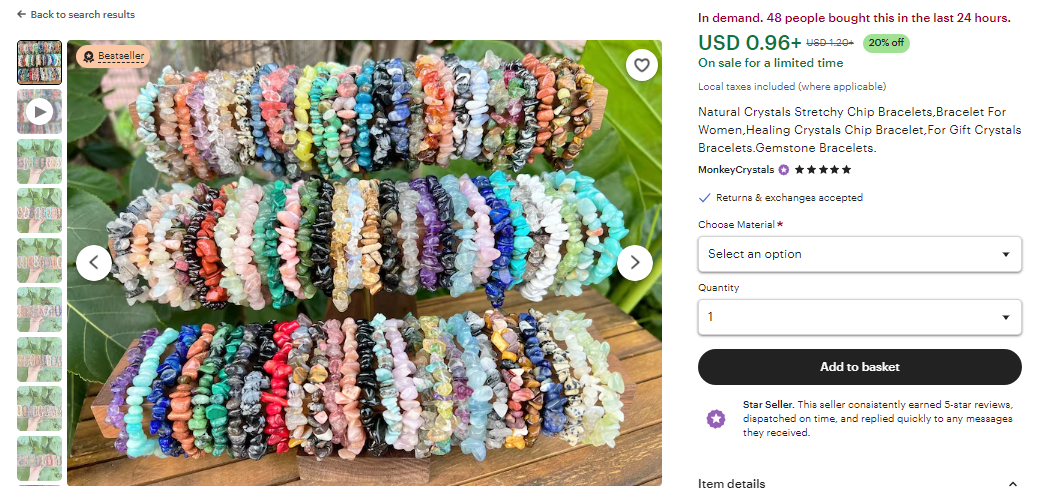
Fig 7: SOE strategy used to find products on ETSY.com’s website/ internet.
Content strategy is also an integral part of ETSY’s SEO system. The site exhibits a wide range of content resources, such as seller guides, DIY tutorials, and trend reports, which target the needs of both customers and sellers. These blog posts not only reach out to readers but also improve ETSY’s expertise in its sphere. By answering the questions that many people usually ask and by giving valuable suggestions, the ETSY becomes more relevant and authoritative in the eyes of search engines, which helps it move up in the search results for particular keywords. Moreover, user-generated content such as product reviews and seller testimonials contributed to the SEO of the ESTY website by providing the site with more fresh and relevant content.
Although a well-elaborated SEO strategy is implemented on ETSY.com, there are loopholes which hinder overall performance. One of the disadvantages comes from the fact that the e-commerce market is highly competitive, with various sellers promoting their products in similar categories (Akin, 2024; Kleisiari et al., 2020). This severe competition usually encounters difficulties in ranking high on search engine results pages (SERPs), particularly for the terms that visitors most often search for. Moreover, ETSY’s dependence on user-generated content that is refreshing and relevant poses another challenge, considering the quality standards and consistency of the content. Ensuring the precision and applicability of user-generated content across the multitude of listings can be a hard job, thus affecting the search engine optimization (SEO) overall performance of the platform. Besides that, ETSY continues to encounter problems with keeping up with changes in search engine algorithms and advancements in best practices. This calls for regular adaptation and optimization of their strategies to keep afloat in the continuously shifting digital environment.
Email Marketing
Email marketing underpins the digital marketing strategy of ETSY.com, with a direct line of communication to the multi-faceted audience of sellers and buyers of the site. The company’s Email marketing serves as an example of perfect segmentation and targeting. As proposed by Alves and Meisen (2023), ETSY.com uses email list segmentation based on user’s behaviour, interests, and demographics to provide the most relevant and personalized content to its subscribers. For instance, a seller of vintage clothing may get emails curated to show them the vintage apparel listings, while a buyer searching for hand-made jewellery may receive recommendations which are right to their taste. This personalized approach not only adds to engagement but also upgrades conversion rates by showing customers products that fit their interests and preferences.

Fig 8: Email template used by ETST (source: https://www.etsy.com/)
Besides, ETSY.com stands out as an email personalization guru, using dynamic content and individual user data to create thrilling emails. For instance, subject lines which are personalized and addressed to the recipient by name or make reference to their recent purchase history have significantly improved open rates and click-through rates (Etsy.com, 2024). Furthermore, ETSY.com creates dynamic product recommendations, displaying content within emails that is similar to the items that were viewed or purchased previously by the addressee. By providing timely and customized suggestions, ETSY.com not only improves the customer experience but also creates an individualized feel, which in turn reinforces customer loyalty and makes customers return.
Nonetheless, ETSY.com’s email marketing strategy still has weaknesses; for instance, there is room for improvement in the areas of automation and optimization. While the company uses email automation workflows for triggered messages like cart abandonment reminders or post-purchase follow-ups, there might be some chances of refining these workflows to increase their efficiency and effectiveness. For example, the use of more advanced criteria for segmentation or the improvement of the timing and frequency of automatic messages could increase their effect. By the same token, though ETSY.com utilizes email marketing data to evaluate metrics like open rates and click-through rates, opportunities for more in-depth data analysis and optimization based on customer engagement are certainly there. Therefore, by utilizing superior analytical tools and testing methods, ETSY.com can perfect its email campaigns to deliver better outcomes and achieve the maximum ROI.
Google Ads
Google Ads is the foundation of the digital marketing of ETSY.com, with the possibility of specific advertising on the wide network of Google. One of the pillars of ETSY.com’s Google Ads strategy is its skilful use of keyword targeting. ETSY.com performs explicit keyword research to identify phrases with commercial intent, maximizing the chances of its ads appearing to users who are currently looking for items that are similar to the ones offered on the site. For instance, a search for hand-made jewellery will result in ETSY.com ads being displayed to users, directing them to the products (See https://www.etsy.com/). With this targeted approach, ad relevancy, click-through rates, and, consequently, conversions are increased to the maximum.
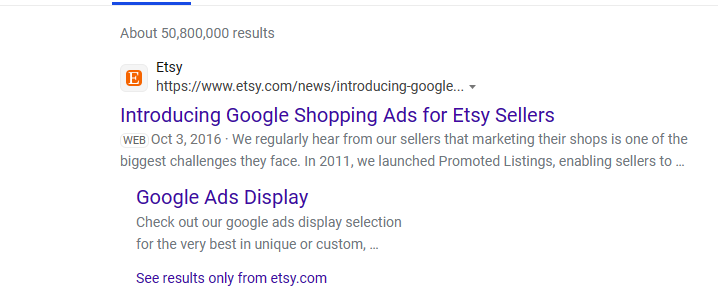
Fig 9: ETSY.com Google ad.
In addition, Etsy.com excels at the creation of persuasive ad creatives that touch the heartstrings of its target audience. Advertising with headlines that draw attention, descriptive ad copy, and impressive images does make users more engaged and interested. An ad displaying fine-quality pottery may be aimed to highlight characteristics like hand-made quality, eco-friendliness, and artisanal grace. ETSY.com utilizes persuasive messaging and appealing visuals to boost ad efficiency and inspire users to be redirected to its website.
On the other hand, the ETSY.com Google Ads strategy has a weakness in the area of optimizing targeting parameters and bidding strategies. The platform delivers robust targeting features by way of demographics, interests, and remarketing, but mastering these features demands ongoing monitoring and tinkering. The ETSY.com website might gain from tailoring its audiences based on user behaviour, geographical location and device preferences to make sure that the ads are directed to the right groups. Besides, refining bidding strategies to receive maximum ROI while keeping ad spend under control is a very important factor for the long-term of the campaign. Thus, continuous performance assessment and improvements are key steps to rectify this weakness and enhance the effectiveness of Google Ads campaigns.
Conclusion
ETSY.com’s digital marketing evaluation discloses a multi-faceted strategy which tactfully exploits different channels to interact with its audience, drive traffic, and create brand loyalty. From its strategic use of social media platforms to its user-friendly website design, comprehensive SEO efforts, personalized email marketing campaigns, and targeted Google Ads initiatives, ETSY.com pays attention to creativity and the customers’ needs. While examination points out positive things such as visual content creation, community engagement, and personalized communication, there are also areas for improvement, like being consistent in posting on social media and exploring new ways to grow. Through the unstoppable improvement of digital marketing strategies and the use of new trends, ETSY.com can secure itself for long-term success in the competitive e-commerce market.
References
Akin, M. S. (2024). Enhancing e-commerce competitiveness: A comprehensive analysis of customer experiences and strategies in the Turkish market. Journal of Open Innovation: Technology, Market, and Complexity, 10(1), 100222. https://doi.org/10.1016/j.joitmc.2024.100222
Alves, G. M., & Meisen, T. (2023). A review of customer segmentation methods for personalized customer targeting in e-commerce use cases. Information Systems and E-Business Management, 21(3), 527–570. https://doi.org/10.1007/s10257-023-00640-4
Etsy.com. (2024). Celebrate EVERY moment with gifts from small shops! https://www.etsy.com/
Kleisiari, C., Duquenne, M., & Vlontzos, G. (2020). E-commerce in the retail chain store market: An alternative or a main trend? Sustainability, 13(8), 4392. https://doi.org/10.3390/su13084392
 write
write