Introduction
Leadership is an umbrella term that not only advocates supervision of tasks the realm goes beyond the planning, organizing and monitoring of the task; inclusive leadership also delves into the identification of hidden skills and knowledge within employees and guidance of harnessing those capabilities to fledge execution so that high productivity and employee satisfaction can result in long term sustainability and the greater good of all with high workplace loyalty. The study will compare and contrast the leadership approach by underpinning employee psychology within the parameters of the ethical conduct and business needs of a leader. The dilemma leaders face between psychological manipulation, workplace control, and fair compliance will be illustrated, stating all the supportive and contradictory opinions by authors. Whether emphasizing an individual’s psychology is collectively detrimental to the goals of a team or motivates them through deeper understanding and intuitive thinking, the study will explore that area of judgment. Additionally, the role of psychological biases in effective destination-making will be discussed to know the impact of psychology on leadership.
1. Can psychological manipulation be justified in leadership?
According to Pulido-Martos, Gartzia, Augusto-Landa, & Lopez-Zafra (2023), emotional intelligence allies in the development of organizational effective commitment and authors highlighted the significance of knowing the deeper insight into people psychology as to the understanding how employees interpret a situation, react accordingly and the skill allowed them to engage in reasoning. Especially when the work environment is confined within a team leaders need to know the extent to which emotional skills can change depending on the context that helped them in proactive risk mitigation. The level of peer support, mutual trust and workplace loyalty is crucial for leaders to understand the strengths and weaknesses of people contributing to the team. In nurturing employee well-being and building stronger team dynamics, leadership plays an intermediate role between affective workplace commitment and workplace emotional intelligence; therefore, leaders must look after employees’ psychological attributes to create a common team vision without lowering the personal satisfaction of each individual. Transformational leadership is about knowing the level of emotional intelligence of employees, one of the most cognitive schema or psychological components that regulate work patterns, beliefs and styles of people in the workplace, and encouraging people by allowing them to explore their skills and knowledge for the complete usefulness of AOC (affected organizational commitment), the variables related work climate, leadership style, and individual’s job characteristics.
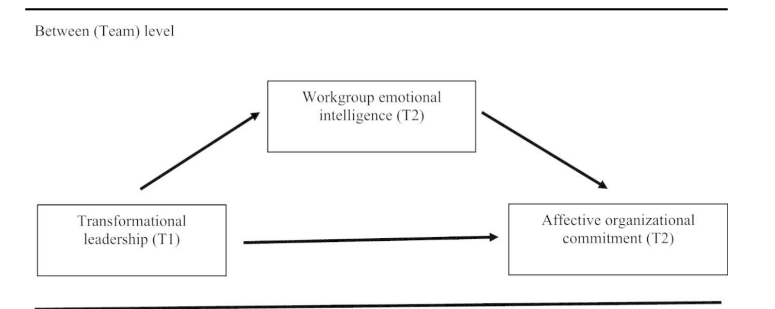
Figure: Interconnection between workplace Emotional intelligence ( human psychology) and leadership
Source: Pulido-Martos, Gartzia, Augusto-Landa, & Lopez-Zafra (2023)
Contradictorily, Dennerlein & Kirkman (2022), empowering a leader’s behaviour influences employees and portrays those behaviours as connecting with the Social cognitive theory of morality, suggests the social environment continuously shapes, modifies or results in changes in one’s belief and morality in favour of new values and thinking which can be unethical organizational behaviour of employees influenced by empowering leadership. Vesting responsibilities on employees’ hands can be detrimental through morale disengagement and role conflicts. When leaders gain deep insight into one’s motivation or efficiency, it can be manipulated or mismanaged out of ill motive, organizational discrimination and economic gain. The power of leaders through psychological manipulation towards unitary construct to manifest distinct behavioural dimensions such as autonomy, expectation of trust, sharing power and control resulted in bureaucracy, job insecurity, and role ambiguity.
Employees carry different traits and needs, and the mindset of leaders is required to scrutinize the motivational factors of each employee so that the leaders can effectively grow a supportive environment through resource optimization and integrated inter-functional coordination. The modern diversified workplace deemed for employee betterment and connecting psychological attributes helps leaders to know the specific needs of people so that their capabilities can be harnessed fully. For example, Mary Kay Ash, a women entrepreneur, understood the psychology of salesforce and wanted a combined adaptability between work and home life balance, so she invented a flexible direct selling model to influence her team. Without knowing the psychology of motivation, she could not become such a great entrepreneur in facilitating women’s empowerment.
2. Is an emphasis on individual psychology detrimental to the collective goals of the team?
Acciarini, Brunetta & Boccardelli (2021) state the interrelationship between environmental transformation, cognitive biases and strategic decision-making by leaders. The author stated understanding trends in the workplace helps in adaptive business vision, model and strategy that can ensure growth. The way leaders present information influences the framing effect in the workplace ( the different contextual reactions or opinions of people might be positive or negative), and the study reveals that the role of specific decision biases, such as logical sufficiency, accuracy and speed processing, can easily influence human choices. It is considered a useful measurement that enables leaders to understand their potential blind spots or the impact of biases on their judgment. The study steed leaders must analyze both the rationality and intuitively of all relevant information before making any decision influenced by cognitive bias. Factors such as demography, interpersonal dynamics and diversity can influence the motivation or efficiency of other members as collective intuition enhances the ability to identify challenges, improve strategic thinking and provide quick solutions.
Contradictory Noor, Beram, Yuet, Gengatharan & Rasidi (2023) stated that cognitive biases can be unfavourable to team dynamics and prejudice, which can have both the good and bad outcomes surrounding the halo and horn effects of cognitive bias. Leaders might overlook areas that can be improved out of ability and authority bias. Halo and horn effects explain the situation where leaders often fail to notice the negative traits in people that their personality prefers or show belief in them, however, a mistake conducted by employees can leave a long-term negative impression on ability or accountability.
The overall study, through compare and contrast, reveals that cognitive biases can be detrimental to team spirit (as praising others can lower the self-esteem of others) if not managed by leaders rationally and ethically. The process-based description-making, unbiased judgment and belief in employees based on performance are a necessity so that employees can feel secure and determined when they know their ability will be recognized and praised not based on cognitive biases of leaders but based on real-time assessment.
3. How can psychological biases hinder effective decision-making?
According to Cristofaro & Giardino (2020), the identification of self-serving bias in managerial decision-making can be effective for core self-evaluation as it evolves the capacity to influence personal effectiveness. Selk leadership is connected with self-core evaluation through understanding the cognitive intuition. Self-leadership is the approach using which an individual is able to decode their own behavioural and cognitive strategies based on which he/she can influence the people using the best resources, skills and environments suitable for employee betterment. Decisions that leaders make are based on cognitive attributes and showcase trust in people, intellectually stimulating performance through individual consideration, and supporting team dynamics. It has positive influences on an individual level and on job performance, job satisfaction and long-term career support. The author started with bias, representing the divergence from what has been identified as rational decisions. Cognitive shortcuts/heuristics and cognitive traps can negatively influence decision-making through wrong judgment and unclarity in decisions, however, the self-leadership process encourages self-assessment utilizing which leaders to make decisions based on rationality and assessment of people’s ability rather than personal bias.
On a different note, a study conducted by Hallo, Nguyen, Gorod & Tran (2020) suggested that decision-making is a complex system and confirmation bias of leaders can leave errors in decision-making. In confirmation error information or phenomena are presented in a way that could support one’s previously held beliefs. The authors stated that a systematic rational decision-making process required emotional stability, information sources and risk tolerance, in place of cognitive biases.
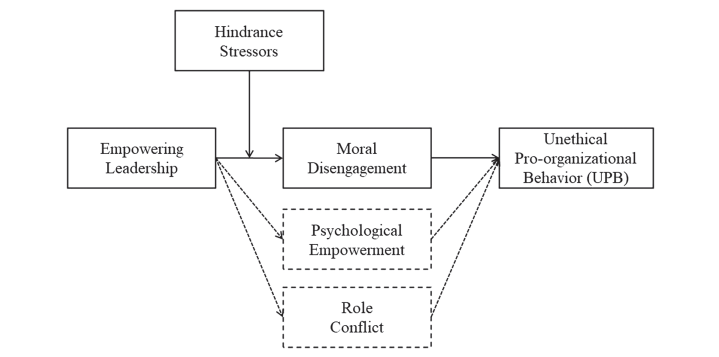
Figure: Systematic decision making
Source: Hallo, Nguyen, Gorod & Tran, (2020)
In conclusion, it can be stated that cognitive bias can have a positive influence that, too, depends on phenomena and areas of applications. If leaders are using it for self-evaluation, then it is beneficial as it helps to recognize personal areas of improvement and discrimination-free workplace ethics both intuitively and consciously. Cognitive bias has a negative impact on traditional decision-making as intuition can not be right all the time. The effectiveness, capability and skills of employees are not contestants, there is much room for improvement and sometimes the reliability of leaders to specific people results in negative outcomes out of high self-esteem. So leaders need to rely on a biased practical approach to decision making.
Conclusion
The study reveals different visionary approaches of authors on leadership, incorporation of psychology in people management and the concept of cognitive bias in decision-making and controlling group dynamics. The study discovered through comparison and contrast of six different journals that understanding psychology is morally right and beneficial if leaders know the ethical boundaries and possess values that follow the workplace complaints. Understanding the psychology of people is required to know different needs, challenges and reasons for motivation in the workplace so that high emotional intelligence and trust building support positive workplace coordination. Cognitive biases can be detrimental to group dynamics if leaders overlook other employees and the chances of missing opportunities become high as human capital fails to assess and harness fully. Decision-making of leaders needs to be rational and cognitive biases are required to utilize self-evaluation in leadership to seek collective information for making better decisions.
References
Acciarini, C., Brunetta, F., & Boccardelli, P. (2021). Cognitive biases and decision-making strategies in times of change: a systematic literature review. Management Decision, 59(3), 638-652.Retrieved on March 18, 2024 from https://doi.org/10.1108/MD-07-2019-1006
Cristofaro, M., & Giardino, P. L. (2020). Core self-evaluations, self-leadership, and the self-serving bias in managerial decision making: A laboratory experiment. Administrative Sciences, 10(3), 64.Retrieved on March 18, 2024 from https://doi.org/10.3390/admsci10030064
Dennerlein, T., & Kirkman, B. L. (2022). The hidden dark side of empowering leadership: The moderating role of hindrance stressors in explaining when empowering employees can promote moral disengagement and unethical pro-organizational behaviour. Journal of applied psychology, 107(12), 2220.Retrieved on March 18, 2024 from https://psycnet.apa.org/doi/10.1037/apl0001013
Hallo, L., Nguyen, T., Gorod, A., & Tran, P. (2020). Effectiveness of leadership decision-making in complex systems. Systems, 8(1), 5.Retrieved on March 18, 2024 from https://doi.org/10.3390/systems8010005
Noor, N., Beram, S., Yuet, F. K. C., Gengatharan, K., & Rasidi, M. S. M. (2023). Bias, Halo Effect and Horn Effect: A Systematic Literature.Retrieved on March 18, 2024 from https://www.researchgate.net/profile/Sukor-Beram/publication/369600152_Bias_Halo_Effect_and_Horn_Effect_A_Systematic_Literature_Review/links/642a9bbf66f8522c38f29295/Bias-Halo-Effect-and-Horn-Effect-A-Systematic-Literature-Review.pdf
Pulido-Martos, M., Gartzia, L., Augusto-Landa, J. M., & Lopez-Zafra, E. (2023). Transformational leadership and emotional intelligence: allies in the development of organizational affective commitment from a multilevel perspective and time-lagged data. Review of Managerial Science, 1-25.Retrieved on March 18, 2024 from https://link.springer.com/article/10.1007/s11846-023-00684-3
 write
write