Social media is a unique digital environment that goes beyond traditional communication barriers and allows people to create, share, and interact with each other. In general, social media is more like a vibrant and complex environment that allows online communication and interaction among people with different content. Social media is varied by its wide range of online platforms that fulfil diverse communication preferences and aims. The scene is ever-increasing, from established social networks like Facebook to short microblogging platforms like Twitter, which provide new forms and innovations.
Social media’s defining characteristic is its dynamic nature, comprising a fast-moving state of perpetual evolution and change. It is updated with new functionalities and features every time. This dynamic nature implies that social media is a changing sphere that needs unremitting responses from marketers and users (Yarchi et al.).
Overview of Popular Typology Models: Along with this understanding of the diverse social media landscape, several typological models provide frameworks for classification. As an illustration, I can show you the “4 Zones of Social Media” and the “Conversation Prism” that break down specific components and features. These models give marketers exclusive views into platforms’ deep-seated goals in the vast social media landscape (Ledbetter & Meisner, 2021).
The focus will be Twitch, the head video content platform in the streaming services sector. Twitch shows the convergence between social networking sites and content consumption due to its original feature set of live streaming and community interaction. Marketers in this area can use Twitch’s unique features to interact with audiences and create a community. The subsequent part will focus on the specific functions provided by Twitch, giving pointers on how marketers should go about designing strategic marketing campaigns that would align with the sessions broadcast on this platform.
Analysis of demographics and Twitch for marketing.
Applying typologies like “4 Zones of Social Media” leads to a disciplined method for categorizing various platforms. This gives a structured understanding of the social media landscape where marketers can build strategic campaigns. However, typologies can overly simplify the complexity of unique platforms and could be big misses as the trends emerge (www.proquest.com, n.d.) Recognizing strengths and weaknesses is the building block for an efficient marketing strategy. The first marketing function of Twitch is to provide diverse marketing opportunities within the streaming service industry. The RACE (Reach, Act, Convert, and Engage) framework offers a strategic roadmap that helps marketers understand the function of this medium (Pollack et al., 2021).
Twitch marketing strategies and visuals
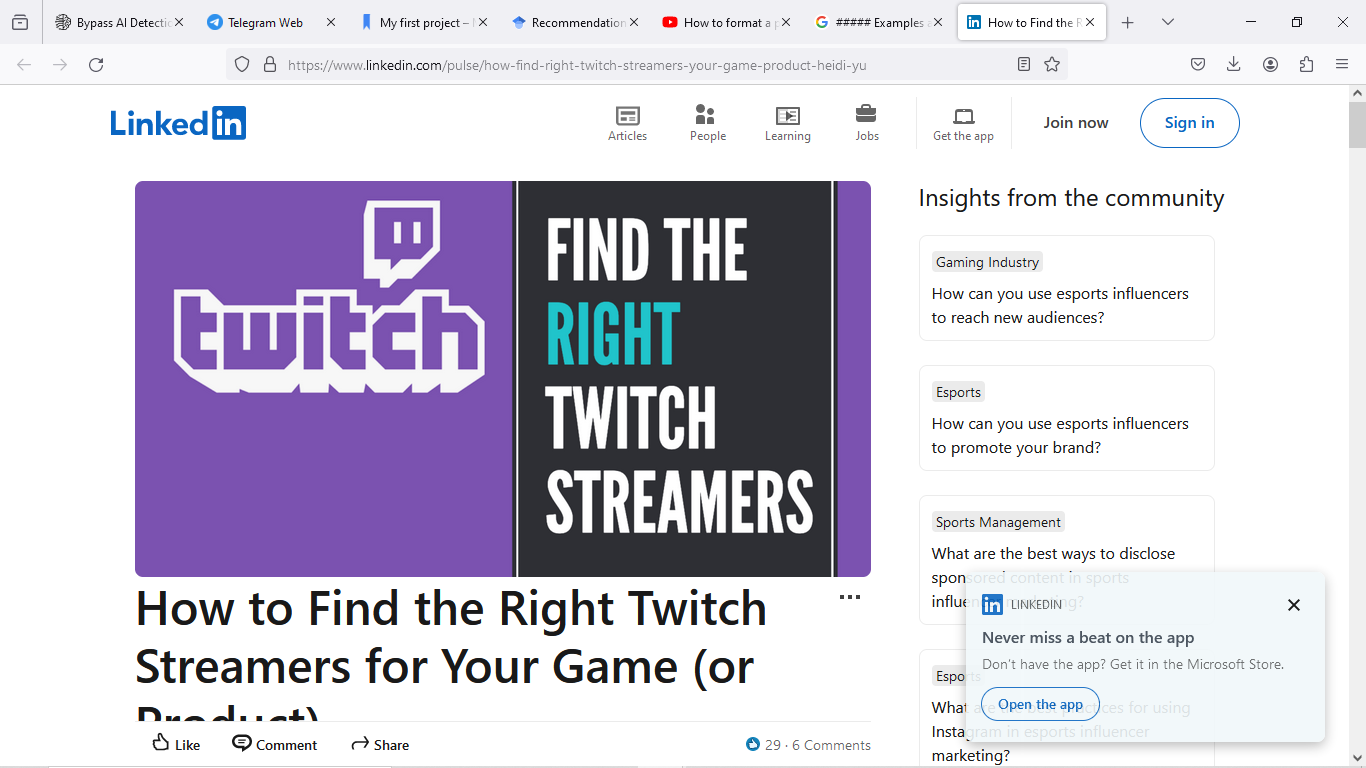
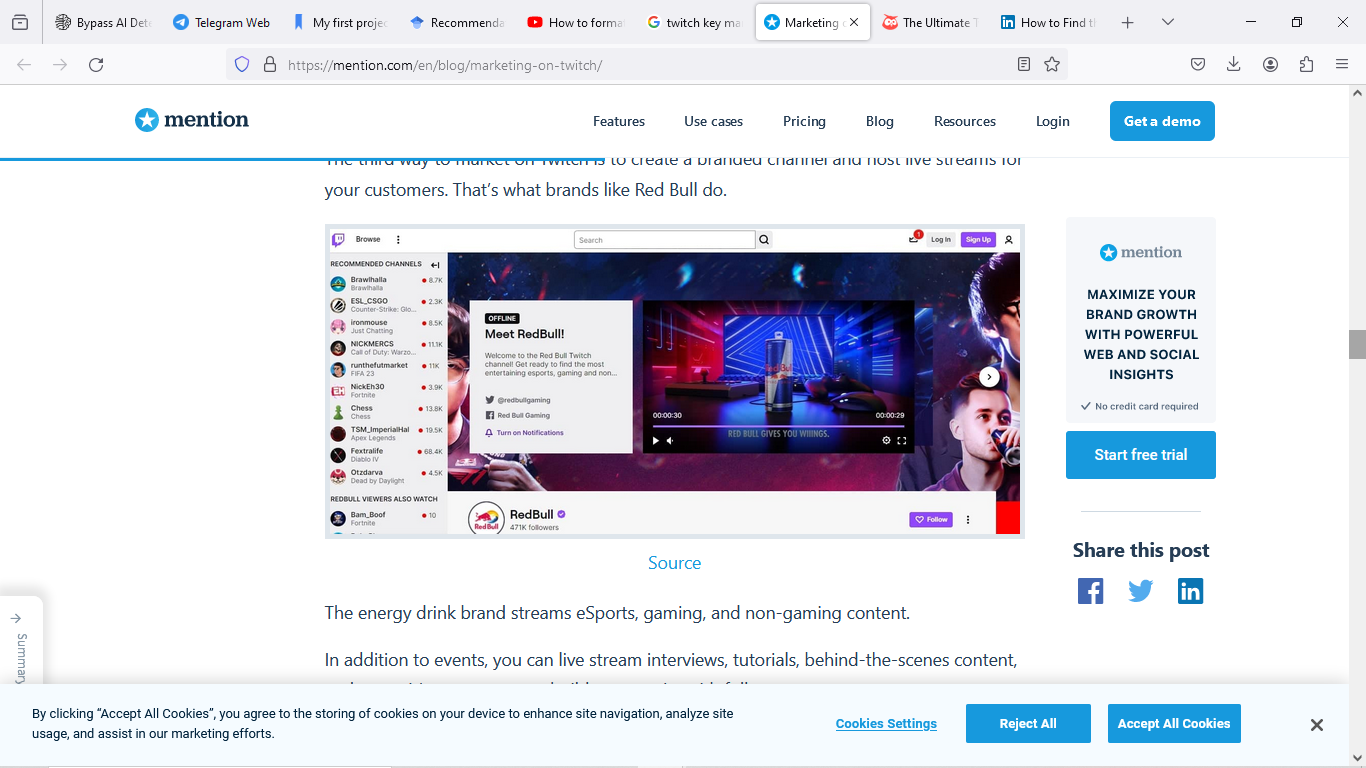
Resonance with the streaming service Industry Strategies is important for achieving marketing success.Whether you want to boost your audience, raise viewer engagement or offer unique content, Twitch has very dynamic features that can be creatively and flexibly utilized (Welden, 2022).
Undefined social media has different effects on various stages of the customer journey. Social media is omnipresent and has distinct impacts on different stages of the customer journey. Segments in the industry of streaming services and social media dramatically affect every step of the customer experience. Social media channels do become great platforms for spreading the news about new content and streaming services. It allows for user-driven content, commentary, and recommendations, which affect the decision-making process of the viewers during the evaluation phase (Aktepe & Durukan, 2022). The crucial step in the purchase stage involves advertising and promoting, which are targeted to lure potential subscribers into streaming.
Academic and Industry Resources as Vital Inputs Academic and industry sources served as invaluable resources in articulating the intricate nature of social media and customers’ behaviour in the streaming media space. Such sources confirm the central place social media occupies in steering consumer awareness, interaction, and brand loyalty for players in the streaming services market (Mukhtar et al. A and Chandra, 2023). This knowledge points to effective campaigns, engaged users, and a notable effect on the number of potential and returning clients (Lee et al., 2023). This analysis shows how social media is knit with consumer behaviour when it comes to the streaming services
A Case Study:
Cross-Case Vignettes of Best Practices Showcase Diverse Strategies Across Streaming Platforms: The streaming service industry, with multiple social media marketing tactics from various platforms, remains as its anchor. Being a Twitch and YouTube standard, the platforms have different apps to engage audiences and help them strengthen their place in the market. These platforms address particular streaming fields, making an overall screen of marketing approaches that can guide the industry. User-Generated Content Monitoring and Engagement: Streaming platforms stand out because they are pretty good at using user-generated content (UGC) to their advantage.For instance, Twitch lets people produce content where they collaborate to build the community (Spilker et al., 2018). The YouTube platform promotes user-generated content through channels, comments, and collaborations. Tap Kick and Rumble into UGC, asking users for the content, too. This technique not only obtains users’ attachment but also inspires ownership and community.
Sustaining a positive web reputation is a crucial factor in the successful operation of the streaming service industry. Platforms direct an intelligent way of handling both positive and negative comments. Twitch, for instance, proactively regulates the chats in the live sessions to ensure the safety of players.YouTube categorises comments using algorithms and content moderation teams (Mao, 2022). Besides UGC and reputation management, social media platforms utilize different approaches to improve their outreach campaigns. There are increasing partnerships across platforms like Twitch and YouTube between brand owners, streamers and influencers. This strategy also incorporates exclusive content releases, live events, and interactive features to complement the marketing approach (Sjöblom et al., 2019). Two relatively young companies, Kick and Rumble, specialize in developing novel monetization strategies by exploiting the latest usage trends in the market.
Social media have significantly impacted the streaming service industry. However, it comes with both benefits and concerns. The concerns comprise the unbeatable range, immediate interaction with the audience and honest time feedback, among the advantages of digital marketing. Nevertheless, hurdles with the moderation of content, negative feedback apprehension, and constant uptake of innovations are unavoidable (Spilker & Colbjørnsen, 2020). Apart from this, algorithms used by the industry to determine the visibility and discoverability of content raise some concerns and, therefore, require a more suitable social marketing approach.
In summary, the exploration of social media marketing apps reveals the complex and multifaceted of these strategies. Twitch represents the essence of community building and promotes a crowd-sourced approach, a diversity of strategies and a variety of tactics disseminated over platforms like YouTube, Kick, and Rumble. Through user-generated content, influencer partnerships show the importance of these marketing strategies. Recommendations for Streaming Services:
By collecting the information from the case studies and the cross-case examples, marketing professionals from the streaming service industry can obtain valuable insights. The recommended techniques are the community-based approach, consistent monitoring of the user-generated content, and the use of a wide range of online reputation management tools (Bourreau & Gaudin, 2021).In addition, creating ties through collaborations, utilizing original content, and applying novel monetization techniques will contribute to refining social media marketing. Striking a tightrope between content moderation and user engagement is necessary for keeping a successful internet presence.
Bibliography.
Aktepe, H.S. and Durukan, T. (2022). A Descriptive Study to Determine the Effect of the Use of New Social Media Channels in Political Marketing Communications on Generation Z: The Example of YouTube and Twitch. | Journal of Applied & Theoretical Social Sciences | EBSCOhost. [online] openurl.ebsco.com. Available at: https://openurl.ebsco.com/EPDB%3Agcd%3A1%3A22264033/detailv2?sid=ebsco%3Aplink%3Ascholar&id=ebsco%3Agcd%3A158052002&crl=c [Accessed 8 Mar. 2024].
Appel, G., Grewal, L., Hadi, R. & Stephen, A.T. (2020). The Future of Social Media in Marketing. Journal of the Academy of Marketing Science, [online] 48(1), 79–95. doi:https://doi.org/10.1007/s11747-019-00695-1.
Bourreau, M. and Gaudin, G. (2021). Streaming platform and strategic recommendation bias. Journal of Economics & Management Strategy, 31(1), pp.25–47. doi:https://doi.org/10.1111/jems.12452.
Edwards, C.G., Pollack, C.C., Prischett, S.J., Haushalter, K., Long, J.W. and Masterson, T.D. (2021). Prevalence and Comparisons of Alcohol, Candy, Energy Drink, Snack, Soda, and Restaurant Brand and Product Marketing on Twitch, Facebook Gaming, and YouTube Gaming. Public Health Nutrition, 25(1), pp.1–32.:https://doi.org/10.1017/s1368980021004420.
Ledbetter, A.M. and Meisner, C. (2021). Extending the personal branding affordances typology to parasocial interaction with public figures on social media: Social presence and media multiplexity as mediators. Computers in Human Behavior, 115, p.106610.:https://doi.org/10.1016/j.chb.2020.106610.
Lee, L.-M., Lau, C.Y.-L. and Wong, C.W.-G. (2023). Reexamining Brand Loyalty and Brand Awareness with Social Media Marketing: A Collectivist Country Perspective. [online] Ssrn.com. Available at: https://papers.ssrn.com/sol3/papers.cfm?abstract_id=4701948 [Accessed 8 Mar. 2024].
Li, F., Larimo, J. and Leonidou, L.C. (2020). Social Media Marketing Strategy: Definition, conceptualization, taxonomy, validation, and Future Agenda. Journal of the Academy of Marketing Science, [online] 49(1), pp.51–70. doi:https://doi.org/10.1007/s11747-020-00733-3.
Lin, Y. (2022). Social media for collaborative planning: A typology of support functions and challenges. Cities, 125, p.103641. :https://doi.org/10.1016/j.cities.2022.103641.
Mao, E. (2022). The effectiveness of event marketing in an attention economy: Findings from Twitch live-stream esports tournament events. Journal of Media Economics, 34(3), 194–211.:https://doi.org/10.1080/08997764.2022.2115503.
Mukhtar, S., Chandra Mohan A & Chandra, D. (2023). EXPLORING THE INFLUENCE OF DIGITAL MARKETING ON CONSUMER BEHAVIOR AND LOYALTY. International journal of research – granthaalayah, 11(9). doi:https://doi.org/10.29121/granthaalayah.v11.i9.2023.5308.
Orduña-Malea, E. and Lopezosa, C. (2024). Uncovering the potential of Twitch as a source for social media metrics. First Monday. doi:https://doi.org/10.5210/fm.v29i1.13214.
Pollack, C.C., Gilbert-Diamond, D., Emond, J.A., Eschholz, A., Evans, R.K., Boyland, E.J. and Masterson, T.D. (2021). Twitch user perceptions, attitudes and behaviours in relation to food and beverage marketing on Twitch compared with YouTube. Journal of Nutritional Science, [online] 10. doi:https://doi.org/10.1017/jns.2021.22.
Sjöblom, M., Törhönen, M., Hamari, J. and Macey, J. (2019). The ingredients of Twitch streaming: Affordances of game streams. Computers in Human Behavior, [online] 92, pp.20–28. doi:https://doi.org/10.1016/j.chb.2018.10.012.
Spilker, H.S. and Colbjørnsen, T. (2020). The Dimensions of streaming: toward a Typology of an Evolving Concept. Media, Culture & Society, [online] 42(7-8), pp.1210–1225. doi:https://doi.org/10.1177/0163443720904587.
Spilker, H.S., Ask, K. and Hansen, M. (2018). The new practices and infrastructures of participation: how the popularity of Twitch.tv challenges old and new ideas about television viewing. Information, Communication & Society, 23(4), pp.605–620. doi:https://doi.org/10.1080/1369118x.2018.1529193.
Welden, R. (2022). PLAYING THE GAME: VIDEO GAMES AND VIDEO GAME STREAMING PLATFORMS AS MARKETING COMMUNICATION CHANNELS. Doctoral Dissertations. [online] Available at: https://trace.tennessee.edu/utk_graddiss/7316/ .
Wibowo, A., Chen, S.-C., Wiangin, U., Ma, Y. and Ruangkanjanases, A. (2020). Customer Behavior as an Outcome of Social Media Marketing: The Role of Social Media Marketing Activity and Customer Experience. Sustainability, [online] 13(1), p.189. Available at: https://www.mdpi.com/2071-1050/13/1/189 .
www.jstor.org. (n.d.). Accept Terms and Conditions on JSTOR. [online] Available at: https://www.jstor.org/stable/pdf/resrep23577.pdf .
www.proquest.com. (n.d.). Understanding the Persuasive Attributes of Twitch Advertisements: A Study on the Effects of Current Advertisements and Sponsorships – ProQuest. [online] Available at: https://www.proquest.com/openview/becf484d703d80f9eb6ad34594475062/1?pq-origsite=gscholar&cbl=18750&diss=y.
Yarchi, M., Baden, C. and Kligler-Vilenchik, N. (2020). Political Polarization on the Digital Sphere: A Cross-platform, Over-time Analysis of Interactional, Positional, and Affective Polarization on Social Media. Political Communication, 38(1-2), pp.1–42. doi:https://doi.org/10.1080/10584609.2020.1785067.
 write
write