Research Question: How does corporate social responsibility impact consumer behavior in purchasing decisions?
From the research question, two key variables can be identified. Corporate social responsibility and consumer behavior. Corporate social responsibility entails the operations of the particular company, including ethical and sustainable considerations, with the social and environmental implications of their operations in play (Zaman et al., 2022). Consumer behavior, on the other hand, entails the consumer’s attitude, actions, and decision-making process while making purchases. This research aims to explore the relationship existing between corporate social responsibility initiatives and the influence they have on consumers. The research will further look into how consumers respond and perceive the activities of corporate social responsibility. The exploration of the influence of corporate social responsibility initiatives on the attitude and behavior of customers will give insight to companies on the best strategies to employ in a bid to have a good relationship between the company and the customer (Bacinello et al., 2021). Through the study, corporations can identify the trends of purchases by consumers and fully adopt them to ensure that customer satisfaction levels are improved across the board. The research question addresses and offers insight into the most important aspect of the social impact and corporate strategy in consumer behavior and attitude.
Literature Review
The concept of corporate social responsibility has been approached differently by various scholars in an attempt to identify the influences that the activities of CSR have on the consumer’s behavior about purchases. Farcane and Bureana (2015) highlight the concept of corporate social responsibility and the impacts it has on consumer behavior. With the concept of management of “Corporate Social Responsibility,” the majority of businesses consider and act upon the environmental and social issues that would affect the perception of consumers and their attitude and behavior toward the purchase of the products offered by a particular company. The relationship that exists between the company and consumers is not limited to the two; it also has other stakeholders who shape the perception and attitude of consumers. Caroll depicted the concept of CSR in 1979. Some of the parameters considered in CSR were legal, economic, and philanthropic activities. These considerations were made about the well-being of the business, while the well-being of the Society was considered second after the business of a corporate establishment. The analysis by Farcane and Bureana (2015) identifies the benefits that a company gains by incorporating CSR initiatives in its overall strategies. Companies that operate under the guidelines of CSR strategies are likely to have a competitive advantage over their rivals, who have yet to adopt the system since the strategies influence the behavior of the consumers. Caroll (2009) also discusses some of the benefits of corporate social responsibility strategies. The effect is majorly on consumer behavior about the purchase of the products on offer. While corporate social responsibility strategies have been in business strategies for a long time, the 20th century saw a sharp rise in companies embracing the strategies. The sharp rise could be a result of the rising number of companies that have led to fierce competition for similar products. To maintain business in such environments, companies must go beyond the way in a bid to impress their customers. Farcane and Bureana (2015) highlighted the elements of corporate social responsibility and its influence on consumers in a diagram presented below.
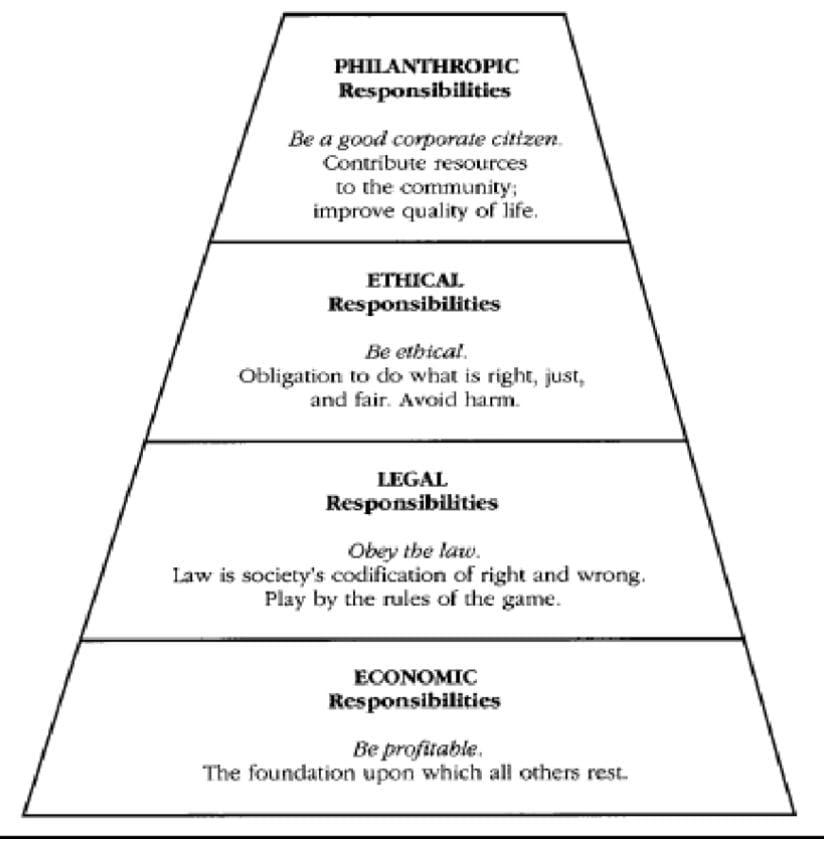
Figure 1: The elements of corporate social responsibility
Source: https://images.app.goo.gl/Vx1LiX6sWf7o5hZz5
The concept of corporate social responsibility does not involve the company adhering to the law but also involves the protection of the environment of operation and having a social network with the people around where the company operates (Prasad, 2020). Managers have adopted a new stance where they value the social and environmental parameters while operating in a bid to maintain a good public image. A good public image will help the company gain the favor of the customers and create an attitude and behavior change, considering the initiatives in place by the company to protect the social capital and environment while operating. Ethics plays a great role in the success of a business. Businesses often get to a dead end due to the negative publicity from the ethical concerns raised. Corporate social responsibility helps enhance the image of the company since customer make inquiries while making their orders or purchases from the company. Employees, in a bid to restore and maintain a good image of the company, can volunteer their time and engage in a worthy social event, such as promoting charity work and donations to the less fortunate (Prasad, 2020). Through such activities, the organizations create their brand, and the public gains their confidence since they strive to make a change in Society.
The concept of corporate social responsibility is gaining prominence in the business field lately. Mishra (2012) highlights the change in operations by companies that endeavor to meet the needs of the customers ahead of the interests of the company. Previously, companies prioritized their operations over the well-being of their customers. The idea was for the company to maximize its profits, thus disregarding customer satisfaction. However, the market dynamics have led to a twist in the operation of the business market. One factor that has led to changes in operations in the corporate world is competition from companies offering similar products. A company must, therefore, adhere to some code of operations if they intend to maintain customers; corporate social responsibility strategies are some of the ways through which companies can prioritize the interests of their customers. By operating on strict adherence to the laws and policies that protect the interests of the consumers, the companies have managed to influence the behavior of the majority of their consumers. When customers are satisfied with the services and products offered to them, every company can be assured of making profits without much struggle.
Research by Mishra (2012) explored the characteristics and the stance of consumers regarding the CSR activities of businesses. The research was conducted to test the knowledge of the consumers regarding their attitude towards socially responsible enterprises and the influence they had on the respective products that the customers desired to buy. According to the findings of the research, the respondents were informed of the activities of CSR by any organization. The customers also confided in the need for organizations to have a wide customer base and protect their reputation, which is the reason why they subscribed to the CSR strategies.
The attitude and behavior of consumers in recent times have been boosted by companies’ ideas of embracing corporate social responsibilities. According to Bashar (2012), consumer behavior, especially purchasing power, is greatly influenced by the adherence of a given institution to corporate social responsibility strategies. Managers have lately acknowledged the role of corporate social responsibility in their competitiveness in the market. Consumers are also aware of the role of organizations in the protection of the environments they operate around. The researcher highlights two critical aspects that have led to the rising awareness of consumers and the role played by corporate social responsibility by companies in dictating their purchase power. Education and media have been identified as the reasons why companies have improved awareness of the implications of corporate social responsibility in determining the purchasing power of customers.
Another article discusses the role of various state governments in intervention for the less privileged in Society. Corporate social responsibility could be neglected by a particular company, thereby leaving the customers at its mercy. In such instances, the businesses operate where there is minimal or no competition, thereby prioritizing their operations and disregarding the values and needs of their customers. According to Khan et al. (2017), instances of the underprivileged population in the remote parts of the world have gone unchecked. Since there is no proper regulation to steer the operations of organizations in such areas, the people end up suffering as they have no choice in the products and services. The needs of the underprivileged require a laser-focused, well-structured, and well-monitored corporate social responsibility strategy, which a concerned institution like the government of the country regulates. Due to the need to protect the idea of consumer interest in the dynamic business field, governments across the world have enacted policies and acts that regulate companies from non-compliance with CSR values (Khan et al., 2017). Some countries have, however, encountered the problem of non-professionalism from the individuals handling the corporate social responsibility strategies in companies. The reason behind the non-professionalism in handling such matters is explained by Samantara and Dhawan (2020), who argue that the operations and application of corporate social responsibility are dynamic, complex, and multifaceted. It, therefore, takes time to find a professional who can adeptly handle the issues arising from customers regarding corporate social responsibility. What the Society expects of the corporate world is hectic to achieve. The parameters of corporate social responsibility include four key areas, according to Caroll (2009). The parameters are economic, legal, ethical, and charitable obligations. For a company to accomplish and satisfy the needs of Society by being a corporate social responsibility-reliant company, the organization might end up spending a fortune, thereby running into losses. An organization, therefore, needs to strike a balance between the parameters and what they have to spend in terms of finances, social, and human capital. A company that endeavors to favor the opinion of the public into making a name for themselves could be on the verge of making huge losses that could make them cease operations at the expense of making the public satisfied.
Gaps in the Dominant Approach
The research question “How does corporate social responsibility impact consumer behavior with regards to purchasing decisions?” aims to solve some of the research gaps within the studies done before for this particular research. Among the research gaps to be addressed include;
- Limited focus and attention to the specific corporate social responsibility activities. Researchers have conducted various studies on the influence of corporate social responsibility on the behavior of consumers. However, the researchers might have overlooked the influence of the specific types of CSR initiatives and activities of the companies under scrutiny.
- You are neglecting the cultural and regional differences in the evaluation of the impacts of corporate social responsibilities on the behavior of the consumer regarding purchasing the available products.
- Another research gap the research intends to address is the static view of consumer behavior.
How the Research Question Will Address the Gaps
The research question for this study aims to evaluate the influence of corporate social responsibility on consumer behavior regarding the purchasing power of clients. Researchers conducted before have aimed at determining the influence of CSR on consumer behavior while disregarding some of the specific types of CSR activities that could lead to a change in the behavior of the consumer. Environmental sustainability programs, community development projects, charitable organizations and work, and ethical labor practices are some of the specific initiatives and activities that could influence the behavior of the customer. This study aims to observe the specific elements of CSR activities that will have an impact on the customer’s attitude and behavior and to what extent.
Other than the CSR concerns, some factors affect the behavior of consumers across different regions. The research question will take into consideration the cultural, regional, and demographical differences that explain the reason why some specific customers will have preferences for some items and disregard the rest (Sakkthivel et al., 2022). The dominant approach has often overlooked the role played by cultural and regional differences in shaping the behavior of the consumer. The research question will, however, employ a multifaceted approach to find a solution to the behavior of the consumer regarding an organization’s approach to CSR strategies.
A dominant approach to this particular research topic may have assumed a static view of consumer behavior. People have had preferences and attitudes towards CSR activities due to the dynamic nature of human wants (Hunt et al., 2020). The research question explores longitudinally some of the reasons that could influence customer behavior by providing better insight into the relationship between corporate social responsibility and the demands of consumers.
Reference List
Bacinello, E., Tontini, G. and Alberton, A. (2021). Influence of corporate social responsibility on sustainable practices of small and medium‐sized enterprises: Implications on business performance. Corporate Social Responsibility and Environmental Management, 28(2), pp.776-785.
Bashar, A. (2012). The Impact of Perceived CSR Initiatives on Consumer’s Buying Behaviour: An Empirical Study. SSRN Electronic Journal,
Carroll, A. (2009). A History of Corporate Social Responsibility. Oxford Handbooks Online,
Hunt, S.D. & Madhavaram, S. (2020). Adaptive marketing capabilities, dynamic capabilities, and renewal competencies: The “outside vs. inside” and “static vs. dynamic” controversies in strategy. Industrial Marketing Management, 89, pp.129–139.
Khan, I., Kasliwal, N. and Joshi, M. (2017). Corporate social responsibility and consumer behavior: A review to establish a conceptual model. Int. J. Emerg. Res. Manag. Technol, 6, pp.142–148.
Mishra, S. (2012). Exploring the impact of corporate social responsibility on consumer behavior in India. International Journal of Business Innovation and Research, 6(4), 401
Prasad, P. (2020). The Importance of Corporate Social Responsibility and Business Ethics.
Sakkthivel, A.M., Ahmed, G., Amponsah, C.T. and Muuka, G.N. (2022). The influence of price and brand on the purchasing intentions of Arab women: an empirical study. International Journal of Business Innovation and Research, 28(2), pp.141–161.
Samantara, R. and Dhawan, S. (2020) corporate social responsibility in India: Issues and challenges. IIMS Journal of Management Science, 11(2), p.91.
Zaman, R., Jain, T., Samara, G. and Jamali, D. (2022). Corporate governance meets corporate social responsibility: Mapping the interface. Business & Society, 61(3), pp.690–752.
 write
write