Executive Summary
The Global Mentoring Program at GM is specifically implemented to increase employee engagement, satisfaction, and development across GM’s worldwide locations. It emphasizes the necessity of more mentors and the smoother functioning of HR departments with job performance appraisals. This program aims to strengthen cross-cultural communications across the many GM operations, including those in North America, Asia, and Europe. This will be accomplished by considering different cultural elements in the process and execution of corporate responsibilities. The main elements of the program include creating a physical and electronic mentoring system to increase flexibility and to develop strict matching procedures based on cultural and gender differences that will guaranty efficient and effective mentor-mentee relationships. Also, the program includes regular consultants’ panels by professional mentor trainers who do this to equip mentors with handling various cross-cultural issues. This initiative aims to uplift the professional development and setting of relationships at GM, creating and maintaining a global culture of professionalism, competitiveness, and meritocracy.
Introduction
GM, the global leader in power and renewable energy with diversified operations in the US, faces outstanding challenges in talent development and employee engagement, particularly among its vast workforce across the borders. This paper develops a strategic design of the fresh, comprehensive mentoring program concentrated on putting a human touch into global talent management and strengthening organizational effectiveness. By providing strong mentoring systems that smoothly fit regular HR functions and obviate cultural communication gaps, GM aims to build a more efficient and dedicated workforce. The program shall use electronic mentoring and face-to-face interactions tailored to meet the requirements of our diverse company employees residing in various locations. Through this program, GM will revise its traditional strategies into competent and aggressive ones, placing the company on a better global in terms of competitiveness and growth stand.
Purpose of the Global Mentoring Program
The Global Mentoring Program aims at multiple objectives: strengthening individual skills and performance and solving strategic business issues in a multinational setting. Through the program that unites experienced staff with rising stars from all departments and locations in the organization, the company enhances know-how sharing, skill building, and knowledge of cultural differences between the regions play an important role in international operations.
The program is designed to address three major problems: skill gap widening, regional inequality in knowledge and techniques, and how cultural differences affect a working group in a global environment. For instance, Treasure et al. (2022) indicate that mentoring develops a corporate culture that respects continuous learning and healthy growth. Similarly, the program addresses employee retention issues through career development avenues that increase job satisfaction and fidelity to their jobs.
On the business side, the Global Mentoring Program provides particular solutions regarding leadership, succession planning, and innovation stimulation. Leadership succession is facilitated by organizations through mentorship (Aquino et al., 2022). This creates a steady flow of competent workers ready to take up higher roles, thus safeguarding the establishment. An additional component of the program is that it accords a collaborative framework for exchanging ideas. This, in turn, leads to innovative solutions and improvements in the processes and products, which is critical in maintaining competitive advantage in the market.
The program is expected to bring tangible business results, such as improved employee engagement and productivity, whose ultimate impact is on the bottom lines. The highly developed in-house network allows teams to respond quickly to market fluctuations and recognize new business trends (Aquino et al., 2022). The program’s main goal is to add to the company’s ability to withstand the constant challenges in the global environment through staff who are knowledgeable and adaptable to changes.
Target of Global Mentoring Program
Mentee
For this mentoring program, the chosen mentees under 30 years old with no more than five years of industry experience show promising leadership qualities for the future in GM. Moreover, this criterion conforms to the developmental mentoring model by Kram (1985), which highlights the necessity of providing direction and mentorship to early career employees to foster their development (Blake-Beard et al., 2021). Therefore, targeting mentees in this career stage has a strong potential of affecting their career attainments in a long term and their overall organizational contributions.
Mentor
Mentors in the program are chosen from GM employees who are in senior positions and hold high management positions. Their long tenure within the company, combined with their knowledge and skills, is rich. This criterion provides a guarantee that mentors are equipped with the right knowledge and the right sense in order to mentor their mentees properly. As proclaimed by Clutterbuck (2005), mentors must have highly developed technical knowledge and abilities, be good relationship-builders, and be truly dedicated to promoting others’ development. As real-life examples, mentors guide mentees by imparting advice that could only come from people who have carried out similar career paths, therefore broadening.
Dynamic Roles
Regardless of the criteria used at the beginning to match mentees with mentors, the program aims to diversify the mentoring roles as the dynamics of the relationship change. Risner et al. (2020) argue that mentees who become mentors after graduation are considered leaders and promote the program’s sustainability and scalability. This method helps cultivate a culture of constant learning and self-improvement within GM, where employees are empowered to receive and provide mentorship throughout their career path.
Recruitment and Participation
Although involvement in the mentorship program is encouraged, it is not mandatory, giving employees a choice to join based on their interests or ambitions. GM will engage in a multidimensional approach to recruit new mentees and mentors, which includes campaigns for communication using a targeted approach, information sessions, and personal invitations from program coordinators. Mentees and mentors could decide when to take on the program based on their schedule and willingness to stick to program requirements.
Encouraging Non-participants
In order to engage the non-participants in future cycles, GM will showcase testimonials/success stories of participants who have participated and demonstrate how mentorship benefits professional goals and career advancement. Moreover, GM will use existing internal networks and leaders to promote the program and insist on its strategic importance as a means of individual and organizational growth.
Benefits for Participants
Whether the participants will be mentees or mentors for the program, they will gain from their involvement. Mentees get the opportunity to be exposed to a wealth of knowledge, including career advice and networking, as they progress in their career path (Jangland et al., 2021). On the other hand, directors experience their success from the outcome of the talent they are nurturing, sharing their knowledge, and contributing towards success of the organization. Research evidence has been found to show the value of mentoring for mentees and mentors in terms of career advancement, skill development, and job satisfaction (Jangland et al., 2021).
Gender Considerations
The matching process in the mentorship program would involve gender considerations to ensure all mentees receive advice and support from their mentors, regardless of gender. Research results indicate that gender diversity in mentorship relationships may not only contribute to improved learning and encourage the feeling of belonging within an organization (Schwartz et al., 2022). Through this procedure, GM plans to establish mentorship links that are welcoming to all parties in a relationship and foster professional growth among them.
Program Structure
Duration of the Program
The relationship duration of the mentorship program is a vital element in keeping the commitment and improvement of the mentees throughout the program, for this program, mentorship will last for at least 12 months. This duration is ideal as it helps mentees and mentors become acquainted, come up with meaningful objectives, and become skillful in handling obstacles. It is supportable to extend the length of the mentorship program to 12 months or more, which agrees with findings from the research that long-term mentoring relationships often have more meaningful effects on mentees’ career growth, skills, and job satisfaction (Hill et al., 2021).
Focus Areas and Competencies
Leadership Development
Leadership development is ranked high among the priority areas that mentees should focus on to grow their careers within GM and climb up to leadership positions. Blake-Beard et al. (2021) indicate that mentees will be given leadership training to master valuable skills, including communication, critical thinking, problem-solving, and team management. Mentors will be critical in acting as role models to demonstrate leadership behaviors, giving their thoughts on mentees’ leadership styles, and offering direction for overcoming leadership obstacles. Through concentration on leadership development, mentees will advance their ability, motivate and influence more people, drive and bring changes in organizations, and achieve success in their careers within GM.
Technical Skills Enhancement
Today’s business environment evolves quickly, and technical skills are necessary to adapt to new challenges and embrace new opportunities. Experienced career mentors will provide information and guidance as well as the necessary resources and work experience for the mentees to improve and hone their technical knowledge and competence. Hill et al. (2021) argue that providing mentees with technical skills and improved knowledge helps them to grow in value. This can be interesting, reduce company expenses, and set them up for career advancement in their respective areas.
Career Planning
Career planning is the main subject through which mentees can learn how to take responsibility for their professional work and choices concerning their professional development. Mentors attain expert guidance, tips, and networks to enable mentees to sail through career transformations, taking advantage of growth opportunities and clearing the way of any obstacle (Blake-Beard et al., 2021). Mentees’ career planning will allow them to sort out their career interests, take advantage of their strengths, and actively develop their career development within GM.
Work-Life Balance
Work-life balance has become a primary topic of interest for workers who strive for a balance in both their private and professional lives. The mentees will be offered personalized mentoring and counseling to identify their priorities, draw healthy boundaries, and adopt habits that will allow them to be happy within themselves, at work, and in their lives. Mentors will impart experiences, strategies, and tips for balancing their lives, which will serve as examples and inspirations to the mentee. To achieve a work-life balance for employees, they can implement certain measures leading to better life quality, stress reduction and burnout, and long-term job satisfaction and success at the corporation (Hill et al., 2021).
Delivery Methods
F2F (F2F) Mentorship
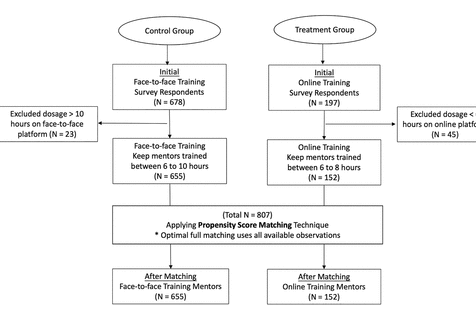
The relationship between a mentee and mentor in face-to-face mentoring allows them to have a personal touch and build powerful, authentic bonds. By attending face-to-face meetings, mentees can learn and receive immediate feedback, observation, and examples from the mentor (Rogers et al., 2022). This interplay offers the right atmosphere for open dialogue, trust-building, and rapport development. It leads to the creation of deep connections and understanding between the mentees and the mentors. Rogers et al. (2022) assert that the presence of face-to-face mentoring allows for the swap of verbal cues and body language, which, as a result, makes communication more effective and improves the quality of interpersonal relationships. Generally, face-to-face mentoring allows both mentees and mentors to interact and share ideas in a personal setting, and it helps them address complex issues efficiently and get individualized help and support according to their needs and situations.
E-Mentoring
E-mentoring employs digital media and technology as the tools that enable mentees and mentors to interact virtually. E-mentoring provides flexibility and convenience; hence, the mentees and mentors can link remotely if they are in different geographical places and different time zones (Jan and Mahboob, 2022). A mentee can interact regularly with a mentor through video conferencing, email, instant messaging, and online collaboration tools where the mentee seeks advice, clarification, or feedback on their achievements and progress. According to Jan and Mahboob (2022), e-mentoring bridges geographical distances; therefore, confining factors such as travel and scheduling conflicts no longer play a role. Consequently, mentorship becomes more open to employees across the corporate culture of GM. Furthermore, e-mentoring is a tool that provides mentors and mentees an opportunity to interact using multimedia sources, exchange documents, and work on projects together remotely, which boosts the efficiency and effectiveness of their relationships.
Mentoring Support
Ensuring the success and effectiveness of mentorship relationships, the Global Mentoring Program will offer substantial mentoring support to both mentees and mentors. Mentees will attain guidance and resources to enable them to set goals, develop action plans, and track their progress throughout the mentorship journey. Conversely, mentors will be equipped with training, tools, and ongoing support to enhance their mentoring skills, navigate challenges, and provide valuable insights and advice to mentees.
References
Aquino, J. F., Riss, R. R., Multerer, S. M., Mogilner, L. N., and Turner, T. L. (2022) ‘A step-by-step guide for mentors to facilitate team building and communication in virtual teams,’ Medical Education Online, 27(1).
Blake-Beard, S., Shapiro, M., and Ingols, C. (2021) ‘A Model for Strengthening Mentors: Frames and Practices’, International Journal of Environmental Research and Public Health, 18(12).
Jan, S., and Mahboob, U. (2022) ‘Online Mentoring: Challenges and Strategies’, Pakistan Journal of Medical Sciences, 38(8), 2272-2277. https://doi.org/10.12669/pjms.38.8.5804
Jangland, E., Gunningberg, L., and Nyholm, L. (2021) ‘A Mentoring Programme To Meet Newly Graduated Nurses Needs And Give Senior Nurses A New Career Opportunity: A Multiple-Case Study’, Nurse Education in Practice, 57, 103233.
- Hill, S. E., Ward, W. L., Seay, A., and Buzenski, J. (2022) ‘The Nature and Evolution of the Mentoring Relationship in Academic Health Centers’, Journal of Clinical Psychology in Medical Settings, 29(3), 557-569. https://doi.org/10.1007/s10880-022-09893-6
Risner, L. E., Morin, X. K., Erenrich, E. S., Clifford, P. S., Franke, J., Hurley, I., and Schwartz, N. B. (2020) ‘Leveraging a collaborative consortium model of mentee/mentor training to foster career progression of underrepresented postdoctoral researchers and promote institutional diversity and inclusion’, PLoS ONE, 15(9). https://doi.org/10.1371/journal.pone.0238518
Rogers, J., Gong, X., Byars-Winston, A. et al. (2022) ‘Comparing the Outcomes of Face-to-Face and Synchronous Online Research Mentor Training Using Propensity Score Matching’. https://doi.org/10.1187/cbe.21-12-0332
Schwartz, L. P., Liénard, J. F., and David, S. V. (2022) ‘Impact Of Gender On The Formation And Outcome Of Formal Mentoring Relationships In The Life Sciences’, PLoS Biology, 20(9).
Stead, V. (2005) ‘Mentoring for Leadership Development’, International Journal of Training and Development.
Treasure, A. M., Hall, S. M., Lesko, I., Moore, D., Sharan, M., and Yehudi, Y. (2022) ‘Ten Simple Rules for Establishing A Mentorship Programme’, PLoS Computational Biology, 18(5).
Appendix
 write
write