In the current business scene, a well-based knowledge of innovative technologies like Change Management, Enterprise Resource Planning (ERP), and Collaboration Systems is a must for the success of an organization. This article aims to unravel arms to unravel the intricate mechanisms of these tools while explaining their significance within the context of digital transformation to readers. The current research looks into the basic premises of the Change Management System, ERP, and Collaboration Systems, which will be a good start to explore further and discover their role in developing modern business practices and putting forward the core point that the fact that modern technological developments are imperative for everyone to accept leads to setting the context where a detailed contemplation of these inventive elements is done.
Technology Description
Change Management is the systemic approach to leading individuals, teams, and organizations from their existing state to the perception of the future state. It embodies several ‘A’ approaches, starting with the ‘ADKAR’ methodology of stimulating awareness, heightening desire, teaching knowledge, acquiring ability, and ending with embodiment. ERP denotes a collection of integrated software for streamlining activities and controlling many functions, such as human resources and supply chain management (Lal, 2020). The core ideas of ERP are, first, the existence of centralized data management; second, automation of processes; and third, real-time access to information. Collaboration systems enable communication and work togetherness, eventually generating new ideas and innovative features. These systems comprise tools like document sharing format, video conference, and panacea, such as project management software. This section details the concept, evidence, and real-life experience of Change Management, ERP, and Collaboration Systems. It touches upon their positive aspects, traps, and success elements to help organizations use them for productivity and improved performance.
Vendors
Concerning ERP and Collaboration Systems, few organizations reign in market dominance. For ERP solutions, in terms of the leading market players, we should mention SAP, Oracle, and MS Dynamics corporations, which offer a wide range of sophisticated software solutions adapted to different company needs. Their brands have built up a multi-market presence with feature-stacked functions that can suit companies of different sizes and industries. Microsoft’s products, such as Teams and SharePoint, plus Google’s tools, namely G Suite and Google Workspace, are well-known collaboration systems that provide a mixed package for user communication, project management, and collaboration. Similarly, Slack is great for this.
Market research shows great analytic results and the chances of domination and future growth for all those vendors. One of the most recent research studies on ERP software shows that SAP has a market share of over 25%, with Oracle and Microsoft Dynamics not far behind in second and third place, respectively. On top of this, the ERP software market is expected to grow at a CAGR rate of approximately 7% in the coming period. As usual, Colin wants Jeff and Mia to take their pictures of the city, but Jeff is reluctant, and Mia is nervous (Lal, 2020). These entities show a promising trend toward rapid expansion, brought about by the ever-growing hunger for teamwork tools in the digital era. Numerical data, which are displayed through tables and charts, are also supported. They contribute to enlightening people about these market dynamics. They are important for corporations seeking to implement ERP and Collaboration systems.
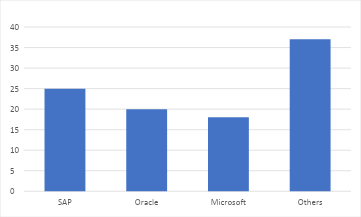
Market share information for ERP vendors:
| Vendor | Market Share (%) |
| SAP | 25 |
| Oracle | 20 |
| Microsoft | 18 |
| Others | 37 |
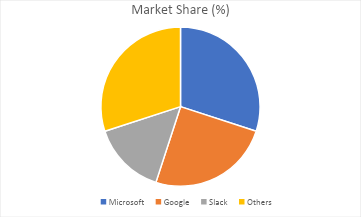
Market share information for Collaboration Systems vendors:
| Vendor | Market Share (%) |
| Microsoft | 30 |
| 25 | |
| Slack | 15 |
| Others | 30 |
Users
Some firms from different industries enjoy the advantages of incorporating Change Management, business process improvement, and collaboration tools in their operations. To illustrate, multinational companies such as Procter & Gamble, General Electric, and Walmart harness Change Management strategies that exude organic transformation and successful realization of strategic objectives. On the same token, organizations like Amazon, BMW, and Coca-Cola have used ERP implementations to make manufacturing operations and supply chains more effective and aid their organizations in success (Iszatt-White & Saunders, 2020). Also, companies like Microsoft, Google, and Facebook have invested hugely in collaboration systems that encourage innovation, allow remote working, and help in effective teamwork.
The success and profitability of the technologies for some companies are obvious in the fact that they achieve operational efficiency by introducing these technologies, saving costs, and making profits in the long run. Tangibly, firms that have been successful in effecting a Change Management program have seen a higher level of employee engagement, less resistance to change, and faster adoption of the processes that support the change. Additionally, the same trend has been noticed in the context of entities that decided to use ERP solutions. Enhanced data visibility, simplification of workflows, and better decision-making capabilities are among the benefits of this software. Also, those applying collaboration systems have evidenced the highest productivity, easy and smooth communication, and faster project delivery. Having synthesized findings, the next part discusses various gains of Change Management, ERP, and Collaboration Systems for different organizations from a specific sector (Lal, 2020).
Value Chain Analysis
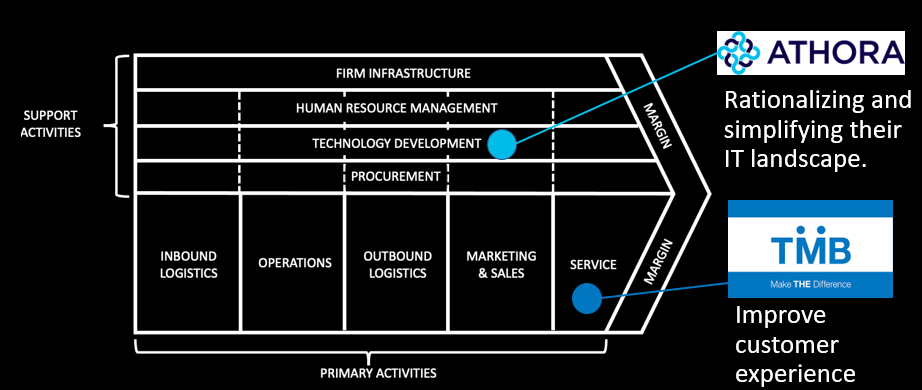
Changing Management, ERP, and Collaboration Systems are vital mechanisms most companies use to change their value chain. By Change Management, the organization may effectively orchestrate the transition by promoting alignment between core processes, organizational structure, and the culture with strategic goals, boosting value creation. ERP systems provide a tool for integrating value chain operations like procurement, distribution, or manufacturing (Iszatt-White & Saunders, 2020). As a result, efficiency in operating processes is enhanced, and related costs decreased. Real-time collaboration Systems set up communication and a collaborative platform for all the stakeholders that simplify cross-disciplinary cooperation and simultaneously improve the innovation levels along the value chain.
Porter’s value chain model becomes a point of reference for the evaluation of how these technologies work to achieve a superior position over competitors. Change Management stands for activating each process embedded in the Value Chain, reflecting organization goals resulting in end-to-end alignment and increasing overall efficiency and effectiveness. ERP systems speed up the internal organization by revealing the weaknesses and bottlenecks of processes, minimizing cycle times, and satisfying customers accordingly. Collaboration Systems integration allows for content exchange and better communication upstream and downstream of the value chain, leading to a faster response and improved services. Utilizing Porter’s Value Chain model enables businesses to locate value-driving areas and ensure that adequate Communications, ERP, and Collaboration Systems are employed to generate value creation and gain a secure competitive advantage.
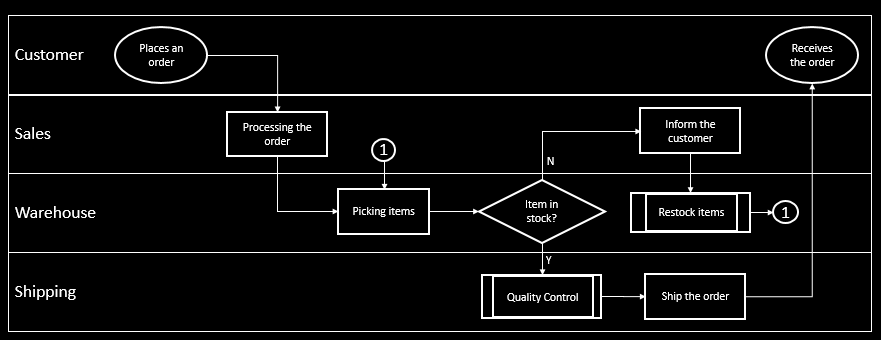
Business Process Diagram
The presentation of a basic business process layout that identifies the ERP implementation within the chosen enterprise is placed as an annex to the main text, which provides the visual image illustrating the structure of the organization and shows how different departments and functions are collaborating inside the organization (Iszatt-White & Saunders, 2020). This pipeline is designed to reveal the data processing, material movement, and activity interactions from the beginning of the business process cycle and up to the end stages, such as logistics and customer care. A thorough ERP implementation process model will provide a complete perspective, including how the system will fit into the product integration points, and data flows and change jobs’ workflows.
When implementing an ERP, the two main business functions that need to change differ by business requirements and the organization’s specific needs. For instance, Google no longer relies on the help of other search engines for its web crawling processes, which is a result of the integration of the ERP system, which required changes to processes such as collection, indexing, ranking, and retrieval. Secondly, implementing ERP would pull through the back office processes related to infrastructural maintenance, resource management, and performance monitoring; powered by robotics, ERP makes Google user-friendly by automating ordinary processes, and it provides instant information while scaling certain functions up or down and continues to improve search engine quality.
Conclusion
In conclusion, the jobs of Change Management, ERP, and Collaboration Systems play a pivotal role in the modern business environment, and their understanding is necessary to overcome the challenges of digital transformation. During this journey, it becomes obvious that these technologies do not just detail operational tasks but also provide innovation, bring together collaboration, and bolster competitive ability. By embracing such change-making instruments, firms can live with fast-changing market conditions, standardize operations, and have sustainable development in the digitalized world.
References
Chapter 4: Management Information Systems. (2020). Computer Concepts and Management Information Systems, 179–204. https://doi.org/10.1515/9781683925842-006
Iszatt-White, M., & Saunders, C. (2020). Leading teams and leading change. Leadership. https://doi.org/10.1093/hebz/9780198834298.003.0009
Lal, N. (2020). Change management in ERP implementation. SSRN Electronic Journal. https://doi.org/10.2139/ssrn.3672795
 write
write