Executive Summary
The focus of the analysis is on the automotive manufacturing industry. Based on the t, the topic analyzes the international competitiveness of the automotive industry in terms of factory conditions, demand conditions, supporting industries, firm strategy, and domestic rivalry. The analysis in the report will be informed by the diamond framework that was integrated by Michael Porter, which ensures A comprehensive analysis of the automotive manufacturing industry based on the internal competitive advantages and how the macro environment also influences competitive aspects in the production of hybrid vehicles in the automotive industry. Based on the analysis of the factor conditions, it can be determined that the industry’s overall competitive advantages and competitiveness depend on the organization’s strategy and add a macro environment dynamic such as consumer preferences and other government strategies, including regulation and incentives. Nevertheless, there is extensive growth in demand for hybrid and electric vehicles demand in the automotive industry, which explains extensive input in research and development to guarantee consistency in the supply of units globally and also provide differentiation that is vital in market entry dynamics. Although there are considerable differences in the organizational strategy of companies operating in the automotive industry, such as the Toyota Motor Corporation, BMW, and Volvo, all the organizations and companies must meet the demand conditions to ensure profitability and consistency in expanding the market share.
Introduction
The analysis of the international competitiveness of the automotive industry aids in understanding the factors affecting the industry, including macro environment elements. The report and subsequent research will thus be based on the competitive analysis focusing on the electric and hybrid vehicles that have gained prominence in the current consumer market. The report will analyze elements such as demand conditions, the supporting industries in the market, firm strategy, and the domestic rivalry in the automotive industry. The integration of the demand conditions will show aspects of the target consumers that will determine the customization, scalability, and growth of the hybrid automotive industry. Additionally, the firm strategy will integrate how contemporary companies such as BMW, VW Group, and Toyota Motor Corporation leverage technology, innovation, support industry capability, and mitigation of domestic rivalry to ensure market leadership and return on investment.
The hybrid electric vehicle embeds automotive technology in the automotive industry that augments different electronic propulsion system designs depending on the manufacturer and the internal combustion engines(Lukin et al., 2022). The features have increasingly been integrated into consumer preferences to enhance sustainable transportation. To this effect, the hybrid vehicles made in the automotive industry have fossil fuel and gasoline systems combined with electric motors. The intention is to ensure optimal efficiency levels by the manufacturer, value or cost efficiency, efficiency, and reliability for the target consumers. Additionally, the industry favours it based on the potential to reduce emissions. The electric motor is used during low-speed driving, while the gasoline engine is incorporated in highway driving. The constant growth in vehicle consumption has seen increased innovation and company production of units to meet global demands. The level of reliability and efficiency are thus the metrics used by the target consumers to determine the best brand and model of the vehicles(Alnoor et al., 2023). There is also the value proposition of regeneration in the braking system of hybrid vehicles. It thus creates harmony because conventional cars’ energy lost in braking is then stored in batteries for use, which points to the vehicles’ more eco-friendly options. The value proposition ensures that consumers have a balanced choice compared to the conventional vehicle. It is a choice that has thus ensured growth in the market.
Structural Analysis of the Automotive Industry
The industry structure analyzes the technical and economic aspects of the industry. The structure will also embed value proposition aspects that lead to competitive advantage. In the case of the automotive industry, it is the innovation of products through integrating new technology(Shrikant Pande, 2022). It is an essential aspect of the current global vehicle industry in the manufacturing of hybrid vehicles and electric vehicles. It trickles down to how the target consumers perceive the vehicle and impacts the pricing strategy, market entry, and competitive advantage in domestic rivalry.
Market Size and Projections
The need for competitive advantages can also be attributed to the rise in market size. Consumers are now seeking more fuel-efficient transportation, which has provided an extensive hybrid vehicle manufacturing market (Boudette, 2024). Additionally, consumers are more informed and educated on the efficiency of behaved vehicles; therefore, manufacturers must integrate different strategies to guarantee customer loyalty as they increase market share. The convenience of the vehicles, the efficiency, and the overall reliability are the main aspects to be considered in electric and hybrid vehicles. Nevertheless, extensive market share also depends on other infrastructural aspects, such as government government vehicles, including infrastructural support. On the other hand, market size growth has also been influenced by changes in organizational strategies to expand and differentiate technology. Consumer awareness of the reliance on efficiency and technology integrated into the vehicles informs the level of uptake in the different industries.
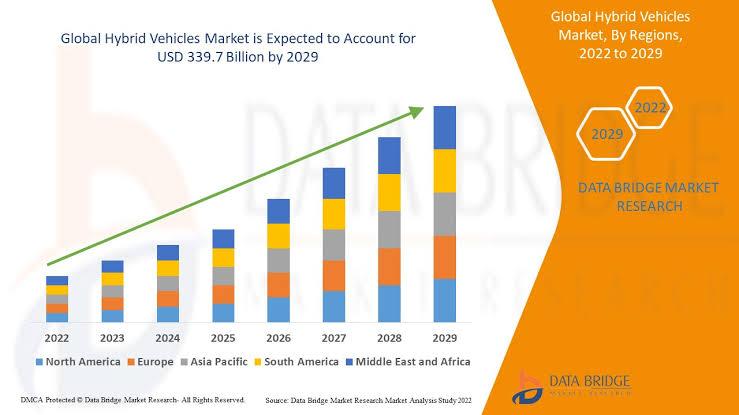
The hybrid vehicles market size and the protected industry growth in different global markets (Data Bridge, 2024).
The figure shows the current projections of the industry growth. Based on the analysis and figures, there was projected to be intense growth in the global market valuation because of the increased consumption of hybrid vehicles in Asian Markets, the USA, and Canada (Boudette, 2024). It thus points to the lucrative nature of the industry and the need for consistent investments in internal competitive advantages.
Factor Conditions
Technology and Innovation For Hybrid Vehicles
The first factor in hybrid motor vehicles is incorporating technology and innovation. Hybrid electric vehicles are a game changer in integrating customized clarity to increase efficiency and produce eco-friendly alternatives(Ma et al., 2021). Some aspects affected by the technology integration include energy management systems within the vehicle’s electric drivetrains under the enhancement of battery technology to guarantee efficiency. Efficiency is one of the significant value propositions for the target consumers and is integral in expanding their market share. The embedded technology also integrates software systems in the hybrid vehicles and battery technology that collaborates with gasoline engine compassion and electric propulsion capabilities. In this context, companies such as the Toyota Motor Corporation have consistently integrated resources towards research and development to enhance technology. Technological innovation guarantees market leadership and product differentiation, enhancing seamless market entry and a consistent return on investment.
Skilled Workforce
The next factor condition is the scale of human capital required to produce hybrid motor vehicles. Companies in the industry should ensure the recruitment of the best engineers, designers, and other software developers (Ma et al., 2021). Retention is integral to consistency in the value proposition and ensures consistent differentiation. Collaboration with research institutions has also enhanced the capacity to innovate in new hybrid models and provide futuristic technology to guarantee market leadership capabilities. Nevertheless, companies must be aware of the challenges of retaining skilled human capital and how aspects such as increasing remuneration and wages will also impact operational costs and subsequent pricing of the units.
The capacity of the firms is a significant determinant in commanding a large market share in the contemporary automotive industry. To this effect, the first aspect of the analysis is the firm infrastructure (Crouch, 2023). A country like Japan, which hosts the largest Toyota manufacturing plant, has more capacity to deliver globally and build capacity to cater to the changing consumer preferences. Integrating energy, technology, and human capital are competitive advantages that ensure leverage in the current global market and mitigate domestic rivalry. Infrastructure conditions are also essential in ensuring agility and incorporation of more suppliers to guarantee consistency in production. Toyota Motor Corporation has to compete with other established companies such as Honda and BMW for market share for hybrid vehicles, which points to the need for optimized capacity and factory conditions as one of the significant competitive capabilities to enhance market entry.
In manufacturing hybrid models globally, the automotive industry relies extensively on cutting-edge technology(Crouch, 2023). Companies are constantly competing with conventional gasoline-powered engines. Technology, therefore, enhances productivity and quality in motor vehicles for the average target consumer. At the same time, the production automation in the supply chain will have a ripple effect on the pricing strategies. To this effect, extensive research and development are embedded in ensuring consistency in cutting-edge technology in the production and maintenance of the vehicles. Companies such as Toyota Motor Corporation have ensured that their enhancement is based on skill. The ability of skilled labour is one of the significant competitive advantages in the automotive industry, and it also determines the level of engineering and efficiency of hybrid models. Nevertheless, it is vital to note that enhancing competitiveness in labour dynamics depends on offering competitive remuneration and wages, which may also impact the end products’ subsequent operational costs and potential pricing to the target consumers.
Firm Strategy, Structure
Companies dealing with hybrid models in the automotive industry incorporate strategic partnerships in a collaborative move to enhance technology and meet consumer preferences. The collaboration also encourages the integration of government entities and other technology suppliers who are the major industry players and determinants of expertise and resources invested in research and development. It is a strategy that also impacts the overall prices given to the target consumers and ensures A collaborative process to enhance product differentiation and efficient running of the supply chain in the delivery of products in spare parts to the designated markets.
Product Differentiation
Conversely, companies dealing with hybrid models in the automotive industries focus on product differentiation. The differentiation embeds aesthetic pictures such as unique designs and enhances services that improve efficiency(Wayland, 2023). The differentiation also integrates a balanced approach to using gasoline vehicles, energy saving, efficiency, and cost savings. The approaches are organizational strategies to enhance brand attractiveness and increase competitive advantages of product differentiation. It is a critical strategy because it enhances the possibilities of economies of scale and creates a differentiated brand identity based on technology, competitive pricing strategies, resilience, and efficiency.
The implementation of cost-efficiency models augments it. Companies such as Toyota Motor Corporation focus on economies of scale to contribute to competitiveness. Efficient production processes and implementing cost management strategies in producing the hybrid models have been integral in ensuring optimal brand visibility in the current automotive industry. These bridges mitigate competition and align with fair domestic rivalry expectations. Improvement of product offerings remains essential for companies such as the Toyota Motor Corporation to penetrate global markets, increase economies of scale, and maintain return on investment.
Domestic Rivalry
The companies dealing in the automotive industry extensively incorporate strategies that will mitigate domestic rivalry. To this effect, the value proposition is based on the differentiation of products and the hybrid model, as well as the cooperation of external macro environment aspects such as government incentives and alignment with consumer preferences regarding efficiency and eco-friendly options.
General Motors: General Motors has maintained competitive advantages in the current hybrid automotive industry by constant innovation. Companies like Toyota Motor Corporation must mitigate the extensive domestic rivalry from established brands (Wayland, 2023). A case in point is that GM Targa targets 30 new electric and hybrid vehicles in the global market. It is a target that is capped to be achieved by 2025. It aligns with the potential achievement of a carbon-neutral business in the next two decades. The prospects and growth of the industry are also pegged to domestic rivalry and global scalability plans by the companies.
BMW Group: BMW has had challenges achieving economies of scale in the hybrid market. Therefore, This can be attributed to the wide range of hybrid and electric vehicles set at premium pricing. The company is also responsible for the wise product portfolio of vehicles such as the Mini, Rolls Royce, and other models with hybrid options (Wayland, 2023). They have niche market capabilities, which also impact domestic competition and rivalry. Companies such as the Toyota Motor Corporation, which focus on quality and still integrate market leadership based on prices, have extensive leverage in the industry to gain economies of scale.
VW Group: The company has several recognized brands in the current market, including Audi and VW. Although it has high-end premium cars like Porsche and Bugatti, the company has focused on the enhanced affordable automotive market, seeking to make a difference in the hybrid market. Although the company has plans to attain carbon neutrality by 2050, there is an extensive market to be covered and hybrid models to be integrated to mitigate challenges from economies of scale companies such as the Toyota Motor Corporation.
Honda: In producing hybrid models, the Honda company has also predicted a significant reduction in the emission period for vehicles producing emissions. To this effect, there is a substantial investment in research and development to target carbon neutrality and ensure enhanced customer loyalty. It is a major incentive for target consumers in different market entries globally. Also, it impacts the overall car sales in the Asian markets, The United States market, and other countries such as Canada. Nevertheless, there should be consistency in innovation to guarantee optimal customer loyalty and expand the market share based on organizational strategies.
Volvo: Volvo plans to enhance its sales volume of hybrid vehicles by 50%, which is projected to reach by 2050. Although the focus is on reducing carbon footprint as the main value proposition, there is recognition that affordability should be focused on increasing market share (Wayland, 2023). The incentive of reducing emissions should also be backed up by reliability in the current market. Maintaining competitive advantages in the domestic market should thus be backed up by a balance between reliability, efficiency, and affordability to maintain high market entry capabilities.
Toyota: Toyota Motor Corporation has integrated a unique approach to expanding hybrid vehicles globally across different markets. One point has been the integration of the Toyota Environmental Challenge, which is projected to be achieved in 2050. It is intended to transform the automotive industry’s preference by significantly reducing its carbon footprint by the milestone year. Besides the lux of hybrid and electric motor vehicle production, the company seeks to transform its brand image by reducing plan and manufacturing emissions. It thus intends to transform the perceptions of the products, which are the types of vehicles, but also integrate the internal competitive advantages.
Increasing Environmental Concerns
Ultimately, one of the major market drivers of integrating hybrid electric vehicles is the transformation of consumer preferences toward climate and Environmental Conservation. It, therefore, requires manufacturers of vehicles to provide eco-friendly options In terms of vehicle production(Valladares et al., 2023). It has necessitated the shift of manufacturers to integrate hybrid vehicles in their manufacturing while also integrating government incentives to ensure fuel efficiency and fewer emissions often indicative of conventional Gasoline-powered vehicles. The variety of e-friendly options affects market trends, is part of the demand conditions of different markets, and informs the type of technology innovation in the industry. US automotive companies must meet consumer preferences and demand to ensure consistent return on investment.
Demand Conditions
On the other hand, depending on the countries, the market size for hybrid and electric vehicles provides potential for economies of scale. Companies such as Toyota Motor Vehicles have a large export market, which adds to the competitive edge of the company’s inconsistency in potential resources to encourage product and service differentiation (Valladares et al., 2023). Nevertheless, it is vital to note that in the production of hybrid models, consumer preferences are also impacted by government incentives supported by regulatory bodies, which may impact perceptions of different vehicle models—the demand for the condition should, therefore, be aligned with the macro environment expectations that also influence consumer preferences. There should also be a collaboration with supporting industries, such as the suppliers, that inform the organizational strategy and create consistency in the quality of products and efficiency in other aspects, such as the supply chain that impacts final prices on the products given to consumers.
Growing Environmental Awareness
The significant growth in environmental awareness among target consumers indicates the need to integrate eco-friendly vehicles. It has also created an influx of demand for hybrid vehicles from major manufacturers such as Toyota Motor Corporation, BMW, Honda, and Volvo (Wellbrock et al., 2020). The regulations promoting clean energy transportation and government incentives for eco-friendly manufacturing and transportation options have significantly enhanced market conditions.
Fuel Efficiency and Cost Savings
Cost savings also influence contemporary markets through the integration of fuel efficiency. Combining electric propulsion and gasoline combustion engines leads to excellence in fuel efficiency and contributes to cost savings in the long term (Wellbrock et al., 2020). It is, therefore, one of the major incentives and determinants of the choice of hybrid or electric vehicle from the different available manufacturers. The demand conditions have also enabled a shift in research and development towards technology that meets consumer preferences. The impact of the demand conditions affected the models of the hybrid under the value proposition embedded within companies to guarantee consistency in production and meet the demands of the consumers. It is critical to ensure that the units sold in different countries compete with rivals based on product differentiation and consumer needs. On the other hand, with the reduction of consumer purchasing power packages, consumers in countries such as Canada, the United States, and Asian markets are seeking hybrid models that are effective and cost-efficient in both buying and maintaining.
Technological Advancement
Technological advancements are a major value proposition that determines demand in the automotive industry. Hybrids have ensured they maintain their value and guarantee customer loyalty through constant innovation and technological advancements through research and development. One of the aspects that helps attract customer attention through technology is enhancing battery life in hybrid models to improve performance. Advanced education from the target consumers is also a significant determinant of how Technology-savvy consumers influence demand conditions. Therefore, the vehicles’ features should be c, consumer expectations, which determine the potential return on investment and expansion of the market share.
Changing Demographics
Conversely, the organization’s strategy and technology development have had to be customized to the demographic shifts. In urban areas, there have been changes in lifestyles, which have also impacted the patches of vehicles. It focuses on efficiency and environmentally friendly vehicles, which have divided the hybrid and electric production models (Wellbrock et al., 2020). It has been manifested in the eco-friendly and transformation of carbon-neutral production of vehicles for the different major manufacturers in the automotive industry. Toilet hybrid models such as the Camry Hybrid, the previous model, and other hybrid options have shown the shift in demand for companies such as Toyota to customize preferences and production technology depending on global demand and international competitiveness. On the other hand, companies must be aware of the changes in the demographics of different regions, such as the Asian market’s differences in perception of people-friendly hybrid vehicles compared to those of Canada and the United States. It helps customize strategies and models based on target market preferences.
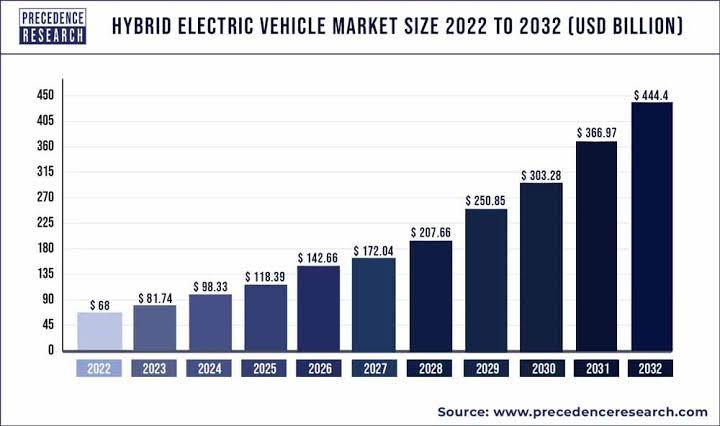
Figure showing consistent growth of the hybrid vehicles market that can be aligned to the demand conditions in the industry (Precedence, 2022).
Supporting Industries In the Automotive Industry
Battery Technology And Suppliers
Companies such as BMW and the Toyota Motor Corporation are heavily reliant on the current advancements in battery technology for motor vehicles. It is a major factor in the success of hybrid vehicles in the global markets. It plays a role in the value proposition aspects, Such as market entry and customer retention capabilities. Toyota Motor Company has an inclusive and collaborative strategy with its battery suppliers to ensure that they meet the standards and thresholds required by the company. The company thus invests in research and development to guarantee high-performance batteries and other related technology and focus on reliability levels. To this effect, battery and technology suppliers and companies like Toyota are vital to the industry’s international competitiveness.
Supply Chain Efficiency
The global supply chain in the automotive industry is essential for the timely delivery of products in the assembly plants and the subsequent disbursement of the end products to the different target markets. The efficiency of the supply chain ensures customer satisfaction. It is also a major value proposition in the overall competitive advantage reduction of production costs, hence playing a role in the end products (Thomas & Maine, 2019). A company like To ota Motor Corporation ensures the use of competitive pricing strategies to gain market entry in different markets; hence, an efficient supply chain of both goods for the assembly and delivery of vehicles and spare parts for the service of the vehicles is a major aspect in the gaining of competitive advantage. It also ensures that the company can maintain optimal return on investment. It is essential to note that the developments in the current hybrid electric vehicle supply chain and the subsequent efficiency require a collaborative effort to ensure innovation maintenance and consistent efficiency levels.
Government Support
Despite the autonomy of the different industries, such as the Toyota Motor Corporation, government support is essential for the enhanced competition in hybrid vehicle manufacturing. They are manifested through tax breaks, policy incentives, and subsidies. Government initiatives differ from market to market, thus also influencing buyers’ pricing (Singh et al., 2019). A case in point is the government’s support for hybrid vehicles for their efficiency and eco-friendliness. It has seen a spike in the units sold by Toyota Motor Corporation, Volkswagen, and Volvo in Canada and the United States market. Government support and incentives also impact the firm strategy by the different organizations in the move to ensure enhanced market dominance. In the case of hybrid vehicles, the government’s support also ensures the seamless functioning of the global supply chain to enhance the optimal delivery of hybrid vehicles and spares to the target market. The augmentation of supplier support, government incentives, and tax breaks has a ripple effect on competitive pricing.
Research and Development
The technology suppliers in manufacturing hybrid vehicles are central to the continued usage and uptake in different global markets such as Asia, Canada, and the USA. Toyota Motor Corp ration has thus significantly invested in research and development capabilities(Shrikant Pande, 2022). It has been essential for enhancing competitive advantage and overall industry growth. The research and development have been vast in the industry to equip the hybrid models with sustainable materials in the manufacturing process, autonomous driving systems capabilities, and better reliable and efficient battery systems in the hybrid models. Research and development thus aid companies like Toyota and BMW in maintaining their overall market leadership capabilities and potential return on investment as the global industry demands increase. The competitiveness in the automotive industry is thus dependent on the industry’s supply. Additionally, the competitive nature of the automotive industry means there should be collaborative efforts between the suppliers to ensure cost-effective manufacturing and overall customer satisfaction.
Recent Developments Impacting Firm Strategy
Apart from integrating technology in the current manufacturing of hybrid vehicles, there has been a need to integrate other eco-friendly fuels, such as hydrogen-based fuels. The hydrogen fuel cell application was intended to ensure powertrain solutions for hybrid models (Shrikant Pande, 2022). A case in point is that in 2023, Toyota Motor Corporation integrated the electric highlights prototype with hydrogen-powered cells. It included a plug-in hydric electric option, the integration of a fuel cell electric option, and battery-charged options. The current developments in innovation and differentiation mean that companies focus on niche market preferences and the production of vehicles that will feed different terrains and operate in different environments globally. Therefore, the research and development is intended to enhance leverage in market penetration and ensure efficiency in the units supplied by the different target markets.
On the other hand, Honda Motor Corporation Limited has also made extensive transformations in its current strategy to ensure market differentiation and customization of strategies to meet consumer preferences. Through its significant investments in its production in the Ohio-based plant, powertrain factories have been integrated to increase capacity for electric vehicles and strategic partnerships to guarantee differentiation as part of this strategy. The construction of the battery factory to the tune of $700 million is therefore intended to be a game changer in the industry, supporting the company’s growth and meeting the production capacity of other global manufacturers, such as China, in the hybrid vehicle industry. The trains have been matched by other already established organizations such as the Volkswagen Group and customization or hybrid models to have futuristic technology in the current market. The extensive opportunities for market growth in the hybrid motor vehicle industry validate the industry’s extensive growth and ensure consistent integration of potential return on investment.
Toyota Hybrid First Strategy
The Toyota Motor Corporation is one of the largest automakers globally. Despite its capacity, the company had previously been criticized for not extensively incorporating electric vehicles into its manufacturing. Nevertheless, the company has embraced implementing the first hybrid technology, infusing electric propulsion and gasoline engine combustion (Boudette, 2024). The intention is to integrate eco-friendly aspects seamlessly based on the available infrastructure and consumer preferences. The hybrid model guarantees efficiency for Toyota vehicles to guarantee competition mitigation and ensures the implementation of eco-friendly aspects that will enhance the overall brand reputation. The company has consistently implemented plug-in hydric vehicles into gas hybrid electric vehicles. According to Boudtte, although there have been successes in market entry in the United States, the company has yet to successfully launch the same products in other vast global markets, including developing countries (Boudette, 2024). Toyota can, therefore, integrate its overall organizational strategy to integrate a holistic view and customization of the hybrid models to the Asian markets, the Canadian markets, and the African markets to guarantee market dominance and leadership in hybrid motor vehicle manufacturing and distribution.
Regulatory Compliance
On the other hand, regulatory compliance levels are essential in mitigating domestic rivalry and ensuring differentiation in the contemporary market. Hybrid electric vehicle manufacturers closely monitor government regulations(Valladares et al., 2023). There are constant changes and amendments in the emission standards and efficiency targets of different domestic markets. Understanding the changes will be essential in providing customization capabilities based on the available regulative incentives for manufacturing hybrid electric vehicles. On the other hand, taking advantage of the regulatory incentives by the government will also ensure the maintenance of farm competitive advantages, which will also have a ripple effect on the pricing of the units that can be integral in maintaining economies of scale and consistent return on investment.
Conclusion
In conclusion, the report focuses on the automotive industry and the production of hybrid and electric vehicles. Major automotive industry players include the Toyota Motor Corporation, Volvo BM W, and Honda. The report focuses on identifying the factors that influence the firm’s strategy demand conditions in the industry’s competitiveness and how different organizations mitigate domestic rivalry and international competition to maintain return on investment. The report identified the implementation of differentiation strategies and competitive pricing as some of the strategies implemented by organizations to ensure profitability and expansion of the market share. Nevertheless, collaboration with different suppliers also impacts supply chain efficiency and procurement of effective technology. Subsequently, organizations have incorporated extensive research and development into their competitive strategies to enhance internal value propositions and meet consumer preferences for hybrid and electric vehicles. Penetration in markets such as the Asian markets, the United States, and the Canadian markets is dependent on the efficiency and eco-friendly nature of the hybrid models, which has been vital in the customization by major industry suppliers such as Toyota Motor Corporation, Honda, and Volvo. Therefore, analyzing the automotive industry’s comp and emotiveness relies on shifting demographics and consumer preferences and building internal competitive advantages to guarantee market leadership and production service differentiation.
References
Alnoor, A., Khaw, K. W., Chew, X., Abbas, S., & Khattak, Z. Z. (2023). The influence of the barriers of hybrid strategy on strategic competitive priorities: Evidence from oil companies. Global Journal of Flexible Systems Management, 24(2), 179–198. https://doi.org/10.1007/s 0171-022-00335-8
Boudette, N. E. (2024, March 9). Toyota’s hybrid-first strategy is delivering big profits. The New York Times. https //www.nytimes.com/2 24/03/09/business/toyotas-hybrid-electric-vehicles.html
Crouch, D. (2023, June 13). Toyota unveils new technology that will change the future of Cars. Toyota Media Site. https: /media. Toyota. Co. u /Toyota-unveils-new-technology-that-will-change-the-future-of-cars/
Data Bridge. (2024). Global Hybrid Veh cles Ma ket – industry trends and forecast to 2029. Data Bridge Market Research h. https://www.databridgemar etresearch.com/reports/global-hybrid-vehicles-market
Lukin, E., Krajnović, A., & Bosna, J. (2022). Sustainability Strategies and achieving SDGs: A comparative analysis of leading companies in the automotive industry. Sustainability, 14(7), 40 0. https://doi.org/10.3390/s 14074000
Ma, J., Hou, Y., Wang, Z., & Yang, W. (2021). Pricing strategy and coordination of automobile manufacturers based on government intervention and carbon emission reduction. Energy Policy, 148, 11191. https://doi.org/10.1016/j enpol.2020.111919
Precedence. (2022). Hybrid Electric V vehicle M rket (by type: Full hybrids, mild hybrids, plug-in hybrids, others; by application: Battery, electric motor, transmission; by power source: Stored electricity hevs, on-board electric generator hevs; by powertrain: Series hybrid electric vehicles, parallel hybrid electric vehicles, combined hybrid electric vehicles; by vehicle) – global industry analysis, size, share, Precedence Research. https://www.precedenceres arch.com/hybrid-electric-vehicle-market
Shrikant Pande, M. (2022). Global Electric Vehicle Market Share, Growth, EV Industry Analysis, Sales Statistics, and Trends. Intelligence Market.
Sin h, K. V., Bansal, H. O., & Singh, D. (2019). A comprehensive review on Hybrid Electric Vehicles: Architectures and components. Journal of Modern Transportation, 27(2), 77–107. https://doi.org/10.1007/s 0534-019-0184-3
Thomas, V. J., & Maine, E. (2019). Market entry strategies for electric vehicle start-ups in the automotive industry – lessons from Tesla Motors. Journal of Cleaner Production, 235, 653–663. https://doi.org/10.1016/j jclepro.2019.06.284
Valladares Montemayor, H. M., & Chanda, R. H. (2023). Automotive industry’s circularity applications and industry 4.0. Environmental Challenges, 12, 100725. https://doi.org/10.1016/j envc.2023.100725
Wayland, M. (2023, December 8). Why are automakers turning to hybrids during the industry’s EV transition? CNBC. https://www.cnbc.co /2023 12/08/automakers-turn-to-hybrids-ev-transition.html
Wellbrock, W., Ludin, D., Röhrle, L., & Gerstlberger, W. (2020). Sustainability in the automotive industry, the importance of and impact on automobile interior – insights from an empirical survey. International Journal of Corporate Social Responsibility, 5(1). https://doi.org/10.1186/s40991-020-00057-z
 write
write