This essay investigates two up-to-date print advertisements from a year ago. It examines whether the thoughts Jean Kilbourne and Jackson Katz pointed out about gender representation and violence will speak to the current situation. Examining the implicit and explicit claims and possible logical fallacy within the advertisements, a critical thought besides Kilbourne, Katz, and the course reading can expose one to their thoughts.
Advertisement 1: Gillette- “the best a man can be” (2019) by Gillette
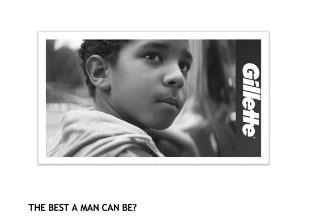
Figure 1; https://images.app.goo.gl/WEKqajvuhrAhGCXM7
In January 2019, Gillette released a short film titled “We Believe: In the recent examples of this ad as part of my ongoing marketing campaign. The advertisement exhibits imagery of aggression and sexual harassment while counterbalancing with scenes of men standing up to prevent encounters like this and the action to promote positive masculinity.
Explicit Claims
The ad flags out and dismantles the existing stereotypical representations of masculinity, which are characterized by brutality, bigotry, and damaging conduct.
It leads both men to define the responsible role and that, in turn, this role is to be the role model for the younger generation.
Implicit Claims
Gillette is a brand that has been around for decades, defining manliness traditionally. In its PR campaign, it has now become the champion of a more progressive and inclusive masculinity.
The advertisement communicates that such an attitude is not ok. It should be emphasized societally, and the corporation, including Gillette, can be the platform to influence positive change.
Relevance to Kilbourne and Katz
Through the shade of direct criticism, the ad Kilbourne spotlights the lens of advertising in fabricating problematic stereotypes and objectification. Through pointing out and addressing the existing image of traditional masculinity, Gillette takes account of and deals with the matters Kilbourne and other critics have raised concerning the influence of such portrayals on the overall attitudes and behaviours of the public. Unlike the logical fallacy of an exact representation of reality, the ad bit provides diverse illustrations of healthy and non-healthy behaviours, both male-oriented types. The work performed by Katz on the manufacturing of patriarchal masculinity in media is also believed to be relatable. The commercial roughly aims to portray acts of bullying, harassment, and aggression. According to Katz, these behaviours then get endorsed and become prominent because of how the media portrays masculinity. The advertisement proof of Katz, who demanded that the media take responsibility, is shown by denouncing such behaviours and encouraging a healthy conception of manhood. On the other hand, the ad might be accused of a common mistake of using an appeal to the authority in that it touches its argument claim to the fame of the brand and the cultural appeal of the brand to make it believable, instead of using the data or the concrete evidence to back up this claim.
Even though the ‘Gillette’ ad is a significant progress in implementing Kilbourne and Katz’s arguments, it may have flaws and may have been criticized. The addition had become a tool to easily frame out negative aspects and alterations, but no doubt it was committed the fallacy of virtue signalling, where a company wants to demonstrate social responsibility or progress without having any intention to bring concrete actions or steps to do that. Moreover, the TV advert could be criticized for its inability to get to the roots of the twisted idea of masculinity by portraying it as a black-and-white issue of good vs. wrong, hence omitting the cause-and-effect factors that lead to social masculinity.
Advertisement 2: ‘Essence of Calvin Klein Underwear Campaign’ (2022)
August 2022 was a low point for Calvin Klein as their “Underwear” ad campaign, which featured sexually provocative images of a semi-nude woman suggestively riding on a semi-nude man in a highly sensual manner, was heavily attacked.
Explicit Claims:
The advertisement is done straight-up with the product, in this case, the underwear line, in a very sexual and provocative way.
Implicit Claims:
The advertising carries unconsciously the backup of traditional gender relations and a power hierarchy, where the male figure is at the service of the female figure.
It thus stresses the relationship between being sexy, using, and controlling. This is mainly true in the oh-so-important fashion industry.
Relevance to Kilbourne and Katz: Relevance to Kilbourne and Katz:
Kilbourne’s arguments about the objectification and sexualization of women displayed in advertising still show many parallels with this specific case. To sum up, it is evident that the anatomical pose and sexually provocative image sustain the idea of harmful stereotypes and representations, which have been constantly criticized as the reason for gender inequality. The commercial could be considered as committing the fallacy of argumentum and passions by concentrating on provocative and sexualized imagery to get bulging interest and sell products, founding logical or fact-based arguments. Additionally, Katz’s work on the creation of aggressive masculinity is valid as the ad is meant to build warrior-like men who follow militarized roles and destroy the peace things and even the women. The male character may be viewed as a subject of passive and objective representation, which is closely related to the narrator in the “great male war novel” by Katz.
While the ad may be accused of making a compositional error by inferring that the sexually oriented portrayal of people depicted in the advert is the societal attitude toward gender and sex as a whole, the ad could be commended for subverting stereotypes about gender and sexuality. Moreover, unlike the Calvin Klein advertisement, the Gucci commercial follows the traditional gender role by portraying the female body as more fragile, weaker, and in need of being dominated by a man. Nevertheless, this aspiration for subversion is undermined by the blatantly sexually explicit and objectifying attributes of the advertisement. Initially, the marketing of products ended up being the priority rather than the aim of promoting the constructive use of one’s body and positive signs in the representation of the sexes,
In conclusion, where this brings us, it suggests that that can be seen in media communications and advertising today. Nevertheless, some commercials, such as the Gillette commercial, have tried to depict and reconstruct traditional gender portrayals. Although, for instance, the embankment of the Calvin Klein campaign has shown that the harmful distorted sexual and gender imageries in the field of advertising are still prominent and a lot more than the selling of products is expected. As a consumer and a wise consumer, it is essential to view such promotions as a doubter who can comprehend both the explicit and implicit claims and figure out the soundness of the premises used to arrive at that conclusion. Additionally, it is significant to hold corporations responsible for their representations, and we must also look for more responsible and ethical signs that corrode rather than reinforce the organic gender norms and culture.
(Katz)
Works Cited
Katz, Jackson. Advertising and Construction of Violent White Masculinity. 2011.
 write
write