The upper Paleolithic period is indubitably the most vivid phase, corresponding to the exceptional developments by early human societies. From 50 millennia to 10 millennia ago, human civilization progressed very fast during this era. Symbolism, social complexity, and artistic techniques emerged. The most compelling and persistent legacy of this period is the artifacts and historical buildings that stand as our ancient ancestors’ remains. By studying these cultural remains – from intimate cave paintings to impressive megaliths – we can unravel all mysteries of the Upper Paleolithic culture and gather lots of important information about the prehistoric people’s ideology, beliefs, and social norms. This paper aims to investigate in detail the rich history of the Upper Paleolithic art and architecture, exploring the meaning of the selected artifacts in reconstructing the cultural, spiritual, and social conditions of this intriguing period.
Culture Description
The Upper Paleolithic is an epoch in human history that marked a transition from simple to technologically complex ways of life as societies shifted from subsistence orientation to culture. The Neolithic period spans as early as 50,000 to 10,000 years ago, during which various communities in Europe, Asia, and Africa developed the culture (Nishiaki & Akazawa, 2018). The lifestyle of the Upper Paleolithic people had general features of hunting and gathering, and the tool-making included stone, bone, and antler. This religion was developed and systemized via the ritual of burying its members and the painting of caves (Nishiaki & Akazawa, 2018). Architectural innovations during that period included shelters made from mammoth bones, animal hides, and natural materials. This mode of living held and reflected not only practical purposes but also symbolic ones of cultural self-expression and social unity. The study of archaeological remains like settlements, tools, and paintings helps researchers put together the social structure and the cultural achievements of the Upper Paleolithic people.
Art/Architecture Selection
The Upper Paleolithic period was a period of artistic and architectural expressions that were meaningful and suggestive of social relations and the inner world of the ancient people. Focusing on four different artifacts/buildings can help us understand the complexity of life in the Upper Paleolithic and their artistic pursuits.
Piece 1: Chauvet Cave Paintings
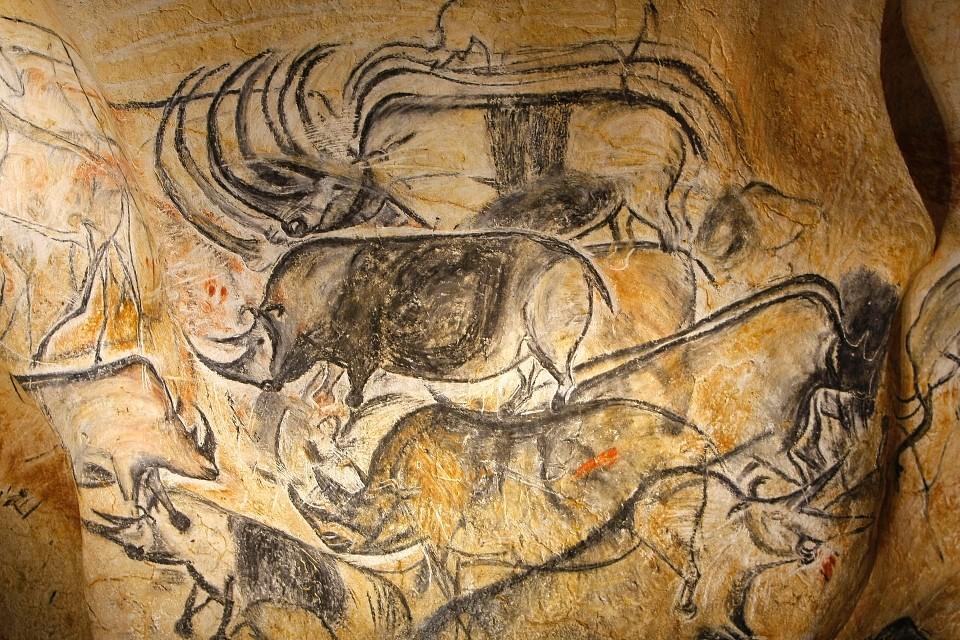
Cave Chauvet in southern France houses some of the oldest and most outstanding pieces of Upper Paleolithic cave art. This painting is approximately 30,000 to 32,000 years old, and it depicts various animals, including horses, mammoths, lions, and rhinos, which are highly realistic and fluid in how they are drawn (Bradshaw Foundation, 2019). The importance of the Chauvet Cave paintings is manifested in their depiction of the natural world and the animals, which were vital for the people living during the Upper Paleolithic era for their survival and cultural identity. The careful implementation of the detailed figures and the artful use of the shade and prospectus reveal the deep reverence for these creatures and perhaps the belief in their spiritual or symbolic meanings. (Bradshaw Foundation, 2019) The published Chauvet Cave paintings’ interpretations tell us that they might have had several uses, such as hunting magic or storytelling, or they might have been used to conduct ceremonies. Some researchers suggest that the caves were meaningful areas where ceremonies were held to ensure hunting success or to communicate with spirits.
Piece 2: Dolní Věstonice Venus
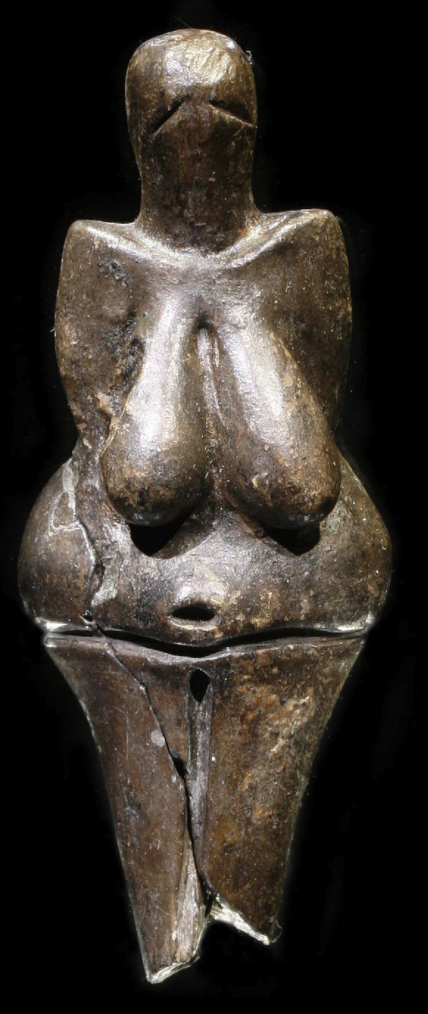
The Dolní Věstonice Venus is a small ceramic figurine found in the Czech Republic and whose age is estimated at 29,000 to 25,000 years (Norman, 2017). As if from clay and fired in the kiln, this artifact illustrates a female figure characterized by exaggerated parts, e.g., large breasts, buttocks, and pronounced belly. The artifact has value since it shows us the artistic forms of the human body and the cultural values and beliefs of the Upper Paleolithic cultures. The Dolní Věstonice Venus features humanized and exaggerated features, signaling a possible emphasis on fertility, womanhood, and motherhood (Norman, 2017). Researchers think that the Venus figurine from Dolní Věstonice could have been an object of fertility rituals and talismans as well, which was supposed to result in success in reproduction or the adaptation of natural resources. It is small in size and, therefore, easy to carry. It can be presumed to be associated with personal or ritualistic significance for community members.
Piece 3: Lascaux Cave Paintings
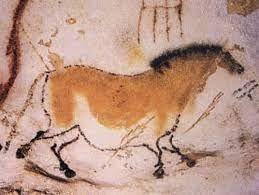
In southwestern France, there is the famous Lascaux Cave, created by hundreds of paintings dating back to about 17,000 years ago (Groeneveld, 2016). The paintings are in excellent condition. In the paintings are various animals, human figures, and abstract symbols, all done with fantastic accuracy and delicacy. The Lascaux Cave paintings are a rich source of information on Upper Paleolithic peoples’ cultural, spiritual, and artistic aspects, as well as their aesthetic taste and refinement in art (Groeneveld, 2016). Animal figures depicted in action and life demonstrate their role in the natural world, and even animal gods and spirits worship. The Lascaux Cave paintings have since been the subject of controversial interpretations among scholars. Some believe these paintings served as hunting rituals, storytelling, or shamanic practices. The combination of abstract symbols and images of animals and humans indicates an elaborate symbolism or system of communication.
Piece 4: Göbekli Tepe
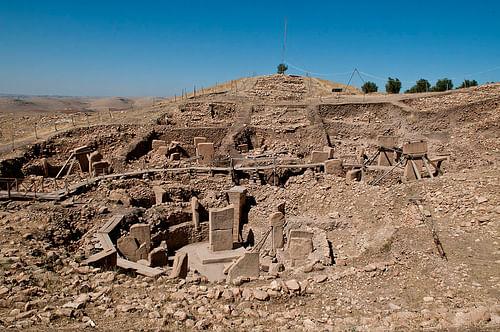
Göbekli Tepe, which is located in present-day Turkey, is a prehistoric archaeological site dating back to the Pre-Pottery Neolithic period, that is to say, about 11,000 to 10,000 years ago (Jones III, 2015). It features gigantic stone pillars arranged in circular courtyards, some decorated with complexly carved creatures, images, and human figures. Göbekli Tepe is notable in that it contradicts the traditional understanding of the emergence of complex societies and symbolic architecture (Jones III, 2015). The site is much older than the period of agriculture and settled groups, evidencing that the complex social and ritual activities occurred earlier than was supposed. The Göbekli Tepe site presents various interpretations, with some researchers suggesting that it could be a ceremonial or a religious center where ritualistic and feasting activities occurred. Among the images of the pillars, there might be some iconographic tales or mythological scenes with deep meaning for the old residents.
Conclusion
In summary, the primal artifacts and buildings that survived to this date from the Upper Paleolithic period are equivalent lead lines for establishing the culture and social relations of the ancient people.
Based on the inspection of cave paintings, ceramic figurines, and monumental structures, the significance and intricacy of the Upper Paleolithic people’s ideas, values, and artistic expressions have been explored in detail. These items not merely show those ancestors’ originality and artistic skill but also open up windows to the view of the world and their way of life. Through thorough study of these remains, we can outline the intricate pattern of human history and admire human communities with such flexibility and strength. The immortal legacy of the Upper Paleolithic culture has stirred up attention and surprise, continuously exemplifying our shared heritage and the enormity of human development.
References
Bradshaw Foundation. (2019). The Cave Art Paintings of the Chauvet Cave. Bradshaw Foundation. https://www.bradshawfoundation.com/chauvet/
Groeneveld, E. (2016, September 6). Lascaux Cave. World History Encyclopedia. https://www.worldhistory.org/Lascaux_Cave/
Jones III, R. (2015, May 7). Göbekli Tepe. World History Encyclopedia. https://www.worldhistory.org/G%C3%B6bekli_Tepe/
Norman’s, J. (2017). The Venus of Dolní Vestonice, the Oldest Known Ceramic Figurine: History of Information. Www.historyofinformation.com. https://www.historyofinformation.com/detail.php?entryid=2493
Yoshihiro Nishiaki, & Akazawa, T. (2018). The Middle and Upper Paleolithic Archeology of the Levant and Beyond. Springer.
 write
write