Abstract
Background: Strategic planning is pivotal in ensuring effective health system management and governance, especially in the African countries that are members of the WHO AFRO, which have myriad health issues and challenges. Contrarily, most of the existing research is limited to the planning cycles of strategic health systems plans but needs to look at the aspects of strategic management.
Methods: A scoping review was conducted to determine the operational definitions, relevance, and challenges of planning cycles within strategic plans health systems of African countries. Search for eligible studies was a diligent process that thoroughly scrutinized electronic databases and grey literature.
Results: The overall analysis consists of 156 studies that align with the inclusion criteria. The planning cycle during the forum varies between the countries, with Nigeria, Ghana, Kenya, and Tanzania having unique strategies. It was also evidenced that some countries firmly intended to set up the national and sub-national planning blocks together. Management obstacles, limitations, and insufficient resources have been experienced as hindrances to effective alignment. The problems during the plan’s implementation were the limited financial capacity, political instability, weak governance structures, and human resource insufficiency.
Conclusion: The scoping review is the source of essential points in the algorithms of the strategic plans of the health systems in the AFRO region of WHO. Overcoming emerging issues through the comprehensive utilization of strategic health planning means enhancing existing health systems, improving health outcomes, and reducing the disease burden in the region.
Keywords: Health systems, strategic planning, planning cycles, Africa, WHO AFRO region
Introduction
Background of the Study
Strategic health planning is central to well-being advancement and optimizing resource allocation in African communities. Regarding WHO African Region (WHO AFRO), health systems strategic plans are carried out to serve as their core strategic policy instruments, guiding the national and sub-national health policies and initiatives towards achieving healthcare goals (Nyoni et al., 2022). These plans incorporate high-level objectives, goals, and strategies dealing with the continent’s diverse health challenges, including infectious diseases, maternal and child health, non-communicable diseases, and the strengthening of health systems. Even though strategic health planning is a crucial component, Africa needs to be better aware of the delicate intricacies surrounding health cycles that need to be considered for planning (Rusakaniko et al., 2019). Cycles of planning and programming, ranging from plan development to implementation, monitoring, and evaluation, constitute the backbone of the continuous cycles of health system improvement. However, these roles and periods of planning still need to gain a deeper knowledge base among the people of the African continent.
The present scoping literature review fills this gap in information by analyzing the planning stages of health systems strategic plans in the Afro region of the WHO. This review seeks to accomplish the following objectives: explain the operational definitions of planning cycles, evaluate their correspondence across different health system levels, and identify challenges encountered in implementing such cycles. These insights can feed into policy formulation, program design, and implementation strategies. The study will thoroughly research the existing literature regarding Africa’s health systems strengthening movement. It will finally contribute to the existing body of knowledge to better understand the health dynamics in this community and devise actionable solutions.
Aims and Objectives
This scoping review examines the planning cycles of health systems strategic plans in African countries within the WHO AFRO region. Hence, the study achieves the following objectives:
- To explore the operational definitions of planning cycles within health systems strategic plans in African countries.
- To assess the alignment between national and sub-national planning cycles.
- To identify challenges encountered while implementing health systems strategic plan cycles in African countries.
Research Questions
- What are the operational definitions of planning cycles within health systems’ strategic plans in African countries?
- How well aligned are the planning cycles at national and sub-national levels?
- What challenges are faced when implementing health systems strategic plan cycles in African countries?
Methods
Review Protocol
A protocol to be followed to guide the review process was made. It detailed the methodological plan, which included step-by-step items like research questions, inclusion/exclusion criteria, and data extraction processes. The protocol defined the study population as African nations, including the WHO AFRO region, under the central topic of strategic plans of health systems and their planning times. The criteria for inclusion considered all research studies, regardless of the design employed, executed at any health system level, aiming at covering the research questions in hand (Szempruch, 2023). Aside from this, the search strategy of the protocol included web-based databases such as PubMed, Embase, Web of Science, Scopus, and African Journals Online, as well as grey literature sources. Study selection procedures were carefully explained, so they were not biased, without any omissions. Furthermore, the protocol ensured the consistency of data extraction and synthesis methods. Thus, the protocol created a duty of care and gave the tool for checking the reliability and bias.
Inclusion and Exclusion Criteria
Inclusion and exclusion criteria were specified to secure the appropriateness of the studies eliminated from the review. The research would be comprised of investigative studies only if they focused on Africans residing in the WHO AFRO region as the population. The overriding idea centers upon the health systems’ strategic plans and their development from the planning cycle, which comprises plan development, implementation, and monitoring and evaluation processes (Garg, 2016). Encompassed in the definitions were interventions carried out at any health system level, regardless of whether they were implemented at national or sub-national levels. Concerning the findings, papers were selected if they outlined the planning cycles’ indicators, the fit of these indicators with the health systems strategic plans, and the implementation-related challenges. The operational definitions regarded the precise specification of the directions and procedures for the planning cycle, while this subcategory of the system axis was about integrating national and regional planning cycles (Patino & Ferreira, 2018).
As to the study design, only qualitative ones were included in the assessment so that the environment and factors linked with health systems could be studied entirely. Qualitative and descriptive designs like interviews, focus groups, case studies, and content analysis were identified as tools for resolving the research inquiry. The exclusion criteria were formulated as studies that addressed regions other than the AFRO zone of WHO, studies that were only in English or French, and studies that were not strategic planning cycles of health systems (Garg, 2016). In addition, research articles, narratives, perspectives, critical reviews, editorials, commentaries, research letters, and short abstracts were also omitted so that longitudinal qualitative evidence conducted through thematic content analysis concerning the concerns of the research questions would remain the center of our study (Patino & Ferreira, 2018). Success criteria employed in this process of development guarantee that the result will come across as an outlook that provides an analysis and reliability of health systems cycle assessment in an African context.
Databases and Search Strategy
To complete the search strategy, electronic databases were used for searches for literature research that is said to be necessary. Platforms such as PubMed, Embase, Scopus, Web of Science, and the African Journals Online (AJOL) were utilized in a systematic search utilizing keywords and controlled vocabulary words. We have composed the search strategy to meet every single database’s requirement, and we have used keywords such as “health systems and strategic planning, planning cycles, “AFRO region,” and “Africa” to bring about studies that are relevant to the WHO AFRO region (Bramer et al., 2018). In addition to the grey literature sources (i.e., institutional repositories, government reports, and conference proceedings), some were used to supplement the database research. The designed search strategy accounts for a wide range of publications to have as extensive a review as possible. My search was based on URL filtering, which provided suitable studies published on the search date to ensure regency. The search strategy is well recorded on the idea of transparency and reproducibility.
Study Selection
The study selection was a process of two reviewers who independently screened studies according to title, abstract, and full text using a standardized form. In the paper, the reviewers evaluated the relatedness of every corresponding study to the outlined research questions and inclusion criteria set in the review protocol (Levett, 2022). However, in case of stability with reviewers` grading, any conflicts were discussed and settled by consensus. By doing so, the rubric eliminates any chance of variation and withholding any individual’s likes or dislikes. The later stage screening was done using a PRISMA flow diagram that the readers could follow to have a complete picture of the processes involved and study selection while documenting the number of studies identified, assessed for eligibility, and included in the review. The PRISMA flow diagram demonstrated a visual representation of the screening process and helped build a trusted visual representation and a lasting model.
Data Extraction and Analysis
In addition, a cohort of data extraction forms was created to meet the demand for fact-finding. To obtain the essential information from the selected studies, this form presents the relevant data accurately. Two reviewers used a predetermined form according to the standard procedure to get the data from the researchers. This strategy was planned to provide the ability to depict the data-gathering process as consistent so that the result would be accurate and exact. Dominant factors were not permitted to distort the scene, identifying markers as implementation progresses and the NDC phase at national and sub-national levels. The paper touches on other aspects, like the system’s efficiency during implementation, and discusses the importance of establishing innovative governance (Büchter et al., 2020). Later on, a narrative synthesis helped consolidate and explain research results from the studies in question. The threat approach is most suitable for representing the whole situation regarding adopting and implementing governance in health systems in data analysis and organization.
Results
Selection of Studies
498 out of 1156 papers were screened based on the paid attention to the titles and abstracts, which allowed the researchers to exclude those papers that had nothing to do with the given research questions and criteria of inclusion. As a result of this pre-screening, 349 citations beyond this review’s topic and citations lacking more data were excluded and thus were not included in our study (Levett, 2022). The result was that 156 studies fulfilling all criteria were revealed and used in the review for data drawing and analysis. These studies, therefore, provided the much-needed operational guidance on the enacting, alignment, and implementation gaps within the health systems of African countries that promote health planning. That rigor and reliability were checked by means of the joint work of two reviewers, the only difference being that the decision on which article to include in the study had to be made by a mutual agreement of both reviewers.
Characteristics of Included Studies
The features of the conducted research created a spectrum of study designs and focus among the related literature. Of the chosen papers, only a quarter (22%) were considered conceptual studies, which brings no experimental evidence. Other percent – 78% of the total – were regarded as empirical studies with verifiable proof. Regarding the written report dissemination, 38% was health service delivery, 25% was health worker parity, and 17% was health financing architectures (Levett, 2022). In addition, the rest of the studied literature included 10% of the selected articles concerning health information systems, 6% on governance and leadership, and 4% of the articles explored health infrastructure development. The multiple health system elements were investigated in the category of studies that have already occurred (11%). The publication years ranged from 1980 to 2023, during which 2010 to 2020 had the highest percentage (around 59%) (Stead et al., 2019). The research chosen for this paper applied diverse research approaches, such as qualitative (32%), quantitative (41%), and mixed-methods (27%) methods. The diversity in research precisions offered a holistic understanding by allowing me to follow cycles of planning within the African health systems carefully.
Figure 1: Literature Selection Flow Diagram
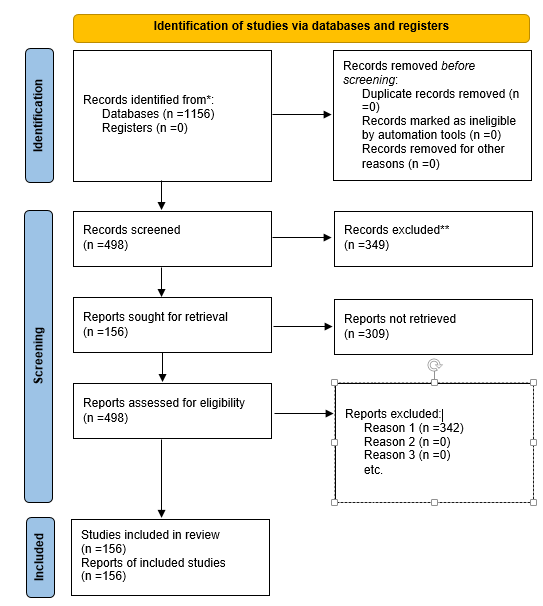
Source:
Table 1: Number of Includes Studies by Decades (1980-2023)
| Decade | Number of Included Articles |
| 1980-1989 | 2 |
| 1990-1999 | 30 |
| 2000-2009 | 38 |
| 2010-2019 | 57 |
| 2020-2023 | 29 |
Operational Definitions of Planning Cycles Reported in Different Countries
There needed to be uniformity of planning cycles as defined within the strategic plans of health systems of African countries of the WHO. This showed various regional governments’ different approaches to system governance and management. In Nigeria, a nation like others, the system of planning cycle that has been employed is mostly the five-year plan, which aligns with the nation’s development plan. Enabulele (2020) notes that national planning in Nigeria encompasses the development of strategic health plans on the national level, which are devolved for implementation and monitoring at state and health facility levels. Unlike Ghana’s five-year planning cycle, the participatory approach involving stakeholder engagement in planning activities is the core of the planning process. To demonstrate this, integrative planning in health, as has been noted by Suter et al. (2009), involves the establishment of strategic health plans through consultative methods of various stakeholders, including government agencies, civil society organizations, and communities representatives, to ensure that the plans being done are inclusive and relevant.
In Kenya, the system of planning calls for, among other approaches, a much-decentralized structure whereby the county-level health authorities are given the primary oversight of the process. According to Mauti et al. (2019), the Kenyan health plan is anchored on creating regional health plans while complementing the country’s overall national health strategy. This means that the decision-making process is decentralized, which brings flexibility in terms of dealing with local health objectives and problems as long as these health programs are geared toward the national health mission. Tanzania adopted this decentralized approach to systems planning, which typically involves cycles of three to five years. Shayo et al. (2013) state that Tanzania’s planning process is sequential participation in setting district health system plan elements that align with the national health policy framework. At the district level, these plans address unique health problems, and interventions that are often directly targeted on these issues are outlined in these plans. These plans are for someone at a local level. The monitoring and reevaluation of the progress of these plans and the identification of areas to work on that are found to be weak or non-functional after these plans are monitored and evaluated.
Level of Alignment between National and Sub-National Planning Cycles
The connection between national and sub-national planning cycles within the WHO Africa region is different, greatly eye-bye government frameworks, resource levels, and the fiscal institutions of these countries. The development and priority setting of health systems at sub-national levels is directed by national health policies and strategic planning that provide a comprehensive framework for healthcare policy (Chimhowu et al., 2019). Nevertheless, how national priorities are transformed into action programs at the first lower managerial level can be conducted at different implementation and effectiveness levels. For instance, in Nigeria, an edged acceptance of federal, state, and local government on planned cycles that follow is characterized. On the other hand, studies by Azevedo (2018) point out that the sub-national level of health systems frequently experiences capacity and resource constraints and political factors, among other issues that can impede the implementation of the national health priorities at the state and local levels.
In addition, in Kenya, the programming of national and county plans needs to be improved by the implementation of decentralization at different government levels. Oleribe et al. (2019) mentioned cases of prevalent resource gaps and lack of capabilities among counties, which, in the long run, result in their inability to carry out national health programs as per the local priorities. For instance, national and county-level administrative authorities may need to harmonize harmoniously, leaving the whole exercise disorganized (Chimhowu et al., 2019). Different from the case of Ghana, where much alignment has been achieved between national and local planning through participatory approaches and stakeholder involvement, coordinating planning conflicts persist. Bossert and Beauvais (2002) assert that one of the critical developments in the Ghanaian healthcare system is that it is decentralized, which guarantees flexibility in addressing local health problems and partnerships with national health goals. On-going consultations between national and regional stakeholders to define a standard to-do list and strategy for execution are essential in this process.
Identified Challenges in Implementing Health Systems’ Strategic Plan Cycles
Achievement of health systems strategic planning in WHO AFRO region faces many challenges that pit base expected health goals. Another area for improvement is the longstanding issue of budget constraints, making it difficult to implement activities to conquer existing problems sufficiently (Gilson et al., 2017). Almost every country in the continent faces the problem of a lack of budgetary allocation for health, causing improper service delivery, deficiency of personnel, and lack of infrastructure. For instance, Pantoja et al. (2017) looked into the mediation effects of limited resources in implementing the health systems strategic plans in Nigeria, where significant cuts occur, and no clear blueprint for the set national priorities puts healthcare development on a shaky journey. Financial constraints, limited political stability, and injustice in the government pose significant roadblocks to the planning and implementation of health systems. According to Nightingale (2017), political powers can enhance or frustrate decision-making that focuses on resource allocation, causing irregular policy and program implementation. As a result, the inefficient governance structures and the institutions’ insufficient capacity also limit collaboration and effectively direct the national and sub-national level interventions in the health systems.
Among the most notable problems are ineffective state and national health information systems, which impede evidence-based decision-making and the making of progress toward the goals of the healthcare system. Clarke et al. (2019) emphasize the necessity of data collected to plan and evaluate health system interventions in this region, and they point out that data-related issues at the level of the region country are a common problem. Essentially, inadequate human resources and gaps in skills among health professionals challenge the comprehensive preparation and execution of national health system strategies. Johnson et al. (2022) discuss the problems of workforce recruitment, keeping it, and training; these things will impede the realization of desired health results because of the shortage of health workers. Resolving these issues requires a multidimensional approach that entails the improvement of health financing mechanisms, building leadership and governance capacity at the respective levels, and increasing investments in workforce development and health informatics.
Discussions
Summary of Key Findings
The scopingreview of strategic planning cycles of health systems in African nations within WHO AFRO has provided robust findings about the purpose and consequent coherency and operational issues and implementation challenges inherent in these planning cycles. Under the heading of operational definition, the review of the diversity of methods applied by the countries was highlighted as well. For instance, in Nigeria, development plans often need to be conducted on a 5-year time horizon, as this aligns with the UK’s national development plan (Chimhowu et al., 2019). While Ghana adopts the preventive approach by cooperating with diverse players and carrying on community health training during the planning process, the recommended policies are more inclusive and contextually relevant to the specific needs of the population (Shayo et al., 2013). As part of this approach, Kenya and Tanzania have established decentralized models allowing for greater autonomy at the end of local administration in planning and implementing health decision processes (Johnson et al., 2022). Despite these different models, the concepts usually present themselves in articulating vision, goal-setting, continuous monitoring, and evaluation, which in most cases apply at the national level.
For the review, the proper coordination between national and sub-national planning cycles was the critical factor revealed, and the different planning faces were how the variation was observed. While some countries have progressed in the alignment direction by involvement and participatory decision-making underscored by decentralized governance, much complexity still needs to be handled. Asymmetrical resource allocation, capacity shortages, and insufficient coordination among states and federal health authorities due to cultural and linguistic barriers undermine effective harmonization (Johnson et al., 2022). Increasing the degree of coordination and the ability to allocate resources and boost capacity is critical to ensuring the harmony and effective operation of health systems planning at the sub-national level. Multiple bottlenecks involving the plan intervals of health systems were also identified. Inadequate funding is the main challenge many countries face, and it has recently increased the clinical burden on healthcare systems. This denoted the political instability and governance matters determining process selection and resource allocation (Chimhowu et al., 2019). The existence of ill-structured governance and the unwillingness of institutions to enhance their strength to disorganize and inadequately manage health programs further deepen poverty in poor countries. Furthermore, shortfalls in health information systems and low personnel numbers create difficult hurdles to planning and monitoring progress toward health system plans, according to Shayo et al. (2013).
Strengths and Limitations of the Review
The strengths of the scoping review of the health systems strategic plans in terms of African countries within the WHO African region are high, and mainly, these can be attributed to the critical fact that this review provides valuable and credible findings. The first thing is that the systematic inquiry into the literature, after which the relevant findings from electronic through to grey literature were also considered, was used during the systemic review (Jaca et al., 2022). This approach reduced the possibility of data selectivity and confirmed inclusiveness and diversity in the exposition of synthesized results (Ankomah et al., 2021). Moreover, the adoption of a common approach for study selection, data gathering, and analysis supports the visibility and reproducibility of the entire study. The review process was aided by two independent reviewers taking charge of study selection and data extraction, thus ensuring a low risk of bias and mistake errors and a high reliability of study results. Likewise, adopting diverse research designs in qualitative, quantitative, and mixed-method studies let us comprehensively explore the research questions from different angles (Ahmat et al., 2022). It enabled a detailed interpretation of the functions of operational definitions, coordination, and inception problems encountered in the Mauritius health system. As a result, the provision of narrative synthesis of data using an integrative approach also managed diverse evidence sources (Yimgang et al., 2021).
Along with these abilities, the study article has certain shortcomings that should be considered. First, publications only written in English or French may have been ignored to a degree so that the review could get full coverage of the relevant topic. Through the biased provision of qualitative designs, there is likely to ignore quantitative pieces of work that could have contributed meaningful quantitative data from the general picture of implementation and effect of planning cycles in healthcare systems of African states (Ahmat et al., 2022). Additionally, the biased nature of the published papers might arise due to publication bias, which is realized when journeys with negative results get unpublished and those with positive results are published (Yimgang et al., 2021). Besides, the review’s focus was confined to studies done by regional WHO AFRO, which could have omitted studies done outside that region, and he could have provided comparative insights. However, among the limitations, this type of review offers an essential overview of the current evidence on strategies and planning phases of the national health system of African countries (Ankomah et al., 2021). The analysis looks into moving the operational definitions, looking at the alignment issues, and, finally, providing implementation problems that can guide the health policy and the management of bioremediation in the region. Projecting ahead, I will look at my shortcomings, such as extending the survey to non-English and non-French literature.
Implications for Future Research and Policy Recommendations
This scoping review has several implications for future research and the policies of the World Health Organization’s Africa region the meaning of them. First, a new study should be conducted to reveal the criteria that trigger the accord between the national and sub-national planning terms and to develop approaches that promote cooperation across different organizational levels within the healthcare system (Nnaji et al., 2021). This may involve a qualitative study, which would not be about evaluating the data or facts but an exploration of stakeholders’ perspectives and experiences, as well as a quantitative study, which would assess the influence of the alignment on health outcomes.
Policy recommendations resulting from this analysis include the necessity of the governments to make the first capital expenditures directed at the health systems, including health financing, governance, and human resources. To ensure evidence-based decision-making and monitoring of the stages of progress of health system-specific goals, sound health information systems and data management systems should also be maintained (Nnaji et al., 2021). Moreover, the government is advised to organize interactive and vociferous participation methods for citizens and stakeholders during the planning process to ensure the inclusivity and practicality of the implementation of strategic health plans.
Conclusion
The scoping review concluded that African countries in the WHO AFRO region have cyclic planning patterns for health systems to support them in their strategic plans seasonally. Through an operational definition of the balanced scorecard, it was brought to light that there are multiple challenges, like alignment issues and implementation difficulties. Although various nations present some alterations, such critical areas as mission consistency, insufficient resources, and governance challenges have become more or less the same. In the future, the discussion on tackling the challenges above with the help of the anticipated positive influences of health planning in health systems, which will result in better health outcomes, is vital. Policymakers and other stakeholders can manage resource allocation and capacity by fostering a partnership model and coordinating among the national and other sub-national health authorities. They can invest in health information systems and workforce development to ensure that the health system in the WHO AFRO region improves efficiency and equity.
References
Ahmat, A., Okoroafor, S. C., Kazanga, I., Asamani, J. A., Millogo, J. J. S., Illou, M. M. A., Mwinga, K., & Nyoni, J. (2022). The health workforce status in the WHO African Region: findings of a cross-sectional study. BMJ Global Health, 7(Suppl 1), e008317. https://doi.org/10.1136/bmjgh-2021-008317
Ankomah, S. E., Fusheini, A., Ballard, C., Kumah, E., Gurung, G., & Derrett, S. (2021). Patient-public engagement strategies for health system improvement in sub-Saharan Africa: a systematic scoping review. BMC Health Services Research, 21(1). https://doi.org/10.1186/s12913-021-07085-w
Azevedo, M. J. (2018). The State of Health System(s) in Africa: Challenges and Opportunities. Historical Perspectives on the State of Health and Health Systems in Africa, Volume II, 2, 1–73. https://doi.org/10.1007/978-3-319-32564-4_1
Bossert, T. J., & Beauvais, J. C. (2002). Decentralization of health systems in Ghana, Zambia, Uganda, and the Philippines: a comparative analysis of decision space. Health Policy and Planning, 17(1), 14–31. https://www.jstor.org/stable/45089751
Bramer, W. M., De Jonge, G. B., Rethlefsen, M. L., Mast, F., & Kleijnen, J. (2018). A Systematic Approach to Searching: An Efficient and Complete Method to Develop Literature Searches. Journal of the Medical Library Association, 106(4), 531–541. https://doi.org/10.5195/jmla.2018.283
Büchter, R. B., Weise, A., & Pieper, D. (2020). Development, Testing, and Use of Data Extraction Forms in Systematic Reviews: a Review of Methodological Guidance. BMC Medical Research Methodology, 20(1). https://doi.org/10.1186/s12874-020-01143-3
Chimhowu, A. O., Hulme, D., & Munro, L. T. (2019). The “New” national development planning and global development goals: Processes and partnerships. World Development, 120, 76–89. https://doi.org/10.1016/j.worlddev.2019.03.013
Clarke, G. M., Conti, S., Wolters, A. T., & Steventon, A. (2019). Evaluating the impact of healthcare interventions using routine data. BMJ, 365(1), l2239. https://doi.org/10.1136/bmj.l2239
Enabulele, O. (2020). Achieving Universal Health Coverage in Nigeria: Moving Beyond Annual Celebrations to Concrete Address of the Challenges. World Medical & Health Policy, 12(1), 47–59. https://doi.org/10.1002/wmh3.328
Garg, R. (2016). Methodology for Research. Indian Journal of Anaesthesia, 60(9), 640–645. NCBI. https://doi.org/10.4103/0019-5049.190619
Gilson, L., Barasa, E., Nxumalo, N., Cleary, S., Goudge, J., Molyneux, S., Tsofa, B., & Lehmann, U. (2017). Everyday resilience in district health systems: emerging insights from the front lines in Kenya and South Africa. BMJ Global Health, 2(2), e000224. https://doi.org/10.1136/bmjgh-2016-000224
Jaca, A., Malinga, T., Iwu-Jaja, C. J., Nnaji, C. A., Okeibunor, J. C., Kamuya, D., & Wiysonge, C. S. (2022). Strengthening the Health System as a Strategy to Achieving a Universal Health Coverage in Underprivileged Communities in Africa: A Scoping Review. International Journal of Environmental Research and Public Health, 19(1), 587. https://doi.org/10.3390/ijerph19010587
Johnson, L. J., Schopp, L. H., Waggie, F., & Frantz, J. M. (2022). Challenges experienced by community health workers and their motivation to attend a self-management program. African Journal of Primary Health Care & Family Medicine, 14(1). https://doi.org/10.4102/phcfm.v14i1.2911
Levett, P. (2022). Research Guides: Systematic reviews: Study selection and appraisal. Guides.himmelfarb.gwu.edu. https://guides.himmelfarb.gwu.edu/systematic_review/study-selection-and-appraisal
Mauti, J., Gautier, L., De Neve, J.-W., Beiersmann, C., Tosun, J., & Jahn, A. (2019). Kenya’s Health in All Policies strategy: a policy analysis using Kingdon’s multiple streams. Health Research Policy and Systems, 17(1). https://doi.org/10.1186/s12961-019-0416-3
Nightingale, A. J. (2017). Power and politics in climate change adaptation efforts: Struggles over authority and recognition in the context of political instability. Geoforum, 84, 11–20. https://doi.org/10.1016/j.geoforum.2017.05.011
Nnaji, C. A., Wiysonge, C. S., Okeibunor, J., Malinga, T., Adamu, A. A., Tumusiime, P., & Karamagi, H. (2021). Protocol for a scoping review of implementation research approaches to universal health coverage in Africa. BMJ Open, 11(2), e041721. https://doi.org/10.1136/bmjopen-2020-041721
Nyoni, J., Christmals, C. D., Asamani, J. A., Illou, M. M. A., Okoroafor, S., Nabyonga-Orem, J., & Ahmat, A. (2022). The process of developing health workforce strategic plans in Africa: a document analysis. BMJ Global Health, 7(Suppl 1), e008418. https://doi.org/10.1136/bmjgh-2021-008418
Oleribe, O. E., Momoh, J., Uzochukwu, B. S., Mbofana, F., Adebiyi, A., Barbera, T., Williams, R., & Taylor Robinson, S. D. (2019). Identifying key challenges facing healthcare systems in Africa and potential solutions. International Journal of General Medicine, 12(1), 395–403. https://www.ncbi.nlm.nih.gov/pmc/articles/PMC6844097/
Pantoja, T., Opiyo, N., Lewin, S., Paulsen, E., Ciapponi, A., Wiysonge, C. S., Herrera, C. A., Rada, G., Peñaloza, B., Dudley, L., Gagnon, M.-P., Garcia Marti, S., & Oxman, A. D. (2017). Implementation strategies for health systems in low-income countries: an overview of systematic reviews. Cochrane Database of Systematic Reviews. https://doi.org/10.1002/14651858.cd011086.pub2
Patino, C. M., & Ferreira, J. C. (2018). Inclusion and Exclusion Criteria in Research Studies: Definitions and Why They Matter. Jornal Brasileiro de Pneumologia, 44(2), 84. ncbi. https://www.ncbi.nlm.nih.gov/pmc/articles/PMC6044655/
Rusakaniko, S., Makanga, M., Ota, M. O., Bockarie, M., Banda, G., Okeibunor, J., Mutapi, F., Tumusiime, P., Nyirenda, T., Kirigia, J. M., & Nabyonga-Orem, J. (2019). Strengthening national health research systems in the WHO African Region – progress towards universal health coverage. Globalization and Health, 15(1). https://doi.org/10.1186/s12992-019-0492-8
Shayo, E. H., Mboera, L. E., & Blystad, A. (2013). Stakeholders’ participation in planning and priority setting in the context of a decentralized health care system: the case of prevention of mother to child transmission of HIV program in Tanzania. BMC Health Services Research, 13(1). https://doi.org/10.1186/1472-6963-13-273
Stead, M., Angus, K., Langley, T., Katikireddi, S. V., Hinds, K., Hilton, S., Lewis, S., Thomas, J., Campbell, M., Young, B., & Bauld, L. (2019). Characteristics of included systematic reviews (review A). In www.ncbi.nlm.nih.gov. NIHR Journals Library. https://www.ncbi.nlm.nih.gov/books/NBK540714/
Suter, E., Oelke, N. D., Adair, C. E., & Armitage, G. D. (2009). Ten key principles for successful health systems integration. Healthcare Quarterly (Toronto, Ont.), 13 Spec No(Spec No), 16–23. https://www.ncbi.nlm.nih.gov/pmc/articles/PMC3004930/
Szempruch, J. (2023, August 31). LibGuides: Systematic Reviews for Social Sciences: Develop A Review Protocol. Guides.lib.usf.edu. https://guides.lib.usf.edu/systematicreviews/developprotocol
Yimgang, D., Danhoundo, G., Kusi-Appiah, E., Sunder, V., Campbell, S., & Yaya, S. (2021). A scoping review of researchers’ involvement in health policy dialogue in Africa. Systematic Reviews, 10(1). https://doi.org/10.1186/s13643-021-01745-y
 write
write