Executive Summary
Company Description
Safaricom PLC is a leading telecommunications company based in Kenya. Founded in 1997, Safaricom has emerged as a leading player not only in Kenya but in East and Central Africa as well, offering a wide range of services to its diverse customers. The giant telecommunications company is grounded on innovation and customer-centric services, which have enabled it to gain a competitive edge. Safaricom’s key attributes include – mobile communication services, financial services, digital solutions, innovation and technology, and corporate social responsibility (CSR). Further analysis of the company’s description focuses on its current position based on customers, products, and technologies.
Current position
Customers
Safaricom serves diverse customers, ranging from individual customers to businesses, government institutions, and non-profit organizations. The diversity of Safaricom’s customers extends beyond geographic, gender, age, language, and cultural aspects. Currently, Safaricom has a total of 43,928,399 subscribers as of June 2023, leading the mobile telephony market share in Kenya. The diversity of Safaricom’s customers extends beyond national borders, evident from its recent expansion of services in Ethiopia, acquiring over 5 million subscribers less than a year following its entry into the country.
Products
Fostered by innovation and in pursuit of customer satisfaction, Safaricom offers various products to its diverse customers, such as mobile services, M-pesa, fiber internet, and a wide range of digital solutions. Licensed and regulated by the Communications Authority of Kenya, Safaricom offers mobile voice calls, SMS messaging, and data services enabled through its extensive network infrastructure. Currently, 31.62 million Kenyans are connected to 4G, representing approximately 77% of Kenyans covered by 4G (Safaricom, n.d.). M-Pesa is a key product offered by the giant telecommunications company that enables users to send and receive money, access loans, make purchases, and pay bills. Launched in 2007, M-Pesa had approximately 36,877,015 active mobile money subscriptions in Kenya, dominating the mobile money services market. In terms of fiber internet, Safaricom provides high-speed fiber optic internet to diverse customers, thus enhancing seamless connectivity (Communications Authority of Kenya, n.d.). Currently, more than 330,000 homes are connected to Safaricom home fiber, which, in turn, bridges the digital divide. Safaricom also offers a wide range of digital solutions, such as cloud services, cybersecurity services, software, and the Internet of Things (IoT), that have so far enabled continued innovation and digital transformation.
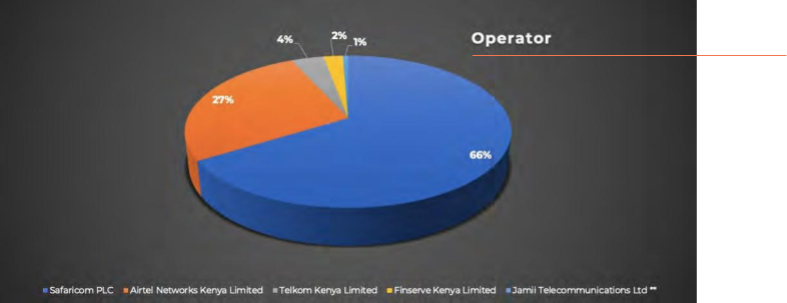
Source: Communications Authority of Kenya
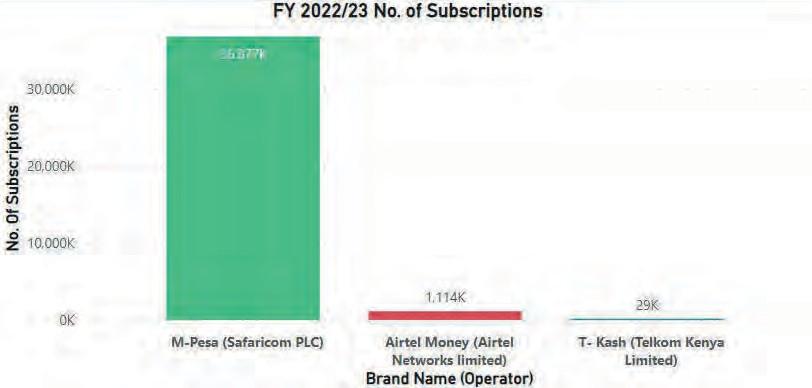
Technologies
Aligned with its goal of providing products and services that meet customers’ diverse needs, Safaricom has leveraged the utilization of technologies – mobile networks, mobile money technology, digital platforms, and fiber optic infrastructure. In terms of mobile networks, the giant telecommunications company operates a robust network infrastructure, ranging from 2G, 3G, and 4G LTE technologies to ensure widespread connectivity and increased network coverage. Mobile money is another technology largely utilized by Safaricom, which is evident from the application of M-Pesa, which allows users to conduct a wide range of financial transactions through their mobile phones. Other technologies, such as digital platforms – cloud computing, data analytics, and artificial intelligence have enabled users to be more innovative, thus enhancing digital inclusivity. Lastly, Safaricom has invested in fiber optic cables that have facilitated high-speed internet connectivity in homes and businesses, enabling increased internet access.
Unique Selling Proposition
Safaricom’s unique selling proposition (USP) revolves around digital transformation solutions, with a strong focus on customer satisfaction, reliability, and innovation. The major element in Safaricom’s USP is its M-Pesa platform, which has revolutionized mobile money in Kenya and beyond. Through M-Pesa, users are able to send and receive money, pay bills, save, and even purchase goods and services in the comfort of their mobile phones. Launched in 2007 by Vodafone, M-Pesa has since transformed the lives of millions of Kenyans, which is evident from the ease and enhanced accessibility of financial services. Since its establishment, M-Pesa has since expanded its operations to provide services to its users in more than 12 African countries and 3 countries beyond the African continent.
How it works
To access M-Pesa services, a user ought to be a registered sim card holder with the service provider using their original national identification card or passport. Once a user registers for M-Pesa, they hand over cash to an M-Pesa agent, who, in turn, credits the money into the user’s M-Pesa account. The user then gets a message notification on their mobile phone acknowledging them of the transaction. To use the M-Pesa withdrawal option, a user has to physically visit an M-Pesa agent, who in turn ensures that the user has sufficient funds to make a debit on the user’s account and, in turn, hands over the cash to the user. An M-Pesa user can also perform other transactions using the M-Pesa menu on their phones, such as sending money, checking their balances, and directly depositing money into their bank accounts. Therefore, sending money through M-Pesa has been made easy, safe, and convenient, as compared to traditional methods, where money was sent through post or a trusted individual to the intended recipient.
Since its establishment in 2007, M-Pesa has since shaped the Kenyan financial landscape, forcing formal banking institutions to incorporate the new change and adopt M-Pesa. As of November 2014, M-Pesa transactions were valued at 2.1 trillion, a 28% increase from 2013 M-Pesa transactions and exceeding more than half of the country’s GDP (Kiggundu & Ogola, 2017). As of January 2016, M-Pesa had a total of 21.8 million Kenyans, with more than 90,000 agent outlets. The average monthly person-to-person transactions are valued at 106 billion, person-to-business transactions are valued at 23.5 billion, and business-to-person transactions account for approximately 27.8 billion per month. An M-Pesa-enabled phone can hold a maximum of 500 000 Ksh in a day or approximately US$3500 (Kiggundu & Ogola, 2017). The growth of M-Pesa over the years is attributed to several factors – the high cost of sending money through other methods, a clear and strategized marketing campaign (“send money home”), the dominant market position of Safaricom and the efficiency of sending money at a user’s comfort.
Activities supporting USP
The success of M-Pesa as Safaricom’s USP is dependent on several activities – continuous innovation, strong network infrastructure, partnerships and ecosystems expansion, customer education, and support.
Continuous Innovation
Over the years, Safaricom has consistently invested in research and development with the intention of improving its wide range of products and services. Specifically, the giant telecommunications company has increased its research and development capabilities concerning M-Pesa to enhance the M-Pesa experience for millions of its users. For example, Safaricom regularly introduces new features that not only enhance functionality but also improve customer service. Various features were introduced to enhance the M-Pesa experience, including the introduction of QR codes and recurring payments. Additionally, continuous innovation has enhanced user experience through optimized application interfaces, reduced transaction times, and seamless navigation that enhances user satisfaction. Constant innovation has also enabled Safaricom to expand on technological advancement through the development of Artificial Intelligence (AI), machine learning, and data analytics, which have all played a vital role in fraud detection and real-time transaction monitoring that have enhanced the ease of M-Pesa use. Continuous innovation has also enabled Safaricom to provide regular updates to its large pool of customers regarding the latest features and enhancements.
Strong network infrastructure
Safaricom has invested in a strong network infrastructure that has enabled the giant telecommunications company to provide seamless M-Pesa services. Aligned to the Communications Authority of Kenya Universal Service Access policies, Safaricom has expanded its network coverage in various geographical regions to ensure that diverse users have access to M-Pesa services irrespective of their locality. Additionally, the company has capitalized on reliability and redundancy intended to minimize downtimes and disruptions even in the event of network congestion. Safaricom’s strong network infrastructure is also evident through its prioritization of quality of services (quality of service), which enables high-speed data connectivity and low latency to facilitate ease of processing financial transactions without delay. Safaricom continues to invest in expanding its technologies 2G, 3G, 4G, and 5G not only to optimize network performance but to deliver seamless user experience as well.
Partnerships and ecosystems expansion
Partners and ecosystems have played a crucial role in the expansion of M-Pesa within Kenya and beyond. For example, banks and financial institutions have partnered with Safaricom through the M-Pesa platform to increase access to loans, insurance products, and investment opportunities. Fintech companies are another group that has partnered with M-Pesa to ensure the introduction of innovative financial products that ease digital lending and investment processes through the development of diverse financial tools and opportunities. Other key partners that have collaborated with Safaricom’s M-Pesa include utility companies and service providers to enable payment of utility bills such as electricity, water, internet, and TV subscriptions that enhance customer convenience. International remittances form another crucial partner of the service provider, where Safaricom partners with global money transfer operators that enable money transfer across borders. In turn, this allows users to transact and conveniently send and receive money from relatives and friends directly to their M-Pesa accounts. Future improvisation strategies should focus on lowering transaction fees through the implementation of a cost-effective remittance solution to facilitate increased transactions.
Customer education and support
Safaricom prioritizes customer education and support initiatives, given the pivotal role of customers in Safaricom’s growth over the years. For example, Safaricom engages in numerous educational campaigns in the form of advertisements, community outreach programs, and social media campaigns that not only increase customers’ engagement but also help raise awareness about Safaricom’s benefits and new security features. Financial Literacy Programs is another customer education initiative that offers educational material and guides regarding investment and financial literacy. Other programs emphasize wise saving and investment decisions among users, such as the 52-week challenge that aims to cultivate a savings culture among Kenyans. Customer education and support are also emphasized through dedicated customer support channels such as the newly developed Zuri platform. This personal Safaricom assistant assists users with technical issues and a wide variety of queries that enhance the Safaricom experience. Specifically, the Zuri platform is developed using Artificial Intelligence (AI) and simulates human experience either through voice or text to enable customer support guidance, troubleshooting, and resolving customers’ issues.
Customer education and support are also enabled through its dedicated customer support channels that assist M-Pesa users with queries and technical assistance regarding access and usage of the platform. This is further enabled through helplines, email support, and in-person assistance at Safaricom service centers, which are largely beneficial to customers for troubleshooting support and any other inquiry that they may encounter in the access of M-Pesa services. Customer education and support are further enabled through FAQs and a knowledge base. Safaricom maintains a comprehensive FAQ section on its website to help users address commonly experienced challenges and technical issues that they may encounter when using M-Pesa services. This may include questions, concerns, and troubleshooting options related to M-Pesa. In turn, this helps users to find answers and queries quickly and more efficiently. Nevertheless, user feedback and improvement is another customer education and support technique facilitated through surveys, customer reviews, and feedback forms to understand and gauge user experiences and assess key areas for improvement. Based on feedback collected, Safaricom tends to improve its operations while refining customer initiatives to ensure that they meet users’ needs and demands. Nevertheless, the feedback collected could be helpful in developing features and functionalities that enhance customer satisfaction and usability.
Activities that detract from their USP
Despite Safaricom having numerous strengths and a strong Unique selling proposition (USP), certain activities tend to detract from its USP. They include service outages, security concerns, complexity, fees, and regulatory challenges.
Service outages
Safaricom experiences several service outages that significantly impact customers’ trust and confidence. In the recent past, the company has experienced service outages that lead to transaction failures and delayed payments, which are affecting the credibility of financial transactions. Most recently, the service provider experienced a major service outage that affected more than 800,000 M-Pesa agents and lasted for more than 2 hours (Mulwa & Ndati, 2013). In turn, this resulted in a halt of all M-Pesa transactions and a congestion of major payment points. Future strategies that the company could adopt in the management of service outages include providing advance notices about scheduled maintenance to avoid service disruptions and inconveniences.
Security concerns
In the recent past, Safaricom has encountered several security concerns compromising its M-Pesa services amidst its set security measures. Common incidents encountered include data breaches, identity theft, and phishing scams that undermine the users’ trust in the security and credibility of the service provider.
Complexity and fees
Despite increased convenience and efficiency in the access and use of M-Pesa services, Safaricom’s users express their dissatisfaction with the high transaction and hidden fees imposed in various transactions that inhibit the adoption and continued usage of the services. Over the years, the service provider has overcome this challenge by openly publishing the transaction fee charged according to the amount of money transacted, as well as prompting users to authorize a transaction prior to its processing. Future interventions to overcome this challenge ought to also include transparent banking pricing to enhance convenience and cost-effectiveness. Complexity is also a key challenge faced by the service provider, and it is evident in customer complaints and support issues, such as unresolved issues and inadequate support channels that, in turn, lead to a high level of dissatisfaction among its users. Nevertheless, negative feedback can also distract the USP’s goals and objectives regarding customer convenience and resolution of issues.
Regulatory challenges
Safaricom, as a service provider, is regulated by the Communications Authority of Kenya, which provides policies that regulate competition, service provision, network coverage, and market access. In turn, this is further translated to its M-Pesa platform, thus affecting crucial operations and the platform’s service provision. Future interventions that the service provider ought to adopt in overcoming regulatory challenges entail increased innovations critical to keeping pace with the fast-evolving regulatory environment.
Future Strategy
Key strategies and initiatives that Safaricom ought to adopt in developing its USP while maintaining its competitive position include — enhancing digital financial services, adopting and integrating emerging technologies, expanding into international markets, and developing customer-centric innovations.
Enhancing digital financial services
Future development of Safaricom’s USP, M-Pesa, should largely focus on the enhancement of digital financial services incorporated into the platform. For example, the company could adopt other financial services, such as increased investment opportunities, micro-insurance, and digital lending platforms, intended to not only attract potential customers but also enhance competition in the financial services market. Doing so could also ensure that Safaricom diversifies its offerings, providing diverse services that cater to diverse users’ needs.
Adoption and Integration of emerging technologies
So far, the giant telecommunications company has adopted recent technological innovations that have shaped its service delivery to its diverse users. However, future strategies regarding the development of its USP should focus on increased leverage of emerging technologies such as artificial intelligence (AI), blockchain, Internet of Things (IoT), and machine learning to enhance the platform’s capabilities. For example, incorporating AI would enhance secure investment and transactions through early detection of potential fraud, thus adopting countermeasures in regard to the attacks.
Expansion into international markets
So far, Safaricom’s M-Pesa platform has been adopted beyond Kenyan borders, with the largest coverage evident in its newly launched market in Ethiopia. However, future strategy should focus on expansion into international markets beyond Africa, particularly regions classified as financially unserved and underserved. Doing so would also enlarge the platform’s partnership capabilities with other financial partners and telecom operators.
Development of customer-centric innovations
Customers are the centerpiece of the M-Pesa platform, whereby the platform largely focuses on the provision of customized services to meet the diverse needs of its varied customers. However, given the technological grounds of the platform, some users still need help accessing and utilizing key functionalities of the platform. Therefore, to ensure equality in its access and usage, future initiatives should focus on the development of customer-centric innovations characterized by ease of use and navigation of key functionalities. Particularly, potential customer-centric innovations should include numerous user preferences and customer feedback to guide the development of tailored and personalized experiences to enhance customer loyalty.
Competitive Position
Currently, Safaricom occupies a dominant position in Kenya’s telecommunications sector and the digital financial services sector, attributed to its strong leadership, corporate social responsibility, customer-centric innovations, and technological advancement that have collaboratively increased its pool of customers. To maintain its current competitive position, the company should engage and collaborate with strategic partners such as the regulatory body, financial partners, and government agencies to drive increased innovation and steer the company’s growth. Additionally, Safaricom should focus on expanding its market beyond the African continent, unlike its competitors, to attract more customers while unlocking growth opportunities.
Adaptability and agility are other key factors that Safaricom should focus on to maintain its competitive position in both the telecommunications and financial services market. The leading telecommunications company should demonstrate agility and adaptability through increased responsiveness to trends and changes in the market, response to technological disruptions, adherence to regulatory policies, and positive response to competitive threats. Doing so is set to sustain long-term growth and success in the telecommunications and digital financial services sectors of Safaricom’s M-Pesa platform.
Linkage between USP and operating strategy
Safaricom’s vision is founded on its large pool of customers, where the giant telecommunications company envisions transforming the lives of its customers through innovative digital solutions while enhancing financial services. Additionally, the company’s vision is also evident through its dire commitment to enhancing simplicity in how it reaches out to its customers, transparency in its service delivery, and honesty in its service delivery promise. So far, Safaricom’s USP revolves around its M-Pesa platform, trusted by millions of users, through the provision of convenient and secure mobile money services that not only empower individuals but businesses as well.
Business Strategy
Safaricom’s business strategy can be summarized through three key elements – a diversified product portfolio, market leadership and innovation, and a customer-centric approach. The three elements are aligned with its USP and have contributed to the company’s immense growth and success over the years. Based on its diversified product portfolio, the company has gone over and beyond in the transformation of its services from digital telecommunications services to adopting recent technology in the provision of digital financial and digital content services. In turn, the diversification has allowed the company to cater a wide range of services to its diverse customers. According to Park (2020), diversification is an effective strategic approach that overly empowers businesses to tap into new markets, consequently attracting a large pool of customers and generating multiple revenue streams. This is evident through its M-Pesa platform, which provides digital financial services complementing the company’s telecommunication sector. Other methods by which Safaricom has diversified its products include the provision of cloud computing and IoT services that have been adopted by numerous businesses, thus enabling it to maintain a competitive edge in the market.
Market leadership and innovation are crucial elements in its business strategy, emphasizing the need for continuous innovation through advanced research and leveraging recent technology. Market leadership and innovation align with its USP, evident through increased enhancements of the M-Pesa platform to cater to its diverse customers’ needs, thus enhancing customer loyalty and satisfaction. A customer-centric approach is another key element in Safaricom’s business strategy committed to understanding customer needs and the provision of personalized experiences. The plan aligns with its USP and focuses on customers’ convenience and reliability, evident through the simplicity of M-Pesa’s platform. A focus on customer satisfaction has enabled the company to also thrive in other areas, such as market domination, increased partnership, and enhanced brand reputation.
Value Proposition
Safaricom’s value proposition is grounded on three core pillars – convenience, reliability, and innovation. Based on convenience, the M-Pesa platform enables users to conduct numerous financial transactions in the comfort of their mobile phones. Such transactions include sending, receiving, balance inquiries, loan requests, and payment of bills. The accessibility and simplicity of the M-Pesa platform, which is aligned with its USP, have enabled it to be convenient among individuals and businesses, particularly those unserved and underserved by digital financial services. The reliability of Safaricom’s M-Pesa platform is evident through the provider’s strong network infrastructure in its 2G, 3G, 4G, and 5G technologies in remote and rural areas. Integrating recent technologies, the platform has been able to provide seamless and secure transactions that have enabled users to instill their confidence in the platform as a reliable financial platform. Innovation as a core pillar in its value proposition is realized through the introduction of new features on the M-Pesa platform as well as the adoption of other services and functionalities that not only enhance diversity but enable the service provider to meet diverse customer needs. In turn, the innovations have enabled the company to maintain a competitive edge in the provision of digital financial services while leveraging recent technologies in the provision of value-added services to its numerous customers.
Strategic Operating Model
The strategic operating model in the giant telecommunications company comprises key components – technology infrastructure, partnerships, ecosystem collaboration, and regulatory compliance. Technology infrastructure includes mobile networks – 2G, 3G, 4G, and 5G emerging technologies that ensure widespread connectivity and coverage even in remote areas. Data centers are also a part of the vast Safaricom technology infrastructure that is equipped with sufficient hardware and software requirements that handle big data transactions characterized by large volume, wide variety, and high velocity. Other core elements in its technology infrastructure include security systems equipped with measures and protocols that help detect and prevent unauthorized access to users’ data.
Partnerships and ecosystems collaboration is another key component of the company’s strategic operating model that ensures the company efficiently collaborates with various partners such as banking institutions, government agencies, fintech companies, and businesses. Each partner and stakeholder has a unique role to play in enabling the platform to realize its goal in the provision of digital financial services. Nevertheless, increased collaboration and partnerships have enabled the company to build trust and confidence among users and attract potential partners and stakeholders.
Regulatory compliance, as a component of the company’s strategic operating model, focuses on adherence to the framework of legal, data protection, and industry best practices. Over the years, Safaricom has adhered to industry practices and legal frameworks as outlined by the Communications Authority of Kenya (CAK), the country’s regulatory body in charge of telecommunication regulation. According to CAK, Safaricom has so far maintained healthy competition with other service providers in the country while contributing significantly to Universal Service Access. This framework focuses on increased connectivity and network coverage in underserved and unserved regions in the country (Park, 2020). Other regulations that Safaricom adheres to include financial rules as per the guidelines set to ensure that M-Pesa operates as a secure and trusted platform and is in compliance with Anti-Money Laundering (AML) and Know Your Customer (KYC) guidelines. The service provider also adheres to set industry standards, such as legal framework and standards related to cybersecurity, IT governance, and risk management, that help to maintain reliability and a high level of trustworthiness in all its operations.
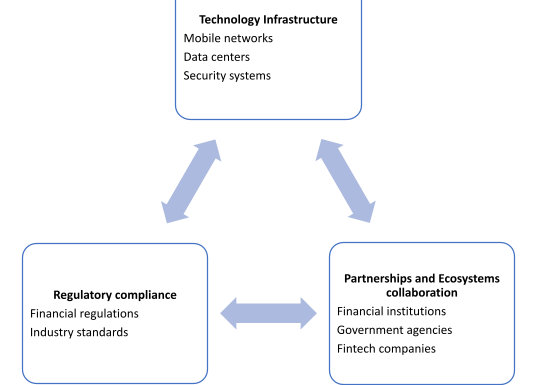
Figure 1 Safaricom’s Strategic Operating Model
Linkage
M-Pesa, Safaricom’s USP, is currently integrated into its business strategy, value proposition, and strategic operating model. Collaboratively, the elements are interlinked to realize the service provider’s goals relating to innovation, customer-centricity, and reliability that have not only enhanced service delivery but also ensured that the company maintains a competitive edge in the telecommunications market.
Strengthening in the Future
Future growth and company expansion ought to focus on strengthening the linkage between USP and its business strategy, value proposition, and strategic operating model. Doing so ought to focus on advanced technology adoption, partnership expansion, and adaptability. Based on advanced technology adoption, strengthening its USP and its business operating strategies should be aligned with the increased leveraging of advanced technologies such as big data analytics, IoT, blockchain, and AI that collaboratively help to improve efficiency through the provision of personalized experiences. Additionally, strengthening the linkage between its USP and business strategy and strategic operating model would require partnership and ecosystem expansion where the service provider could partner and collaborate with other strategic partners in various geographical regions defined by distinct economic status. Strengthening the linkage between its USP and business strategy in the future should also focus on adaptability and a positive response to market dynamics, technological growth, and regulatory adherence. Doing so would enable the giant telecommunication company to effectively meet its diverse customer demands and thus contribute to increased growth and expansion.
Conclusion
Safaricom’s USP, which is centered on its M-Pesa platform, is the right one, attributed to several compelling reasons – market need, competitive advantage, and customer value. Based on market need, the USP focuses on the market need regarding the provision of reliable, secure, and customer-centric digital financial services. This is further driven by the need to provide such services in remote and rural areas with limited digital access. Therefore, the M-Pesa platform realizes this need by empowering individuals and businesses to access and transact secure digital financial services. Moreover, M-Pesa, Safaricom’s USP, enables the service provider to maintain a competitive advantage in the digital financial services market and beyond. This is evident through the platform’s features and functionalities – innovative features, ecosystem partnerships, extensive networks, and established brands that have, over the years, enabled the service provider to maintain a dominant position in the telecommunications and digital financial services market. Customer value is another key element that makes M-Pesa the right USP in Safaricom. Aligned with the company’s mission and goals, M-Pesa is committed to the provision of tangible value to its more than 20 million users by providing convenient, effective, reliable, and innovative financial services. So far, M-Pesa users have enjoyed reliable, seamless, and personalized experiences that have greatly enhanced their financial and economic well-being.
Key operational changes Needed
Despite Safaricom’s USP growth and increased customer base, various operational changes exist that are needed to enhance its effectiveness and success further. Key operational changes needed include enhanced technology infrastructure, innovative product development, and ecosystem expansion. Enhanced technology infrastructure would involve revolving around its mobile networks, data centers, and security systems. Currently, the service provider utilizes 2G, 3G, 4G, and 5G emerging technologies to increase connectivity and network coverage. Enhancing technology infrastructure would involve strengthening its mobile network coverage, particularly in remote and rural areas, to ensure increased coverage. Additionally, the provider would increase the number of data centers necessary to handle increased customer data and needs. Doing so would require increased software development and the acquisition of more hardware resources. Nevertheless, the provider would increase its security systems through the acquisition and adoption of advanced cybersecurity measures to ensure increased reliability and security of M-Pesa operations.
Innovative product development is another key operational change needed to enhance the USP’s future effectiveness and success. This would entail the introduction of new personalized features, solutions, and services on the platform and beyond. Recently, Safaricom launched Zuri, a virtual assistant AI popular on the WhatsApp messaging platform that enables over 20 million users to perform Safaricom’s operations. On the same effect, future product development should emulate the AI platform specifically designed to provide M-Pesa help to its users. This would involve integrating emerging technologies such as AI, Blockchain, and IoT not only to enhance increased efficiency but also to provide user-friendly experiences.
Ecosystems and partnership expansion are other key operational changes needed to drive the USP to increased growth and success. This would be realized either through seeking more partners or strengthening the existing partnerships. Strengthening existing collaboration with its key partners, such as fintech companies, government agencies, and businesses, would encourage the company to develop and introduce new products and services to meet diverse customer needs. Regulatory compliance and risk management ought to be another key operational change needed to effectively maintain strict adherence to regulatory frameworks and industry best practices related to financial services. Doing so would enable the company to meet its goals and objectives regarding the provision of secure and efficient services.
Testing Success Metrics
To test the success of Safaricom’s USP, various success indicators and metrics ought to be utilized, such as – customer satisfaction, financial performance, user adoption, and market share. Customers are the centerpiece of Safaricom’s USP, whereby the service provider has a dire commitment to meeting its diverse users’ needs while ensuring they are not only transparent but convenient as well. An assessment of the USP’s success ought to involve user surveys, questionnaires, and Net Promoter Score (NPS) to analyze customer satisfaction and service delivery. Financial performance is another crucial success indicator to assess the USP’s success. This would involve examining the profits and revenues generated from the M-Pesa platform, profitability margins, and return on investment (ROI) to evaluate the financial impact of the USP. Nevertheless, the economic performance could be compared to those of other service providers to assess its position in the digital financial services sector. User adoption as a success metric ought to evaluate continuous customer base growth and the frequency of usage among users. The engagement levels between the USP and its users ought to be compared against other service providers to evaluate its competition. Market share is another effective metric needed to measure the success of the USP, where key indicators ought to revolve around competitor activities, market leadership, and competitive positioning against its key competitors. Nevertheless, this would also be helpful in keeping track of its performance evaluations and sustainable growth in the market.
Innovation and productivity are other key indicators that could be utilized to measure the success of the USP. Specific metrics that could be used include the rate of innovation and development given different timelines. Additionally, the rate of innovation and development could be compared against its key competitors not only to analyze the rate of competition but also to assess its market position. Other notable metrics to evaluate innovation and productivity as a success indicator include product development cycles, productivity improvements, and operational changes, which are necessary to keep track of operational modifications and improvements from time to time.
References
Communications Authority of Kenya. (n.d.). ANNUAL REPORT FOR THE FINANCIAL YEAR 2022-2023.
Kiggundu, M. N., & Ogola, F. O. (2017). Kenya’s Safaricom, CEO Bob Collymore and M-Pesa: Extended Notes from Keynote Address. Africa Journal of Management, 3(1), 30–52. https://doi.org/10.1080/23322373.2017.1304630
Mulwa, M., & Ndati, N. (2013). Integrated Marketing Communication and Technology Adoption: A Case of Safaricom’s M-PESA Mobile Money Transfer Services in Kenya. African Journal of Science, Technology, Innovation and Development, 5(5), 363–371. https://doi.org/10.1080/20421338.2013.829297
Park, E. (2020). “Human ATMs”: M-Pesa and the expropriation of affective work in Safaricom’s Kenya. Africa, 90(5), 914–933. https://doi.org/10.1017/s0001972020000649
Safaricom. (n.d.). Safaricom – Who We Are. Www. Safaricom.co.ke. https://www.safaricom.co.ke/about/who-we-are
 write
write