Movement and connectivity are the two main factors that dictate urban quality and development, influencing many aspects, from accessibility to social interactions. This literature review will look into these aspects, with the organic morphology in Arabic cities having a special significance. First, the paper defines the space syntax theory by Bill Hillier, a very effective analytical instrument that helps one understand the unexpected interconnections between space layout and human movement. Additionally, the review explains how the cities of the Arabs possess a definite character determined by historical, cultural, and environmental agents. By studying the principles of mobility and connectivity within the framework of an Arabic city, this review reveals the complexity of the processes in the cities. It gives the useful information for the planners, designers and researchers on improving the urban environment.
Understanding Space Syntax
The space syntax introduced by Hillier and his collaborators remains a popular theory in the urban planning and design sectors. In principle, space syntax provides a framework for systematically analyzing and detecting the association between spatial arrangements and people’s movements in urban environments. It incorporates a set of theories and techniques to identify how the ever-changing morphology of a human body is connected to its performance (Alobaydi & Rashid, 2015). At the core of this framework stands the premise that the spatiality of a place carries a deep level of impact on how people move and interact with their environment.
At the core, space syntax works on a theory that the city was constructed with streets, squares, and walkways that affect movement and how easy it is within a city. The space syntax technique examines the spatial hierarchy, connectivity, and integration of urban components, which identifies hidden patterns and structure orders that determine urban movement (Hassan, 2023). The merging of spatial configurations as well as human flow patterns is the core of space syntax theory and is what gives this approach more depth as it shows how the built environment is shaping social interactions, daily activities and economic activities.
Space syntax has experienced substantial academic input from diverse research field practitioners. The seminal studies have covered diverse urban mobility and connectivity themes, and their results provide invaluable evidence of city life’s intricate practices. Among scholars, Zied and Vialard (2017) are noteworthy for their significant contributions to advancing the theoretical foundations of space syntax, which have rendered space syntax applicable in various urban contexts and scales. They have not only increased the revealed spatial patterns but also provided the needed innovative tools and techniques for urban analysis and modeling.
Defining Arabic Cities
According to Dabbour (2021), Arab cities are the untold story of history, culture and the geography of the region, all working together to make each city’s urban patterns and spatial allocation specific. To get the gist of Arabian cities, it is necessary to go into their complexity, considering these factors: historical heritage, cultural identity and environmental conditions. Scholars like Besim Selim and Jamal Hakim have, for instance, concentrated on Arabic urbanism; their works are intended to unravel the complexities of Arabic urbanism and to expose the underlying principles that govern the layout and development of these cities.
According to Jabbari, Fonseca and Ramos (2021), to understand Arabic cities, it is necessary to recognize the historical significance that runs deep in their genes. Through the cities of ancient Mesopotamia to the urban Islamic Golden Age there was always a place of trade, scholarship, and cultural exchange. This historical legacy is represented in their built environment, often featuring a mixture of architectural styles, ranging from the courtyard houses of traditional houses to the magnificent mosques and palaces.
Arabic cities also give off their cultural smell, which becomes integrated in all the social norms, economic activities and spatial procedures. Hakim’s particular focus on the influence of Islamic urbanism on the development of the Arabs’ city plans, for instance, places great value on the concepts of centrality, privacy, and community living (Alsaffar and Alobaydi, 2023). Moreover, the research of Besim Selim deals with the intricacies of the Arabic spatial pattern and his findings concludes that the built form and social structure than form a symbiotic relationship.
Often, Arabic cities are distinguished by their organic style of layout, which has features like interconnected courtyards, labyrinthine alleyways, and meandering streets. Contrary to the rectangular streets typical in Western urban architecture, the Arabic cities display some adaptive and flexible morphology shaped by the growing natural settlements for many years. The organics here are not only physical but also the spatial networks that are created based on social relationships, cultural affairs, and environmental considerations.
In addition, Arab cities are well known for designing their cities so that walking and social connections among their people are enabled (Boukhalfa, 2022). Ranging from busy markets to peaceful gardens, the cities provide a wide variety of spaces that will be essential to the strive of their people. This is a network of places that create a sense of belonging and make the community. It provides chances for socializing, culture exchange and economic endeavors.
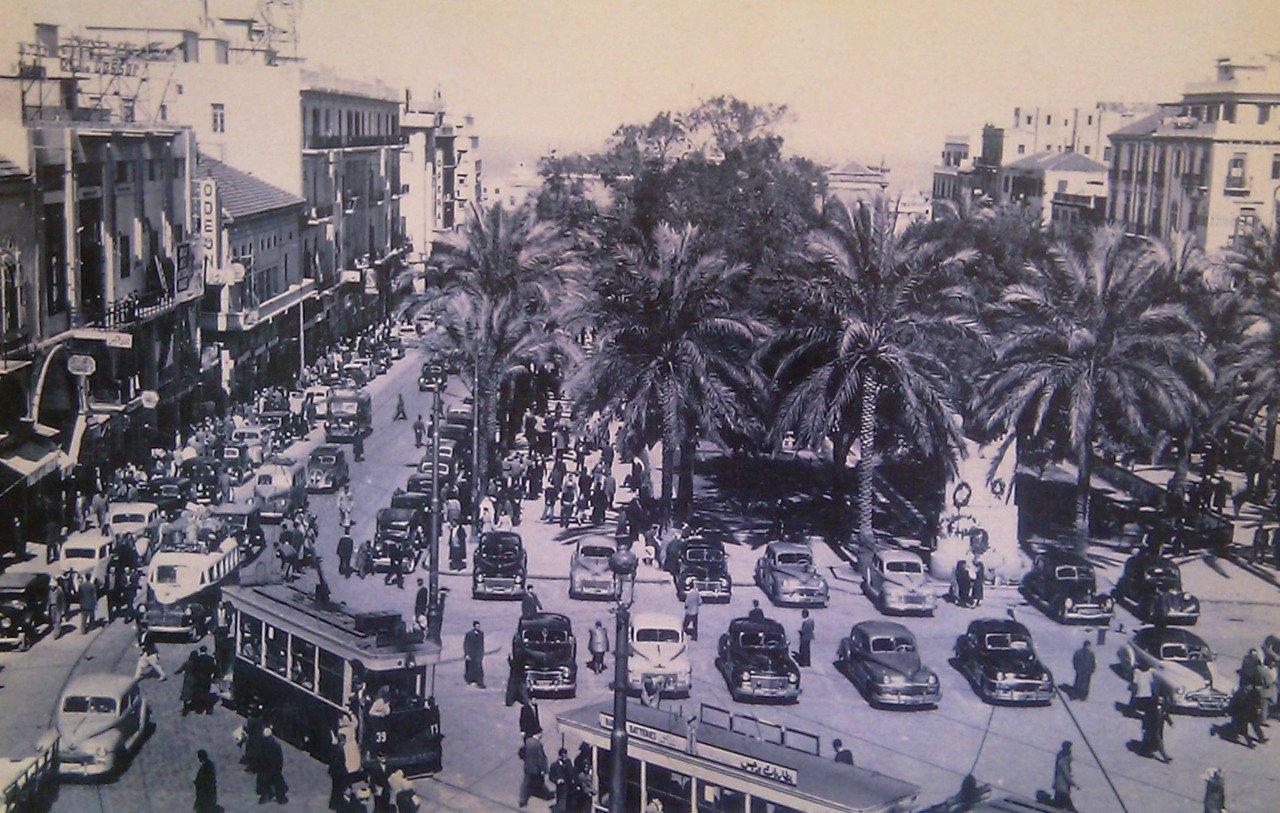
Fig 1: Arab City
Integrating Local and Global Movements
According to Alobaydi and Rashid (2017), the essence of movement processes within Arab cities can be described as the integration of local movement patterns rooted in organic shapes and the commonly global movement dynamics often created by modern transportation systems. The cities of the Arabs used their complex street networks and detailed spatial structures only for pedestrians as the primary method of transportation. The narrow streets and connecting courtyards on the organic shape of these cities such as Fez, Cairo and Damascus have been the architectural norm for centuries. Although cities have moved on with globalization and urbanization, the pressure to accommodate contemporary mobility remains challenging for many of these cities.
However, the challenge is integrating the old spatial configurations with the contemporary system needs of the modern transport network. Arab cities are expected to provide not only their traditional charisma and cultural features but also to tolerate different modes of mobility such as private cars, public transport, and bicycles (Alalouch et al., 2019). This puts transportation planners and policymakers into a situation where they must take a problematic road between preserving the identity of organic urban forms and integrating new transport infrastructure discreetly.
Through the lens of critical analysis, competition among interested parties and different visions about urban development become apparent as a complex environment. From one side, the necessity to expand accessibility and connectivity in the Arab cities that will satisfy economic growth and social inclusion is perceived increasingly. This leads to the development of policies geared toward improving public transportation systems, replacing the old road network with new ones, as well as pedestrian-focused facilities (Alsherfawi Aljazaerly et al., 2023). On the other hand, these attempts are highly opposed by preservationists and conservationists who commit to preserving historic neighborhoods and cultural landscapes.
Additionally, blending local and global tides within Arabic cities brings about more adverse impacts that go beyond this to make provisions for sustainability, equity, and social justice. Although better model of transport may improve the connectivity and economic development by stimulating the economy, but this may lead to worsening of the social inequality and environmental degradation (Dabbour, 2021). This can be illustrated in cases such as new highway constructions or expansion of public transport. These projects might be more prone to affect the marginalized people leading to their displacement and gentrification. On the other hand, higher vehicle densities and traffic congestion also create concerns over air pollution, noise pollution and urban sprawl.
According to Nasser & Mahdi (2023), to deal with the complexities, planners and decision-makers must take a comprehensive stand that harmonizes the needs of various interest groups while preserving the unique nature and heritage of Arabic cities. Such engagement necessitates an active partnership with the local communities, stakeholders and experts to develop solutions unique to the circumstances and help achieve the purpose of sustainable mobility, improved urban life and preservation of the cultural heritage. Applying inclusive urban planning and participatory planning methods, Arabic cities will be able to map their way to an equal, resilient, and lively urban vision with interactions between local and global processes kept in harmony within the organization of the organic urban morphology.
Space Syntax in Arabic Cities
The practical implementation of space syntax theory helps to shed light on the intricacies of movement and connectivity among Arab cities. Along with reviews of spatial configurations and how they affect people’s behavior, space syntax offers valuable details on the hidden structure and order of the urban environment. The organic growth and history cross roads in Arabic cities need to be addressed with the powerful tool of space syntax which is an effective mechanism to understand the spatial dynamics.
Observational studies and casework have proved the efficacy of using Arab urban space syntax methods in tracking spatial hierarchies, accessibility, and pedestrian movement. Spatial configurations are used by researchers to reveal patterns of movement that reflect the social, economic, and cultural dimensions of the Arabian cities (Elgamal, Sheta and Foda, 2020). For instance, the deep roots of the historic souks and bazaars in fostering footfalls are revealed through research, indicating the critical role of informal networks and social interactions in shaping urban mobility.
According to Albabely and Alobaydi (2024), space syntax analysis has clarified the contribution of spatial hierarchies to the urban form creation, affecting the urban function. Through mapping spatial arrangements and examining their connection patterns, researchers can show the most critical nodes and paths that enable movement and access to amenities, services and public areas. This insight will affect urban planning and design making it possible for managers to carry out targeted activities for improving accessibility, connectivity, traffic congestion and other efficiency issues of the urban areas.
While this kind of research has made several significant strides, there are still some notable research gaps that need to be addressed further. Such as the space syntax theory is widely used to describe urban form and movement patterns in Western cities yet its application in the Arabic cities is comparatively scarce. Thus, there is a gap for empirical research and case studies driven by the particular features of Arabic urban settings such as their cultural, historic, and geographical contexts.
On the other hand, future research would provide space geometry theory as a foundation for more sustainable and inclusive ways of producing urban space in Arabic cities. Through incorporating space syntax analysis along with principles of equity, social justice, and environmental sustainability, the researchers will study the issue holistically and produce context-specific solutions which maintain urban livability, community resilience and cultural heritage.
Ultimately, it can be said that space syntax theory has great potential for developing knowledge of organic forms and movements inside Arabic cities. Using spatial analysis techniques and empiric findings the researches can reveal the hidden structures and patterns that govern urban life, which is the beginning of the good decisions in urban planning and design. Therefore, there is a need to coordinate the ongoing research and formulate novel solutions that consider the complex problems faced by Arabic cities in the 21st Century.
Conclusion
The literature review deeply covered movement and connectivity patterns in Arabic cities, focusing on the working relationships between organic morphology and spatial configurations. Through space syntax theory and the intersection of Arabic urbanism factors, the paper shed light on the intricate connection between space planning and human behavior. It also has demonstrated that the study of how organic morphology affects urban mobility and accessibility in Arabic cities offers an insight into the urban patterns that, among other things, define urban life.
Therefore, it is clear that the gaps in the research shall have to be addressed in a future study to gain in-depth knowledge of Arabic urbanism for creating more effective urban planning and design principles. The future research should attempt to extend the application of space syntax theory to Arabic cities controlling for their complex socio-cultural, historical and geographic context. In addition, there is need for interdisciplinary research where knowledge from urban studies, geography, anthropology, and so on, is combined to receive integrated strategies for tackling the dilemma which face Arabic cities. Through enhancing cooperation among scholars, practitioners, and policymakers, people can improve the livelihoods of urban communities, making their cities more inclusive, resilient, and sustainable with rich cultural diversity and heritage.
Bibliography
Alalouch, C., Al-Hajri, S., Naser, A., and Al Hinai, A. 2019. The impact of space syntax spatial attributes on urban land use in Muscat: Implications for urban sustainability. Sustainable Cities and Society, 46, 101417.https://www.sciencedirect.com/science/article/pii/S2210670718306243
Albabely, S., and Alobaydi, D. 2024. Impact of Street Network Properties on Urban Pedestrian Movement Densities: Insights from Iraq.https://www.researchgate.net/profile/Dhirgham-Alobaydi/publication/378969186_Impact_of_Street_Network_Properties_on_Urban_Pedestrian_Movement_Densities_Insights_from_Iraq/links/65f409d3c05fd2688013852b/Impact-of-Street-Network-Properties-on-Urban-Pedestrian-Movement-Densities-Insights-from-Iraq.pdf
Alobaydi, D., and Rashid, M. 2015. Evolving syntactic structures of Baghdad. In Proceedings of the 10th International Space Syntax Symposium.https://www.researchgate.net/profile/Dhirgham-Alobaydi/publication/281842604_Evolving_syntactic_structures_of_Baghdad/links/5612c7ff08aea9fb51c26590/Evolving-syntactic-structures-of-Baghdad.pdf
Alobaydi, D., and Rashid, M. 2017, July. A Study of the Morphological Evolution of the Urban Cores of Baghdad in the 19th and 20th Century. In Eleventh international space syntax symposium at Instituto Superior Técnico, University of Lisbon, Portugal (pp. 38-1).https://www.researchgate.net/profile/Dhirgham-Alobaydi/publication/318116959_A_Study_of_the_Morphological_Evolution_of_the_Urban_Cores_of_Baghdad_in_the_19th_and_20th_Century/links/595d373caca27230850d0119/A-Study-of-the-Morphological-Evolution-of-the-Urban-Cores-of-Baghdad-in-the-19th-and-20th-Century.pdf
Alsaffar, N. H., and Alobaydi, D. 2023, March. Studying street configurations and land uses in downtown Baghdad. In AIP Conference Proceedings (Vol. 2651, No. 1). AIP Publishing.https://pubs.aip.org/aip/acp/article-abstract/2651/1/020064/2880365
Alsherfawi Aljazaerly, A., Okyere, S. A., Fatemi, M. N., Frimpong, L. K., and Kita, M. 2023. Configuring urban morphological changes: the case of Damascus city in the late modern era. Archnet-IJAR: International Journal of Architectural Research.https://www.emerald.com/insight/content/doi/10.1108/ARCH-03-2023-0061/full/html
Boukhalfa, B. B. 2022. Space Syntax Theory Identifies the Ethical Reversal Trend of the Overwhelmed Mādina of Al-Djaza’Ir Urban Morphology. Mediterranean Archaeology and Archaeometry, 22(1), 155-155.https://www.maajournal.com/index.php/maa/article/view/673
Dabbour, L. M. 2021. Morphology of quarters in traditional Arab Islamic city: A case of the traditional city of Damascus. Frontiers of Architectural Research, 10(1), 50-65.https://www.sciencedirect.com/science/article/pii/S2095263520300741
Dabbour, L. M. 2021. Morphology of quarters in traditional Arab Islamic city: A case of the traditional city of Damascus. Frontiers of Architectural Research, 10(1), 50-65.https://www.sciencedirect.com/science/article/pii/S2095263520300741
Elgamal, S. A., Sheta, S., and Foda, M. 2020. Optimizing Public Transportation Networks Using Space Syntax as an Evidence-Based Approach: The Case Study of Mansoura City. MEJ-Mansoura Engineering Journal, 45(4), 1-9.https://bfemu.journals.ekb.eg/article_118212.html
Hassan, S. A. 2023. Using Space Syntax Approach to Describe Movement Densities in Historical Urban Fabric: A Case Study of AlKarkh Historic Core, Baghdad, Iraq (Doctoral dissertation, University of Baghdad).https://www.researchgate.net/profile/Saif-Albabely/publication/373237241_Using_Space_Syntax_Approach_to_Describe_Movement_Densities_in_Historical_Urban_Fabric_A_Case_Study_of_AlKarkh_Historic_Core_Baghdad_Iraq/links/64e1e21c14f8d17338108ab4/Using-Space-Syntax-Approach-to-Describe-Movement-Densities-in-Historical-Urban-Fabric-A-Case-Study-of-AlKarkh-Historic-Core-Baghdad-Iraq.pdf
Jabbari, M., Fonseca, F., and Ramos, R. 2021. Accessibility and connectivity criteria for assessing walkability: An application in Qazvin, Iran. Sustainability, 13(7), 3648.https://www.mdpi.com/2071-1050/13/7/3648
Mohamed, A. A. 2019. Space Syntax Approach for Articulating Space and Social Life. In Handbook of Research on Digital Research Methods and Architectural Tools in Urban Planning and Design (pp. 223-249). IGI Global.https://www.igi-global.com/chapter/space-syntax-approach-for-articulating-space-and-social-life/230530
Nasser, W. W., and Mahdi, R. M. 2023. The Role of Connectivity and Integration in Cultivating Attractive Values: A Space Syntax Study of Al-Amal Housing Project, Basra. International Journal of Sustainable Development & Planning, 18(9).https://search.ebscohost.com/login.aspx?direct=true&profile=ehost&scope=site&authtype=crawler&jrnl=17437601&AN=172797889&h=iSXOIAnqUuisWa7JtcKx3AtRil6AhzDU5a0Ngv21BSnyIS8mnPwGBxq6DJmf2Zdh8SyWKYnyUVQAlqt%2BNU87HA%3D%3D&crl=c
Zied, E., and Vialard, A. 2017. Syntactic Stitching: Towards a Better Integration of Cairo’s Urban Fabric.https://nrl.northumbria.ac.uk/id/eprint/31461/
 write
write