Introduction
The world is becoming digitalized and connected, leading to the integration of big data, machine learning and the Internet of Things, which are the revolutionizing factors in almost all industries across the globe. Today, the digital world is such an environment that technology is becoming more and more important as a means of reshaping the sectors of tourism, hospitality, and events. Digital platforms and data analytics, along with AI-driven insights, are driven in businesses, operations can be streamlined as well, customer experiences are enhanced, and innovation is invested in. Technology has revolutionized the way tourism and hospitality sectors deliver customized services, enhance marketing approaches, and make business processes easier. Furthermore, the technology process in the entertainment industry simplifies event planning, active audience involvement, and actionable metrics crunching. With the engagement of the world in high levels of data-sharing and machinery, the implications of the ICT trend on the tourism, hospitality, and events sectors in Australia should be thoroughly understood by stakeholders who are looking forward to surviving in the information age.
Factors that gave rise to the trend
The exponential growth in data consumption is notably a result of the multiple linkages typified in a situation where all these factors converge to impact the global consumption of information. The evolution of technologies that enable us to access enormous amounts of information from any location is the main factor driving the next-gen tech. Side by side, the availability of smartphones, many of which also operate on high-speed Internet, has ensured that connectivity is now extensive, and individuals now gather and give information from almost everywhere (Cisco, 2020). Moreover, the capabilities of exponential data storage have been the reason why large chunks of information have been gathered and analyzed, further making data consumption move at a higher rate (Cisco, 2020).
In addition, the intrusion of important technologies such as big data, machine learning and the Internet of Things (IoT) is one of the key factors that has resulted in this paradigm shift. Data analytics in a big format give enterprises the possibility to extract meaningful outcomes from a massive amount of complex information, allowing data-driven decision-making to be used in different areas (Oberzaucher, 2024). More and more processes, including operational business, research, and development, are being automated thanks to machine learning algorithms that run on big data. Besides, Internet of Things devices are interconnected via the Internet and produce real-time flows of data. This is mostly used to monitor and run different systems and processes across industries efficiently (Cisco, 2020). The following Figure 1 shows the global internet user growth
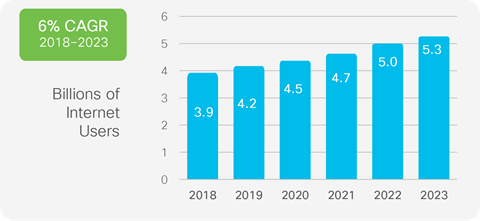
Figure 1. Global Internet user growth
Source: Cisco Annual Internet Report, 2018-2023
Combined, the software, hardware and content advancements flourished the well-oriented cycle of data creation, analysis and utilization, providing a foundation for the e-book boom we observe nowadays. As these trends further shift in the coming times, the future ahead is even more dynamic, with 5G connectivity, edge computing and artificial intelligence being the next major advancements that will lead to the reshaping of the data growth ecosystem across industries (Oberzaucher, 2024). As revealed by Cisco, 500 billion discrete interactions and communications will, in 2030, be connected to the Internet of Things (IoT). Each gadget has sensors/modules that are used to collect the data, react to the environment, and communicate over the network. IoT comprises various devices that are linked together, and these links exchange data, which is then used to collect pro, cess and offer insights needed to strategize on the all-important issues. Figure 2 below shows the projected IoT connection worldwide by 2025 from 2015
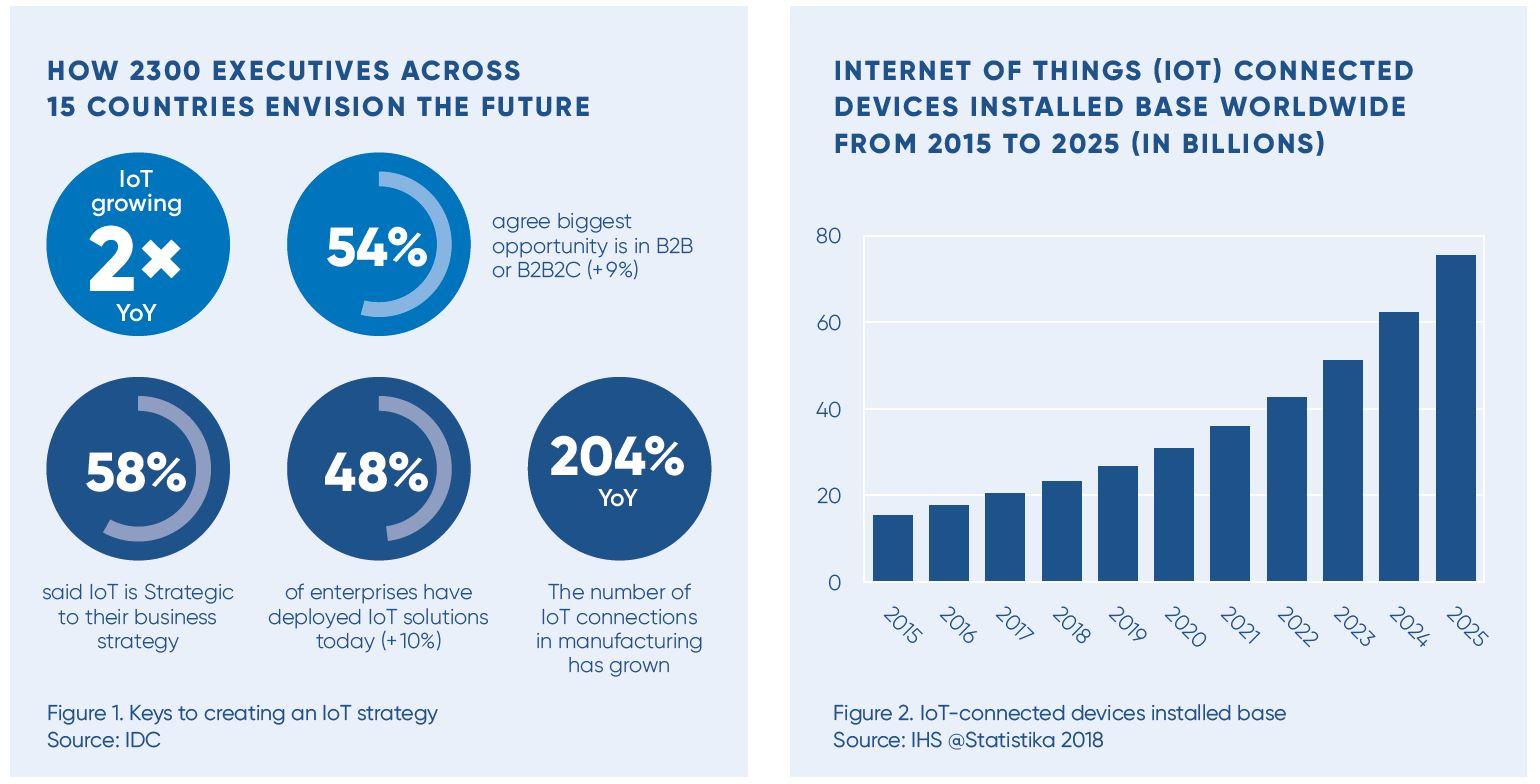
Figure 2: IoT Connected Device installed Worldwide
Source: (Oberzaucher, 2024)
The Trend and Key Characteristics
This data-driven and digitally connected reality is where technology is used to improve efficiency, personalization and creativity among the tourism, hospitality, and live event sectors, as indicated by the (García-Madurga & Grilló-Méndez, 2023). In the course of this development, the following features are of major importance: personalized customer experience, demand predictions based on analytics, and integration of advanced digital technologies. For example, the usage of date-based approaches in the tourism sector facilitates personalized recommendations and individually tailored experiences based on one’s preferences and historical behavior patterns (Deloitte, 2022). Using the analysis of customer data like previous reservations, demographics, and online interaction, the strategists can give the traveler offers based on their location, time of travel, and interesting destinations that are customized to the real-time travel experiences.
In addition, predictive analytics has been a mainstay in constant demand forecasting during the pre-pandemic period and capacity planning within the hospitality sector (PWC, 2022). Combining historical data with market trends and external factors such as weather patterns and geopolitical events, hotels and resorts can estimate who needs what stock, which will further contribute to achieving a maximum profit or urgent allocation of resources. Such proactive measures not only improve the effectiveness of operations but also help to maximize revenue generation and customer service satisfaction by increasing the availability and quality of service during high-demand periods (García-Madurga & Grilló-Méndez, 2023).
Moreover, the incorporation of smart infrastructure that IoT technologies make possible transforms the way events are organized through the use of real-time insights, better logistics, and superior attendee experiences. Via devices with intelligent connections, such as sensors and network ecology organizers, can modify crowd flow, reduce energy consumption and, ensure convenience and safety, adjust the ambient settings accordingly (García-Madurga & Grilló-Méndez, 2023). As well, wearable technology and mobile apps increase interaction and engagement during events, which permits participants to access personalized agendas. They can also take part in interactive sessions and even provide feedback at the place and time. Therefore, these significant traits underpin the disruptive power of a data-driven and interconnected world in the tourism, hospitality, and events sector, changing the culture and creating new standards globally.
Application of the Trend to the context of Australia
The Australian tourism, hospitality, and events sectors sample smart technologies and data-driven technology, which cause time of innovation and efficiency in conducting operations. One can easily realize how these technologies have a paramount place on the pathway to recovery and economic transformation as the COVID-19 pandemic, which sped up digitization, has greatly accelerated this development. In the bracket of Australia, which is a country with core foundations in tourism, these trends are influencing the industry to develop new ways of attracting visitors, operating the business and providing memorable experiences.
In Australia, the tourism sector is transitioning to a digital economy by adopting data-driven tourist strategies to adapt to shifting traveler choices and habits. Consequently, the spread of digital platforms and social media results in more tourists engaging different online channels to develop their travel plans, for example, reserving rooms and booking activities. Australian tourism operators are, hence, exploiting the big data trend by using the technology to understand their customers’ needs, determine appropriate market segments and then tailor marketing messages accordingly (Advertiser, 2024). For example, Australian Tourism levies data analytics to discover the interest groups, demography, and online behavior of the intended visitors; thus, their promotional campaigns yield maximum impact (Sheppard, 2024).
The deployment of IoT devices is perfecting the guest experience and coordinating operations thanks to IoT, which has become a common phenomenon in the hospitality business (Oberzaucher, 2024). Australian hotels are beginning to leverage smart technology solutions through the use of keyless entry systems, automated check-in kiosks, and in-room voice assistants to provide a hassle-free experience and attention to detail for guests. IoT integrations in the hotel industry accelerate the targeting of energy-efficient equipment, automated maintenance, real-time tracking of guests’ day-to-day lives, and the creation of customized services (Advertiser, 2024). For instance, the luxury resorts in Queensland are the trendsetters in the panel of hotels that have provided IoT-enabled amenities such as smart lighting and climate control systems to enhance physical comfort and keep things sustainable while reducing operational costs (State Infrastructure Strategy 2022).
The extent of data-orientedness in the events industry is a key form of transformation that punches organizers to plan, market, and manage heavenly events in Australia. Event organizers are using machine learning algorithms to look at the attendees’ data, predict attendance, and optimize event logistics accordingly. By knowing how their clients identify themselves, marketing and organizers can now use this knowledge to enhance event experiences, send targeted marketing messages, and maximize ticket sales (Oberzaucher, 2024). On top of that, event planners can make timely decisions as the data is being analyzed because they use real-time data analytics. They change schedules and allocation of resources and ensure smoothness across the event for out-attendees (Restncat, 2022). Examples include using predictive analytics to predict crowd numbers, optimize security operations, and improve crowd control by major music festivals in Victoria (Eventbrite, forecasted in 2024). It impacts the enjoyment as well as safety of all attendees of the festivals.
Conclusion
In conclusion, this report emphasizes major changes made in this industry thanks to the use of data that can be connected with the growth of tourism, hospitality, and events chairs in Australia. By implementing big data, IoT devices, and machine learning algorithms, among others, enterprises can customize the experience, improve operations, and, in turn, bring in higher sales. As Australia braces up for the immediate aftermath of the pandemic, it is no longer an option but an imperative for the industry players to welcome these innovative strategies in order for them to stay competitive against travelers who are very challenging in their needs. Highlighting technological integration and innovation as the core factors for future tourism, hospitality, and events will lead to the reshaping of their Australian landscape.
References
Advertiser. (2024, February 14). Revolutionizing hospitality: Australia’s approach. Hotel Management. https://www.hotelmanagement.com.au/2024/02/14/revolutionising-hospitality-australias-approach/
Cisco. (2020, March 9). Cisco Annual Internet Report (2018–2023) White Paper. Cisco. https://www.cisco.com/c/en/us/solutions/collateral/executive-perspectives/annual-internet-report/white-paper-c11-741490.html
Deloitte. (2022). Connecting meaningfully in the new reality. https://www2.deloitte.com/content/dam/Deloitte/ca/Documents/deloitte-analytics/ca-en-omnia-ai-marketing-pov-fin-jun24-aoda.pdf
García-Madurga, M.-Á., & Grilló-Méndez, A.-J. (2023). Artificial Intelligence in the Tourism Industry: An Overview of Reviews. Administrative Sciences, 13(8), 172. https://doi.org/10.3390/admsci13080172
Oberzaucher, B. (2024). Digitalization as a Megatrend. Www.andritz.com. https://www.andritz.com/spectrum-en/latest-issues/issue-39/digitalization-as-a-megatrend
PWC. (2022). The Essential Eight Technologies. PwC. https://www.pwc.com/us/en/tech-effect/emerging-tech/essential-eight-technologies.html
Restncat. (2022, July 17). Seven top tech trends in hospitality right now. Restaurant and Catering Industry Association of Australia Inc. https://homeofhospitality.rca.asn.au/7-top-tech-trends-in-hospitality-right-now/
Sheppard, K. (2024, January 1). How Australia’s hospitality industry is using tech to attract tourism. Vacations & Travel. https://www.vacationstravel.com/hospitality-industry-using-tech-to-attract-tourism/
State Infrastructure Strategy. (2022). https://www.statedevelopment.qld.gov.au/__data/assets/pdf_file/0013/72103/state-infrastructure-strategy-2022.pdf
 write
write