In the digital age, social media platforms such as Facebook, Instagram, Snapchat, Twitter, and LinkedIn have emerged as central pillars of social interaction, enabling users to exchange, create, and share a vast array of digital content, including text, images, and videos (Ahmed, Ahmad, Ahmad, & Zakaria, 2019). The penetration of these platforms is extensive, with usage rates among middle-aged individuals ranging from approximately 70% to 97% (Ahmed, Ahmad, Ahmad, & Zakaria, 2019). This widespread engagement has also extended to those living with mental health conditions, for whom social media has become an indispensable tool for sharing personal stories, accessing information, and finding solace in community support. Indeed, individuals with mental health issues such as depression, anxiety, and psychotic disorders participate in social media at rates akin to the broader population, leveraging these platforms as vital lifelines to resources, peer support, and educational content aimed at promoting mental wellness and destigmatising mental health challenges.
However, the nexus between social media use and mental health is complex and dual-faceted. On the one hand, social media can be beneficial as it comprises early intervention, a support system for those at risk, and help, as well as crucial life-saving information. On the contrary, this side also includes risks like exposing people to content that may convince or even make suicide appear as an easy way out, which in turn becomes a threat to vulnerable persons (Areán et al., 2021). The benefits and risks of the proliferation of social media platforms in suicide prevention and awareness campaign efforts call for a more careful examination of the attendant complexities.
Considering the context mentioned above, this review of literature will particularly touch on the topics mentioned above that explore ways through which social media is used by individuals with mental illness, with the main focus on suicide being the critical area. The discussion will focus on social media as a double-faced tool that may serve positive behaviour change and create a risk to mental well-being. Putting together different sources that include the observations from Google search histories by authors Asch et al. (2011), the cyberchondria study in clinical samples by Vismara et al. (2018), and the analysis of internet search activity of young mages who have mood disorders by Moon et al. (2020), this review seeks to present a coherent picture about the effect of social media.
There are deep cracks and inadequacies in the availability, efficiency and coverage of evidence-based mental health care in the US and other parts of the globe. This paper’s review of literature will be dedicated to social media use by people with mental illness, specifically dealing with the most alarming problem of suicide. This review will be built to carefully go through the action of social media platforms and online behaviours as beacons and storms for people with mental health issues, particularly on suicide. It attempts to clarify the multi-faceted nature of the Internet, i.e., as an indicator of mental health conditions and a platform for their manifestation. This involves scrutiny of the correlation between the Internet and suicide, mood problems, and Cyberchondria, as well as addressing the attendant challenges.
The main aim of the study is twofold. Initially, the predictive analysis should be used to detect suicidal thoughts and behaviours on the Internet. Through the Asch et al. (2011) data, one can learn how the digital tracks may hint at ideas of a loved one with suicidal thoughts or plans of committing suicide. This part of the review will explain why monitoring and analysing search activities might become an essential tool in suicide prevention initiatives.
Additionally, the review widens its vision to the broader aspect of mood disorders. The guidelines of Moon et al. (2020) will be adopted to study the association between internet search activity and social media engagement with emotions and thoughts associated with mood disorders. These markers may help to predict episodes of depression and mania. This exploration will address the dual role of using the Internet: It helps avoid mood disturbances and becomes the culprit of the exacerbation or activation of negative moods.
Thus, the paper contains one of the essential components represented by the research on Cyberchondria, as stated by Vismara et al. (2018). This identified point is known as Cyberchondria by healthcare practitioners, in which individuals worry too much about different medical syndromes with continuous surfing online and, as a result, end up with higher degrees of stress and anxiety. The paper cuts through the network composed of empowerment and anxiety that is provided by the Internet, which we consider to represent the highest concern for people who have a mental illness. This network will be made by analysing cases when the Internet provokes Cyberchondria and Internet-induced anxieties.
Winning it all requires the most of what you have wearing. It evaluates various ethical issues and challenges in using the Internet for mental health surveillance and interventions. Such interventions include privacy issues and misinterpretation of data and the platform for exposure to harmful content. This purpose presents ideas on both sides: the infinite benefits and the glitches of social media and the search engine uniforms in mental health support and suicide prevention.
Lastly, this subject is specifically designed to encompass a thorough and critical debate on the role of online use in improving mental health. This aims to showcase potential online behaviours and their mental health repercussions, which would then be the point of departure for various intervention pathways, including advocacy, the promotion of digital literacy, and others.
Internet use and suicidal thoughts
There has been much attention on the connection between internet use and suicidal thoughts and actions. The frequency and purpose of searching for information connected to suicide, as well as its effect on seeking treatment, were evaluated by analysing the internet usage habits of individuals suffering from depressive disorders (Ahmed, Ahmad, Ahmad, & Zakaria, 2019). A self-administered questionnaire was utilised to gauge suicidal behaviour, internet use features, and help-seeking choices among psychiatric inpatients receiving depression treatment. The study included 113 inpatient psychiatric patients with depressive illnesses (Voros et al., 2022). A third of the participants had attempted suicide at least once in their lives, and most had already come across materials on suicide while surfing the Internet (Voros et al., 2022). A total of 27% acknowledged deliberately searching for information that was suicidal. Characterised by younger age, single status, more frequent suicidal thoughts, and a higher likelihood of considering suicide in the future, this category of Internet users was known as suicide-related Internet users (SRIU (Voros et al., 2022). A subset of people with depressive illnesses was shown to have a possible increased risk of suicide. This high-risk subgroup’s propensity for online help-seeking and regular Internet use may provide a chance to stop suicidal conduct (Voros et al., 2022). The authors concluded that the potential for utilising the Internet to prevent suicide more successfully needs more excellent investigation.
The Potential to Utilise Online Search Patterns to Predict Suicidal Intentions: An Analysis of Behavioral Trends
The tendency of people who think of committing suicide to search for information through the digital space carries big promises regarding improving mental health interventions by utilising online search patterns as an analysing tool. In doing so, researchers are allowed an in-depth observation of people and their mental health, immensely enhancing their predictions by preventing the tragic act. The line between tracking someone’s digital footprints and online search patterns is relatively thin, especially when there is no obligation. So ethical considerations, however, are the ones that make the use of such techniques dependable. The ethical gathering and analysis of data requires the protection of human privacy and the assurance of consent. Reliable findings are thus assured through the utilisation of sophisticated methodological techniques.
Christen and colleagues (2023) present a new perspective on the role of web-based activities and self-harming tendencies. This study was conducted by Christen et al. using a sample of 500 people with diverse backgrounds who signed up through a set of mental health discussion forums and social media groups. The recruitment strategy received a 75% response rate, reflecting the participants’ desire to collaborate with the researchers and contribute vital data in this field. The project included inventing and anonymising engine search enquiries over a year, allowing the researcher to recognise patterns that could predict suicidal behaviours. Their results were excellent; locomotive terms and patterns were shown to be predictors of suicidal thoughts and attempts, indicating that the tracked data displayed the possibilities of early intervention.
On the contrary, Luxton et al. (2022) did their systematic review and meta-analysis instead of using other studies. In their evaluation, they included only 30 peer-reviewed studies, each of which was assessed using the appropriate established criteria. This comprehensive analysis revealed a consistent trend across the studies: people with suicidal ideas and behaviours, especially the youth, turned to the Internet for information on how to commit suicide and where to get mental health help. The discussed studies had different qualities, but most of them were of adequate quality standards that met good methodological rigour and ethical treatment. The critical finding of Luxton and co-authors can be summed up as the imperative of tracking web search patterns, being at once practical and feasible; the suggestion is to include digital behaviour analysis into the public health system for operationalising suicide prevention.
First, by utilising a retrospective analysis of search data as a methodology for grasping data, we can examine previous searches in individuals who have initially attempted suicide. By relying on medical records that connect their search to the digital engine data (Christen et al., 2023) and conducting a meta-analysis of existing research information such as medical records and self-reported searches (Luxton et al., 2022), researchers and healthcare services and supporters can dive deeper into the indicator for the suicidal attempt and ideation. Using these two methods offers valuable insights, but some limitations come along. Medical records used by Christian et al., 2022, provide a reliable and objective form of data that limits biased reports. However, the retrospective analysis inherently restricts the predictive capability of this method, as it primarily relies on search engine data and may overlook critical risk factors unassociated with online behaviour. By applying meta-analysis methodology, Luxton et al. (2022) bring to light the situation in the broader aspect through the knowledge and data from previously conducted research. I am confident that the variety of methods and types of data present a heterogeneous and possibly systematically biased result, and the case of self-report searches may also raise the issue of accuracy. The medical record, as Christen et al. (2023) points out, is a valid, unbiased data source.
Nevertheless, the retrospective analysis approach primarily relies on search engine data, which may inadvertently overlook critical risk factors not represented in online behaviours. This limitation underscores the potential for biased outcomes, as the methodology may not capture the full spectrum of factors contributing to suicidal ideation or attempts, particularly those that are not manifested in digital footprints. However, the methodology and the self-reported searches, according to Luxton et al. (2022), present more problems with the data accuracy. The self-record data are prone to several errors, such as recall bias, wherein the participants might need help to give authentic accounts of their search history, and social desirable bias, where respondents may falsely respond to be considered socially acceptable. This data bias may jeopardise the correctness of the data and, subsequently, the findings.
The following solutions to spontaneous searches can also be applied: citizens can use tools like browser extensions or mobile apps that do not require participants’ memory. Another strategy, based on aggregate data that some search engines give about their anonymous searches, could be used without enumerating individuals and self-reports. Furthermore, analysing and combining information stemming from triangulated sources such as qualitative interviews or psychological assessments can be extremely helpful in enriching this context and in revealing motives that lie behind suicidal thoughts and behaviours, which in turn can offer a more accurate, fuller understanding of risk factors.
With the accessibility to personal search data, several ethical concerns have been raised regarding transparency and privacy regulations. The two studies acknowledged and considered the ethical concerns that arise from this research while emphasising the importance of providing consent to researchers and working by privacy regulations. This is a massive drawback regarding the potential misuse of sensitive and private information, remaining a challenge in this field of study. After all, it is necessary to consider the fact that understanding the risks of suicide requires various factors and areas that align with mental health history, society, and accessibility to support and help. Also, when relying only on search data, the information may only be practical if it is provided with evidence-based approaches that could back up the information extracted.
Despite the ethical limitations, future researchers must also focus on three other vital aspects while researching search patterns on suicidal risk in order to improve mental health interventions concerning its factors. It is paramount to create precise prediction models by relying on a vast horizon of information that is not limited to search behaviour alone. In order to be sure that the mental health interventions for reducing suicide risk that are evidence-based are in place, the researchers should not just investigate the patterns of the search for the suicidal risk but also consider other critical factors beyond that. First, we should build prediction models that are based on not only search behaviour; diverse data sources should be integrated. Search patterns in healthcare are proper, but including other data in the process, such as social media activity, demographics, and clinical history, can improve the accuracy of predictive models. Another example would be that researchers could analyse data from wearables that track activity and sleep variations, which might indicate a mental health condition on the decline.
Secondly, ethics should be regarded as a priority at all stages of research. It is vital to comply with the ethical standards established for responsible technological use and to ensure the data privacy policy is being informed. Researchers are responsible for observing the concepts of beneficence, non-maleficence, and respect for autonomy when analysing and collecting sensitive data regarding mental health. The open communication with participants about data collection and protection must be operated transparently to maintain trust and follow ethical standards.
Lastly, though, is to combine search data analysis with different risk analysis tools that will make suicide prevention a more comprehensive and holistic approach. Such a risk analysis toolkit may be made up of machine learning algorithms, natural language processing techniques, and sentiment analysis. Likewise, machine learning algorithms can find patterns and correlations in complex datasets, which makes it possible for me to predict the risk of a person committing suicide more precisely. Using natural language processing, a specialist can investigate the emotional tone and the words used in online interplay to recognise persons who are more likely to want to commit suicide. The integration of these means with search data analysis can offer researchers the chance to explore in-depth the intricate factors boosting suicidal thoughts and behaviours, thereby easing the coming up of targeted intervention and support programs.
When carefully focusing on these challenges, researchers and mental health supporters can use the digital world’s power and the nuances technology has to offer to the modern world today to enhance our understanding of this topic to help support at-risk people and save their lives.
The Potential of Web Search Data to Predict Mood Disorders: Trends and Indicators in Online Behavior
Mood problems impact a considerable segment of the overall population. Mood disorders that cycle are typified by sporadic bouts or incidents of the illness. According to Yom-Tov et al. (2014), the possibility of predicting mood swings and disorders was investigated. This study sought evidence of mood swings in a cohort of persons with a substantial interest in mood-stabilising medicines (MSD) using anonymised Web search data.
The study exploited data from a considerable sample of external users drawn from Microsoft Bing search, analysing search queries from 20,046 searchers across a semester. Besides, the researchers pooled the data on the searchers’ demographics and surveyed people with mood disorders. They look into the evolution pattern of intellectual information linked to mood-stabilising drugs. The analysis, however, found some measurable changes, unearthing a rise in the search activity for adult materials, buying information, and weight loss articles more frequently as MSD observed considerable spikes in search traffic. In this case, it was also seen that asking questions regarding MSD made mood issues much worse in those with mood disorders. The model managed to perform well by AUC =0.78 in predicting the inquiries of the day before. Finally, it is noted that the figured search activity pattern was more or less along the trend and even relevant, highlighting the value and pertinence of this whole study.
Although the size of the studied sample is extensive, the possibility should be taken into account that the exact demographic and feature representation of the panel users is needed to match the overall population fully and, in particular, to have the mood disorders patients proportion, which limits the applicability of the findings While data harvested through search queries from a search engine constitutes beneficial real-world information, it is still significant to acknowledge possible biases that may have occurred in the data collection phase, as mood disorder patients may not be well-showcased in the users who generate the search results and, therefore, may affect the validity of the results. In the same way, surveys bring in valid handholding data. However, there are shortcomings of sample bias and social desirability bias, which thwart interpretation of the results and survey design influences response quality. Though it is implied, from the reported AUC value, which is good, for the applicability of the prediction model, further metrics and validation are required to ascertain its reliability and the ability to be used across diverse populations. What follows is the need to evaluate the final results other than alternative viewpoints and probable confounding factors; the definite ones should be avoided, but not the provisional ones. Also, ethical concerns about data privacy and informed consent should be paramount, with particular attention on mental health data, and safety measures must be established to protect the confidentiality and privacy of participants.
With the study showing there is a strong relationship between searches for mood-stabilising drugs (MSD) and the development of manic or depressive episodes at specific times, we have a clue of a possible correlation. Analyses revealed that the MSD users, who probably were prescribed these medications, displayed signs of having searched most in the morning (when the most common mood disorder complications take place) and on weekdays (reflecting the structure of a working routine). The diagram in Figure 1 clearly illustrates that the MSD queries follow this cyclic behaviour: they peak in the morning and on weekdays, which is just as expected with the common trend in depression disorders.
The specificity of these searches, as detailed in the study, is striking: most MSD searches deal with only one drug, and for most, only one encapsulates their interest, even among the ones with a high frequency. The diagram (Fig. 2) also depicts the fluctuations of the queries of different categories over time. There is a distinct rise in queries on nutrition, business and adult materials after Queries MSD. These spikes, particularly noted the day after an MSD search, suggest that individuals may experience a heightened interest in certain life aspects concurrently with their mood swings.
The findings also reveal a diurnal pattern in adult material searches, with a notable rise in the days following an MSD search, peaking in the early morning. Such detailed insights, gleaned from an examination of both the timing and content of searches, highlight the intricate interplay between internet behaviour and the lived experience of mood disorders. They reinforce that online search patterns can provide a window into the behavioural and emotional states associated with mood disorders, offering an avenue for anticipatory guidance and tailored support.
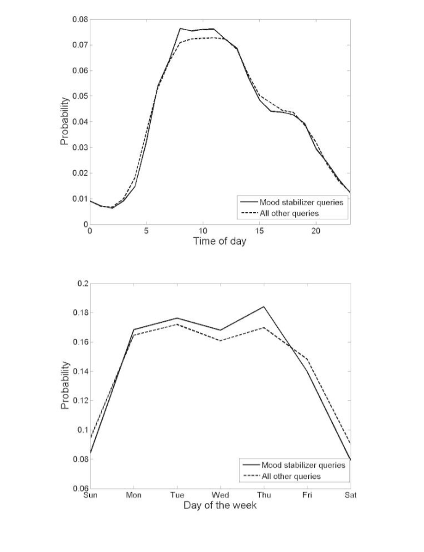
Figure 1: This graph shows the probability of sending MSD questions relative to all other queries, depending on the day of the week (bottom) and time of day (top). This graph shows that early on weekdays, MSD queries are more common (Yom-Tov et al., 2014)
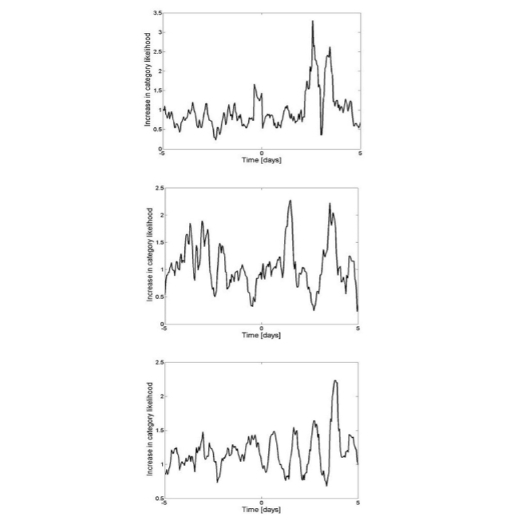
Figure 2: changes over time in the likelihood of a specific query category. An MSD query time of zero marks. Starting at the top, the categories represented are adult materials, business, and nutrition. The five-hour moving average was used to smooth the time data. (Yom-Tov et al., 2014)
The Potential of Cyberchondria to Predict Comorbid Mental Disorders: Insights from Web-Based Health Anxiety Trends
Cyberchondria is a term used to describe a clinical condition in which recurrent searches for medical information on the Internet lead to excessive worries about one’s physical well-being. Although it is yet unknown if Cyberchondria presents a distinct public burden, there is a positive correlation between cyberchondria and health anxiety symptoms. Health anxiety is a condition in which individuals misinterpret normal or benign physical sensations as indicators of severe disease. Additionally, a mental health condition in and of itself, Cyberchondria, can be anticipated or tracked. A diagnosis of cyber chondria helps predict various mental illnesses, such as depressive disorders, anxiety, OCD, and health anxiety/hypochondriasis. Depression and anxiety can be prevented from developing since Cyberchondria can also cause them.
Vismara et al. (2021) examined the prevalence and manifestation of Cyberchondria (CYB) in patients with major depressive disorder (MDD), obsessive-compulsive disorder (OCD), and anxiety disorders (ADs) in a cross-sectional study. The study included a total of 27 healthy controls (HCs) and 77 patients” (OCD:25, ADs:26, MDD:26)” referred to a tertiary psychiatric outpatient clinic. The frequency of CYB was measured using a “working” definition of CYB. The Cyberchondria Severity Scale (CSS) was used to gauge the severity of CYB. Of the total patients, only 1.3% had CYB. The authors reported a more extensive distribution “(OCD:12%, ADs:19.2%, MDD:15.4%, HCs:3.7%)” and greater CYB symptom severity when they used a broader criterion (Vismara et al., 2021).
A positive connection was seen in the combined patient sample between the CSS scores and health anxiety or hypochondriasis measures. Patients who were administered benzodiazepines or mood stabilisers, as well as those with a positive family history of mental illnesses, showed higher levels of CYB symptom intensity. CYB, therefore, suggests a varying burden of disease and is a common transdiagnostic syndrome in individuals with OCD, Ads, and MDD ranging in severity. This supports the necessity for particular therapeutic considerations and therapies. More research on CYB in clinical samples is urged, given the prevalence of using the Internet to find health-related information (Vismara et al., 2021).
Internet-based medical information is a critical component of patient education in today’s environment, according to another study by Pawar et al. (2022) that demonstrates the prevalence of Cyberchondria among outpatients with metabolic syndrome in a tertiary care hospital located in India. Numerous websites on health are readily available. According to Pawar et al. (2022), it is now customary to do an online search before visiting a doctor. This study’s primary goal was to ascertain the prevalence of cyberchondriasis and how it related to various demographic factors (Pawar et al, 2022). Patients with metabolic syndrome (n=379) who were seen in the outpatient departments of a tertiary care hospital in South India’s cardiology, endocrinology, and neurology participated in a cross-sectional research study. The cyberchondria severity scale (CSS) determined the prevalence of cyberchondriasis and its components. The average CSS scores for all sociodemographic factors did not differ statistically significantly. The link between the constructs was ascertained using the Spearman correlation (Pawar et al., 2022). Cyberchondriasis afflicted 28.0% of them moderately and 42.5% of them badly (Pawar et al., 2022). Out of all the components examined, more participants were affected by the compulsion “(85.7%)”, anguish (91.8%)”, excessiveness “(96.6%)”, and reassurance “(76.1%)” constructions than by the mistrust of medical professionals construct (33.0%) (Pawar et al., 2022). The history of myocardial infarction was significantly correlated with cyberchondriasis (Pawar et al., 2022). Between reassurance and distrust, there was a statistically significant positive linear association “(r s = 0.169, p value<0.001)”. Distress and reassurance showed a substantial inverse linear connection “(r s = -0.147, pp-value= 0.004)” (Pawar et al., 2022).
Consequently, while seeking reassurance online or from healthcare professionals is a typical response to health anxiety, this behaviour can paradoxically lead to increased distrust in the information or advice provided. Moreover, the inverse relationship between distress and reassurance-seeking might indicate that individuals with higher levels of distress could either be less inclined to seek reassurance due to disillusionment or fatigue or that their methods of coping with distress do not align with seeking reassurance from external sources. With their use of medical records and reliable information, an accurate conclusion can be made stating that Cyberchondriasis is becoming a more common mental health concern in India. Raising broad public awareness is essential to reducing the potential adverse effects of cyberchondriasis, such as anxiety and sadness. Screening individuals at risk of cyberchondriasis for potential risk factors is advised.
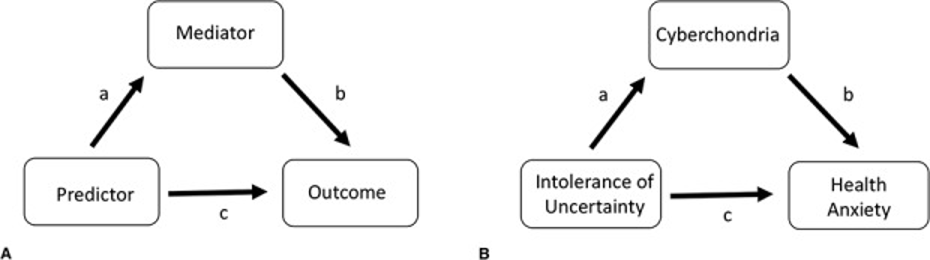
Figure 3: (A) The mediation analysis is shown in this figure. (B) This diagram illustrates how health anxiety is the result, Cyberchondria is the mediator, and intolerance of ambiguity is the predictor. Along with these effects, This graphic also shows the direct effect (Path c: intolerance of uncertainty on health anxiety that did not result in Cyberchondria), the indirect influence (Path a × b), and the effect of Cyberchondria on health anxiety.
Drawing on medical records and verifiable data, we can assert with confidence that cyberchondriasis is increasingly prevalent in India, raising concerns as a mental health issue. As illustrated in Figure 3, cyberchondriasis acts as a mediator between the predictor—intolerance of uncertainty—and the outcome, which is health anxiety. This mediation analysis underscores the complexity of cyberchondriasis’s impact, where the discomfort with ambiguity can escalate into health-related anxieties fueled by online searches. To combat the adverse effects of cyberchondriasis, such as heightened anxiety and depressive symptoms, it is imperative to elevate public awareness and promote screening for risk factors associated with this condition. Identifying and addressing these risks early on is crucial in curbing the spread of cyberchondriasis and its implications for mental health within the population.
As the outcome of additional research, Cyberchondria refers to excessive fear that causes anxiety, according to it, through the consequent obsessive internet browsing for health-related information. In a study by Blackburn et al. (2021), 155 patients visited two orthopaedic outpatient clinics, one sports medicine clinic, and one hand and upper extremity service over three months. Forty-one participants were removed from the study, mostly ten of whom had never looked for medical information online. Of the 104 other participants in the research, it was found that they had searched for medical information online about their current condition. The patients filled in the Numerical Rating Scale, a shortened Cyberchondria Scale, the Intolerance for Uncertainty, and the Short Health Anxiety Inventory by the authors (Blackburn et al., 2021). A team of researchers conducted several linear regressions to find if Cyberchondria (mediator) predicts more significant health concerns and whether intolerance of ambiguity predicts greater Cyberchondria. Cyberchondria accounted for 33% (Blackburn et al., 2021) of the variation in the relationship between the impact of intolerance of ambiguity and health anxiety after adjusting for potentially confounding factors such as pain severity, multiple pain conditions, and education.
Therefore, the study’s findings through medical use show that high Cyberchondria, or fear, appears to be strongly correlated with the high level of intolerance to ambiguity among patients with the use of the Internet to search for data and statistics. The success of orthopaedic treatments can be accomplished by finding out about those people who are intolerant to vague and telling them that desperately looking for medical information will be distasteful (Blackburn et al., 2021). In these ambivalent situations, orthopaedic surgeons should also be able to refer the patients for cognitive behavioural therapy to help them in the proper way to be more accepting of uncertainty, stop internet browsing and become less anxious about their health.
This study has a specific research methodology, which includes 104 orthopaedic patients who have visited the Internet to seek their health information. However, it has several critical limitations that affect the generalizability and reliability of the findings. An omission of non-web health information seekers might result in only selecting one group – the group not representative of the more excellent orthopaedic patient group. Its cross-sectional nature inevitably leads to the problem of a causal connection between Cyberchondria, health anxiety, and intolerance of ambiguity, where the longitudinal studies with the capability to unveil these processes over time seem to be a more profound approach. Reliance on self-reported data for tools like the Cyberchondria Severity Scale may lead to response bias, underlining the need for objective measures of internet use and anxiety for increased validity. The study is limited because its focus comes on a single patient group, making its uses unavailable for other conditions. This shows a need for research across different medical fields to ensure we fully understand Cyberchondria in general. Furthermore, by advocating cognitive behavioural therapy as an approach to Cyberchondria and its relatives, the study emphasises a multidisciplinary, multidisciplinary approach to the intervention that involves practitioners of medicine and digital literacy experts in treating young ones at orthopaedic and widespread medical clinics.
Ethical considerations
The ethical nature of this inquiry and the reliability of the data analysis are pivotal aspects of its credibility. This analysis would benefit the most from using sources vetted through statistical accuracy and proper sources. These ethics include having the research used in the best possible way, which is trustworthiness or one of the research projects, the prevention of data misuse, fairness, social responsibility, and safeguarding privacy. This commitment is about producing reliable, theoretically and ethically sound and encouraging more informative results. Hence, this paper explicitly follows data from the better education and scholarly resources that previously circulated within the field of academia after going through stringent peer review processes before publication, therefore furnishing the reliability and ethical integrity of the information utilised in our analysis.
Suicide continues to be one of the top causes of mortality worldwide, despite decades of study to understand suicide risk better and create detection and preventative techniques. One of the most critical problems facing suicide prevention researchers and healthcare professionals is identifying warning indications for suicidal behaviour. These behaviours deliver the exact moment a specific person is at risk of suicide within minutes, hours, or days. Hence, a short period. Extensive research using actual data from electronic health records can identify those at risk. However, it could not pinpoint the exact moment at which an individual is at risk. On the other hand, individualised search history data may provide a constant real-time data stream revealing personal beliefs and mental states.
Arean et al. conducted a study that aimed to evaluate the acceptability and viability of identifying suicide attempt risk through tailored online information-seeking behaviour. This study had a cohort survey design with the intention of evaluating the views of participants who had previously attempted suicide on the use of web search data for suicide prevention. The study also collected data on dates of suicide attempts, and participants were allowed to provide a download of their previous Google search history. Some of the significant findings were how participants perceived internet data collection for suicide intervention and if there was any potential change in online information-seeking behaviour in the run-up to a suicide attempt through prediction. The amount of time in online search data characteristics collected from periods proximal “(7, 15, 30, and 60 days)” to the suicide attempts were compared to the baseline or average search activity of participants. Sixty-two people who had previously tried suicide consented to take part in the research. Individual differences were seen in the number of online searches “(median 2–24 per day)”. There were modifications in the way individuals searched the Internet even sixty days before the suicide attempt. The top three search components associated with attempts were fury “(7/30 attempts, 23%)” (Arean et al., 2015), online searching behaviours “(9/30 tries, 30%)” (Arean et al., 2015), and semantic relatedness of search queries to suicide strategies “(7/30 attempts, 23%)” (Arean et al., 2015). Participants “(40/59, 68%)” said that using specialised web search data for prevention was acceptable with no intrusion of potential interventions such as opening up to a member of the community such as a counsellor, friend, or family member; concerns were raised about detection accuracy, privacy, and the possibility of overly invasive intervention (Arean et al., 2015).
Overall, shifts in the way people search the Internet might be a practical and appropriate way to identify suicide risk. Personalised research of information-seeking behaviour online revealed significant shifts in search words and activity that are associated with early warning signals of suicide that appear two months to seven days before a suicide attempt.
One critique of this study concerns its sample size and the specificity of its participant group—62 individuals who had previously attempted suicide. While this focus provides valuable insights, the relatively small and specialised sample may limit the generalizability of the findings to broader populations. Moreover, the research’s dependence on self-reported data and voluntary Google search history provision could be biased, considering that it has a considerable chance of selective omission of sensitive data, which in turn may reduce the integrity of data collected during the research. Apart from the ethical issues, data mining for suicide prevention causes some other questions as well. The writing revealed that most respondents agreed with this technique application, but they had many questions about privacy, detection errors, and potential medical invasions. Therefore, the ethical dimension of this quest for early detection would demand that we look for the balance between effectiveness and privacy invasion, suggesting embracing clear rules and solid consent procedures in future research.
Discussion
This literature review, which is an evaluation of the conflictual relationship between internet search behaviours and mental health, this review will deepen the suicide prevention aspect. It highlights how social media, despite being a critical support and information source, may also inadvertently worsen mental health conditions or contribute to suicide’s glorification. Studies by Asch et al. (2011), Vismara et al. (2018), and Moon et al. (2020) emphasise the predictive value of digital footprints for identifying suicidal ideation, stressing the importance of ethically leveraging this data for prevention. Besides this, the phenomenon known as Cyberchondria is a consequence of people surfing the Internet intensively in order to get information about their health, which can provoke such conditions as anxiety, stress and depression, and in fact, demonstrates the importance of precise health information online.
The author of this literature review concentrates on the fact that comprehensive solutions should be formulated to prevent cyberchondria outbreaks and enhance web awareness among the internet community. The goal is to make people knowledgeable so they can critically evaluate the sources online and figure them out, thus reducing stress, anxiety and Cyberchondria. It stresses the appropriate use of digital platforms as a mental health tool. It emphasises the role of cooperation between all concerned professionals — professionals in mental health, educators, companies that develop tech, and policy-makers. Collaboration of all the stakeholders is one of the vital things that should be given importance while designing and implementing interventions that highlight the positive aspects of digital tools without those who are not very good for mental health. It is the principle of action whose main objective is to improve people’s mental state and contribute to that of the public health system – to achieve this securely and acceptably.
This discussion highlights the ethical and logistical dilemmas that arise from using internet instruments for suicide risk evaluation, with a particular focus on privacy and the level of accuracy these scales may offer. It points out the need to treat such occurrences with precision and the utmost respect for people’s privacy, which demands the highest care possible in this case of a seemingly delicate area of mental health support. The untapped potential of harnessing the search for suicide risk over the Internet and providing tailored assistance online posts the most remarkable result of the research as the positive outcome. Notwithstanding the former, the latter leaves unresolved issues, such as the accuracy of the data which comes from searching online, ethically dubious issues concerning consent and the way data is used and the general efficiency of digital interventions to stop people from committing suicide. These obstacles justify extensive and multifunctional approaches that guarantee ethics as well as the practicality of the utilisation of digital tools in suicide prevention.
The new directions in digital mental health evaluation will address such tasks as acquiring data about the patient and streamlining algorithms that may be used for predictive purposes, as well as expanding the coverage to other languages. Thus, the augmentations focus on the dramatic expansion of the availability and appropriation of digital tools for different languages, making it possible for persons from distinct language and cultural groups to take advantage of early detection and treatment strategies. Such a futuristic attitude underpins the dual-sightedness but hopeful opportunities the emerging technologies play on the canvas of suicide resistance. Innovation is essential to creating these technologies as it helps put the heart into them. However, at the same time, to make these technologies more effective and compassionate, we will need to put much effort into providing for issues like data security and privacy. This work on better mental health evaluations online illustrates the undertaking of using these impressive technologies that respect our dignity and cultivate the hope of saving a life and providing excellent mental health for everyone.
References:
Ahmed, Y.A., Ahmad, M.N., Ahmad, N. and Zakaria, N.H., 2019. Social media for knowledge-sharing: A systematic literature review. Telematics and informatics, 37, pp.72-112.
Areán, P. A., Pratap, A., Hsin, H., Huppert, T. K., Hendricks, K. E., Heagerty, P. J., Cohen, T., Bagge, C., & Comtois, K. A. (2021). Perceived Utility and Characterisation of Personal Google Search Histories to Detect Data Patterns Proximal to a Suicide Attempt in Individuals Who Previously Attempted Suicide: Pilot Cohort Study. Journal of Medical Internet Research, 23(5), e27918.
Asch, J. M., Asch, D. A., Klinger, E. V., Marks, J., Sadek, N., & Merchant, R. M. (2011). Google search histories of patients presenting to an emergency department: an observational study. BMJ open, 1(1), e000066.
Blackburn, J., Fischerauer, S. F., Talaei-Khoei, M., Chen, N. C., Oh, L. S., & Vranceanu, A. M. (2019). What are the Implications of Excessive Internet Searches for Medical Information by Orthopaedic Patients? Cureus, 11(11), e6208.
Moon, K. C., Van Meter, A. R., Kirschenbaum, M. A., Ali, A., Kane, J. M., & Birnbaum, M. L. (2020). Internet Search Activity of Young People With Mood Disorders Who Are Hospitalised for Suicidal Thoughts and Behaviors: Qualitative Study
Pawar, P., Kamat, A., Salimath, G., Jacob, K. R., & Kamath, R. (2020). Prevalence of Cyberchondria among Outpatients with Metabolic Syndrome in a Tertiary Care Hospital in Southern India. Indian Journal of Psychological Medicine, 42(4), 424.
Vismara, M., Benatti, B., Ferrara, L., Colombo, A., Bosi, M., Varinelli, A., Pellegrini, L., Viganò, C., Fineberg, N. A., & Dell’Osso, B. (2018). A preliminary investigation of Cyberchondria and its correlates in a clinical sample of patients with obsessive-compulsive disorder, anxiety and depressive disorders attending a tertiary psychiatric clinic. World Journal of Psychiatry, 28(10), 949-957.
Yom-Tov, E., White, R. W., & Horvitz, E. (2014). Seeking insights about cycling mood disorders via anonymised search logs. In Proceedings of the 2014 ACM Conference on Human Factors in Computing Systems (pp. 2757-2766).
 write
write