Introduction
The integration of artificial intelligence (AI) algorithms into medical imaging, especially in MRI image analysis, has become a powerhouse of significant changes in healthcare delivery. With the assurance of higher diagnostic accuracy, better workflow optimization, and ultimately facilitating enhanced patient outcomes, AI-supported systems are the cornerstone of the transformation of medical imaging. The main goal of this article is to examine how AI algorithms may influence MRI image analysis and contribute to the redesign of healthcare systems. Using AI to make this possible not only enables quick intervention but also creates customized therapy for each patient and a specific treatment according to his individual needs. With AI continuing to grow and become more sophisticated, its role in medical imaging will be crucial and beyond reach. This trend opens the door to a future where health care is more efficient, accessible, and patient-centered, with better health outcomes and an enhanced quality of life for patients across the world.
Advancements in AI Algorithms
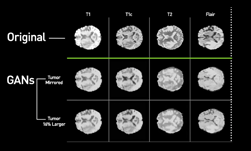
Artificial intelligence algorithms, intense neural networks like convolutional neural networks (CNNs), and generative adversarial networks (GANs) have gained significance in the field of MRI imaging analysis. Through deep learning algorithms, these intriguing algorithms access extensive datasets to discover subtle patterns and details within MRI images, enhancing a reliable diagnosis. On the other hand, the fearsome advancement of AI technologies has driven developments in real-time image processing and interpretation, supplying healthcare professionals with actionable data necessary for constructive decision-making at every suitable juncture. Using AI that inseparably combines with MRI analysis, the process of reaching a diagnosis is much quicker, planning is more straightforward, and the results are much better. With progress in AI technologies still underway, its effect on medical imaging will continue to grow, changing the contours of the healthcare industry and triggering the dawn of more spot-on, speedy, accurate, and personalized diagnostic methods for a person’s specific needs.
Source: https://developer.nvidia.com/blog/ai-can-generate-synthetic-mris-to-advance-medical-research/
Enhancing Diagnostic Accuracy
The utilization of AI algorithms in MRI image analysis yields a pivotal benefit: diagnostic accuracy and decision. AI can, through deep learning models, see slight anomalies and other structures that would otherwise go undetected by human observers. This makes it possible to identify diseases at the earliest stage, including tumors and lesions, and to plan and give the necessary treatment protocol immediately. In addition, AI algorithms are priceless tools for radiologists, boosting the speed of analyzing complicated MRI pictures (Hu & Giger, 2021). AI assists in preventing diagnostic mistakes and quickens the test procedure. Therefore, it improves overall patient care. AI technology and medical expertise are the combination that guarantees high accuracy for the future generation of MRI image analysis. Since AI algorithms move on with their evolution and systemic integration into physician workflow, medical imaging gains big chances for diagnosis accuracy and care enhancement.
Maximizing Workflow Efficiency in Medical Imaging
AI-based methods have been shown to be quite efficient in terms of workflow optimization in radiological diagnostic departments (Krauze et al., 2022). AI algorithms that utilize automation to shorten the time for segmentation and feature extraction reduce the effort and time needed for MRI image analysis. On top of improving productivity and throughput, this assistance frees up healthcare professionals’ time for cases requiring individualized attention as well as their specialized expertise.
Additionally, AI-driven decision support systems assist in sorting out urgent cases. As a result, they reduce the time of resource allocation and speed up the process of managing patients. Therefore, the consequent reduced workflow time is imperative not just for improving patient care outcomes but also as a measure of cutting healthcare costs, thereby presenting the multifaceted advantages of the application of AI to medical imaging.
Implications for Future Healthcare
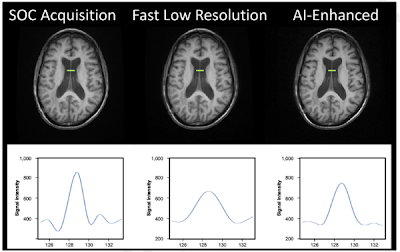
The fusion of AI-based algorithms and MRI image processing has its roots in being a crucial initiator for significant upheavals in the delivery of healthcare. The introduction of AI in this field comes as a reinforcement of the need to improve the accuracy of diagnosis, the efficiency of workflow, and, as a result, patient outcomes. Therefore, AI-based systems have become a staple of the evolution of radiology. This review strives to delineate the critical effect of MRI image analysis of AI algorithms and the transformational power they have on health care. Through the use of AI, healthcare practitioners will gain unparalleled precision and speed when navigating MRI datasets, allowing for timely interventions and tailored treatment strategies. The unyielding advancement of AI shows more and more promise for medical imaging, and the future of healthcare will be characterized by high efficiency, accessibility, and a patient-oriented horizon.
Source: https://intelligentimaging.ucsf.edu/news/using-ai-based-image-enhancement-reduce-brain-mri-scan-times-and-improve-snr
Conclusion
In conclusion, such an integration of AI technology into medical imaging systems, especially MRI image analysis, has brought about a revolutionary change in the healthcare method of delivery. Inspiring the possibility of greater diagnostic precision, workflow optimization, and, ultimately, better patient outcomes, AI-based efforts emerge as the foundation for the advancement of current medical imaging methods. This report is intended to reveal the incomparable power of algorithms in the analysis of MR images, which offers insight into a new healthcare scenario. The use of AI, which is powerful, allows doctors to go through magnetic radiographic images that are dense in the most profound detail and at an incredible speed, prompting the delivery of treatment and saving patients’ lives. In the future, advanced AI will become an irreplaceable factor in medical imaging; this development will create a future where healthcare will be more effective, convenient, and user-friendly. This will eventually lead to better health outcomes and a better quality of life for patients everywhere.
References
Hu, Q., & Giger, M. L. (2021). Clinical artificial intelligence applications: breast imaging. Radiologic Clinics, 59(6), 1027-1043.
Krauze, A. V., Zhuge, Y., Zhao, R., Tasci, E., & Camphausen, K. (2022). AI-Driven image analysis in central nervous system tumors-traditional machine learning, deep learning and hybrid models. Journal of biotechnology and biomedicine, 5(1), 1.
Rea, G., Sverzellati, N., Bocchino, M., Lieto, R., Milanese, G., D’Alto, M., … & Sica, G. (2023). Beyond visual interpretation: quantitative analysis and artificial intelligence in interstitial lung disease diagnosis “expanding horizons in radiology”. Diagnostics, 13(14), 2333.
 write
write