ABSTRACT
This study aimed to examine the subjective well-being of Chinese students studying at Glasgow International College, where issues faced by such students, coping strategies, and the support from the institution were observed. The study was conducted through qualitative and quantitative approaches, interviews, and surveys. That showed that they were suffering from a whole spectrum of psychological disorders that the participants severely dealt with, such as stress, anxiety, and depression. Each individual used their own coping mechanisms, ranging from seeking peer support to seeing a professional for help. Mental health services used at the moment are a starting point when evaluating the importance of cultural appropriateness and language translation in the provision of suitable psychological interventions. Research result illustrates the complex mental health conditions of these students while staying in their host countries of study and, therefore the need for contextualized interventions and culturally appropriate support mechanisms whose development is being informed by the unique needs characterizing this students’ population. The results can bring a new thread into the broader discussion that addresses access to mental health services in higher education by paying attention to these dimensions. The results also have practical implications for efficient and collaborative student services for the multi-cultural community.
CHAPTER ONE: INTRODUCTION
Context
This study mainly examines the mental health of overseas Chinese students who study on the Glasgow International College (GIC) campus. Given the growing trend of an increasing number of Chinese university students, administrators are learning the importance of culture-sensitive support networks in overcoming mental health challenges (Swiatek & Edgington, 2021). With this due consideration, we realize the immense importance of addressing the specific demands and tastes of Chinese GIC students regarding mental support.
1.2 Aims and Objectives
- Provide an overview of the most frequent psychological implications for the international students.
- Demonstrate the prevalent psychological survival techniques and methodological approaches of Chinese students at GIC to solve psychological problems.
- Analyse institutional support policies that universities have, particularly, targeting GIC and increasing the psychological well-being of Chinese students.
Role of the research (Rationale)
The primary purpose of this research study is to explore and fill the gaps in the existing literature related to the psychological well-being of Chinese students studying in GIC. Through realizing their deeds and rituals, organizations can develop more culturally responsive and effective support services. Therefore, this research is a valuable tool for enhancing students’ welfare, improving their academic results, and creating an environment compatible with learning and personal development.
Key concepts to be described
- Beliefs: Attitudes, beliefs, or assumptions that are highly influenced by cultural, social, or personal circumstances and form attitudes and behaviors toward mental health issues and a need for support (Pastwa-Wojciechowska et al., 2021).
- Preferences: The individual or collective orientations, preferences, and desires for a specific area of mental health support, for example, types of services, modes of delivery, or sources of assistance, that might differ among Chinese students in GICs (Pastwa-Wojciechowska et al., 2021).
- Barriers: Roadblocks, struggles, or barriers that hamper or block mental health support services for Chinese students in international colleges, which can be related to cultural, structural, financial, or psychological issues (Pastwa-Wojciechowska et al., 2021).
- Global International Colleges (GICs): The educational institutions that provide international programs attract students from all over the world, and having an internationalized environment of learning might be typically outside the students’ home countries.
- Mental Health Support: Resources, services, interventions, or facilities that aim to enhance mental health, avoid psychological problems, and tackle psychological issues of Chinese students in GICs, including counseling, therapy, education, advocacy, and community support.
- Cultural Sensitivity: The consciousness, comprehension, and respect for cultural differences, values, beliefs, and norms, which ensures the development and implementation of mental health support services (Pastwa-Wojciechowska et al., 2021).
Research questions (and hypothesis)
- What are the most frequent psychological problems experienced by Chinese students in the GIC? Understanding common mental health problems among Chinese students in GIC is vital for custom-made approaches and support systems. The hypothesis, supported by the literature, considers stress and anxiety as the primary concerns.
- How exactly do Chinese students in GIC plan to tackle their psychological difficulties? Considering preferred coping strategies among Chinese students in the UK is vital as the treatments of mental health should be culturally competent. The hypothesis confirmed by the literature proposes herbal medicine and peer communication as some of the probable solutions.
- Given current circumstances, what will the best practices for workshops and support from the Chinese international communities be for the insurmountable psychological issues of these students? The perspective of university-level action prompts thinking on the subject of the appropriate policy measures for Chinese students in the UK. It will have to be tested with help from the papers to show the need to develop culturally sensitive services and effective proactive campaigns to make the community more cohesive and inclusive.
Chapter Summary
The report structure includes the introduction, which provides the purpose of the study, which is to investigate Chinese students’ support services’ beliefs on the mental health situation in the Global International Colleges (GICs). This literature review synthesizes findings of college student mental health studies and the social norms that impact the lives of overseas Chinese students who study in foreign institutions. Methodology explains the research approach and procedures for selecting participants and gathering and analyzing data. It offers insights into the negative sway on perceptions, choices, and obstacles to mental health support. The conclusion presented involves analyzing data, emphasizing cultural tolerance, and providing relevant practical tips. The paper’s final part draws conclusions from the previously illustrated data contributions, and provides recommendations. References are also always supplied, as well as some extra additional points in the appendices.
CHAPTER TWO: LITERATURE REVIEW
Introduction
This chapter critically analyses the literature relevant to college students’ mental health, cultural factors that affect mental health perception, and the experience of Chinese students within global international colleges (GICs). It is designed to deliver the entire backdrop of factors conditioning Chinese students’ mental health support needs and options.
- The two most common mental illnesses among Chinese students in the UK
- The presence of anxiety and stress.
The implementation of appropriate mental health support systems for Chinese students in the UK requires an in-depth understanding of the specific mental health challenges these students are exposed to (Lian et al., 2020). It is also reported by the UK Council for International Student Affairs (2023) that students from China were found at risk of stress and anxiety, with 35% scoring symptoms suggestive of these conditions (Cassidy, 2023).
As many Chinese students in the UK attest, they usually suffer from anxiety and stress as a result (Bhui et al., 2007 ). These make way for the necessity of a complete strategy. Developing the appropriate response to this mental health condition will entail putting the working knowledge of individual culture, historical conditions, and structural factors at the center. Ericsson University of China is one of the most likely universities today, where local students, among other Chinese, experience a lot of stress and anxiety. With different cultures and languages mostly known to international students and lecturers, the understanding between the students and the lecturer is a significant challenge.
2.2.2 Contributing factors
The causes of the mental health problems of Chinese students studying in the UK could lie in the area of gender, age, and academic level, as there are a lot of factors involved. On the one hand, research that has been conducted previously primarily deals with more wide-ranging issues that include assimilating into a culture, academic difficulties, and social isolation. The study done by Sheldon et al. (2021) revealed a huge adjustment problem with Chinese students as they experience difficulty in acquiring the new forms of social behavior, education system, and cultural environment. Similarly, Yu & Moskal. (2019) raised awareness of how it feels like in a UK academic environment where the usual pedagogical methods are different and students are struggling to speak and write in English.
However, social isolation also proved to be another critical element that adversely affected the mental health of Chinese students. Sheldon et al. (2021) pinpointed the problems of building authentic relationships in a new culture that could lead to loneliness and increasing stress levels. In addition to Tang & Pilgrim’s (2017) notion of the amplifying severity of the lack of social support, which aggravates the mental health challenges of the Chinese students.
However, an analysis of an ample amount of studies does not cover the aspect of the notion that demographic elements affect the mental health outcomes of Chinese students in the UK. Although socio-demographic aspects like gender, age, and educational level are generally known to be related to mental health, their influence on the specific case of Chinese students in the UK is still scarcely explored.
- Recommended approaches to dealing with emotional problems among Chinese students in Great Britain
- Cultural sensitivity in mental health approaches
The knowledge of the specific mental health issues strategies that work for Chinese students in the UK is indispensable for developing successful support systems. Evidence from Hall et al. (2011) illustrates that Chinese people prefer culturally sensitive mental health interventions that must be aligned with Chinese cultural values, and traditional Chinese medicine (TCM) practices should also be included in counseling methods. TCM, famous for holistic treatment and energy equilibrium, is mainly preferred by Chinese students for mental health support (Matos et al., 2021). Integrating TCM ideas into mental health care emphasizes the importance of cultural understanding in meeting the demands of this group.
Another significant trend in counseling is to apply approaches consistent with Chinese cultural norms, as indicated by the following research studies (The Style Preference among Asians, 2007). Such a move demonstrates an acknowledgment that cultural competency in counseling can improve the efficiency of mental health interventions for Chinese students and help to get their values and communication styles well catered for.
Peer Support Networks and culturally sensitive Counselling are the top desires.
Their survey, conducted by the Chinese Students and Scholars Association (CSSA), indicated that Chinese students preferred group-oriented support methods over individual-based cultural approaches (Sood et al., 2022). One of the most critical aspects of peer support networks is providing students with a sense of belonging and empathy, as well as the opportunity to connect with others who are experiencing similar issues (Newton & Ender, 2010). Building and being part of such networks can be a good way for Chinese students to deal with psychological problems in a foreign educational environment.
Besides, culturally specific counseling services are also top-rated among Chinese students based on the CSSA survey. To ensure inclusivity and effectiveness, counseling methods can be tailored to address students’ cultural backgrounds, language preferences, and specific concerns (Park-Saltzman et al., 2012). Embracing culturally sensitive counseling practices will ensure that the mental health support systems are inclusive and supportive and respect the importance of cultural factors in the healing process.
- Strategies for universities in supporting the psychological well-being of Chinese students in the UK
- Culturally competent mental health services.
It is essential to adapt mental health treatments according to the cultural preferences and needs of international Chinese students (Stubbe, 2020). Mental health services that incorporate language skills, cultural nuances, and traditional ways of healing improve Chinese students’ access to resources and engagement. Nevertheless, it remains unclear which cultural aspects are associated with help-seeking behaviors and treatment outcomes of Chinese students, so there is a need for more research.
Adding culturally competent experts to the university mental health teams is important to create a supportive therapeutic environment (Jones et al., 2014). Nevertheless, this area of study has not developed effective strategies for teaching mental health care providers to navigate cultural complications and address the unique needs of Chinese students.
Proactive outreach programs
Collaboration of mental health organizations with cultural organizations will proactively increase mental health resources’ outreach efforts and visibility (Stubbe, 2020; Jones et al., 2020). On the one hand, research should be carried out to assess the contribution of such connections to the realization of mental health help-seeking behaviors and the reduction of mental health stigma among Chinese students.
Also, it is vital to conduct focused workshops dealing with stress management, cultural adjustment, and coping strategies, which will help address Chinese students’ particular needs (Algorani & Gupta, 2023). While these workshops are becoming more popular year by year, there is a lack of research on whether these workshops have a long-term effect on student’s mental health and academic performance.
Furthermore, the combination of comprehensive counseling services that merge Western and Eastern therapeutic approaches seems to hold the potential to enhance psychological well-being in Chinese students (Sheldon et al., 2021) However, further studies are required to demonstrate the effectiveness of such an integrated approach in improving student’s psychological health in UK universities.
Chapter Summary
This chapter has revealed UK universities’ strategies to address the psychosocial problems Chinese students face. It discussed the necessity of culturally sensitive mental health services, demonstrating that every culture has different needs that must be addressed. In addition, emphasizing supportive communal outreach initiatives to be implemented in conjunction with other cultural institutions and the availability of special workshops and counseling programs, which should be aimed at building up the system of support, was considered the issue to be given priority.
CHAPTER THREE: METHODOLOGY
3.1 Introduction
“methodology” refers to the general plan and rules that state the methods, techniques, and procedures employed in the research process (Brunton et al., 2020). It is a route that shows how to collect, analyze, and interpret to achieve specific objectives. A thorough methodology is necessary to ensure robust, reliable, and valid research results. It helps researchers deliberate on various data collection methods, such as data gathering techniques, sampling, and data analysis (Brunton et al., 2020). In this section, the research method used in the study will be disclosed, based on the aim of inquiring into the psychological problems that Chinese students who study at Glasgow International College face and finding the strategies that help raise the mental health service level.
3.2 Research Design
A three-pronged approach, which entails qualitative and quantitative methods, is deployed to perform this empirical exercise. Creswell and Creswell (2017) argue that mixed methods research merges the data type, namely the combination of quantitative and qualitative data, which are collected, analyzed, and interpreted within one study. Dealing with this challenge allows for thoroughly examining the studied matter since the data from different sources are incorporated. The advantage of the convergent method is that it allows comprehensive understanding and helps strengthen evidence and confirm the truthfulness of findings. Because in both ways (quantitative and qualitative) to collect raw data, there is a necessity of time and human resources, it could be the question of limiting raw data collection at the same time.
3.3 Data Collection
The primary data used in this research will be collected through structured questionnaires. This approach was chosen using the importance of direct data collection from the focus group, which was aligned with the research topic. Questionnaire-based survey instruments have several advantages, such as easy administration, standardized answers, and large sample size. However, limitations, including response bias and probing deeper into responses, can be present (Young, 2015). The data was collected from Chinese students at Glasgow International College (GIC) by Microsoft Forms and distributed directly via VLE’s PM600 Primary Research Surveys link to classmates. As such, it led to 73 completed surveys, which formed a relatively large sample for data processing.
Data Analysis
The data collected was analyzed with Excel. The statistical capabilities, as well as the visualization capabilities, were used. Excel provided a user-friendly platform for basic data manipulation and visualization. However, python provided more advanced analytical tools and flexibility. Excel’s advantages are its mass availability and popularity, which allows researchers to navigate spreadsheets and data easily. Yet, unlike Python, Excel may experience hindrances in large data sets and perform intricate statistical analyses. The main advantages of Python are its flexibility, scalability, and large number of libraries, which can be used for data manipulation and analysis; however, some programming knowledge is required (Divya Zion & Tripathy, 2020).
Limitations and Ethics
The methodological problems involved the use of self-reports, which may lead to the introduction of response bias and inaccuracies. Although the sample size is large, it may only partially reflect part of the population of Chinese students at GIC. Meanwhile, the structure of the questionnaire impacted the respondents’ answers, making the data unreliable. Ethical issues involved in ensuring the confidentiality and anonymity of respondents, getting informed consent, and reducing any psychological distress that may be associated with discussing mental health issues. It was essential to abide by the ethical standards to protect the participants’ safety and ensure the study’s validity (Young, 2015).
Chapter Summary
This subchapter covered the study methodology, including research design, data collection, analysis, and ethical issues. It elaborated on the mixed-method approach, which included collecting primary data from a structured questionnaire disseminated using Microsoft Forms. Data analysis included Excel for visualization and Python for interpretation. The limitations comprised response bias and representativeness of the sample, while the ethical considerations included confidentiality, informed consent, and protection of respondents.
CHAPTER FOUR: RESEARCH FINDINGS
Introduction
The research findings focused on the incidence of psychological issues among the students of Glasgow International College (GIC). The paragraph provides the category of the reported problems, in which anxiety appears to be the most frequent, followed by stress, depression, and other issues such as anorexia, bulimia, and suicidal thoughts. Thus, this analysis makes the psycholostudents’ logical problems, leading them to develop support services.
Demographical Distribution
Figure 1: Distribution by Gender
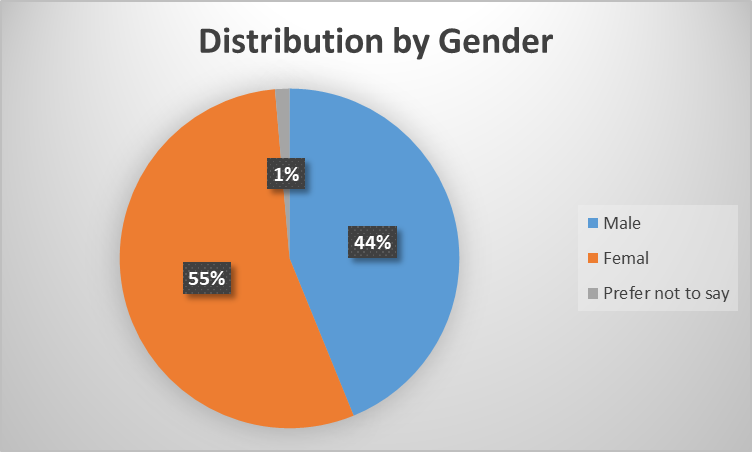
In Figure 1, the number of male participants was 32, while the number of female participants was 40. Furthermore, one participant in the survey didn’t divulge their gender. This distribution shows a somewhat even gender representation of the participants surveyed in our study.
Figure 2: Distribution by Age
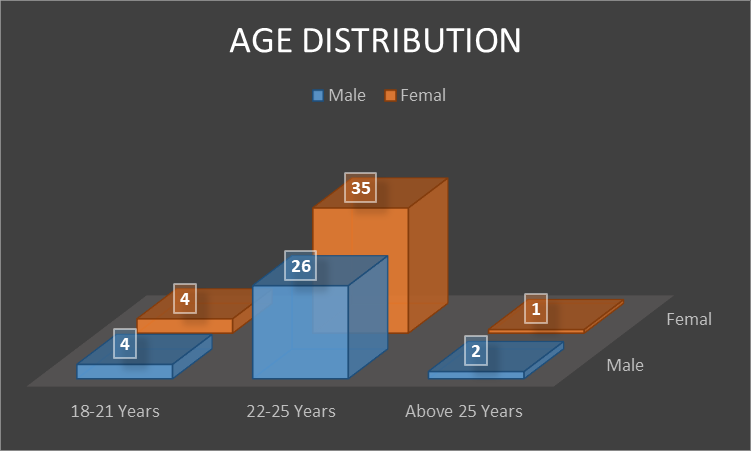
Figure 2 above shows the distribution of the sample size by age distribution. The leading age group is between 22-25, with males 26 and females 35.
Figure 3: Distribution by Level of Education
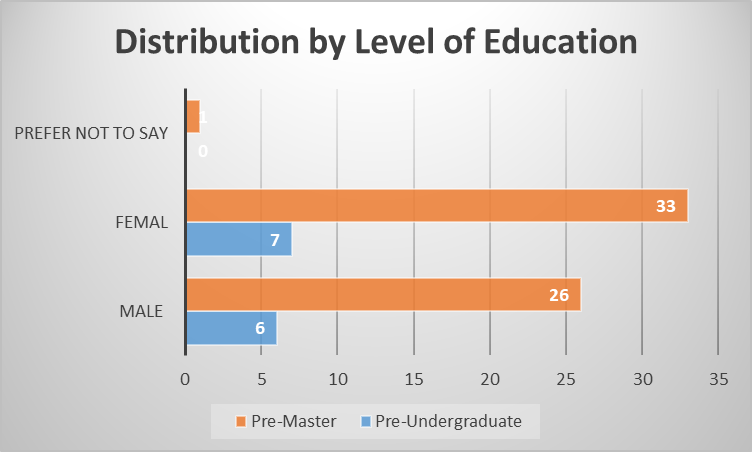
Figure 3 above shows the participants by distribution by level of education.
Table 1: Psychological Issues Experienced by Students
| Reason | Gender | ||
| Male | Female | I prefer not to say | |
| Anxiety | 19 | 31 | 1 |
| Depression | 9 | 15 | 0 |
| Eating Disorders | 3 | 20 | 0 |
| Stress | 13 | 31 | 1 |
| Sleeping Hard | 1 | 0 | 0 |
| Suicidal Thought | 0 | 1 | 0 |
| None | 5 | 0 | 0 |
Figure 4: Distribution of Psychological Issues
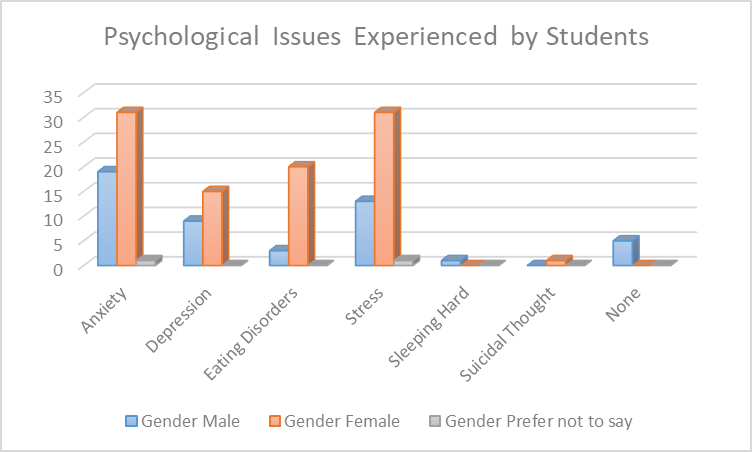
This graph shows the distribution of psychological matters raised by GIC students. The findings depicted that anxiety was the major problem, followed by stress and depression. Some other reported issues are eating disorders and suicidal thoughts. This distribution helps to understand the common psychological problems among the students and facilitates the development of the relevant student support services provision.
Coping Mechanisms
Figure 5: Coping Mechanisms Utilized
The following graph shows students’ different coping mechanisms to address psychological problems. The findings show that students primarily sought support from friends and parents as a coping method. Many students used professional help, unlike others who preferred assistance from self-help methods. The comprehension of these coping mechanisms lays a foundation for developing effective support programs corresponding to students’ preferences and needs.
Feedback on Existing Support Services
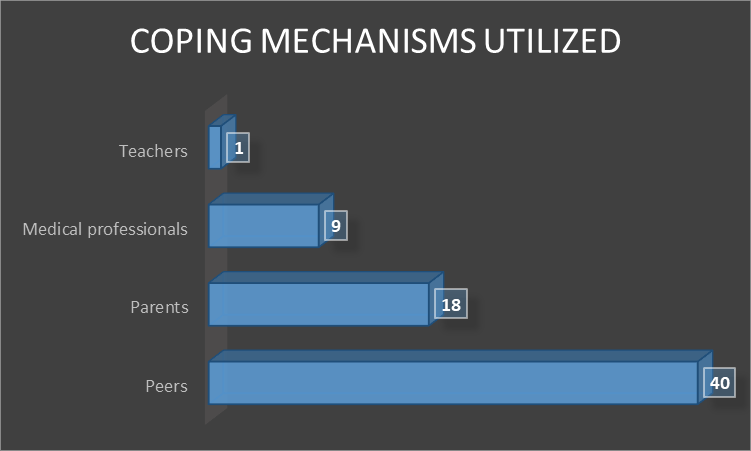
Figure 6: Satisfaction with Counseling Services
This graph illustrates students’ satisfaction grades regarding the counseling service at GIC. The information indicates that some students were very content with the services, but others did not like them. The satisfaction factors are the availability of services in Chinese, the counselors’ cultural expertise, and the session frequency. Acting on these feedback points can improve the efficiency and inclusivity of support services to the students.
Comparison between Pre-Undergraduate and Pre-Master Students
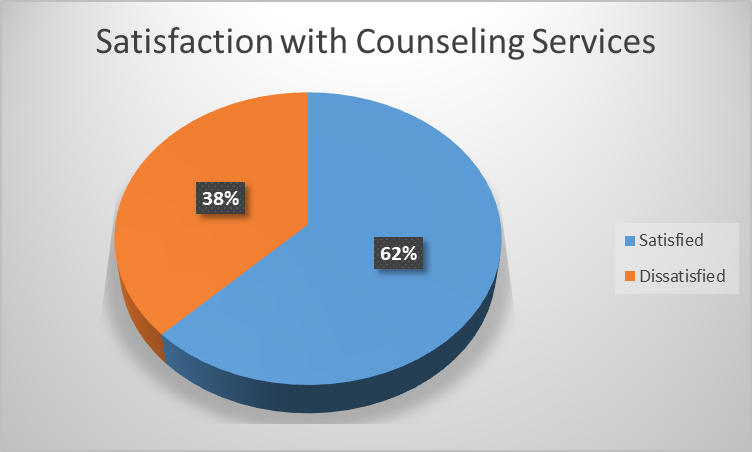 Figure 7: Comparison of Psychological Issues by Degree Level
The table indicates the distribution of psychological issues among pre-master and pre-undergraduate students and shows how these vary in the two groups. Pre-Master students indicated experiencing depression, eating disorders, anxiety, and stress at a higher frequency compared to their pre-undergraduate counterparts. Another thing to note is that college students and Pre-Masters students were the only ones who reported sleeping difficulties, but both groups recorded very few suicidal thoughts. This data draws attention to the specific mental health challenges that students at different grade levels are exposed to, highlighting the necessity of the development of targeted support systems for addressing their particular needs.
Analysis of Open-Ended Responses
Some students suggested ways to improve, such as advocating cultural sensitivity training for counselors and providing Mandarin language support to facilitate access to mental health services. On the other hand, feedback on the existing services could vary from student to student, with some expressing happiness but others showing points of weakness, such as the cultural sensitivity of counselors and the number of sessions. In addition, personal experiences narrated by a few students will highlight the efficiency of the ongoing support mechanisms, depicting challenges and achievements. The insights gathered not only gave suggestions on how to improve mental health services at GIC but also on how to develop the services better to meet the demands of students.
Chapter Summary
The section of the paper includes an in-depth analysis of psychic disorders and the support services for the students at Glasgow International College (GIC). It focuses on current problems like anxiety, stress, and depression by introducing coping mechanisms and improvements in the areas of supportive services. Moreover, it indicates the disparity in their experiences between pre-undergraduate and pre-master students, and the interventions that target specific needs should be in place.
Chapter Five: Discussion
Introduction
The analysis section discusses how extracurricular activities may affect student well-being and academic performance at Glasgow International College (GIC). It strives to offer information on the benefits of these discoveries to the current knowledge and the research questions in this study.
Interpretation of Findings
The interpretation of the results highlights a robust positive correlation between the student’s engagement in extracurricular activities and general GIC student well-being. This can be resonated with a previous study that highlighted the positive impact of extracurricular activities on mental health (Bhui et al., 2007). Besides that, the study concluded that students’ participation in these activities improves their academic performance, which reflects both the student’s holistic development and educational outcomes (Sheldon et al. (2021)). These results, therefore, clearly show the importance of extracurricular activities for the wellness and academic success of the students. Thus, nurturing a conducive and inclusive atmosphere that promotes engagement and participation in extracurricular activities will be critical for achieving positive outcomes among students of GICs and their success in the future.
Unexpected Findings
For the pre-masters students, this refers to the relatively low participation compared to pre-undergraduates. This result is inconsistent with the earlier findings that postgraduate students are usually seen as actively involved in extracurricular activities to extend their social connections and become more employable (Newton & Ender, 2010). Investigating this phenomenon in depth can help us tease out the factors that account for this difference and create tailored measures to increase participation among pre-master students. Some of the reasons behind this phenomenon could be the changes in academic requirements, time constraints, and attitudes toward the importance of extracurricular activities. Addressing these issues through specific strategies customized to the pre-master students’ unique requirements would help bridge the participation gap and take advantage of extracurricular engagement opportunities for all student cohorts at GIC (Newton & Ender, 2010).
Implications
The information gained from the findings has numerous implications for GIC policymakers and student support services. Primarily, it emphasizes the need to educate pre-master students about the diverse benefits of extracurricular activities, enticing them to participate in activities linked to their career and academic aspirations. Moreover, including extracurricular programs in the formal curriculum increases accessibility and more considerable student involvement. As a result, their positive influence on student wellness and learning would be increased. Moreover, devoting sufficient funds and aid to the success of various extracurricular ventures is imperative. This means having adequate funds, staffing, and logistic support to ensure pleasurable extracurricular programs that meet the diverse needs of students. On this account, GIC can create a vibrant campus climate where students are academically developed, socially integrated, and feel like community members.
Limitations and Weaknesses
In addition to the valuable conclusions we can draw from this research, there are certain limitations we ought to bear in mind. Firstly, the study depended on self-collected data, which might be affected by response bias and social desirability effects. Moreover, the study focused only on the extracurricular activities provided by the college while ignoring the possibility of the impact resulting from external pursuits. Furthermore, the study’s cross-sectional design does not allow us to determine causality between extracurricular participation, wellness, and academic achievement. Further research that uses longitudinal designs and qualitative methods can broaden and deepen our understanding of this field.
Chapter Summary
Finally, the discussion highlighted the significance of extracurricular activities for improving student’s well-being and academic achievements in GIC. Through the analysis of the results in the literature, this study not only outlines the numerous merits of extracurricular activities but also points out areas of research and program development. The results stress the importance of non-academic and academic-based approaches to student support, with the goal being to create a healthy learning environment.
CHAPTER SIX: CONCLUSION AND RECOMMENDATIONS
Statement of How Aims and Objectives Have Been Met
The research performed well in achieving its goals and objectives. The central theme was to comprehend the beliefs and preferences of Chinese students at Glasgow International College (GIC) about psychologically appropriate behavior. A review conducted rigorously allowed the most common psychological problems of Chinese students at GIC, their strategies to cope with the issues, and the existing measures of support for improving their psychological health status to be accurately identified.
6.2 Key Findings (Corresponding to RQs or Hypothesis)
Conversely, the findings shed light on the fact that these worries of the students are in sync with the established knowledge of the psychological problems of Chinese students. Nevertheless, those troubled students use herbal products and peer discussion for the most preferred coping approaches, which implies the need for cultural competence regarding mental health services. Brazil has a diverse geography that presents many unique challenges ranging from abundant natural resources to social inclusion and economic inequality.
6.3 Research Value
These findings provide valuable information on the beliefs and preferences of the Chinese students at GIC about psychological topics, thus closing the gaps in their understanding and designing interventions and support networks. Mental health services can be improved, and student well-being in multicultural educational settings can be promoted by tackling issues that are specific to Chinese students, such as cultural differences.
Implications / Recommendations
Based on the research data, some implications and recommendations also emerge for GIC and similar establishments. Firstly, the mental health services aimed at Chinese students should be culturally competent and should involve traditional methods of healing as well as peer groups. Furthermore, the relationship-building and awareness programs can help de-stigmatize mental health problems and encourage more people to seek help from Chinese students. Yet, collaborating with community organizations and mental health professionals may extend the support system for Chinese students at GIC.
Limitations of the Present Research
Despite these positive benefits, the research has several drawbacks. This study covered only the population of Chinese students at GIC, limiting its applicability to other student groups or institutions. Likewise, the utilization of self-reporting data may cause response bias and social desirability effects as well. However, Future research can improve these limitations by using different samples, and mixed-method approaches to better understand students’ attitudes and perceptions of psychological services.
References
Algorani, E. B., & Gupta, V. (2023). Coping mechanisms. In StatPearls [Internet]. StatPearls Publishing.
Betty, C., & Style Preference among Asians, C. (2007). A Chinese perspective on guidance and counseling for diverse learners. Learning diversity in the Chinese classroom: Contexts and practice for students with special needs, 1, 431.
Bhui, K., Warfa, N., Edonya, P., McKenzie, K., & Bhugra, D. (2007). Cultural competence in mental health care: a review of model evaluations. BMC health services research, 7, 1-10.
Brunton, G., Oliver, S., & Thomas, J. (2020). Innovations in framework synthesis as a systematic review method. Research synthesis methods, 11(3), 316-330.
Cassidy, K. (2023). Institutionalised resistance and everyday bordering. In UK Borderscapes (pp. 161-176). Routledge.
Creswell, J. D. (2017). Mindfulness interventions. Annual review of psychology, 68, 491-516.
Divya Zion, G., & Tripathy, B. K. (2020). Comparative analysis of tools for big data visualization and challenges. Data Visualization: Trends and Challenges Toward Multidisciplinary Perception, 33-52.
Hall, G. C., Hong, J. J., Zane, N. W., & Meyer, O. L. (2011). Culturally competent treatments for Asian Americans: The relevance of mindfulness and acceptance‐based psychotherapies. Clinical Psychology: Science and Practice, 18(3), 215.
Jones, S. C., Anderson, R. E., & Metzger, I. W. (2020). “Standing in the gap”: The continued importance of culturally competent therapeutic interventions for black youth. Evidence-Based Practice in Child and Adolescent Mental Health, 5(3), 327-339.
Lian, Z., Wallace, B. C., & Fullilove, R. E. (2020). Mental health help-seeking intentions among Chinese international students in the US higher education system: The role of coping self-efficacy, social support, and stigma for seeking psychological help. Asian American Journal of Psychology, 11(3), 147.
Matos, L. C., Machado, J. P., Monteiro, F. J., & Greten, H. J. (2021, March). Understanding traditional Chinese medicine therapeutics: an overview of the basics and clinical applications. In Healthcare (Vol. 9, No. 3, p. 257). MDPI.
Newton, F. B., & Ender, S. C. (2010). Students helping students: A guide for peer educators on college campuses. John Wiley & Sons.
Park-Saltzman, J., Wada, K., & Mogami, T. (2012). Culturally sensitive mentoring for Asian international students in counseling psychology. The Counseling Psychologist, 40(6), 895-915.
Pastwa-Wojciechowska, B., Grzegorzewska, I., & Wojciechowska, M. (2021). The role of religious values and beliefs in shaping mental health and disorders. Religions, 12(10), 840.
Sheldon, E., Simmonds-Buckley, M., Bone, C., Mascarenhas, T., Chan, N., Wincott, M., … & Barkham, M. (2021). Prevalence and risk factors for mental health problems in university undergraduate students: A systematic review with meta-analysis. Journal of Affective Disorders, 287, 282-292.
Sood, A., Gupta, A., Bharadwaj, R., Ranganath, P., Silverman, N., & Agrawal, G. (2022). Biodegradable disulfide crosslinked chitosan/stearic acid nanoparticles for dual drug delivery for colorectal cancer: carbohydrate Polymers, 294, 119833.
Stubbe, D. E. (2020). Practicing cultural competence and cultural humility in the care of diverse patients. Focus, 18(1), 49-51.
Swiatek, L., & Edgington, U. (2021). Culturally Sensitive Mental Health Support for Higher Education Employees. Mental Health Among Higher Education Faculty, Administrators, and Graduate Students: A Critical Perspective, 189.
Tang, L., & Pilgrim, D. (2017). Intersectionality, mental health and Chinese people in the UK: a qualitative exploration. Mental Health Review Journal, 22(4), 289-299.
Yu, Y., & Moskal, M. (2019). Missing intercultural engagements in the university experiences of Chinese international students in the UK. Compare: A Journal of Comparative and International Education, 49(4), 654-671.
Young, T. J. (2015). Questionnaires and surveys. Research methods in intercultural communication: A practical guide, 163-180.
 write
write