Define the Disease
Ancylostomiasis or hookworm infections are parasitic diseases caused by the genera Necator or Ancylostoma hookworms. Nematode parasites mainly affect humans and are part of the common intestinal worm group (STH). The parasites Hindworm, roundworm, and hookworm are found in the soil or feces (Ghodeif & Jain, 2019). Infections of hookworms are found to be high in subtropical and tropical regions, especially among low-income and middle-income countries where inadequate sanitation and hygiene practices are demonstrative at large.
Demographics of the Disease
Hookworm infection is one of the numerous global health issues that continue to affect millions of people, with a large amount of attention being paid to the area that is resource-crunched. The infection comes with a regional spread; the endemic areas where it is common are located in sub-Saharan Africa, Southeast Asia, and Latin America regions, among others. According to the national surveillance data published by Zhu et al. (2022), hookworm disease significantly burdens the Chinese population, showing that the epidemic is prevalent in the country. Those groups that live in poverty have hookworm illness more than agrarian workers, and pregnant women also the group experience more than any other group. The studies have analyzed many contexts and have included the delicate groups on the list numerous times (Misikir et al., 2020; Ajjampur et al., 2021). Social and economic effects, lack of sanitation infrastructure, and h, healthcare services contribute to hookworm persistence in subpopulations; hence, the h, bookworm will never end (Malizia et al., 2022). In Ethiopia, it appears that the rate of hookworm infection among pregnant women visiting antenatal clinics is very high, a fact which compels us to reflect on whether or not low-income households, since pregnant women constitute a significant portion of them, are protected from this infestation (Misikir et al., 2020). Identifying the demographics of hookworm infection is undoubtedly the key means of strategic approach and planning of appropriate public health strategies and interventions aiming to eliminate this neglected disease. Through population-based research, we get to understand the spaces and population levels at which hookworm infection is most common as we look at the various strategies that can be implemented to eliminate the spread of hookworms and improve health outcomes in the cities.
Cause of the Disease
Hookworm infection is exclusively transmitted through the penetration of species larvae of two genera, Necator americanus and Ancylostoma duodenale, into the human skin. The larvae flourish in soil polluted with the feces of humans and those in contact with them, especially when there is an accident or a wound (Ghodeif & Jain, 2019). Once they touch the skin, it impacts their blood circulatory system to go to the lungs and come out through coughing and after being swallowed. This development, though, causes the larvae to migrate further from the feet to the intestines, leading to the complete transformation into audio hookworms (Aziz & Ramphul, 2023). After the initial stage in the small intestine, the adult hookworms are firmly attached to the intestinal wall near the blood and tissue fluids where they eat. The hookworm-causing fecal-oral transmission results in iron-deficiency anemia, which is a main health complication of hookworm infection (Tiremo & Shibeshi, 2023). Hemorrhage due to the frequent loss of blood from soil-transmitted worms and impaired iron absorption due to intestinal infection by the hookworms can thus lead to the development of iron deficiency anemia, further potentiating the significance of the infection.
Signs and Symptoms of the Disease
- Chronic iron deficiency anemia is characterized by fatigue, weakness, and pallor.
- Gastrointestinal symptoms such as abdominal pain, diarrhea, and nausea.
- Skin manifestations include pruritus and a characteristic rash known as “ground itch” at the site of larval penetration.
- Respiratory symptoms, such as coughing and wheezing, occur during the larval migration phase.
Laboratory Findings
Laboratory findings regarding hookworm disease mostly involves stool investigation and detection of eggs or larvae that is typically done with the aid of the Kato-Katz technique for fecal examination (Misikir et al., 2020). However, the sensitivity of these conventional ones is implicit in cases of low-intensity infections.For this purpose, advanced molecular technologies such as PCR-based assays are more commonly employed due to their higher sensitivity and specificity in identifying hookworm DNA from stool samples (Xu et al., 2021). These molecular techniques allow for accurate identification of hookworm species and broaden our perspective on hookworm epidemiology, as demonstrated by, among others the s, the studies from Zhu et al. (2022) in China.
Images of the Disease
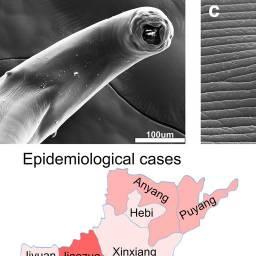
(Xu et al., 2021)
Prevalence of the Disease
The incidence rate of hookworm infection (Ancylostomiasis) can differ in different regions and populations. In the systematic review by Clements and Alene, the prevalence of hookworm infections was stratified into two categories: high (≥30%) and low (<30%) prevalence levels (Clements & Alene, 2021). Moreover, the review informed that the most common hookworm species worldwide were Necator americanus, with 79% (95% CI 67–89%) aggregate prevalence, while the proportion of people infected with Ancylostoma spp was lower at 32% (20–45%) (Clements & Alene, 2021). Moreover, studies in the Asia-Pacific region demonstrate that Ancylostoma ceylanicum infection is more prevalent than Ancylostoma duodenale. The exact percentages of Ancylostoma infestations, which vary by region and specific population characteristics, may differ. The prevalence of hookworm infection can be as low or as high as that of the different geographical regions, environmental factors, and social factors. Therefore, it is essential to consider these factors in the determination of the prevalence of hookworm disease and part of the control measures to reduce the burden of this disease. The rate of hookworm infection observed among the pregnant women in the study in Dembecha district, North West of Ethiopia, was 32.0% (Misikir et al., 2020). It implies that there is a remarkable percentage of pregnant women who are suffering from hookworm illness in the study zone. Factors like living conditions, income level, hygiene practices, and environmental factors have been related to the predominance of hookworm infection.
Treatment for the Disease
The cure for hookworm infection is by administration of anthelminthic drugs, whereby benzimidazoles such as albendazole and mebendazole are the commonly used medications. These drugs have already been demonstrated to kill adult worms and decrease the parasite load. Generally, one oral dose of the medicine is required to cure the patient. On the contrary, in situations where severe anemia has been brought about by chronic bleeding through hookworm infection, iron supplementation may be obligatory to deal with iron deficiency (Malizia et al., 2022). For example, Tiremo and Shibeshi (2023) published a study that described the case of a severe iron deficiency anemia patient diagnosed by endoscopic method and having to take both anthelminthic and iron supplementary treatment as the self-remodification measures are not effective in reversing the course of the disease. This holistic approach to getting rid of the parasite normalizes iron levels, which contributes to healing and prevents a relapse of anemia.
Diet for the Patient
Dietary factors for hookworm infection are paramount, necessitating improving nutritional status and rehabilitating iron reserves. A balanced diet of iron, vitamins and minerals rich foods is vital to sustain the recovery from anemia and enhance general well-being. Taking iron-rich foods during the diet is very important for every hookworm-stricken person with long-lasting bleeding symptoms because they suffer from iron deficiency anemia, the complication of hookworm disease. A patient can tackle the deficit by supplying this important element, including leafy vegetables, lean meat, beans, and fortified cereals with readily absorbable iron. Eating vitamin C-rich foods will improve iron absorbance, thus helping to resolve problems related to the deficiency of this vital micronutrient. Such dietary recommendations are in line with the findings of studies like Misikir et al. (2020) and the study undertaken by Ajjampur et al. (2021), which emphasize the need to eradicate nutritional deficiencies for better management of hookworm disease. Patients with hookworm infection who follow a diet that is balanced and meets their individual nutritional needs to aid the recovery process and have improved general well-being.
Prognosis of the Disease
The prognosis of hookworm infection is closely associated with rapid diagnosis and the appropriate treatment, usually an anthelminthic medication, e.g., albendazole or mebendazole. The outcome is usually positive when timely management is undertaken properly. Often, infections that range from several months may result in challenging health issues like severe anemia, poor weight gain, and poor growth in children. The literature of Ghodeif and Jain (2019) and Zhu et al. (2022) supports the cautiousness of the commencement of detection and treatment of these complications in the chronicle. Enlarging the prevention measures by keeping high hygiene standards and observing the disease spread path to decrease transmission and reinfection are the problems to solve. Despite some diagnose and treatment, there have been undeniable improvements in diagnostic procedures. We should recognize that hookworms are among the top three parasites responsible for ETA worldwide. They have a strong impact mostly on people residing in poor settings where people live in and around farms, and pregnant women face a greater risk than others in their community. Therefore, integrated approaches following surveillance, prevention, and treatment are crucial for combating the hookworm epidemic and ameliorating the effects of the disease on both the physical and socio-economic health rates among infected people and communities. The verdict of Misikir et al. (2020) and Ajjampur et al. (2021) serves as an indication that there is a need to conduct more research in order to either improve the vaccines or surface policy changes in the form of the development of new vaccines (Ajjampur et al., 2021). This will lead to more successful run control policies and lower chances of disease emergence.
Reference(s)
Ajjampur, S. S., Kaliappan, S. P., Halliday, K. E., Palanisamy, G., Farzana, J., Manuel, M., … & Walson, J. L. (2021). Epidemiology of soil-transmitted helminths and risk analysis of hookworm infections in the community: Results from the DeWorm3 Trial in southern India. PLoS Neglected Tropical Diseases, 15(4), e0009338.https://journals.plos.org/plosntds/article?id=10.1371/journal.pntd.0009338
Aziz, M. H., & Ramphul, K. (2023). Ancylostoma. In StatPearls [Internet]. StatPearls Publishing.https://www.ncbi.nlm.nih.gov/books/NBK507898/
Chapman, P. R., Giacomin, P., Loukas, A., & McCarthy, J. S. (2021). Experimental human hookworm infection: a narrative historical review. PLoS Neglected Tropical Diseases, 15(12), e0009908.https://journals.plos.org/plosntds/article?id=10.1371/journal.pntd.0009908
Clements, A. C., & Alene, K. A. (2022). Global distribution of human hookworm species and differences in their morbidity effects: a systematic review. The Lancet Microbe, 3(1), e72-e79.https://www.thelancet.com/pdfs/journals/lanmic/PIIS2666-5247(21)00181-6.pdf
Ghodeif, A. O., & Jain, H. (2019). Hookworm.https://www.ncbi.nlm.nih.gov/books/NBK546648/
Malizia, V., Giardina, F., de Vlas, S. J., & Coffeng, L. E. (2022). Appropriateness of the current parasitological control target for hookworm morbidity: a statistical analysis of individual-level data. PLOS Neglected Tropical Diseases, 16(6), e0010279.https://journals.plos.org/plosntds/article?id=10.1371/journal.pntd.0010279
Misikir, S. W., Wobie, M., Tariku, M. K., & Bante, S. A. (2020). Prevalence of hookworm infection and associated factors among pregnant women attending antenatal care at governmental health centers in DEMBECHA district, north West Ethiopia, 2017. BMC Pregnancy and Childbirth, 20, 1-8.https://link.springer.com/content/pdf/10.1186/s12884-020-03134-0.pdf
Tiremo, S. N., & Shibeshi, M. S. (2023). Endoscopic Diagnosis of Hookworm Disease in a Patient with Severe Iron Deficiency Anemia: A Case Report. International Medical Case Reports Journal, 841-845.https://www.tandfonline.com/doi/pdf/10.2147/IMCRJ.S443625
Xu, F. F., Niu, Y. F., Chen, W. Q., Liu, S. S., Li, J. R., Jiang, P., Wang, Z. Q., Cui, J., & Zhang, X. (2021). Hookworm infection in central China: Morphological and molecular diagnosis. Parasites & Vectors, p. 14. https://doi.org/10.1186/s13071-021-05035-3
Zhu, H., Huang, L., Chen, D., Zhou, H., Zhu, J., Qian, B., Zhang, Z., Li, Z., & Zhou, N. (2022). National surveillance of hookworm disease in China: A population study. PLoS Neglected Tropical Diseases, 16(6). https://doi.org/10.1371/journal.pntd.001040
 write
write