In the era of technological advancements, each weapon has become more sophisticated, and cybersecurity has become an invisible guardian of the security of operations. The digital infrastructure continues to develop in interconnected systems, leading military leaders to increasingly depend on the whole network as the foundation of their operational skills. This article dives deep into the issue of cybersecurity in the military landscape and why networks must be protected from data breaches and other malicious activities. In fact, given the continuous development of cyber threats, the military should stress that cybersecurity means implementation to protect their sensitive data and ensure they do not face other challenges. Maintaining thorough defense against unauthorized access and cyber-attacks becomes a necessity. It shows the armed services’ adherence to defending national interests and the success of military operations in the digital era.
Cybersecurity is a must for the uninterrupted operations of the military as the military units are interdependent, which means that cyber threats can strike them. Senol and Ertugrul (3) posit that the loss of integrity of these systems, regardless of whether it is aimed at obstructing critical operations or posing security risks, is hazardous and can endanger the country’s security. Consequently, strict cybersecurity precautions are indispensable to resist unauthorized access, protect confidential information, and avoid interruptions of services (Senol and Ertugrul 3). Nowadays, a virtual war escalates; investing in cybersecurity is more than a carefully measured decision or a rational approach. It is a question of ensuring the security of military operations and state sovereignty. As cyber threats get more complicated to detect and cyber capabilities expand their scope, robust defensive measures must be in place to prevent the interference of potential cyber adversaries and the effective operation of military networks.
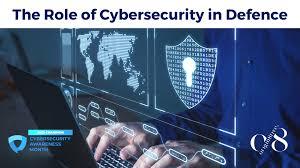
Figure 1: The role of Cybersecurity in Defense (Senol and Ertugrul 3).
Besides protecting sensitive information scavengers secretly, military cybersecurity also shields them from the intrusion of cyber adversaries. According to Kerttunen (429), this encompasses guarding sensitive information such as military deployment, command and control plans, and confidential, classified data at high risk of hacking and cyber espionage. Attacks on these systems not only pose seemingly insurmountable national security challenges, but such threats also can put pressure on international relations, thus affecting the personal security of troops (Kerttunen 429). To reduce risks in this regard, the military puts a string of measures in place for user verification and reinforcing network systems’ safety, showing that it takes the issue of classifying information seriously. Strong cybersecurity policies cannot be left out if we are to avoid cyberattacks that make military operations less effective and subvert them. Through the early detection and management of cybersecurity threats, the military will be duly prepared to defend its critical assets from emerging cyber threats and preserve overall mission effectiveness.

Figure 2: Importance of Cybersecurity in Military (Kerttunen 429).
Cyber operations aiming at military sovereignty can be translated into an attempt to penetrate security restrictions and gain access to military capabilities and strategies. Advancing actors participate in the most complex cyber-attacks, trying to infiltrate the military networks and get unauthorized access to secret information to ensure their strategic benefit (US Military Moments 2, 2022, 5:59-6:02). In response to such threats, the military uses a wide-ranging defensive strategy, building fortified security perimeters to prevent intrusions and spying. Through reinforcing defensive systems and establishing preventive security strategies, the army improves its resistance against cyber espionage attacks. Hence avoiding the disclosure of sensitive data and preserving its competitive edge (Hasib 106). Such a preventive approach goes beyond preserving the primary military units and, thus, contributes to the strength of national security. Through continuous improvement and adaptation of its cybersecurity, the military tries to outpace competitors in the cyber realm to protect strategic information and preserve advantages.

Figure 3: Enhancing Data Security in the Defense
The cyber realm has become a powerful arena of modern warfare involving integrating cyber techniques into conflict resolution. This requires vital avenues of security measures. As cybercrimes are becoming worse, individuals who cause trouble to their native countries to differentiate from the state defense through hacking the power grids and communication networks can assume the role of dictators and terrify the nation. Expressing the resilience of the armed forces to cyber-attacks, several investments in a robust cybersecurity system might be created both for the discouragement of possible attackers while knowing how to react to cyber-attacks (Solar 397) quickly. By gaining control over social networks and emphasizing prevention and security measures, the military reduces the involvement of the antagonists to resist armed activities. This rise puts in a commanding position infrastructure system not only in terms of defense but also in the context of national interest assurance, which has become very critical in the cyber warfare era where cyber warfare, which can go far beyond conventional defense strategies, is becoming a popular method of warfare.
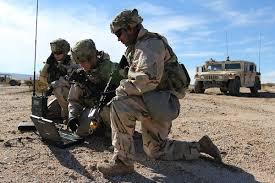
Cyberwarfare
Operational readiness increasingly depends on on-boarded supply chain components, making military systems a vulnerable target for cyber-attacks that tend to target the core systems, be it weapon systems or logistical support. Reveron and John (556) highlight that any delay on either side hinders operations readiness, resulting in operational delays. This risk can be managed through stringent cybersecurity measures, bringing together the protection of supply chains and their enforcement. Protocols of such type are established to find and eliminate procurement weaknesses that hackers might use. Implementing potent cybersecurity methods will ensure that the strategic supply chains of the military units remain intact, thereby contributing to the unending flow of operations (Reveron and John 556). Active defense of strategic assets is an effective and anticipatory response to changing cyber threats. Thus, with constant cybersecurity measures implicated, military command and control systems become more resilient and capable of dealing with more sophisticated problems of the digital environment. Through the emphasis on the stability of supply chains, the military increases the decisiveness of its defense position, enhancing its capability to remain operational and to change the character of cyber challenges since it might become essential.
In conclusion, cybersecurity is a crucial element that is meant to support the operational integrity, as well as the national sovereignty of the military. By fortifying the networks against unauthorized access and malicious attacks, the military can prevent cyber warfare and safeguard critical supply chains. Given that this era is characterized by the digital field enmeshing with the traditional mode of war, reinforcing the cybersecurity investment is no longer an option but a must. Among these measures is the effectiveness of military activities; in this way, national security is being maintained. A military that can preemptively counter cyber assaults is a military that is prepared for the ever-changing battlefield and, therefore, retains its capacity to counter the aggressors and safeguard its citizens and the nation’s interests.
Works Cited
“Cyber Security Interviews (2019) us.”YouTube, US Military Moments 2 (2022). https://www.youtube.com/watch?v=D4aG26O-KvQ
Hasib, Mansur. Cybersecurity leadership: powering the modern organization. Vol. 1. Tomorrow’s Strategy Today, 2022. (90-120)
Kerttunen, Mika. “The Role of Defence in National Cybersecurity.” The Oxford Handbook of Cyber Security (2021): 447. (29_447)
Reveron, Derek S., and John E. Savage. “Cybersecurity convergence: Digital human and national security.” Orbis 64.4 (2020): 555-570.
Senol, Mustafa, and Ertugrul Karacuha. “Creating and implementing an effective and deterrent national cyber security strategy.” Journal of Engineering 2020 (2020). (1-19)
Solar, Carlos. “Cybersecurity and cyber defence in the emerging democracies.” Journal of Cyber Policy 5.3 (2020): 392-412.
 write
write