Introduction
Toyota Corporation, a multinational company that is very popular in automotive manufacturing, belongs to the automotive sector industry. The incredible conversion rate, which is as $275 billion as registered in the latest financial report, puts Toyota on the pedestal of global giants. Toyota leads in various countries and has a presence in over 170 territories. This worldwide impacts different markets and areas (Ekemezie & Digitemie,2024, p. 800). Toyota asserts a workforce of more than 360,000 workers from all over the world. Due to this, its operations thrive due to the presence of well-trained, committed, and skilled personnel. Toyota remains a sector leader at the forefront of automotive development, consistent with unmatched quality and customer satisfaction standards. This positions the company strategically and ensures it maintains its dominance in the industry.
Porter’s Five Forces Analysis
Competitors:
- Intensity of Rivalry (High): The global automotive market is characterized by intense competition among numerous players, including traditional automakers and new entrants focusing on electric and autonomous vehicles.
- Threat of Entrants (Moderate): While barriers to entry exist, such as significant capital requirements, technological advancements and shifts in consumer preferences have lowered entry barriers, particularly for electric and autonomous vehicle manufacturers (Oh et al., 2024, p. 123061).
- Product Differentiation (Moderate): Automakers differentiate through branding, technology, and design. However, increasing consumer demand for sustainable and technologically advanced vehicles has led to convergence in product offerings.
- Industry Growth Rate (Moderate): The automotive industry experiences moderate growth driven by population growth, urbanization, and rising disposable incomes in emerging markets.
- Exit Barriers (Low): While costs associated with exiting the market exist, such as restructuring and potential loss of investments, they are not excessively high, allowing firms to exit if necessary.
Suppliers:
- Supplier Power (Low): Toyota benefits from a diverse supplier base globally.
- Cost of Switching Suppliers (Low): Switching suppliers is relatively easy, but long-term relationships and quality standards may influence decisions.
- Availability of Substitutes (Moderate): While alternative suppliers may exist, sourcing critical components can be challenging due to specialized manufacturing processes.
- Supplier Competition (High): Suppliers compete on price, quality, and reliability, giving buyers like Toyota bargaining power.
- Supplier Concentration (Moderate): Some critical components may be sourced from a limited number of providers, posing a risk to supply chain resilience (Ashta,2024, p. 6).
Buyers:
- Buyer Power (Moderate): Consumers have moderate bargaining power, influenced by factors such as brand loyalty, product features, and pricing.
- Price Sensitivity (High): Consumers are price-sensitive, especially in economic downturns or markets with intense competition.
- Brand Loyalty (Moderate): While brand loyalty exists, consumers are open to considering alternative brands, particularly with the rise of electric and autonomous vehicles.
- Access to Information (High): Consumers can easily access vehicle information, including prices, reviews, and specifications, influencing purchase decisions.
- Fragmented Buyer Base (Low): While the buyer base is diverse, purchasing decisions are often influenced by similar factors across different demographic groups.
New Entrants:
- Barriers to Entry (High): The auto industry has high barriers to entry because of the vast resources needed, economies of scale, and the dominant brand presence.
- Economies of Scale (High): Leading car companies already benefit from the efficacy of quotas, for example, in purchases, distribution, and research, which provides them with an obstacle to new competitors.
- Regulatory Hurdles (High): Many rules set out the security, emissions, and manufacturing requirements; they decrease the entrance’s affordability and difficulty.
- Brand Recognition (Moderate): Leading car makers like Toyota have a reputation with customers worldwide, and it is a bad omen for newcomers; they can hardly capture the market share.
- Access to Distribution Channels (Low): OEMs with contractual agreements with networks and resellers can make access difficult for new entrants in regions where they primarily operate.
Substitution:
- The threat of substitution (Moderate): Communal vehicles are substituted for personal ones, but individual vehicle ownership is fundamental to many people, which screens out the threat to some extent.
- Patent Protection (Low): The diversion can be prevented via patenting for technology and company branding.
- Regulatory Barriers (High): The motor vehicle industry is subject to a rigid regulatory framework that covers safety and emission standards. This makes it difficult for other off-the-grid modes of transportation to become viable replacements for personal cars.
- Consumer Preferences (Moderate): The total substitution of private mobility with public transit passengers appears somewhat unrealistic, given the customer’s choice of choice, convenience, and customization.
- Availability of Alternatives (High): While substitutes exist, personal vehicles offer unique benefits in terms of mobility, convenience, and ownership experience.
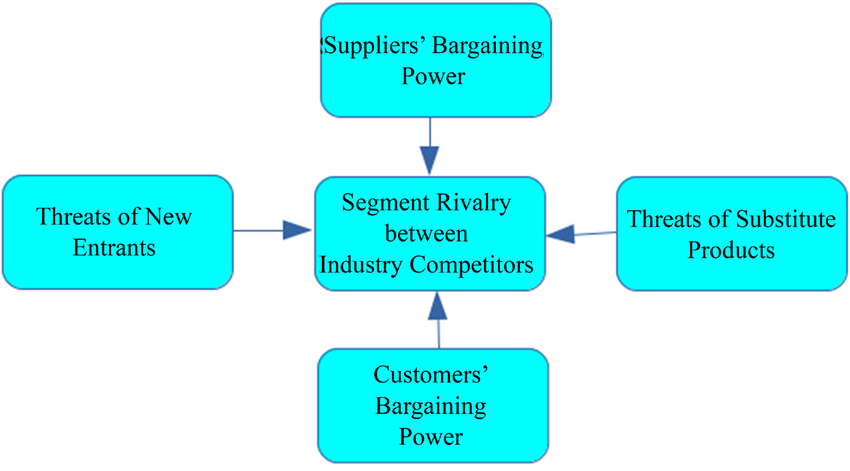
Porter’s Five Forces(https://i.ibb.co/HprR77V/porters-five-forces-diagram.png)
Competitive Structure Analysis:
The automotive industry’s competitive structure for Toyota is characterized by intense rivalry among numerous players, significant barriers to entry, and moderate buyer power (dos Santos et al., 2024, p. 290). Toyota maintains its competitive position through its brand reputation, technological innovation, and global presence.
The global automotive market remains attractive for Toyota due to moderate industry growth, increasing demand for sustainable vehicles, and opportunities in emerging markets. Additionally, Toyota’s focus on innovation, quality, and customer satisfaction enhances its competitiveness and attractiveness in the market.
Reasons the Market is Attractive:
- Moderate industry growth is driven by population growth and rising disposable incomes.
- We are increasing demand for sustainable and technologically advanced vehicles.
- Opportunities in emerging markets with growing automotive demand.
- Toyota’s brand reputation, innovation, and global presence enhance its competitiveness.
- Focus on quality, reliability, and customer satisfaction strengthens Toyota’s position in the market.
Theoretical models
Porter’s Diamond Analysis for Toyota Corporation
Factor Conditions
Japan possesses critical factors contributing to Toyota’s competitive advantage in the automotive industry. The country has a skilled workforce renowned for its efficiency, discipline, and craftsmanship, essential for manufacturing high-quality automobiles.
Moreover, Japan’s strong emphasis on innovation and research in engineering and technology provides Toyota with a robust foundation for developing cutting-edge automotive technologies and products.
However, ongoing training and development programs are necessary to ensure that the workforce remains adept at the forefront of technological advancements, especially in areas like electric vehicles and autonomous driving technology (Dzienis & McCaleb,2024, p. 275).
Demand Conditions:
Japan’s domestic demand for automobiles, including Toyota vehicles, is a significant driver of innovation and product development. Japanese consumers’ preferences for fuel-efficient, reliable, and technologically advanced vehicles have influenced Toyota’s product offerings.
Japan’s aging population and urbanization trends have also increased demand for compact and environmentally friendly vehicles, prompting Toyota to innovate in areas such as hybrid and electric vehicle technology.
Related and Supporting Industries:
Japan boasts a robust ecosystem of related and supporting industries crucial to Toyota’s success(Bhattacharya,2023, p. 240). These include suppliers of automotive components, advanced materials, and technology providers.
Collaborations with Japanese suppliers and technology partners enable Toyota to maintain high-quality standards, innovation, and efficiency in its manufacturing processes.
Furthermore, Japan’s advanced logistics and transportation infrastructure facilitate Toyota’s supply chain management and distribution operations, ensuring timely delivery of vehicles to domestic and international markets.
Firm Strategy, Structure, and Rivalry:
Toyota’s competitive strategy emphasizes quality, innovation, and customer satisfaction. The company’s renowned Toyota Production System (TPS) emphasizes continuous improvement, waste reduction, and lean manufacturing principles.
In Japan, the automotive industry is characterized by intense rivalry among major players like Toyota, Honda, and Nissan. Competition revolves around product differentiation, technological innovation, and operational efficiency.
Bartlett & Ghoshal Framework Analysis for Toyota Corporation:
International Strategy:
Toyota primarily adopts an international strategy characterized by decentralized operations and local responsiveness. The company customizes its products and marketing strategies to meet the specific needs of diverse markets worldwide, including Japan, the United States, and Europe.
Example: Bayer, a German multinational pharmaceutical company, adjusts its product and marketing strategies to fit local tastes and regulations in different countries, similar to Toyota’s approach.
Global Strategy:
While Toyota is one of the most international companies, it does not follow a global strategy; instead, it treats each country as a separate market and adapts its products to meet local customer needs. In its place, Toyota seeks scale efficiencies and synergies where it is possible to combine numerous entities. However, it maintains flexibility in dealing with specific local requirements.
Example: The McDonald’s Corporation practices a global strategy by presenting the same type of food and services worldwide, allowing customers to be familiar with the standard of service and quality.
Transnational Strategy:
Toyota stands for multinational patterns, and it is essential to be aware that providing a combined international and local relevance is critical. The firm harnesses it through the achievement of economies of scale as well as operational efficiency via its global platform. However, it also goes into customizing them and other strategies to local market preferences and regulations.
Example: Toyota Motor Corporation, like Toyota’s approach, is a great role model of how a company should be implemented through global manufacturing and supply chain management with localized product customization and marketing; thus, it can be referred to as a transnational strategy.
Multidomestic Strategy:
Toyota’s focus is on sales and production based on the local demand of the respective region. However, it partially adopts a decentralized policy that allows national units the right to take and make decisions (Potsangbam,2023, p. 9510). This approach will be able to provide answers to location-specific problems while having a direct link with central control.
Example: Nestle S.A. operates a multi-dominant strategy with regional units given the power to decide on local tastes and preferences while maintaining uniform standards.
Integration of Theoretical Models:
A distinguishing feature of Toyota in the global automotive industry is the resultant effect of two approaches: a model of Porter’s Diamond and the theory of Bartlett & Ghoshal. The domestic market for Toyota in the Japanese home ground is a vital condition that offers skilled workers, a supportive culture, and highly innovative industries, which contribute significantly to Toyota’s competitive advantage (Chen,2023, p. 49). The Toyota firm is also addressing differentiation by adopting an international strategy that combines the two distinctive approaches so that decentralized operations change according to the diverse global market needs, resulting in a unique blend of transactional and multi-domestic approaches. By a system-based integration of the architectures, Toyota maintains a global leadership position in automobiles, seeking to respond to local markets’ requirements and difficulties.
Current External Environment Analysis for Toyota Corporation
Political Factors:
The political environment is crucial in Toyota Corporation’s business, particularly foreign direct investment (FDI) policies. Japan’s government typically prefers Foreign Direct Investment (FDI) by actively encouraging the country to attract foreign companies. The aim is to bring in new capital and technology, stimulating economic growth (Nadayama,2023, p. 1). However, there may be political disputes or policy adjustments regarding the extent to which foreign players can participate in critical sectors of the economy.
In other countries where Toyota works, there are differing views on how foreign direct investment (FDI) is perceived. Like the United States, governments frequently acknowledge the benefits of foreign direct investment (FDI) but may impose restrictions or implement rigorous evaluation procedures to safeguard national security or critical industries. In contrast to other nations, China enforces stringent laws and regulations on foreign investments, notably in vehicle-related technologies.
Economic
Japan’s economy exhibits a somewhat developed and sophisticated structure characterized by notable stability and elevated living levels. As measured by its Gross National Income (GNI) of approximately USD 5.37 trillion and Gross Domestic Product (GDP) of around USD 5.15 trillion, Japan’s economy is widely recognized as one of the leading global economic forces. Furthermore, Japan’s per capita purchasing power parity (PPP) is at USD 42,883.00, indicating the country’s significant consumer purchasing power and wealth. Japan effectively offsets these adverse factors with its competitive advantage in several industries. However, it continues to face the challenges of an aging population, deflation, and sluggish domestic demand (CHOWDHURY& KHONDAKER,2023, p 9). These characteristics present a significant obstacle for corporate organizations such as Toyota Corp, and they directly impact the profitability and sales in their local marketplaces.
Another concerning problem is the aging population in Japan, which is causing shifts in customer preferences for automobiles owing to demographic changes. Both deflationary pressures and slow domestic demand impact the economic climate and contribute to the challenging position. These circumstances could hurt Toyota’s sales and revenue growth in the country. Despite these hurdles, Toyota’s strong global presence and diverse range of products enable it to mitigate risks and capitalize on opportunities in several sectors. To overcome economic issues in the domestic market, Toyota, the biggest automobile manufacturer in Japan, may leverage its strengths in innovation, quality, and efficiency. Simultaneously, the organization can achieve consistent growth on a global scale, thereby securing its competitive standing.
Social
The social geography of Japan is closely connected to concerns of gender, nationality, and an aging population, with a median age of approximately 48 years. The generational shift is challenging for automobile manufacturers like Toyota, as elderly customers may have distinct preferences and mobility needs compared to younger generations. Toyota must adapt its product line-ups and marketing methods to cater to the specific demands and preferences of elderly adults. This includes placing a greater emphasis on safety features in their automobiles. Furthermore, the growing population of elderly drivers may necessitate significant alterations to technology and vehicle design to enhance driving assistance and ensure optimal comfort for senior drivers.
Japan is characterized by a significant level of urbanization, with around 93% of its population residing in metropolitan areas. Urbanization is inherently characterized by uncertainty, which manifests in the changing patterns of consumer behavior, the development of transport network infrastructure, and the demand for cars. There is a significant preference for compact, fuel-efficient cars in an urban setting. This particular attribute can significantly contribute to the success of any car company. However, when it comes to sustainable transportation solutions, the government plays a crucial role. To cater to the unique urban consumer demands, Toyota must strategically sell and promote its products by offering hybrid and electric automobiles. Additionally, the company should invest in urban mobility initiatives such as ride-sharing and autonomous vehicles. By perceiving and adapting to the social dynamics of the Japanese market, Toyota can maintain a competitive edge and effectively respond to the evolving demands of the market.
Legal
In Japan, Toyota adheres to long-standing rules that promote business and safeguard intellectual property rights. The nation’s legal system is renowned for its transparency, expeditious administration of justice, and safeguarding the principles of the legal framework. Toyota has complete confidence in executing its business activities due to its stable and conducive environment. The company knows that all its rights are safeguarded and respected by the law. Moreover, Japan’s legal structure fosters an atmosphere conducive to innovation, facilitating corporate growth and supporting Toyota’s research and development efforts and market expansion, both domestically and internationally.
In addition, in nations such as the USA and China, where Toyota operates, the legal framework poses significant challenges that give rise to various inquiries and apprehensions (Soliman,2020, p. 135). The Toyota Motor Corporation in the United States is subject to a highly intricate network of rules that oversee safety, emissions, and consumer protection. Enforcing these restrictions is a crucial measure to ensure compliance with consumer laws and rights and enhance processing, marketing, and product development, ultimately leading to the production of the safest cars. Like China, Toyota faces the intricacy of legislation, encompassing restrictions on foreign investments, intellectual property protection, and labor laws. Adopting local laws and government policy is crucial for Toyota’s success in the Chinese market (Peng,2022, p. 100). Therefore, the company employs a proactive strategy to engage with the relevant authorities and ensure legal compliance and efficient operations. In conclusion, the capacity to recognize and effectively address the legal aspects in each area is crucial for preserving Toyota’s competitive advantage and strong position in the global automobile market in the future.
Significance and challenges
Regulatory Compliance: Toyota must consistently adhere to various regulations in different nations, such as safety standards, emissions standards, trade policies, and labor laws. Non-compliance can result in financial penalties, legal disputes, and a damaged reputation.
Market Competition: The automobile industry is marked by fierce competition consistently influenced by client demands and technological advancements. Toyota must consistently seek strategies to maintain its competitive edge. Competitors’ aggressive marketing, product innovation, and pricing strategies pose intellectual hurdles that compel Toyota to innovate and differentiate its goods consistently.
Economic Uncertainty: Fluctuations in the economy, political conflicts, and trade disagreements frequently impact the trust and spending power of consumers, as well as the overall level of consumer demand. Toyota must adopt adaptable company strategies to navigate economic headwinds and ensure long-term profitability effectively.
Demographic Shifts: Toyota faces issues in adapting to consumers’ changing preferences and needs and addressing the issue of mobility in markets such as Japan and other mature markets with aging populations. To ensure its future success, Toyota should focus on more than just developing items for youthful consumers; it should also effectively adapt to their shifting expectations.
CSR practices
The Toyota Corporation demonstrates its unwavering commitment to a sustainable and ethical business model by implementing activities aligned with the Sustainable Development Goals (SDGs). Through its CSR strategy, Toyota emphasizes the significance of sustainability in its whole business process. The company prioritizes the environment, community involvement, and ethical business operations.
The Toyota Group has implemented Goal 7 (Affordable and Clean Energy) of the U.N. Sustainable Development Goals by humanizing its technology and investing in developing and marketing hybrid and electric vehicles. This initiative aims to reduce gas emissions and address climate change. In addition, Toyota’s energy conservation initiatives and efforts to enhance renewable energy efficiency significantly contribute to attaining Goal 7.
It is also a component of Toyota’s corporate social responsibility (CSR) strategy that focuses on achieving Goal 11 (Sustainable Cities and Communities). This is done by developing urban mobility solutions to reduce traffic congestion and improve transportation infrastructure (Kawai,2022, p. 70). The goal is to promote transportation options that are cleaner, more environmentally friendly, and more efficient in urban areas. Toyota is committed to promoting sustainable global development and responsible business practices by aligning its corporate social responsibility principles with the United Nations Sustainable Development Goals (SDGs). As a result, it will aid in closing the divide in social, ecological, and economic dimensions.
Recommendations
Within the framework of Toyota Corporation’s operations, various suggestions can improve its competitive edge, internationalization plan, and corporate social responsibility practices:
To maintain its competitive edge in the automotive industry, Toyota should prioritize the technological advancement of sustainable technologies, particularly in electric and hydrogen fuel cell-powered automobiles (Akabane,2021, p. 20). Toyota conducts extensive research and development to ensure its products align with current trends and client preferences while prioritizing ecological sustainability.
To facilitate global market expansion, Toyota must devise a comprehensive internationalization strategy that includes developed and emerging economies. This would ensure that the associated risks are distributed over various areas, reducing economic instability. Strategic partnerships and alliances are valuable instruments for Toyota to enter new markets and enhance its leadership position. Additionally, these collaborations allow Toyota to make sensible investments in markets where the company’s worldwide brand image is already established.
Cultural Sensitivity and Leadership: When managing Toyota’s global operations, it is essential to exhibit a leadership style that is influenced by and respectful of different cultures while acknowledging and addressing any conflicting or contradictory aspects. Toyota may implement an effective cross-cultural communication and leadership training program to enhance its global workforce and foster innovation and synergy. This will empower employees from different cultures to collaborate effectively and tap into their collective potential.
CSR Integration: Toyota must incorporate CSR practices into the company’s operational structure, ensuring sustainability principles are consistently implemented throughout the value chain (Dave,2020, p. 1600). Toyota’s corporate social responsibility (CSR) initiatives, which are in line with the United Nations Sustainable Development Goals (SDGs), serve as a tangible demonstration of the company’s commitment to social responsibility. These efforts not only contribute to addressing social issues but also to the overall success of the business and the generation of value for stakeholders.
References
Akabane, J., (2021). Study of the Global Market Portfolio of the Big Seven Automakers. The Journal of Economics, 62(1・2・3), 1–23.
Ashta, A., (2024). Perlmutter visited. Japanese international Business strategic orientation transformation in India: Progress made and forces against—Journal of Asian Business and Economic Studies.
Bhattacharya, S., (2023). Multinational working capital management a study on Toyota Motor Corporation. International Journal of Finance & Economics, 28(1), 236–256.
Chen, S., (2023). The Motivation and Performance Analysis of the Multinational Strategic Alliance between BYD and Toyota. Information Systems and Economics, 4(2), 46–56.
CHOWDHURY, M.A. and KHONDAKER, R.M., (2023). En Yasu and Japanese Auto Industry Performance: Focus on Toyota Motor Corporation and Its Management Strategy. 南山経営研究, 38(1), pp.1-24.
Dave, P.Y., (2020). The history of lean manufacturing is viewed from the viewpoint of Toyota-Ford. International Journal of Scientific & Engineering Research, 11(8), 1598–1602.
Dos Santos, L., Holmen, E., Pedersen, A.C., Mogos, M.F., Lodgaard, E. & Powell, D.J. (2024). How can a buying company develop a Toyota-style supplier network while its lean capabilities evolve? International Journal of Lean Six Sigma, 15(2), 274–294.
Dzienis, A.M. and McCaleb, A., 2024. Motives behind Sino-Japanese strategic alliances in the new energy vehicles sector in the age of the Belt and Road Initiative. Asia Pacific Business Review, 30(2), pp.274-299.
Ekemezie, I.O. and Digitemie, W.N., 2024. BEST PRACTICES IN STRATEGIC PROJECT MANAGEMENT ACROSS MULTINATIONAL CORPORATIONS: A GLOBAL PERSPECTIVE ON SUCCESS FACTORS AND CHALLENGES. International Journal of Management & Entrepreneurship Research, 6(3), pp.795-805.
Kawai, T., (2022). Evaluation of Toyota’s Strategy for Electric Vehicles in Counteracting Platformers—Based on the Theories of Dynamic Managerial Capabilities and Dynamic Platform Strategy—. Journal of Strategic Management Studies, 14(1),
67–87.
Nakayama, N., (2023). Global Management in Japanese MNEs: An Agenda for Future Research. Japanese and Polish Management, Göttingen, Germany: Unipress.
Oh, E.T., Chen, H.C., Nakamoto, R. and Liu, R.J., (2024). Alliance portfolio configuration strategies as catalysts for innovation: Evidence from international alliances between Japanese and Taiwanese manufacturing corporations. Technological Forecasting and Social Change, 200, p.123061.
Peng, M.W., (2022). Global strategy. Cengage learning.
Potsangbam, C., 2023. EXECUTIVE PERFORMANCE IN RESPONSE TO GLOBAL CHALLENGES: A CASE STUDY OF JAPANESE MULTINATIONAL CORPORATIONS. Journal of Research Administration, 5(2), pp.9504-9513.
Soliman, M.H.A., 2020. The Toyota Way to Effective Strategy Deployment: How organizations can focus energy on key priorities through Hoshin Kanri to achieve the business goals. Journal of Operations and Strategic Planning, 3(2), pp.132-158
 write
write