Introduction
Communication is critical for a successful team focused on agile software development since it helps the project. The distinctive feature of these tasks is the enormous role assigned to collaboration as a team and the crucial role of instant communication products. The primary foundation of these projects is a setting where regular communication is required. Communication is a critical factor in the age of agility. Among other things, it includes a team, clarifying the vision and solving bumps on the way. This paper starts with a detailed analysis of the importance of communication in teamwork performance. The significance of such a factor attracts interest and will lead to a focused literature review. This paper seeks to hone the analysis of the communication strategies and the constituent elements that pulse through agile teams and are a crucial determinant of such teams’ high performance. Through this investigation, the effectiveness of the multifaceted communication systems will be clarified, which normally constructs a pluralistic ambience for triumph.
Under the outcome of the literature section review, a conceptual model is solved, which is depicted as a visualized co-relationship of those key communication concepts and the agile team in particular. The focus shall be to make the model bidirectional and address all dimensions of communication, highlighting interdependence and synergy among team players and making the team one high-performing team. Thus, this extensive approach seeks to increase sensitization about communication strategies and practices and to give project teams tools to tackle the challenges of the rapidly changing software development environments.
Literature Review
The communication processes and effective team performance are built on trust and psychological safety. Both work as the foundations of agile software development, where the teams usually work in an environment of constant change and iteration. Countless studies confirm that these components are at the heart of a working environment that favours communication, distribution of knowledge, and collaboration, which are all crucial for a vibrant team. Trustworthiness and psychological safety are equally important to teamwork, according to Ragas and Ragas (2021). A tide change occurs when team members feel encouraged to take personal risks without fearing punishment or humiliation. Interculturally, communication barriers disappear, leading to more authentic and sincere discussions, faster and efficient knowledge transfer, and successful joint actions to solve issues. This psychological safety is the spark that allows the possible members to voice their concerns, give honest feedback, and solve interpersonal disagreements—all the components of agile teams’ continuous optimization. Zolotina et al. (2023) highlight that psychological safety ensures efficient team communication and productivity. Openness, creativity, innovation, and collaborative solution-finding abilities are fostered when individuals freely express their opinions, ideas, and concerns without fear of being ostracized. Hence, this psychological safety enables free dialogue and fosters an endless learning and development culture compatible with the agile mindset.
However, again, the same idea can be stretched into virtual teams, which are common in agile environments, and transformational leadership behaviours have far-reaching impacts, as explained by Lumseyfai et al. (2019). This study reveals that the practice of leaders building trust and the process of teamwork rather than the ladder of hierarchy brings about better communication and teamwork among virtual teams. With the establishment of shared trust and common values, these leaders offer for successful collaboration, even without co-location. On top of that, distributed agile team building trust is also emphasized. In these faraway surroundings, where face-to-face interaction is limited, creating trust through inclusive team-building activities, co-created experiences, and fulfilling commitments becomes essential. They serve as an initial step in forming trust, enabling remote workers to face the challenges of virtual collaboration more calmly and confidently.
Developing trust and psychological security among agile teams goes beyond generalized communication metrics and performance. It cultivates an atmosphere where team members feel supported to make well-considered decisions, embrace innovation, and learn from mistakes that are typical of the agile approach (Starsia). When there is cohesion and everyone feels they can speak freely, ideas will be shared more, assumptions will be challenged, and dialogues will be more dynamic, leading to better solutions. The fact that trust and psychological safety work as accelerators releases the whole agility of the teams by establishing open communication, knowledge sharing, collaborative problem-solving, and a culture of continuous learning and improvement. With these key ingredients at the core of agile teams, a process of virtuous cycles of performance level, adaptability, and the final success of software developers in the rapidly changing software development landscape is ensured.
Social Intelligence and Emotional Awareness
Social capability and personal appearance make the intricate fabric that stitches all the individual parts of good communication into solid and agile teams. Among the negative factors of human relationships, which fall under emotional perception difficulties, relativistic cross-cultural awareness and lack of empathy could negatively affect international team management, thereby halting global virtual collaboration (Stray et al., 2020). Or else, the emotional intelligence attributes like emotional self-awareness, emotional self-control, motivation, empathy and social skills of hat members make them people become those who can emotionally understand, reason and communicate to a higher degree. This set of skills makes people intelligent enough to deal with different and complex agile processes while being better informed and knowledgeable.
Ghobadi and Mathiassen believe that group emotional intelligence can improve communication, relationships and cooperative learning. Agile teams that exhibit autonomy may need greater emotional intelligence to support team members in the social evolution of ever-changing, iterative development processes (Laussen & Sutanovac, 2021). Ghobadi and Mathiassen (2017) found that when emotional intelligence is trained, team members’ social and emotional relationships are enhanced, increasing productivity. By helping team members observe, understand, and manage their emotions, agile teams can foster collaborative problem-solving, empathic communication, and constructive conflict resolution.
The quality of team communication is determined by the thoughtful selection and use of communication tools and media, especially in rapid software development, where rapid information communication is concerned with error-free communication importance. According to Roush et al. (2021), information quality improves productivity, knowledge transfer and communication. Face-to-face communication is the most effective because it facilitates visual and auditory signal exchange, promoting better understanding and communication (Pereira et al., 2021). This is followed by video conferencing and the use of cues to improve communication with a withered physical location. Although less sophisticated, email and document exchanges, online chats and audio talks are reliable for day-to-day planning and information sharing.
Manochehri (2022) investigates the subject in element, illuminating the complicated hyperlink between the verbal exchange channel alternatives and the continuing planning requirements of agile. Group texting could be sufficient for making plans every day. Collaboration and expertise sharing on complicated troubles are facilitated via visual records. According to Manocri’s (2022) “media stickiness” concept, this tactic comprises attributes that trade. When essential, teams may additionally begin narratives with richer content to construct context and relationships before switching to leaner channels. In addition to boosting engagement, these honour paintings-existence stability.
Cultural sensitivity Cultural intelligence might be essential for green verbal exchange with the complicated teams that globalization has produced, consisting of humans from many cultural backgrounds. Lapshun and Fusch (2021) factor out that communique misunderstandings and breakdowns in cross-cultural groups can also occur from versions in conversation styles, group hierarchies, and directness if these troubles are not resolved through cultural intelligence. In 2017, Muszyńska studied global building initiatives and recommended using uniform conversation protocols, guidelines, and cultural sensitivity schooling. These sports are underpinned by agile software development, emphasizing self-company and quick choice-making. However, assume people from exclusive cultures are assembled in a team and have one-of-a-kind approaches to planning, war decisions, and selection-making. In that case, this could hinder team concord if not controlled efficiently.
Agile groups that comprehend cultural verbal exchange techniques can also collaborate globally. Cultural intelligence is more significant than simply information cultural differences; it is usually ideals, attitudes, and modes of idea that impact verbal exchange amongst numerous groups (Muszyńska, 2017). People might also connect synergistically, openly, nuanced, or effectively in no time, whilst social intelligence, emotional intelligence, media utilization, and cultural recognition collectively create nimble group dynamics. Agile groups that excel realize and comply with these many standards to help them negotiate the complexity of collaborative software development with belief, empathy, and information—the cornerstones of tremendous performance.
Proposed Conceptual Model
The theoretical foundation in this paragraph displays a holistic framework that reveals how core communication concepts, tactics, and elaborate goals work together constructively to enable proper communication in the agile software development field of work. Such a model summarizes the informed insights vertically sought throughout the literature review to synthesize the multifarious dimensions that reinforce the agile team’s performance.
These four communication standards—agree with mental safety, emotional and social competencies, aware use of generation for communication, and cultural intelligence—shape the idea of this method. Thus, those notions underpin proper conversation approaches. They help teams accomplish critical achievements that improve overall performance and ensure the best consequences (Stepanenko, 2022). Inclusive leadership shared revel in and targeted training create a way of life of mutual appreciation and equitable involvement that enables people to specify their thoughts, provide comments, and settle problems collectively (Phillips, 2019). When key team individuals view the chance of taking interpersonal risks without raising the stakes, they are much more likely to grow to be involved in wealthy discussions, critically assign current assumptions, and receive experiments that guarantee effects, which might be all agile mindset traits.
Understanding and coping with oneself in social conditions, empathizing, and speaking freely are emotional and social intelligence tendencies. This shall allow teammates to assist each other in understanding social signs and team dynamics. By being more conscious of the group’s emotional currents, individuals might choose subtle communique signs and symptoms, even silent language. This emotional and linguistic link fosters intra- and inter-personal range appreciation (Stepanenko, 2022). Accelerated know-how change and effective collaboration in agile teams want the right media choice and creative software. Using media richness efficaciously, together with preferring face-to-face or video bureaucracy for complex context-putting over lean conversation for recurring coordination, may assist in reaping a balance of engagement, legitimacy, and productivity.
Cultural intelligence, recognizing cultural values and adapting to preferred communication styles, is increasingly crucial in multicultural software program development. Agile teams may also destroy cultural obstacles and foster an environment of mutual comprehension and recognition in their cooperation by looking forward to cultural variations and setting up an environment for adopting and amassing standard verbal exchange norms (Stepanenko, 2022). Communication’s cross-purposeful additives are interconnected, and any one issue can also enhance the entire system. However, emotional intelligence affects group cohesiveness and cultural bridge-constructing. Video conferencing transmits nonverbal emotional indicators more at once.
These communication concepts only take on their own life when applied as a deliberate direction and not just as a perception. That way, the teams can make evidence-based realizations of their objectives and finally realize high-performance and agile projects. These outcomes include:
- Shared Understanding and Alignment: A fundamental principle of agile teams in project management is open communication conditional on trust and mutual information sharing, providing a basis for all members of the team to have a thorough and shared understanding of the project vision, priorities, and plans, with any possibility of divergence of ideas excluded (Phillips, 2019).
- Rapid, Seamless Coordination: Building mutual trust and implementing open communication channels thus represented agile teams’ capabilities to coordinate tasks and activities with great precision, turn around guiding requirements quickly, and spot issues immediately (Gren et al., 2020).
- Productive Conflict Resolution: After creating a psychologically secure environment where the crew starts expressing themselves constructively but with deep empathy, the team can efficiently communicate on conflicts and find new competitive solutions from the team’s combined experience.
- Effective Knowledge Sharing: Through the process of breaking cultural barriers and allowing for creativity to be drawn from the experts who together make a single agile team, knowledge sharing can be reached readily, and the innovations that occur can be for the better (Radhakrishnan et al., 2022).
- Mutual Accountability and Commitment: Open and participatory progress monitoring and tracking of a team’s progress strengthens a sense of joint accountability and brings everyone together with a shared purpose. Therefore, all the members are aligned well and ready to press on to their common goals (Pereira et al., 2021).
The collective impact of these factors produces high-speed performance in agile teams: increased quality provision, responsiveness to changing requirements, team cohesion, and reduced time to delivery (Phillips, 2019). The core communication concepts, strategies, and outcomes are adjuncts. Their synergistic interplay forms a virtuous circle of consistent improvement, adaptability, and sustained success in software development. Therefore, this heuristic of a mode lets the agile team focus and gradually improve their communication skills by curbing the interdependencies and connections of its various parts. By adhering to and promoting these vital communication basics and techniques, agile teams can leverage them to reach their maximal potential. This is why an atmosphere is created where trust, empathy, and a mutual bond are the starting points towards great results
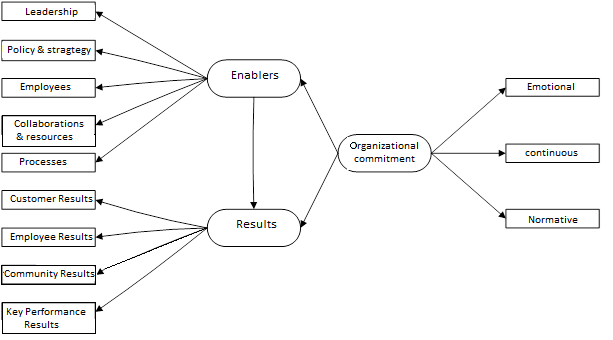
(Esmaeilpour et al., 2014).
Conclusion
In the fast-paced agile development environment characterized by a quick pace of work, resounding collaboration, and unconditional continuous adaptation, remarkable communication is a cornerstone for successful teams. These encompassing communication skills—mutual understanding, emotional intelligence, correct use of media, and cultural bridging—are the pillars of agile teams that exceed success milestones. Creating a trusting and psych safety-reliant atmosphere gives birth to a world where open conversations, honest criticism, and collaborative dispute resolution flourish. Emotional intelligence, manifested in soft skills such as self-awareness, empathy, and interpersonal skills, is foundational for smoother transitioning through the faster sequences and iterative cycles typical of Agile. The wisely managed selection and exploitation of the information-communication media, through harnessing the richness for the more critical cases while also using the leaner channels for regular work coordination, maximize engagement while at the same time showing consideration for each individual’s productivity requirements. Furthermore, cultural intelligence, the capacity to comprehend and adapt to different cultural assumptions and communicational patterns, becomes a reliable and ever more important tool in the current international software development ecosystem, allowing people of different origins to synthesize, work together, and understand each other.
Intentionally or no longer, all fundamental conversation factors may be integrated into strategic imperatives to encourage this agile philosophy’s virtuous loop of continuous records flow, efficient collaboration, and shared duty.The theoretical framework in this text gives a complete lens via which groups might also study their communication practices, revealing patterns and synergies within know-how fields. Meeting practices that assist agile teams in speaking and agreeing on assignments imaginatively and presciently and route and task verification allow numerous suited results. To settle problems quickly and correctly, communique channels foster trust and tranquillity amongst crew individuals. When these dreams align, agile teams may supply faster, produce higher products, circulate their moods quickly, and stay solid. Thus, the broken communication between the agile group contributors will become their bond. This communication helps the group navigate software development-demanding situations without sacrificing agility or adaptation and prevail. This concept’s communicational pillars and processes will help your agile team character be exceptional by building agreement, compassion, and open communication. Software development’s universal chief is communication capabilities. Agile groups can only be as practical, inventive, and effective with steerage.
References
Ciancarini, P., Farina, M., Masyagin, S., Succi, G., Yermolaieva, S., & Zagvozkina, N. (2021). Root causes of interaction issues in agile software development teams: Status and perspectives. In Advances in Information and Communication: Proceedings of the 2021 Future of Information and Communication Conference (FICC), Volume 2 (pp. 1017-1036). Springer International Publishing.https://www.academia.edu/download/65153346/Succi.C322.RootCausesOfInteractionIssuesInAgile.pdf
Esmaeilpour, M., Hamidianpour, F., & Dorgoee, A. (2014). The Effect of Organizational Commitment on the Performance of Organizational Units, Case Study: The Telecommunications Company of Bushehr Province, Iran. Asian Journal of Research in Social Sciences and Humanities, 4(5), 562–577.https://www.researchgate.net/profile/Majid-Esmaeilpour/publication/329988073_The_Effect_of_Organizational_Commitment_on_the_Performance_of_Organizational_Units_Case_Study_The_Telecommunications_Company_of_Bushehr_Province_Iran/links/5c277e6b299bf12be3a108f2/The-Effect-of-Organizational-Commitment-on-the-Performance-of-Organizational-Units-Case-Study-The-Telecommunications-Company-of-Bushehr-Province-Iran.pdf
Ghobadi, S., & Mathiassen, L. (2017). Risks to effective knowledge sharing in agile software teams: A model for assessing and mitigating risks. Information Systems Journal, 27(6), 699-731.https://eprints.whiterose.ac.uk/144697/1/ISJ2-May2016.pdf
Gren, L., Goldman, A., & Jacobsson, C. (2020). Agile ways of working: a team maturity perspective. Journal of Software: Evolution and Process, 32(6), e2244.https://arxiv.org/pdf/1911.09064
Lapshun, A. L., & Fusch, G. E. (2021). Trust and safety are fundamental conditions for a high‐performance team. Performance improvement, 60(3), 15-19.https://www.researchgate.net/profile/Alex-Lapshun/publication/350741728_Trust_and_Safety_as_Fundamental_Conditions_for_a_High-Performance_Team/links/64163c51a1b72772e40b2a5d/Trust-and-Safety-as-Fundamental-Conditions-for-a-High-Performance-Team.pdf
Laussen, J., & Sutanovac, A. (2021). Evaluation of Agile Team Performance.https://odr.chalmers.se/bitstreams/d9cf8f6a-fb8b-4ff7-ba3a-14032563e3d3/download
Lumseyfai, J., Holzer, T., Blessner, P., & Olson, B. A. (2019). Best practices framework for enabling high-performing virtual engineering teams. IEEE Engineering Management Review, 47(2), 32-44.https://doi.org/10.1109/EMR.2019.2916815
Manochehri, T. (2022). Reaching Top Performing Teams in successful projects: A Case study on Project Excellence Award Winning Teams.https://www.diva-portal.org/smash/get/diva2:1696568/FULLTEXT01.pdf
Muszyńska, K. (2017). Patterns of communication management in project teams. In Information Technology for Management: New Ideas and Real Solutions: 14th Conference, AITM 2016, and 11th Conference, ISM 2016, held as Part of FedCSIS, Gdansk, Poland, September 11-14, 2016, Revised Selected Papers 14 (pp. 202-221). Springer International Publishing.https://www.researchgate.net/profile/Karolina-Muszynska/publication/313020060_Patterns_of_Communication_Management_in_Project_Teams/links/5a79d120a6fdcc4ffe92763d/Patterns-of-Communication-Management-in-Project-Teams.pdf
Pereira, V., Del Giudice, M., Malik, A., Tarba, S., Temouri, Y., Budhwar, P., & Patnaik, S. (2021). A longitudinal investigation into multilevel agile & ambidextrous strategic dualities in an information technology high performing EMNE. Technological Forecasting and Social Change, p. 169, 120848.https://doi.org/10.1016/j.techfore.2021.120848
Phillips, M. (Ed.). (2019). The Practitioner’s Handbook of Project Performance: Agile, Waterfall and Beyond. Routledge.
Radhakrishnan, A., Zaveri, J., David, D., & Davis, J. S. (2022). The impact of project team characteristics and client collaboration on project agility and success: An empirical study. European Management Journal, 40(5), 758–777.https://doi.org/10.1016/j.emj.2021.09.011
Ragas, M., & Ragas, T. (2021). Understanding agile for strategic communicators: Foundations, implementations, and implications. International Journal of Strategic Communication, 15(2), 80-92.https://www.tandfonline.com/doi/abs/10.1080/1553118X.2021.1898147
Rausch, B., Gray, J., Thirolf, T., & Wollmann, P. (2021). I am applying the Principles of the 3-P model to Build an Agile, High-Performance Team Within Finance. Organization and Leadership in Disruptive Times: Design and Implementation Using the 3-P-Model, 193-219.https://doi.org/10.1007/978-3-030-63034-8_15
STARSIA, G. WITH AGILE PRINCIPLES.https://kelmandigital.ca/strategymag/edocman/features/Improving%20Strategic%20Management%20With%20Agile%20Principles.pdf
Stepanenko, A. (2022). Applying global software development approaches to building high-performing software teams: Master’s Thesis, Faculty of Sciences, University of Helsinki, Finland.https://helda.helsinki.fi/bitstreams/82b992d6-da2a-4b3e-992b-35a92e020fde/download
Stray, V., Tkalich, A., & Moe, N. B. (2020). The agile coach role: coaching for agile performance impact. arXiv preprint arXiv:2010.15738.https://arxiv.org/pdf/2010.15738
Tyagi, S., Sibal, R., & Suri, B. (2022). Empirically developed framework for building trust in distributed agile teams. Information and Software Technology, 145, 106828.https://doi.org/10.1016/j.infsof.2022.106828
Zolotina, O. A., Razumova, T. O., Sotnikov, Y. A., Nastavnyuk, A. V., & Frerichs, H. (2023). Digital transformation of high-performing teams. Population and Economics, 7(2), 60-93.https://populationandeconomics.pensoft.net/article/98911/download/pdf/
 write
write