Introduction
Although the Indigenous face multitudinous problems and challenges, the prime immediate concern is the vast majority of Indigenous communities having no access to clean drinking water. The following report will look deep into the complexity of this issue, from its impacts, media portrayal, contestation efforts, personal reflections, and relevant visuals. Clean water may be a fundamental human right, but for most Indigenous communities across Canada, it has often seemed just a cruel promise (Human et al., 2023). The government identified the problem, but there was no movement on the ground, so to say, to deliver essential water services to the people. This is not just a health and well-being issue, but it sheds light on the value of underlying problems on rights, sovereignty, and environmental justice.
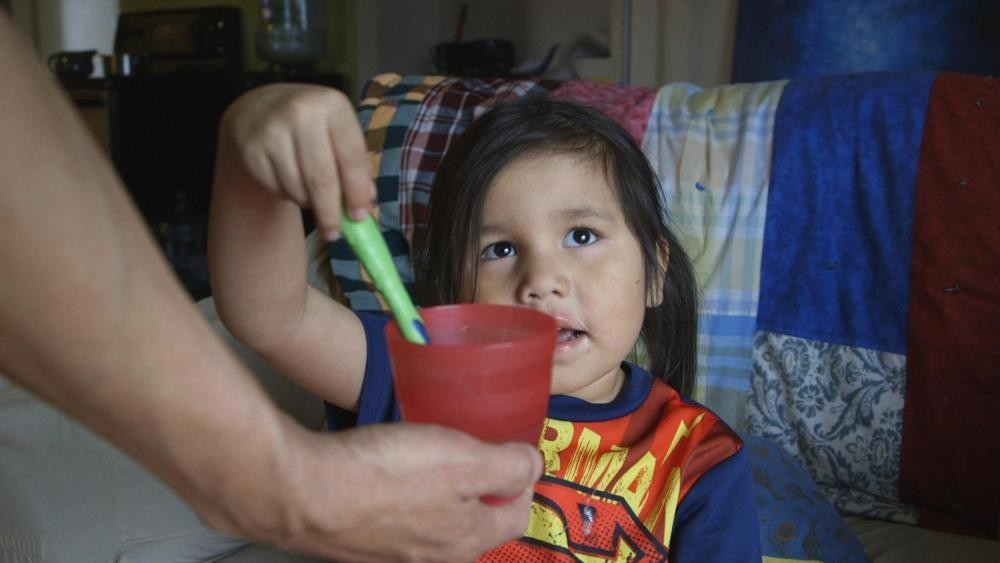
Canada’s Water Crisis: Indigenous Families at Risk (Redirect Notice, 2016).
Overview of the Issue
The challenge of securing a consistent, clean drinking water supply in Indigenous communities right across Canada has and remains to be, a consistent and reoccurring problem for many generations. Moreover, many First Nations reserves continue to boil water advisories despite the advanced technological infrastructure and economic might. Therefore, these advisories are an explicit call and reminder that, in most cases, the water available to communities is unsafe for drinking and must be boiled before consumption. This emphasizes public severe health. (Human Rights Watch, 2023) However, the profound and multiple root causes behind the crisis allowed its tentacles to be found in many much bigger socio-economic and political issues, from water infrastructure that is woefully out of date and not adequately funded to the logistical complexities of being able to reach far-flung Indigenous communities.
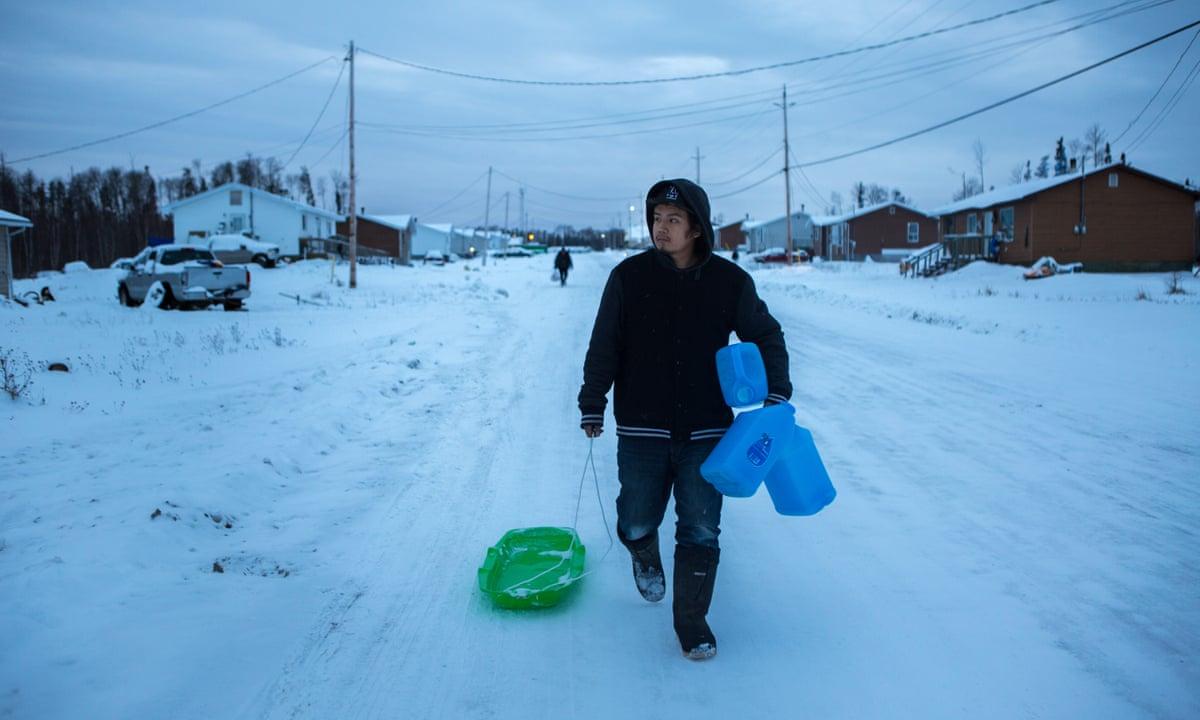
Dozens of Canada’s First Nations lack drinking water (Redirect Notice, 2021)
Deeply embedded in the background of colonization, there is a land dispute with the failure of self-rule, which would make the struggle to solve the problem of the water crisis very difficult. Therefore, the nature of the advisories—and their lasting nature —represents not only an immediate health risk but rather a tool to undermine trust in the commitment of the Canadian government to live up to its promises to Indigenous Peoples. The crisis is beyond a crisis of physical health; it has symbolic and practical meaning in Indigenous cultures. Such erosion of confidence brings forth a decline in the meaning of health issues, which are down to cultural integrity and autonomous crises. This makes the current clean drinking water crisis a quite apropos manifestation of more considerable systemic disparities and injustices still grating on Indigenous communities in Canada, with very apt justice that calls into question the very self-image of the country as a champion of human rights and equality (Hurlbert et al., 2024).
Impact on Indigenous Peoples/Communities
The intractable crisis problem of inadequate access to clean water deeply colors the picture of the life and health of the indigenous communities. This problem often collides with many other aspects of the existence, both physical and spiritual, of the indigenous communities. The health system is the first affected; communities go through a cycle of recurring health problems – water contamination, skin disorders, and gastrointestinal problems that frustrate their lives and make every day a living nightmare for all the people affected (Durand-Moreau et al., 2022). The fact that this continuing health crisis is more than a physical condition is that it is a woven whole of mental strain, a pattern that pervades residents’ minds and is created by leaders who give scant attention.
Human rights to safe drinking water and sanitation of indigenous peoples (Redirect Notice, 2024).
The economic and social effects are equally alarming as they define community growth in which prosperity can be achieved. The fact that precious funds for chief projects are allocated to imported bottled water and medical treatment while the local community desperately needs them impedes economic stability and sustainability. Besides, water scarcity not only chops the cultural thread of the Indigenous communities, but it is also a divine thing to them as a significant part of their spiritual practices and worldviews (United Nations, 2020). This is the case because the poisoning of such a significant resource through contamination interferes with long-standing connections, which causes a heavy loss from the cultural perspective.
With this ever-increasing disaster at hand, the significant gap between the Indigenous and non-Indigenous is now more conspicuous than ever before, while the sincerity of Canada to become a defender of human rights and environmental conservation is currently put to the test. Besides, the divergent picture between what Canada portrays globally and the daily life of indigenous peoples in itself symbolizes the period of introspection and action to be needed from both national and community levels, urging for reconsideration of what should be of top priorities and commitments to all citizens in terms of equity and social justice.
Media Coverage Analysis
The media representation of the water problem in the Indigenous people’s community is very extreme; that is, it mirrors the wider society’s biases and paternalistic attitudes. Traditional mass media platforms disregard this critical problem by rarely acknowledging it, except when a governmental declaration or an acute emergency occurs. Thus, they tend to take aspects on the surface and fail to reach a deeper level, nor to fairly represent the perspectives of the Indigenous people, as they do not believe their involvement can make a difference. Thus, intermittent and somewhat surface coverage may cause the public to misconceive the issue, portraying to them that these moments of injustice only come in the form of flash that hides the fact that the system is one with deep roots and requires constant acknowledgment and action (Lam et al., 2017).
However, compared with Indigenous and alternative media sources, which offer a more holistic and detailed description of events, the mainstream media report needs to be more superficial and whitewashed. They craft it cleverly by situating it within a historical and cultural context, trying to capture proposals of those affected and reveal a clear link between environmental stagnation and Indigenous rights violations (Lam et al., 2017). Such discrepancy points to a high degree of inequality in media portrayal, and it also has a significant effect on the public’s perception of the crises, which eventually impacts the rate of change in the policy measures adopted by the factories. The diversity in coverage interprets the urgency for a varied media landscape that gives more importance to comprehensive and inclusive narratives to ensure that the Indigenous communities never get underestimated or ignored during trials.
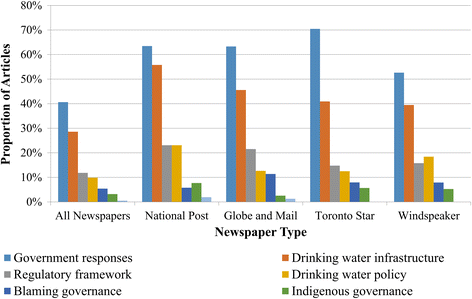
An analysis of Canadian newspaper coverage from 2000-2015 (Lam et al., 2017).
Contestation of the Issue
Resistance of indigenous groups and their allies over the water crisis as a multidimensional movement of equality and justice demonstrates their fight against systemic injustice and neglect. Thus, through the means of the law, Indigenous People, in many cases, have sought out a broader channel and have upheld their treaty obligations to demand accountability from the responsible level of government. These legal battles are the most important as they portray the water crises not only as the failure of infrastructure but also as the violation of the most treasured treaty that binds the relationship between Indigenous Peoples and Canada (Flagship, 2023). While these legal battles are taking place, a colorful blend of activism and advocacy work has been constructed as the rage of protests, awareness programs, and international appeals have been used as one of the tools in the fight for justice. Such moves bring the crisis to the international scene, where the issue is highlighted, and support emanates from a broad range of international communities and organizations alike (Yazzie, 2018).
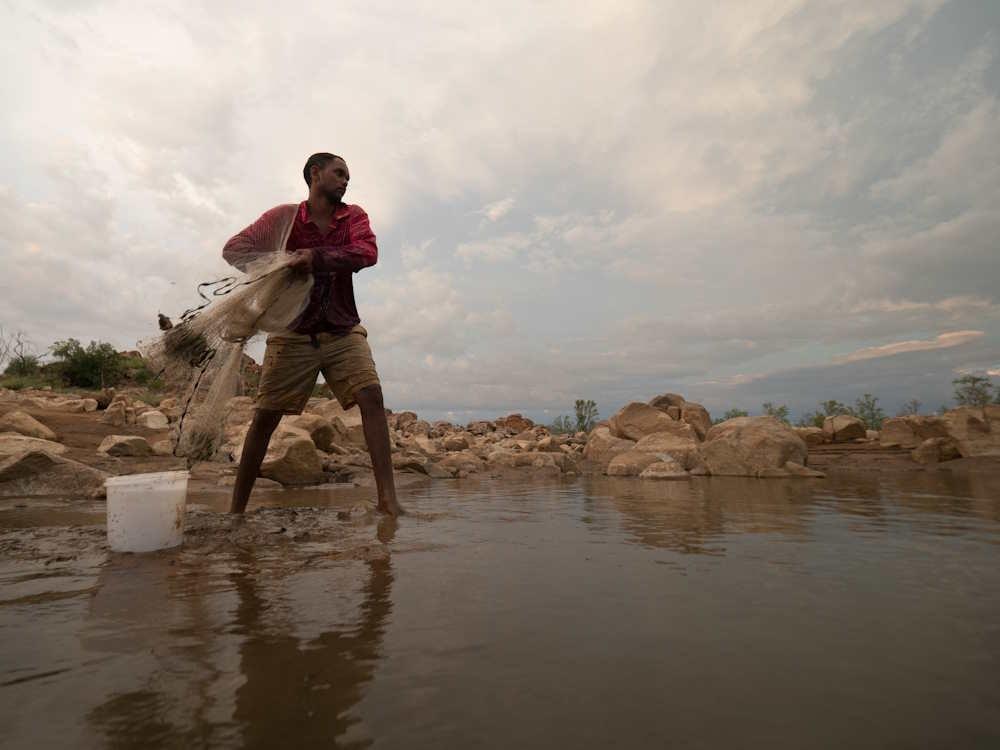
Minorities, Indigenous Peoples and the Water Crisis – Minority Rights Group (Redirect Notice, 2024b)
Furthermore, the indigenous communities are putting in place some community-based projects like using the new water purification technologies to respond urgently as they underscore their ability to be self-reliant and self-governing. Such community actions demonstrate the highest level of resilience, in a way setting up tactics on how to handle the challenges they deal with. Indigenous collective contestation efforts transcend mere advocacy for clean water; they are, in fact, a solid Indigenous claim for sovereignty, rights, and dignity within the backdrop of historical and ongoing colonialism. These water protests also fall under a more significant movement for the indigenous rights of self-determination and the justice of the environment that the Canadians should now consider in casting off the colonial legacy of the time and entering into a track of genuine reconciliation and equitable partnership with the peoples.
Reflections
As I contemplate the water crisis that has befallen the aboriginal communities of Canada from a profound point in my heart, my emotions are battered by a violent storm of emotions — disbelief of the wicked systemic inaction, overwhelming sorrow of the plight of these people, but a strand of hope generated by this indomitable human resilience. The profound contrast of a nation enjoying its prosperity but rigidity in ensuring that the basis of a human being, which is a basic necessity, is not accessible to everyone within its borders, on the one hand, is heartrending and, on the other hand, clashes with the essence of fairness and justice which we claim to uphold. It uncovers the highly complex aspects of the issue we must deal with while the international community tries to tackle such a complicated problem (Bradford et al., 2016).
In addition to that, Indigenous peoples have been resisting in the most challenging circumstances, as witnessing them is truly unique. Through their unwavering devotion and solidarity, their civilization would have unequaled lessons about persistence and teamwork. The problem has also broadened my view, forcing me to acknowledge an interconnectedness between environmental preservation and upholding Indigenous people’s rights. It thus exemplifies the compelling fact that the first step should be to regard the Indigenous tribes’ knowledge and experiences as central to comprehensively handling the problem.
The present situation is not a limited concern that affects only a tiny segment of the Indigenous population but has amplified to an admission of the deep-seated Canadian societal values and the possibility of approaching equity, equality, and mutual respect on a larger scale. It requires a contemplative soul-searching and asks us plainly: What is our essence as a nation? What do we want to leave behind as our legacy? My journey of self-discovery through the flow of the story of the water crisis not only enriched my appreciation and understanding of the complicated hydro-dynamics that shape the world but also firmly planted the belief that the pursuit of justice and sustainability ought to be one that we Canadians share, one where all parts of the society have a responsibility.
Conclusion
The fact that clean drinking water shortage is a persistent truth for many Indigenous communities is undoubtedly a symbol of several obstacles in Canada, such as inequality, colonialism-embedded subconscious mentality, and having a caring attitude toward the environment. This predicament requires more than technical solutions; it requires a total re-evaluation by Indigenous communities, the state, and their relationship to the land. We Canadians need to face unpleasant facts, contribute to this listening of Indigenous people, and dedicate ourselves to the actions that would be maintained, sustained, and just. There are difficult roads ahead, but one must go through them to make a nation better and a planet cleaner.
References:
Bradford, L. E. A., Bharadwaj, L. A., Okpalauwaekwe, U., & Waldner, C. L. (2016). Drinking water quality in Indigenous communities in Canada and health outcomes: a scoping review. International Journal of Circumpolar Health, 75(1), 32336. https://doi.org/10.3402/ijch.v75.32336
Durand-Moreau, Q., Lafontaine, J., & Ward, J. (2022). Work and Health Challenges of Indigenous People in Canada. The Lancet Global Health, 10(8), 1189–1197. https://doi.org/10.1016/S2214-109X(22)00203-0
Flagship. (2023, June 20). Minority and Indigenous Trends 2023 – Focus on water – World | ReliefWeb. Reliefweb. int. https://reliefweb.int/report/world/minority-and-indigenous-trends-2023-focus-water
Human Rights Watch. (2023, January 12). Canada: Events of 2022. Human Rights Watch. https://www.hrw.org/world-report/2023/country-chapters/canada#:~:text=Inadequate%20access%20to%20clean%2C%20safe
Hurlbert, M., Acharibasam, J. B., Datta, R., Strongarm, S., & Starblanket, E. (2024). Decolonizing Indigenous Drinking Water Challenges and Implications: Focusing on Indigenous Water Governance and Sovereignty. Water, 16(5), 748. https://doi.org/10.3390/w16050748
Lam, S., Cunsolo, A., Sawatzky, A., Ford, J., & Harper, S. L. (2017). How does the media portray drinking water security in Indigenous communities in Canada? An analysis of Canadian newspaper coverage from 2000-2015. BMC Public Health, 17(1). https://doi.org/10.1186/s12889-017-4164-4
Redirect Notice. (2016). Google.com. https://www.google.com/url?sa=i&url=https%3A%2F%2Fwww.hrw.org%2Freport%2F2016%2F06%2F07%2Fmake-it-safe%2Fcanadas-obligation-end-first-nations-water-crisis&psig=AOvVaw0Rt5T5uLfUa1RlGv9zkQ7L&ust=1709889663354000&source=images&cd=vfe&opi=89978449&ved=0CBUQjhxqFwoTCLjKq8Lp4YQDFQAAAAAdAAAAABAR
Redirect Notice. (2021). Google.com. https://www.google.com/url?sa=i&url=https%3A%2F%2Fwww.theguardian.com%2Fworld%2F2021%2Fapr%2F30%2Fcanada-first-nations-justin-trudeau-drinking-water&psig=AOvVaw0A_ija4yT7bmgG7ZqWfnw8&ust=1709889852454000&source=images&cd=vfe&opi=89978449&ved=0CBMQjRxqFwoTCIiPsJzq4YQDFQAAAAAdAAAAABAJ
Redirect Notice. (2024). Google.com. https://www.google.com/url?sa=i&url=https%3A%2F%2Fwww.unwater.org%2Fnews%2Freport-human-rights-safe-drinking-water-and-sanitation-indigenous-peoples&psig=AOvVaw1YH44_BimFXv1WjBrkh8us&ust=1709889170435000&source=images&cd=vfe&opi=89978449&ved=0CBUQjhxqFwoTCJiigdfn4YQDFQAAAAAdAAAAABAJ
Redirect Notice. (2024b). Google.com. https://www.google.com/url?sa=i&url=https%3A%2F%2Fminorityrights.org%2Fevents%2Fminorities-indigenous-peoples-and-the-water-crisis%2F&psig=AOvVaw0kggNgEnLoW1ugQeT1GBhG&ust=1709889456846000&source=images&cd=vfe&opi=89978449&ved=0CBUQjhxqFwoTCLCStt_o4YQDFQAAAAAdAAAAABAE
United Nations. (2020). ECONOMIC AND SOCIAL CHALLENGES AND OPPORTUNITIES A Compilation of the United Nations High-level Advisory Board on Economic and Social Affairs. https://www.un.org/development/desa/en/wp- content/uploads/2020/07/RECOVER_BETTER_0722-1.pdf
Yazzie, M. K. (2018). Introduction: Indigenous peoples and the politics of water. https://jps.library.utoronto.ca/index.php/des/article/download/30378/23031
 write
write