Ireland is on the verge of forming energy policies that will guide the country to a better future as it grapples with the tangle of technology, sustainability, and security. The Pendant Island’s use of a mixed fuel mix of carbon-neutral and burning fuels in the wake of the global campaign against carbon emissions draws attention to the crucial role that energy diversification will play in the future. While the pursuit of cost-effective and environmentally friendly energy generation gains velocity, nuclear power arises as a suitable choice since, in addition to its high energy density, its emissions are rather low. The declared expedition is no longer only academic, but it is key to the sustainable future of Ireland as it faces 2030 renewable energy objectives towards which all the EU is directing. Accordingly, the main task of the paper is to investigate the possibility of using nuclear power in Ireland as part of its power system matrix, a challenging idea for mass media scrutiny. As such an antique theme, the idea gets back around nuclear power as the driving factor for the development of a dynamic and sustainable energy policy in Ireland.
Ireland’s Current Energy Mix and Goals
One of Ireland’s energy landscapes combines a mix of green energy sources, fossil fuels, and imports readjusted towards sustainability. Ambitious goals set for 2030 highlight the country’s commitment to a greener future. We have a plan to achieve RES of about 34.1%, where RES-E and RES-T share a significant portion. Renewable Energy Directive III (REDI) comes to enhance the aims as well as spark a European-wide trend of renunciation of reliance on gas-generation fuels. This transition to a carbon-neutral electricity grid is not only in line with the current global sustainability agenda but also an ambitious attempt by the Irish government to drastically curb greenhouse gas emissions through systematic reformulation of the energy mix (Hughes et al., 2022).
Renewable Energy Contributions
In Ireland in 2022, there were different kinds of clean energy. More than half of the country’s green energy comes from wind. Later, bioliquids, solid biomass, and electricity were talked about. This wide range of green energy sources demonstrates how well Ireland uses its natural resources to produce energy. A big part of lowering CO2 pollution was renewable energy, mostly from wind. Ireland was able to meet its environmental goals and avoid a lot of pollution by switching from using fossil fuels to making energy. Renewable power is very important for Ireland to move toward a green energy future (Locatelli, Bingham, & Mancini, 2018).
The feasibility of nuclear power in Ireland
When it comes to Ireland’s energy mix, the use of nuclear power presents both problems and possibilities. Ireland is small and has a high population density, so choosing the right spot is very important. Small Modular Reactors (SMRs) are an option that can be scaled up and is better for the environment. SMRs also meet strict safety standards that are needed for the public to accept them. Nuclear energy could add variety to the energy mix and greatly cut carbon pollution. By working with green energy sources, nuclear power could help Ireland reach its lofty goals for lowering emissions (Ozen, 2022).
Comparative Analysis
When it comes to Ireland’s green energy sources, nuclear power stands out because it is reliable and has a high energy output. Nuclear power has a stable base-load supply, unlike green sources that change all the time. This could help make sure there is a steady flow of energy and make energy security better. Nuclear power could help Ireland meet its Renewable Energy Share (RES) goals, especially the lofty goal of getting 80% of its electricity from renewable sources (RES-E). Ireland wants to reach its goals for sustainable growth. Adding nuclear power could be a safe way to build a strong energy system, lower carbon pollution, and get a wider range of energy sources.
Case Studies and Global Perspectives
Ten per cent of the world’s low-carbon energy comes from nuclear power. More than 50 countries support nuclear energy, which reduces greenhouse gas pollution and increases energy security. France gets almost 70% of its energy from nuclear sources, which shows that nuclear power is environmentally friendly and can last for a long time. The US, India, and China all see nuclear power as a way to solve their economic and environmental problems. Ireland could learn from the rest of the world that nuclear power can help achieve carbon neutrality and energy security, even though it has been criticized in the past and faces legal problems. Ireland could get past the scientific, social, and environmental problems that stand in the way of using nuclear energy by copying the plans of countries that have already done it successfully (Ozen, 2022).
Public and Political Perspectives
A nuclear power plant in Ireland is high on the cards. However, safety concerns, waste disposal, and environmental problems are obstacles glossing over it. After all, after the 1970s, when people met with injuries at the Carnsore Point rally and nuclear fissionalihijaci was prohibition by law, it is quite significant that opposition to nuclear power showed some growing interest among people. Nuclear power’s reconsideration as an energy independence strategy and as a gateway to lowering particular emissions has found a way to erase the worries that used to limit it: safety and the environment. Small modular reactors and carbon neutral plans, such as those stated for Ireland, may be calling for a reexamination of the Energy Regulation Act, which allows nuclear power plants to be used only for fission instead of producing electricity. This scepticism and the difficulty of navigating the political situation in favour of nuclear energy show that we should start a thorough and well-informed debate on the practicality of nuclear energy and whether it fits into our energy and environmental goals (Mancini et al., 2018).
Economic and environmental implications
Ireland needs to think about how increasing nuclear energy versus green energy will affect the economy and the environment. In nuclear power, small modular reactors (SMRs) can be expensive to set up, but their security and ability to produce a lot of energy make up for it. Using nuclear power cuts greenhouse gas pollution by a huge amount. But problems with trash handling and the environment come up. Renewable energy sources like solar and wind have lower start-up costs and smaller effects on the environment, but they change quickly and are hard to maintain. To help Ireland meet its energy goals for 2030, both nuclear and renewable sources need to combine economic investment, care for the environment, and readiness for new technology (Ozen, 2022).
Nuclear power could work in Ireland, but there are both pros and cons to the research that has been done. Adding nuclear energy, a stable, low-carbon energy source that could be used with renewable energy, could help Ireland reach its goals for energy diversity and sustainability. Before making policy changes, it’s important to learn a lot about safety, how the changes will affect the environment, and how people feel about them. Open communication should be pushed for in Ireland, and people should be taught about the pros and cons of nuclear energy. The economy and the environment should also be carefully studied. If we want to see a future with many clean energy sources, we need to include stakeholders and the public in discussions that are well-informed.
References
Hughes, M. B., Elío, J., & Crowley, Q. (2022). A user’s guide to radon priority areas: examples from Ireland. Journal of the European Radon Association, 3, 7586. https://doi.org/10.35815/radon.v3.7586
Locatelli, G., Bingham, C., & Mancini, M. (2018). Small modular reactors: A comprehensive overview of their economics and strategic aspects. Progress in Nuclear Energy, 103, 15–25.
Ozen, D. (2022). What are the main future targets and prospects of renewable energy in Ireland? (Doctoral dissertation, Dublin National College of Ireland). Retrieved from https://norma.ncirl.ie/6387/1/dilanozen.pdf
Appendix
Figure 1 is a pie chart with the title “Ireland’s 2030 Renewable Energy Targets: A Pathway to Sustainability.” The chart is divided into three segments, each representing a different renewable energy target that Ireland aims to achieve by 2030.
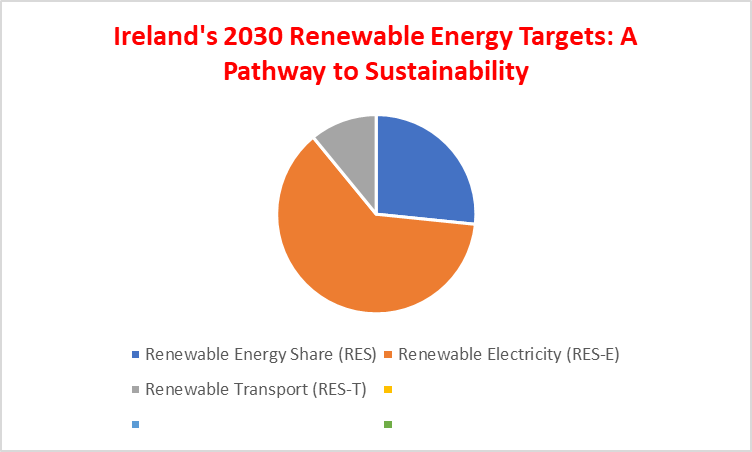
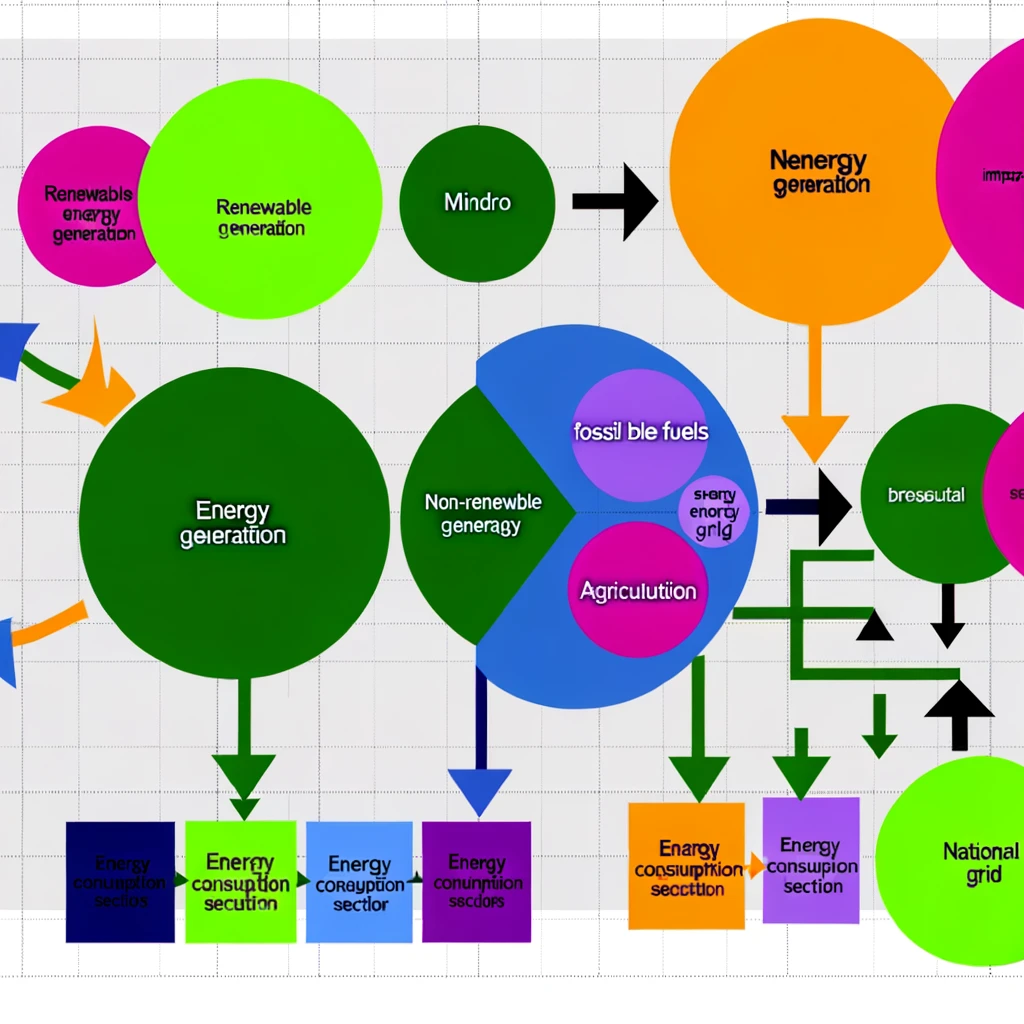
Figure 2 Flowchart visualizing Ireland’s energy landscape: Circles depict energy sources; rectangles represent generation and the National Grid; arrows illustrate energy flow to consumption sectors and optional storage.
 write
write