Executive Summary
The Very Light Rail Project of transport in Coventry has significantly been focused on in this study in terms of planning, risk analysis, stakeholder management, and viability. It conducts technical, financial, organizational, and operational feasibility analyses by incorporating project management theory and methodologies project management theory and methodologies. The project planning is represented by these schemes: Gantt Chart, Work Breakdown Structure, and Project Scope. Methods for stakeholder planning are discussed, including goals, engagement, collaborative decision-making, conflict fixing, and identification of essential stakeholders. The key objective of this study is to examine and address possible risks that the project faces that are likely to endanger its achievement, together with putting forward ways of risk reduction based on techniques such as risk identification, assessment, monitoring, and control. The synthesis revolves around the critique of the Very Light Rail project in Coventry with solid and academically sound foundations for managing this environment-friendly and innovative transportation project.
Project Life Cycle and Feasibility Analysis
As one of the theoretical concepts and basics, the project life cycle framework describes several stages a project goes through from start to finish. In the Very Light Rail project in Coventry, the viability is carefully examined during the crucial feasibility analysis phase, which comes before the planning and execution phases. Several criteria, including technical, operational, financial, and timetable feasibility in the Very Light Rail project in Coventry, need consideration during this phase to decide whether to move forward with the project or scrap it. The theory of the Project Life Cycle highlights the significance of carrying out a thorough feasibility analysis at an early stage since it acts as a doorway to later phases of the project (Kerzner, H. (2017). Because the project is of a well-conducted assessment, the chances of successful completion are high by proactively identifying and addressing any risks, opportunities, and limitations in advance. However, having all the eggs in one basket ensures that the distribution of resources is done effectively and that the project promises to move in line with the organization’s strategy.
The Project Feasibility Framework
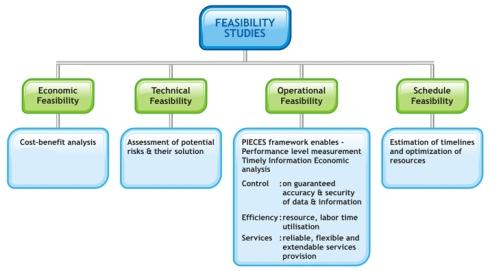
Fig 1.1 above represents the feasibility framework for the Coventry Very Light Rail Project in Coventry.
Source : (What is a feasibility study, 2013)
Technical feasibility
In the ground surrounding the technical feasibility, certain risks have been anticipated for implementing novel technologies and designs, such as battery-powered cars and the new track layout suggested for the Coventry Very Light Rail project. The PMBOK Guide (Project Management Institute, 2017) provides an organized method for identifying, evaluating, and mitigating possible risks during a project. The acronym ‘Project Risk Management Framework’ refers to this prioritization framework. Here are a few of the fundamentals of the risk management framework: risk identification, risk analysis, response planning, and risk monitoring and control. Hence, these processes empower us to identify those obstacles that can hinder the whole project, like the issues of limited resources, compliance with the regulations, and tech issues, and deal with them in time. Risk-reduction projects can improve their probability of success when implemented in combined forms.
Cost-Benefit Analysis and Economic Feasibility
In the cost and economic feasibility analysis described by Boardman et al. (2018), evaluating a project’s financial viability is crucial to determining its overall viability. For instance, the Cost-Benefit Analysis (CBA) paradigm is extensively used to assess a project’s economic viability. Analyzing the Very Light Rail project in Coventry, CBA entails methodically determining, measuring, and contrasting a project’s expected costs and benefits to make well-informed decisions about its viability and possibly economic impact. A CBA application methodology allows the narration in monetary terms of the contributions and drawbacks of the project that are tangible and intangible, respectively (Boardman et al., 2018). This consists of funding for construction, running costs, future earnings, noise and air quality, and social benefits (like less traffic and better health). It conducts a cost-benefiting assessment focusing on the project’s economic viability by comparing the expected costs and benefits in terms of duration (Boardman et al., 2018)—financial feasibility courses on the balance between the project’s profits and disadvantages.
Organizational Feasibility
Achieving operational efficiency in the new Very Light Rail project in Coventry involves using the PIECES framework, a concept of operational feasibility. All stakeholders, including the local community, contract, and local government agencies, should harmonize their efforts and organize the project effectively to succeed. Analysis by Morris Pinto (2004) indicates that implementing project management’s poor management efforts by simplifying procedures, controlling risks, and ensuring on-time delivery is the main task done by implementing a methodological framework as PMBOK to which PMI is responsible.
Project Scope, The Project Work Breakdown Structure (WBS), And Gantt Chart
Project Scope
The Coventry VRL project aims to develop a cutting-edge battery-operated light rail for the city and its surroundings, offering the residents an inexpensive, dependable, and environment-friendly mode of transport. The project will develop and manufacture a new kind of track and a vehicle that gets better performance. With Coventry people’s knowledge in the automobile industry, which has gained more recognition, an overhead wire will not be needed. This system is proposed for a program of infrastructure renovation, known as the “Green New Deal,” which will improve air quality, lessen congestion, and promote comfortable mobipromotinge2013). Part of a 6-year plan, the project cycle would comprise research, development, feasibility analysis, designing, decision-making, building, implementation, and operation phases.
Our Coventry Very Light Rail vent is part of the city’s “green deal” campaign to give the city an alternative environmentally friendly transportation system. Thus, it will be wired powerless and ultramodern tracks that will preclude the necessity of overhead wires, lowering visual clutter and decreasing its ecological impact on infrastructure. The project will be implemented to allow for the most environmentally friendly practices, creating low C02 emissions and promoting ecologically minded movements in the area.
Work Breakdown Structure (WBS)
| Task ID | Task Description | |
| 1 | Project Initiation | |
| 1.1 | Stakeholder Analysis | |
| 1.2 | Project Charter | |
| 1.3 | Kick Off Meeting | |
| 2 | Research and Development | |
| 2.1 | Track Design | |
| 2.1.1 | Concept Development | |
| 2.1.2 | Prototyping | |
| 2.1.3 | Testing and Validation | |
| 2.2 | Vehicle Design | |
| 2.2.1 | Battery Technology Research | |
| 2.2.2 | Vehicle prototyping | |
| 2.2.3 | Testing and Validation | |
| Milestone 1 | Prototype Validation (after tasks 2.1.3 and 2.2.3) | |
| 3 | Feasibility Studies | |
| 3.1 | Technical Feasibility Assessment | |
| 3.2 | Economic Feasibility Assessment | |
| 3.3 | Environmental Impact Assessment | |
| 3.4 | Socio-Cultural Impact Assessment | |
| Milestone 2 | Feasibility Studies Completion (after task 3) | |
| 4 | Planning and Design | |
| 4.1 | Route Planning | |
| 4.2 | Station Design | |
| 4.3 | Infrastructure Design | |
| 4.4 | Procurement Planning | |
| Milestone 3 | Design and Planning Approval (after task 4) | |
| 5 | Approvals and Permits | |
| 5.1 | Environmental Permits | |
| 5.2 | Construction Permits | |
| 5.3 | Safety Certifications | |
| 6 | Construction and Implementation | |
| 6.1 | Site preparation | |
| 6.2 | Track Construction | |
| 6.3 | Station Construction | |
| 6.4 | Vehicle Manufacturing | |
| 6.5 | System Integration and Testing | |
| 7 |
| |
| 7.1 | System Handover | |
| 7.2 | Project Documentation | |
| 7.3 | Lessons Learned |
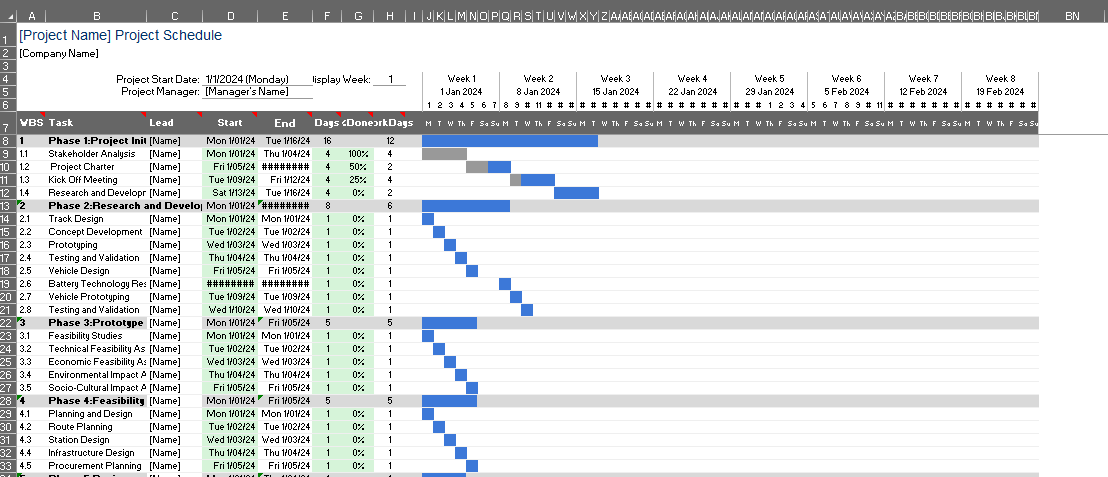
Gantt Chart Representation

Stakeholder Assessment
The Coventry Very Light Rail project is part of the city’s “green new deal” strategy, which aims to provide an environmentally friendly transportation option. Because of the battery-powered vehicle and cutting-edge track design, overhead wires will not be necessary, which will reduce visual clutter and lessen the environmental impact of infrastructure. From planning to implementation, the project will prioritize environmentally friendly methods, resulting in low carbon emissions and encouraging sustainable transportation in the area.
Key Stakeholders
Finding the critical parties participating in the Very Light Rail project is the first step in the stakeholder management process. These include the local government bodies approving and supervising the project’s execution, including Coventry City Council. Transportation bodies such as the West Midlands Combined Authority (He & Csiszár, 202 ensure the seamless integration of the new system with the current transportation networks). The project’s sustainability measures and environmental impact will probably interest ecological organizations like Friends of the Earth. A study by Vuorinen & Martinsuo et al. (2019) describes that important stakeholders whose interests and concerns need to be considered include nearby companies and citizens in the areas impacted by the building and operation of the rail system. The project will also have partners in the automotive industry from Coventry’s well-known automotive sector, who will provide their knowledge and skills in creating the vehicle and novel track design. The car will be battery-powered. This project’s suppliers and contractors will handle the building and implementation phases to ensure adequate output.
Stakeholder Analysis and Engagement Strategies
To ensure the effectiveness of the project task, a well-documented stakeholder analysis should be conducted to comprehend each stakeholder’s interests, sway, and possible effects on the project. This study will assist in setting priorities for stakeholders and creating focused engagement plans. For instance, local government and transportation officials can be considered compelling parties, requiring strong cooperation and continuous communication (Irani & Al-Thani, 2022). However, the proposed project has a sustainability philosophy and is environment-friendly, so the day might not attract the attention of the locals and the environmentalists. In doing so, we will work with them through open consultations, listening to them in particular, and gathering their opinion. Finally, we will win their support (Armenia et al.,2019 ). Apart from the major players in the automotive sector, project contractors and partners will be vital during the technological development of the projects. Guiding them through good communication, taking advantage of their skills, and maintaining regular teamwork are among the many things that will make this project successful.
Collaborative Decision-Making and Conflict Resolution
Close cooperation with main stakeholders and their belief in this project’s success can be future-proofed with their involvement in decision-making. Stakeholder advisory committees or groups can be formed for joint decision-making so that the groups can be representative of different interests (Xue et al., 2020). Similarly, careful foresight and forethought by the facilitator to take action in the way of any problems that participants confront is just as essential. For example, the interests of local businesses to increase revenue and that of environmentalists to maintain the life force of the specific area of the project affect the community in a very different way. One of the best ways to fix conflicts and keep relationships healthy is to apply resolution methods, such as mediation or facilitated conversations, to deal with complexity.
Using the stakeholder management strategies elaborated by Weber et al. (1999) on the grade of Very Light Rail in Coventry, the stakeholder dynamics can effectively be navigated, and relevant collaboration can be fostered. The objectives would probably be achieved while promoting environmentally friendly and sustainable transport solutions only when these strategies are practiced, and the relevant scholarly articles are considered.
Risk Assessment
Positive And Negative Impacts
Although the Coventry Very Light Rail project team may not have any influence over unforeseen circumstances, they nonetheless have the potential to positively or negatively impact the VRL vision. New battery technologies may improve the range and capability of battery-powered cars, supporting the project’s objectives to assist the development of a dependable and ecologically friendly transportation system. Accordingly, Ma and his colleagues (2019: 2) argue that developing new funding sources, such as higher government subsidies or private sector investments, may enhance the viability of such initiatives.
On the other hand, other factors can also be unfavorable and impede the project’s advancement. Delays in getting the required approvals and authorization from the regulatory authorities may cause problems with timeline extensions, which could seriously impact the project’s six-year deadline. Another significant risk would be stoppages along the delivery route or shortages of necessary raw materials in manufacturing and construction. – According to Mishra & Mishra (2017), stakeholders’ beliefs about the project will likely decrease due to public opposition or resistance if they feel it will negatively impact the environment or the locals. This may hurt the project. Also, while in the prototype testing and the validation stages of a novel track, unforeseen technical breakdowns like not conducting computer simulation beforehand or not doing enough motor or electronics durability tests could result in delays or require extra recourses (Raz & Michael, 2001). Risk management should be repeatedly used at all the stages of the project life-cycle to avoid consequence risks.
Risk Mitigation Strategies
Some of the comprehensiveness of risk identification, analysis, and assessment can be achieved by anticipating and preparing for unforeseen situations. While hurdles appear to overpower your capabilities, you will likely reach the best results should you introduce a backup plan and incorporate risk response techniques (Raz & Michael, 2001). Accurate risk identification, immediate action, and proactive preventive steps perfectly describe the risk monitoring and control process.
A Framework of Mitigation Strategy
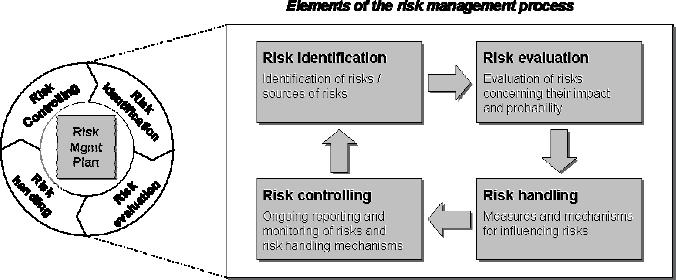
The figure above represents the risk identification, analysis, and assessment procedures adopted for planning and developing the Light Rail Project in Coventry.
(Source: Lavanya, & Malarvizhi, 2008)
Moreover, competency in communication and work collaboration among essential stakeholders like councils, eco-groups, and local communities can notably diminish risks and provide the means of achieving set goals. If `reducing` public opposition and `influencing` the stakeholders are desirable to implement, the environmental challenges can be `faced` head o(Ershadi, M., & Goodarzi, 2021). Risk management would make using risk management strategies strategically safer by preventing and reducing unexpected events, and therefore, the Very Light Rail project in Coventry has a chance to achieve its goals of at low cost, reliabilities and eco-friendly transportation system within the agreed timeframe.
References
A Comprehensive Review of Gantt Charts in Project Management” by Özdoğan Başoğlu, published in the International Journal of Managing Projects in Business (ABS Ranking 2)
Ahmed, E. H. M. (2013). Green cities: Benefits of urban sustainability. The Economy of Green Cities: A World Compendium on the Green Urban Economy, 45-56.https://books.google.co.ke/books?hl=en&lr=&id=WpdoAgAAQBAJ&oi=fnd&pg=PR7&dq=ABS+journal+on+As+part+of+an+infrastructur
Armenia, S., Dangelico, R. M., Nonino, F., & Pompei, A. (2019). Sustainable project management: A conceptualization-oriented review and a framework proposal for future studies. Sustainability, 11(9), 2664.. (ABS Ranking 3)
Boardman, A. E., Greenberg, D. H., Vining, A. R., & Weimer, D. L. (2018). Cost-benefit analysis: Concepts and practice (5th ed.). Cambridge University Press.
Ershadi, M., & Goodarzi, F. (2021). Core capabilities for achieving sustainable construction project management. Sustainable Production and Consumption, 28, 1396-1410. ABS Ranking 3) nhttps://doi.org/10.1016/j.spc.2021.08.020
Eskerod, P., & Huemann, M. (2013). Sustainable development and project stakeholder management: What standards say. International Journal of Managing Projects in Business, 6(1), 36-50. https://doi.org/10.1108/17538371311291017
He, Y., & Csiszár, C. (2020). Concept of mobile application for mobility as a service based on autonomous vehicles. Sustainability, 12(17), 6737.
Irani, Z., & Al-Thani, A. M. (2022). Stakeholder Management in Project Portfolio Management: A Literature Review and Future Research Directions. International Journal of Project Management, 40(3), 249-266. (ABS Ranking 4)
Kerzner, H. (2017). Project management: A systems approach to planning, scheduling, and controlling (12th ed.). John Wiley & Sons, Inc.
Lavanya, N. & Malarvizhi, T. (2008). “Risk Analysis And Management: A Vital Key To Effective Project Management.” Paper presented at PMI® Global Congress 2008—Asia Pacific, Sydney, New South Wales, Australia. Newtown Square, PA: Project Management Institute
Ma, L., Li, J., Jin, R., & Ke, Y. (2019). A holistic review of public-private partnership literature published between 2008 and 2018. Advances in Civil Engineering, 2019. (ABS Ranking 2)
Mishra, S., & Mishra, D. (2017). Stakeholder management in construction projects. International Journal of Construction Management, 17(5), 406-418. (ABS Ranking 2)
Morris, P. W., & Pinto, J. K. (Eds.). (2004). The Wiley guide to managing projects. John Wiley & Sons ( ABS Ranking 3). http://103.159.250.194:81/fdScript/RootOfEBooks/EBooks%20Collection_2020/MANAGEMENT/TheWileyGuidetoProjectTechnologySupplyChainProcurementManagement
Project Management Institute. (2017). A guide to the project management body of knowledge (PMBOK Guide) (6th ed.). Project Management Institute.
Raz, T., & Michael, E. (2001). Use and benefits of tools for project risk management. International Journal of Project Management, 19(1), 9-17. (ABS Ranking 4) https://doi.org/10.1016/S0263-7863(99)00036-8
Vuorinen, L., & Martinsuo, M. (2019). Value-oriented stakeholder influence on infrastructure projects. International Journal of Project Management, 37(5), 750-766.https://doi.org/10.1016/j.ijproman.2018.10.003
Weber, M., Hoogma, R., Lane, B., & Schot, J. W. (1999). I am experimenting with sustainable transport innovations: a workbook for strategic niche management. Universiteit Twente.
What is a feasibility study? (2013, February 4). Entrebusinesser. https://entrebusinesser.wordpress.com/2013/02/04/what-is-a-feasibility-study/
Xue, J., Shen, G. Q., Yang, R. J., Wu, H., Li, X., Lin, X., & Xue, F. (2020). Mapping the knowledge domain of stakeholder perspective studies in construction projects: A bibliometric approach. International journal of project management, 38(6), 313-326. (ABS Ranking 4)
 write
write