Introduction
The cultural tapestry of Toronto can be found in the myriad of vibrant cultural neighborhoods, each with its unique flair and ethnic trade. In recent years, the Latin neighborhood has become a tourist destination and a favorite place for everyone willing to have a cultural experience with many residents and a prosperous business flow. In the process of studying this area, along with online intelligence and virtual panoramas, the physical setting of the area and its ethnic economy were the issues that intrigued me most. This led to my research question: What led to multiple elements defining cultural behaviors and ethnic economy in Toronto’s Latin neighborhood? In this essay, I will explore this neighborhood’s historical, economic, and cultural aspects to uncover the various forces shaping its current landscape. I will mainly rely on newspaper articles, academic journals, and widely consumed media to develop a multi-faceted approach to the area. Given that the neighborhood has its landmarks, economy, culture, and environmental factors, I believe I will be able to show the public the complex connections between place, space, and culture within this beautiful community. Finally, my analysis aims to reveal the hidden layers of the Latin neighborhood, through which I will understand its diverse cultural mosaic and the impelling forces that have brought it to what it is today (Rankin & McLean, 2015).
Literature review
The literature on Toronto’s Latin region presents insights into the historical, economic, and cultural elements that have shaped its landscape and ethnic economy. Chaudhary and Guarnizo (2016) discover the organizational areas of Pakistani immigrants in Toronto and New York City, highlighting how cultural associations and commercial enterprise networks form immigrants’ economic possibilities. Neighborhood identities are similarly explored by using Ray and Preston (2015), who learned about the range in Toronto that displays the occurrence of ethno-racial discrimination in the city’s labor market and retail sector, especially for immigrants and minorities. Takahashi (2017) discusses the influences of gentrification on Toronto’s Little Portugal, emphasizing the complicated power dynamics between local entrepreneurs and incoming residents. In a comparable vein, Walks (2001) examines the social ecology of the post-Fordist/global city, highlighting the polarizing outcomes of monetary restructuring on the Toronto city region.
Additionally, Currah (2002) gives a historical evaluation of the evolution of multichannel retailing in Toronto, shedding light on the influences of altering client preferences and technological developments on the city’s financial landscape. Additionally, Hiebert (1993) intends to find out the role of Jewish immigrants in the garment factory in Buffalo and how ethnic families contributed to the city’s economy in their unique way. On the contrary, Nash and Gorman-Murray (2015) compare the spatial geography of urban trade in the gay villages of Toronto and Sydney. This led to the enlightenment of city planning’s role in gentrification and displacement in those cultural centers. Additionally, Rankin and McLean (2015) look at the internal suburbs of the city of Toronto, examining how a worksite is disinvested and gentrified. Their study reveals a connection between the monitoring factors and a local insurance policy that removes older companies and communities. Similarly, Zhuang and Chen (2017) add to this conversation by observing the role of grocery-anchored retail in suburban retrofit in Toronto and the revitalization of suburban retail areas by ethnic stores. Their research reveals a bright flash of hope for immigrant-owned services’ ability to trigger cultural effervescence and market activity in underdeveloped suburban communities (Zhuang & Chen, 2017).
The main points provided in this review show how the cultural setting and ethnic economy of Toronto’s Latin neighborhood are affected by several factors. It affirms the processes of immigration, gentrification, restructuring of the economic system, and policies as the forces behind the area and its inhabitant’s redevelopment (Chaudhary & Guarnizo, 2016). Lastly, this shows that the business of minorities and immigrants revitalizes urban and suburban areas by creating economic chances and cultural diversity. We will start with a literature review, which will later lead us deeper into the research of this lively community, further tying the results with broader ideas and theories.
Research Question
My question for research is aimed at discovering what impact the cultural environment and the Ethnic and financial structure of the Latino community had on the Latin neighborhood of Toronto. Several central discoveries from my historical investigations made me familiar with this subject in a new way. The three sources of information I examined come from newspapers and show an extensive history of arrivals of Latin American immigrants, mainly from Mexico and Colombia. The others, in turn, describe the locals’ financial rise, their cultural revitalization, and the multiple landscape business scenario formed by the independent small businesses and the chain stores. Also, I found that the area with a Latin feel has been prone to skilled gentrification; that aspect has a great deal to do with changing the environs and economy of the region. Gentrification is a socio-economic phenomenon that means upgrading a specific area that attracts middle-class inhabitants, pushing away the poorer folks, and causing observable physical, temporal, and cultural changes in that neighborhood. Moreover, it is communities in areas of gentrification that also tend to lose their Latinx business groups, with the good and bad that comes with the cultural identity and economy of the neighborhood in mind.
Moreover, I concluded simultaneously that the local barrio could demonstrate the diversity of cultural identities and a favorable ecosystem. In addition, the idea of a corridor like a neighborhood being a cultural center using festivals for roads, art, and song scenes. My findings came to show that a combination of such events as the migration waves, economic factors, and cultural processes have given the neighborhood its unique cultural environment, ethnic characteristics, and financial system (Hiebert, 1993). The Latin quarter of Toronto is a long-standing process of the interplay of historical, economic, and cultural factors that shaped the current shapes. The physical terrain of the park depicts its past and present rivalries, while buildings that stand tall in the neighborhood tell the story of its past. The most important streets of the neighborhood, such as College Street and Bathurst Street, act as boundaries, demarcating the Latin nearby from its surrounding areas. The four foremost landmarks, the Columbus Centre, the Little Italy Arch, the El Trompo monument, and the Vibrant Latin America mural, signify the neighborhood’s various cultural identities and influences.
Moreover, the historical aspect of the Latin region is rooted in the wave of Latin American immigration to Toronto in the Sixties and 1970s, which is evident from newspaper articles. The educational sources additionally spotlight the function of gentrification in shaping the neighborhood’s landscape. As new residents and organizations moved into the area, the nearby underwent sizeable changes, with a combination of historic and contemporary structures, representing a combination of previous and present. Economically, the Latin region has recently experienced skilled revitalization, with a large commercial enterprise landscape comprising impartial small agencies and established chain stores (Walks, 2001). The giant inflow of Latinx-owned organizations nearby is a result of the historical immigration patterns, and the centered gentrification process led to a strong experience of monetary health in the community, with job possibilities and a thriving neighborhood economy.
Culturally, the Latin neighborhood is a vibrant space, as considered by famous media sources that depict its active avenues, festivals, arts, and tune scenes. The numerous cultural identities of the residents are mirrored in the number of corporations and landmarks of the neighborhood, making it a captivating destination for travelers and locals alike. However, the attention of Latinx-owned companies additionally poses an undertaking to the cultural wellbeing of the neighborhood by way of probably contributing to gentrification and displacement of lower-income residents. In phrases of environmental wellbeing, the Latin local suggests symptoms of each forget and preservation. While some areas have gone through redevelopment and are well-maintained, different areas exhibit symptoms of litter and garbage, indicating a lack of interest in environmental concerns. It is a reminder that the improvement and increase of a region must no longer come at the value of its ecological health.
Analysis
To thoroughly recognize the cultural landscape and ethnic financial system of Toronto’s Latin neighborhood, we should consider the interaction of historical, economic, and cultural factors. As my research has shown, the locals have a wealthy record of Latin American immigration, which has fashioned their astonishing cultural variety. It is evident in various businesses, landmarks, and cultural occasions that rejoice in the neighborhood’s Latin American roots. However, this immigration has additionally contributed to the awareness of Latinx-owned companies, which has led to the system of gentrification in the evolution of technology (Currah, 2002). Further, gentrification within the Latin quarter has left an incomparable mark on its physical and economic systems. Now, new corporations and residents have settled there; it has experienced renewed vibrancy and wealth (Takahashi, 2017). The retail option of these developments has attracted the general chain stores, thereby expanding the neighborhood’s job market and economy. On the positive side, gentrification has made roses but has also birthed issues to the community in cultural and environmental wellbeing. Latinx-owned businesses’ positioning in the area has resulted in fewer affordable residential options for low-income residents. It potentially threatens the region’s cultural identity while exacerbating the social and monetary disparities.
According to Nash and Gorman-Murray (2015), gentrification, one of the significant disruptions to the green life of Latin Quarters, also covers rebuilding and cleansing the historic parts of the neighborhood famous for the gay village. If some character becomes more recognizable and decorated, the opposite – the other part of the plot – may process signs and symptoms of not investing in and neglecting the environment. In summary, the Latin neighborhood’s topography and money system are the consequence of cultural, historical, and economic procession, which is a little complicated. When changing the image into modern, it is also necessary to synthesize with preserving the historical heritage and the community’s environmentalism. By merchandising a numerous and inclusive community, we can ensure that Toronto’s Latin region stays a bright and welcoming space for all.
Conclusion
Finally, my project has given me an understanding of how complicated Toronto’s Latin area, its culture, and its economy are. Analyzing the historical, ecological, and cultural factors shows that this community has developed from immigration, gentrification, and cultural diversity (Ray & Preston, 2015). The physical landscape embodies the neighborhood, revealing its past and present through landmarks that tell the stories of its people, the richness of their history, and their diverse identity. This sense of economic prosperity is current through a booming local economy. However, some issues of gentrification are slowly harming the cultural and environmental state of the community. We should emphasize the passing of that neighborhood’s cultural heritage and ecological well-being while making it all-inclusive and welcoming. However, knowing this fact allows us to acknowledge the diversity of nationalities in a Latin neighborhood of Toronto and the numerous factors that have affected its development. To proceed with the neighborhood’s development, one should carry on this learning and comprehend its complex characteristics to promote its progress and welfare while maintaining its cultural identity.
References
Chaudhary, A. R., & Guarnizo, L. E. (2016). Pakistani immigrant organizational spaces in Toronto and New York City. Journal of Ethnic and Migration Studies, 42(6), 1013–1035. https://journals-scholarsportalinfo.ezproxy.lib.ryerson.ca/pdf/1369183x/v42i0006/1013_piositanyc.xml
Currah, A. (2002). Behind the web store: the organizational and spatial evolution of multichannel retailing in Toronto. Environment and Planning A, 34(8), 1411–1441. http://journals.sagepub.com.ezproxy.lib.ryerson.ca/doi/pdf/10.1068/a3562
Hiebert, D. (1993). Jewish immigrants and the garment industry of Toronto, 1901–1931: A study of ethnic and class relations. Annals of the Association of American Geographers, 83(2), 243–271. http://www.jstor.org.ezproxy.lib.ryerson.ca/stable/pdf/2563495.pdf?refreqid=excelsior%3A3d06d631cb1677e2e8fbfe59bfd3e18c
Nash, C. J., & Gorman-Murray, A. (2015). Recovering the gay village: A comparative historical geography of urban change and planning in Toronto and Sydney. Historical Geography, pp. 43, 84–105. https://ejournals.unm.edu/index.php/historicalgeography/article/view/3188/Nash-GormanMurray
Rankin, K. N., & McLean, H. (2015). Governing the city’s commercial streets: New terrains of disinvestment and gentrification in Toronto’s inner suburbs. Antipode, 47(1), 216-239. https://journalsscholarsportalinfo.ezproxy.lib.ryerson.ca/pdf/00664812/v47i0001/216_gtcsotagitis.xml
Ray, B., & Preston, V. (2015). Working with diversity: A geographical analysis of ethno-racial discrimination in Toronto. Urban Studies, 52(8), 1505-1522. https://journals-scholarsportalinfo.ezproxy.lib.ryerson.ca/pdf/00420980/v52i0008/1505_wwdagaoedit.xml
Takahashi, K. (2017). Toronto’s Little Portugal: gentrification and social relations among local entrepreneurs. Urban Geography, 38(4), 578-605. https://journals-scholarsportalinfo.ezproxy.lib.ryerson.ca/details/02723638/v38i0004/578_tlpgasrale.xml
Walks, R. A. (2001). The social ecology of the post-Fordist/global city? Economic restructuring and socio-spatial polarisation in the Toronto urban region. Urban Studies, 38(3), 407-447. https://journals-scholarsportalinfo.ezproxy.lib.ryerson.ca/pdf/00420980/v38i0003/407_tseotppittur.xml
Zhuang, Z. C., & Chen, A. X. (2017). The role of ethnic retailing in retrofitting suburbia: case studies from Toronto, Canada. Journal of Urbanism: International Research on Placemaking and Urban Sustainability, 10(3), 275–295. https://journalsscholarsportalinfo.ezproxy.lib.ryerson.ca/pdf/17549175/v10i0003/275_troeriscsftc.xml
Appendix
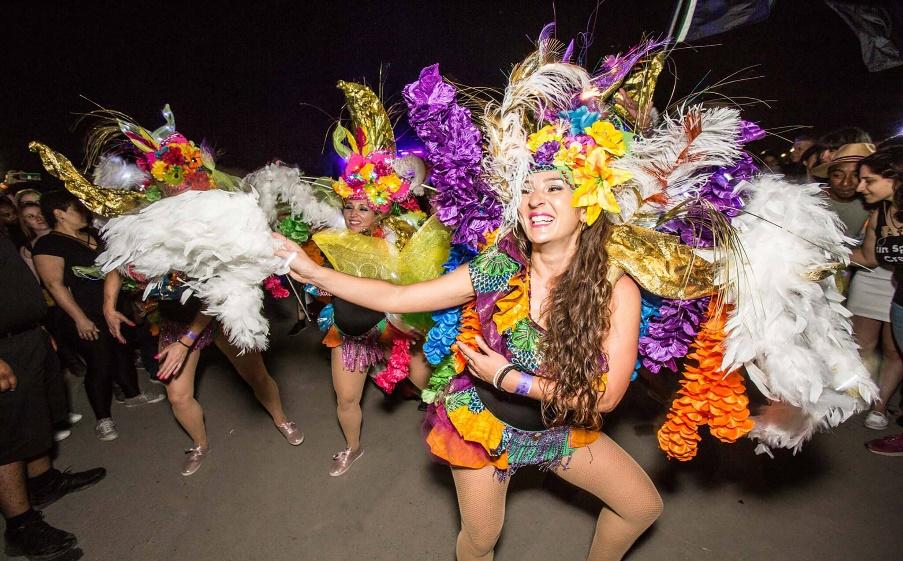
Pg.5 Toronto is getting a vast Latin block party during the summer.
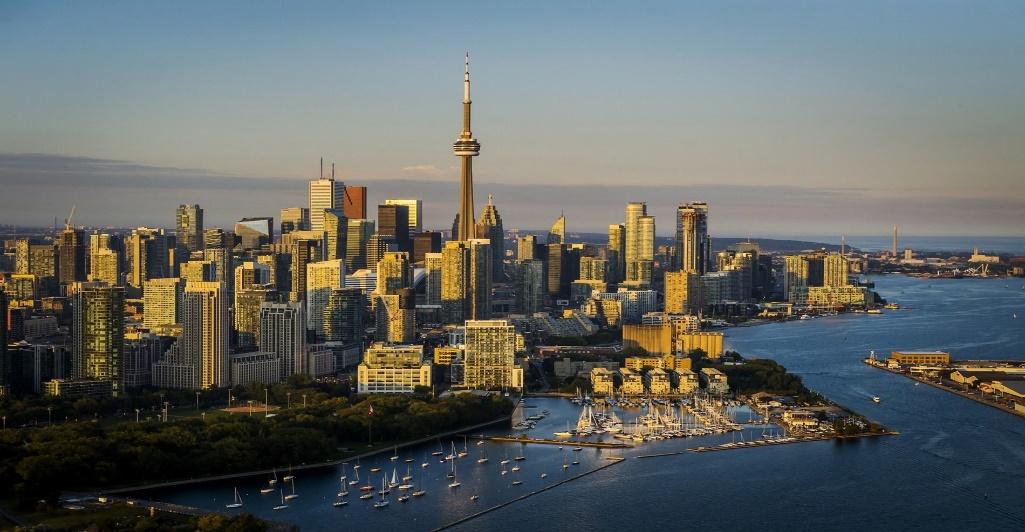
Pg.4 Latin Toronto’s landscape
pg.6 Latin Toronto’s diverse culture
 write
write