The present-day digital generation grows up with various technological gadgets, noticing that rolling their fingers on smartphones, tablet PCs, or computer screens is all they can see (Alsadoon et al., 2022). With the 24/7 presence of technology, it has become possible for learners to be involved in their learning, communicate, and interact with the world around them. In contrast, technology serves as a gift for convenience and interconnected experience, while it also poses profoundly deep questions.
With the child’s time on the screen and digital devices increasing, the question arises about the possible influence on the brain, memory, and social and emotional development (Salgado et al., 2023). The parents, teachers, and researchers twist themselves into knots about what this immersion means, whether it replaces a physical world or benefits learning and creativity.
With technology almost everywhere in modern society, children are constantly confronted with different forms of digital content and experiences at the age where they use none (Alsadoon et al., 2022). Thinking of educational apps, interactive platforms, and screens will give opportunities for learning and exploring. However, computers have possible disadvantages, such as digital addiction, decreased physical activity, and exposure to inappropriate content. Therefore, it is necessary to understand this fact and to develop evidence-based policies to facilitate the positive impact of technology on children.
The Upsides of Tech
Technological gadgets are a doorway to various educational materials where children can watch educational videos, online tutorials, and e-libraries. Based on a poll conducted by Schwartz (2017), 95% of children from 0 to 8 have a smartphone or tablet, emphasizing how universal technology is in their lives. With this availability, children can study subjects and topics far beyond the classroom limitations.
Interactive videos and online tutorials provide learners with a unique experience through which they can utilize their learning styles and preferences. For instance, tools such as Khan Academy give free, excellent educational videos on different subjects, from mathematics to history (Khan Academy, n.d.). These resources compensate for the classroom’s deficits and allow children to discover new topics and pursue their interests independently.
In addition, technology enables personalized learning through adaptive learning platforms. Adaptive learning algorithms evaluate the student’s performance and adjust the educational material to his particular needs and capabilities (Alsadoon et al., 2022). The US Department of Education researched students using adaptive learning software to make noticeable progress in their academic results compared to traditional instructional methods (Regis College Online, 2023).
Conversely, VR technology is a powerful tool that provides immersive learning experiences. VR simulations allow children to visit historical attractions and planets or dissect virtual organs to offer hands-on learning experiences that stimulate curiosity and engagement. Research has proven that VR-based learning improves knowledge retention and increases children’s cognitive abilities (Alsadoon et al., 2022).
Besides introducing technological achievement as a school tool, technology also develops and improves other essential skills, such as problem-solving and critical thinking. Technological games and mobile applications that provide such leisure learning activities require creative thinking, strategic thinking, and vital skills in making good decisions (Regis College Online, 2023). The same study by the Joang Cooney Ganz Center reported that 80% of these teachers believe digital games are pivotal in enhancing student thinking skills.
Subsequently, it becomes clear that games like “Minecraft,” based on the use of puzzles and where players create their virtual worlds and overcome environmental problems, contribute to creativity and collaboration skills development. There is research that was a product of the University of Wisconsin-Madison asserting that kids who used “Minecraft” had higher levels of creativity and spatial reasoning skills, unlike those who did not play it (Lee, 2015). Also, as an example, ‘Scratch’ apps help kids to acquire computational thinking and programming as fun as a play.
Additionally, learning systems based on technology tend to have game-like aspects that act as issuers of awards and badges for kids, thus urging them to keep focused on education and enjoy themselves throughout the learning process. Research on this topic revealed by the Journal of Educational Psychology showed that the gamified environment motivates the students from their minds, thus improving their performance during learning (Alsadoon et al., 2022).
Children can tremendously advance their learning processes and skills as technology provides unequaled learning chances and skill-developing circumstances (Alsadoon et al., 2022). In combination with educational video games with fully immersive virtual reality simulation interfaces, technology enables the kids to examine, obtain, and develop themselves in ways that have never been possible without them.
III. The Downsides of Tech
The main adverse effect of too much time on technology usage is disturbed sleep. Exposure to the light on screens can impact the creation of melatonin, a hormone responsible for supplying sleep-wake cycles. A study by the World Health Organization (2019) shows that children who can reach the screens inside their bedrooms are more likely to have sleep problems, including difficulty going to bed on time and too short hours of sleep. The survey by the National Sleep Foundation shows that 75% of children aged 6 to 17 years old have screens in their bedrooms, which often leads to less sleep duration and insufficient quality sleep (Hale et al., 2018).
Children are even more accountable for the excessive use of the screen, which directly inspires them to do inappropriate things such as violence and immoral behaviors. Learning from a Common Sense Media (2011) report, it was clear that 42% of all children aged eight and below had experienced accidental exposure to inappropriate content. Additionally, a study done by Hale et al. (2018) documented that gazing upon the screen for a more extended period can make a child less sensitive to life violence and active aggression. Likewise, early exposure to sex-related material can bring up these individuals’ incorrect perceptions about relationships and sexuality, forever leading to harmful sexual behavior.
Moreover, the use of technology in excess is one thing that could deprive people of their social skills and make virtual talk more preferable than face-to-face interactions. As per Wu et al. (2024) findings, adolescents who are regularly on social media for extended periods are more likely to suffer from loneliness and become distant from their friends. Not only this, but an article by Hijazi (2023) has also proved that teenagers who play more on social media platforms manifest low abilities for empathy and understanding others’ feelings. Social isolation caused by remote learning may produce an invisible barrier and hurt children’s psychological well-being.
Technology can always connect us, thus blending offline relationships with online ones. Therefore, it becomes difficult for children to differentiate between real and virtual friends. A research study by the Pew Research Center found that 57% of teens have made new friends online, and 20% report that they have met them in person (Lenhart, 2015).
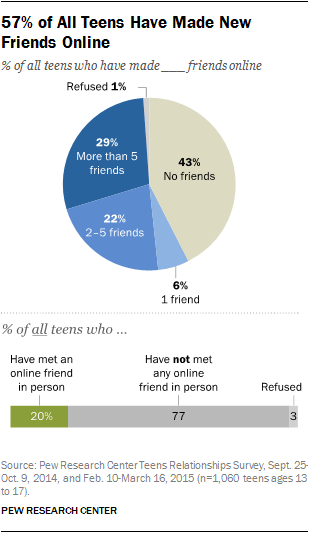
The mixing of boundaries can result in a feeling of detachment from real-world relationships and, therefore, may contribute to the inability to form good interactions.
Furthermore, the sitting ones (screens) pose considerable threats to the children’s physical health. Sustained sitting and insufficient exercise are associated with an increased risk of obesity, cardiovascular disease, and musculoskeletal disorders. According to the WHO (World Health Organization), kids who spend more than two hours on the screens daily have higher BMI and lower physical activity (World Health Organization, 2019). Furthermore, another study published in the JAMA Pediatrics journal revealed that excess screen time is associated with an enhanced risk of developing metabolic syndrome, a cluster of conditions that leads to an increased risk of heart disease, stroke, and type 2 diabetes.
Prolonged screen time can affect children’s mental health as well and cause mood problems like anxiety, sadness, and aggressiveness. According to Sivanesan et al. (2020), a study shows that children who spend more time on screens have a higher risk of developing symptoms of depression and ADHD than others. Constantly being confronted with a feed of curated images and glamorous lifestyles that are scripted on social media worsens the low self-esteem and inadequacy of vulnerable children.
Hence, as technology introduces multiple opportunities, the risks of excessive screen time in children should be noticed. The consequences of long screen time are diverse. They can lead to disrupted sleep patterns, exposure to inappropriate content, social isolation, and adverse effects on physical and mental health.
Why Early Years Matter
Early childhood, usually understood as the period from birth to age five, is a period of most rapid growth and formation. During this time, the brain experiences significant neuronal development, which has crucial implications for cognitive, social, and emotional functioning as one age. Research has demonstrated that the neural architecture of the human brain is highly affected by early life experiences, which can have implications for lifelong learning, behavior, and health status (Black et al., 2017).
Considering the significance of preschool brain development, one must avoid prolonged exposure to screen time during this stage. Prolonged screen time can replace critical activities like playing, exploring, and social interaction that promote physical and mental development. The World Health Organization (2019) urges a daily limit of no more than an hour of high-quality screen time for children aged 2-5.
Studies indicate that excessive screen time while toddlers undergo neurodevelopmental processes can cause delayed language development, reduced attention span, and impaired social skills. In a study by Sivanesan et al. (2020), the link between the amount of screen time during early childhood and the delay in cognitive development, especially in language and literacy skills, has been established. In addition, children’s screen time is associated with a higher risk of obesity, sleep disorders, and behavioral problems.
Quality Time with Parents
Parental involvement is a significant factor in supporting the development of children beginning from the early adulthood stages (Salgado et al., 2023). The basis of successful parent-child relationships is providing emotional support, moral direction, and means for growth and discovery to children. Evidence suggests that children with a good bond with their parents will be more successful in their social, emotional, and academic performance as they grow up.
Spending time together can develop strong emotional bonds, hopefully leading to secure attachment relations, which may be critical to a child’s socio-emotional development. With such activities as joint reading, playing games with kids, and just talking together, parents can bond with their children on a much deeper level, and they will feel safe and comfortable inside (Salgado et al., 2023).
In addition, parent-child interactions are also crucial in facilitating the fast growth of cognitive skills and academic success. Children’s cognitive development is stimulated through storytelling, songs, singing, and facilitating brainstorming, creativity, and language development. Research has revealed that kids who have been engaging in regular interactions with the grown-ups around them and who are intellectually challenged exhibit better cognitive functioning and academic performance (Salgado et al., 2023).
Consequently, the early period of a child’s development is essential for establishing the perspective for their whole life. Reducing over-screening and paying attention to the parent’s role in children’s development are crucial strategies to ensure that the children can fully develop, especially during this critical period.
Tech and Health Worries
Cognitive Development
Various researchers found that persistent use of screens correlated with cognitive impairment in children. Research published in the journal Pediatrics showed that a large amount of screen time exposure in preschool years hurt children’s developmental skills, especially in language and literacy skills. Another WHO (2019) research finding found that if children spend too much time in front of the screen, their cognitive skills, such as attention, memory, and problem-solving, decrease.
Besides that, screen exposure negatively influences children’s ability to keep attention for a long time and use critical skills. An article by Nechtem (2021) indicated that kids who spend more than two hours daily using screens have lower cognitive performance tools. This research concluded that it provided a valuable reference for keeping screen time low and promoting proper cognitive growth in kids.
Mental Health
Excessive screen time is also one of the common factors leading to mental health issues in children, including anxiety, depression, and attention-deficit/hyperactivity disorder (ADHD). It was reported by Salgado et al. (2021) that more excellent screen time in early childhood resulted in a higher possibility of suffering symptoms of depression and ADHD as they get older. Parallelly, the NIH Longitudinal Study revealed that adolescents who spent much time on screens were more susceptible to mood swings and depressed symptoms.
In addition, many experts believe that this is a damaging gateway to adverse mental health effects on children, like low self-esteem, cyberbullying, and social isolation. A meta-analysis published in the journal Clinical Psychological Science suggested that those who spent much more time were more vulnerable to suffering anxiety and depression, which may not apply to those who had only social media. However, this data underlines the responsibility of the parents and the caregivers to be on alert and set limits to children’s screen time to reduce the risk of mental health-related issues.
Overall Well-being
Besides carrying the experience of mental and cognitive issues, no matter how much they are on the screen, they are at risk of diminished physical functions and social connectivity as well. As reported by Meates (2020), children who have higher levels of screen time tend to get obesity, sleep disorders, and behavior problems. Similarly, the American Academy of Pediatrics conducted research that showed connections between the duration of screen time in early childhood and poor health. Such associations linked poor health outcomes like chronic conditions and increasing mortality rates to excessive screen time.
Furthermore, adding a small screen may depress children’s social development by using offline contacts and replacing virtual communication. Meates (2020) recorded that teens who spent more time on social media more often said that they felt more lonely and unconnected to their peers. In particular, these results stress the need for parents to urge kids to follow safe screen time boundaries and engage in productive offline social activities.
Wrapping it up
Recommendations
It is crucial to be positive and appreciative of technology while being realistic about its drawbacks. While the technology offers a platform for knowledge and brings connection, the rapid overuse of these networks harms students’ health. By admitting that the qualities of technology are invariable, we can evaluate its usage with due attention and restraint to the situation where the constancy is to its benefit. At the same time, the prodigality means the end of the world.
Promoting healthy interactions with children other than those related to watching screens will limit the adverse effects on children who spend excessive time on screens. Physical activity, attending museums and art galleries, and reading are highly recommended because they combine sports, socialization, and creative development. These activities are suitable for children and bring new, intriguing, tedious, and valuable development for children of the age of toxic screens.
It is vital to keep the connection open and to have constant dialogue among parents, educators, and policymakers to explore the ever-changing rules and solve the problems associated with technology’s influence on a child’s growth. By openly discussing different points of view, issues, and solutions, the stakeholders can align their efforts to create innovative strategies and regulations that will help raise healthy teachers in our children. Everything happens in the form of regular communication, which is necessary to accept the new scientific results and provide the latest technologies so that we can make decisions based (on) the welfare of a child.
Conclusion
In conclusion, the influence of technology on child development is a complex issue that calls for careful thinking and appropriate action. The advantages of technology that facilitates learning, helps build networks, and stimulates imagination are indisputable. On the other hand, it should be matched with the awareness of potential dangers, including too much time in front of screens, social isolation, and mental health problems.
Ensuring a healthy perspective is maintained is necessary, as well as recognizing both the advantages and disadvantages of the technology. It necessitates a watchful attitude to prevent children’s screen time from becoming excessive, allowing for uninhibited physical, cognitive, and social development. The caregivers and educators may do this through reframing and reshaping technology to promote mindfulness and other activities beyond the screen to create a nurturing environment.
For instance, outdoor play, cultural exploration, artistic imagination, and other creative activities provide children’s basic needs in a digitally free world. These experiences promote physical health and social skills and trigger imagination, critical thinking, and emotional resilience.
Ongoing dialogue among parents, educators, and policymakers is critical for changing technology. Stakeholders can create informed approaches to support children’s wellness during the digital era by sharing insights, discussing concerns, and teamwork to solve solutions. This inclusive collaboration ensures that policies and practices stay responsive to emerging challenges and capitalize on technology to boost learning and connectivity. Not alone, but collectively, we can harness the power of this technology to benefit the children of the future by making it a positive tool rather than a source of harm.
References
Black, M. M., Walker, S. P., Fernald, L. C. H., Andersen, C. T., DiGirolamo, A. M., Lu, C., McCoy, D. C., Fink, G., Shawar, Y. R., Shiffman, J., Devercelli, A. E., Wodon, Q. T., Vargas-Barón, E., & Grantham-McGregor, S. (2017). Early childhood development coming of age: science through the life course. The Lancet, 389(10064), 77–90. https://doi.org/10.1016/s0140-6736(16)31389-7
Centers for Disease Control and Prevention. (2023). Child development basics. Centers for Disease Control and Prevention. https://www.cdc.gov/ncbddd/childdevelopment/facts.html
Common Sense Media. (2011, October 25). Common Sense Media Research Documents Media Use Among Infants, Toddlers, and Young Children | Common Sense Media. Www.commonsensemedia.org. https://www.commonsensemedia.org/press-releases/common-sense-media-research-documents-media-use-among-infants-toddlers-and-young-children
Hale, L., Kirschen, G. W., LeBourgeois, M. K., Gradisar, M., Garrison, M. M., Montgomery-Downs, H., Kirschen, H., McHale, S. M., Chang, A. M., & Buxton, O. M. (2018). Youth Screen Media Habits and Sleep: Sleep-Friendly Screen Behavior Recommendations for Clinicians, Educators, and Parents. Child and Adolescent Psychiatric Clinics of North America, 27(2), 229–245. https://doi.org/10.1016/j.chc.2017.11.014
Hijazi, S. (2023, June 5). U-M expert shares thoughts on next steps after US report on social media’s effects on youth. University of Michigan News. https://news.umich.edu/u-m-expert-shares-thoughts-on-next-steps-after-us-report-on-social-medias-effects-on-youth/
Khan Academy. (n.d.). Khan Academy | Free Online Courses, Lessons & Practice. Khan Academy. https://www.khanacademy.org/#:~:text=Created%20by%20experts%2C%20Khan%20Academy
Lee, A. (2015). An investigation of the linkage between technology-based activities and STEM major selection in 4-year postsecondary institutions in the United States: multilevel structural equation modelling. Educational Research & Evaluation, 21(5/6), 439–465. https://doi.org/10.1080/13803611.2015.1093949
Lenhart, A. (2015, August 6). Teens, Technology and Friendships. Pew Research Center: Internet, Science & Tech; Pew Research Center. https://www.pewresearch.org/internet/2015/08/06/teens-technology-and-friendships/
Nechtem, C. (2021). The impact of technology on children. The Impact of Technology on Children. https://www.cerritos.edu/hr/_includes/docs/August_2021_The_Impact_of_Technology_on_Children_ua.pdf
Regis College Online. (2023). Effects of technology on children during a pandemic. Regis College Online. https://online.regiscollege.edu/blog/effects-of-technology-on-children/
Salgado, M., González, L., & Yáñez, A. (2021). Parental Involvement and Life Satisfaction in Early Adolescence. Frontiers in Psychology, 12, 628720. https://doi.org/10.3389/fpsyg.2021.628720
Schwartz, S. (2017, October 19). Young Children’s Use of Mobile Tech Has Tripled, Survey Finds. Education Week. https://www.edweek.org/leadership/young-childrens-use-of-mobile-tech-has-tripled-survey-finds/2017/10
Sivanesan, H., Vanderloo, L. M., Keown-Stoneman, C. D. G., Parkin, P. C., Maguire, J. L., Birken, C. S., & TARGet Kids! Collaboration (2020). The association between screen time and cardiometabolic risk in young children. The international journal of behavioral nutrition and physical activity, 17(1), 41. https://doi.org/10.1186/s12966-020-00943-6
World Health Organization. (2019, April 24). To grow up healthy, children need to sit less and play more. Www.who.int. https://www.who.int/news/item/24-04-2019-to-grow-up-healthy-children-need-to-sit-less-and-play-more
Wu, P., Feng, R., & Zhang, J. (2024). The relationship between loneliness and problematic social media usage in Chinese university students: a longitudinal study. BMC Psychology, 12(1). https://doi.org/10.1186/s40359-023-01498-4
 write
write