Abstract
Goal 14.7 agenda on sustainable use of marine resources to boost economic benefits. This target is crucial for creating environmental sustainability with economic growth, especially for the Small Island Developing States (SIDS) and Least Developed Countries (LDCs), which base their economy heavily on marine resources (Our World in data, 2023). Community empowerment through responsible fishing, aquaculture, and tourism will help the elimination of poverty and loss of biodiversity and provision fair opportunities to future generations at the same time. Not only failing to meet this goal is an immediate threat to people who are making a living from it, but it also carries forward natural degradation and social stratification. The platform of stewardship and solidarity through ethical principles needs to be placed for the perpetuation of marine ecosystems and the promotion of sustainable development.
Target Explanation
Target 14.7 is crucial for several reasons. Economic Impact: Marine resources create a huge commercial advantage for the global economy. Sustainable management is the source of many positive aspects, including the creation of jobs, the stimulation of the economy as well as poverty reduction. Biodiversity Conservation: Effective resource utilization guarantees the conservation of the marine environment and the diversity of species. Small Island Developing States (SIDS) and Least Developed Countries (LDCs): The coastal countries have a strong presence in the marine sector. Such a goal can offer a firm basis for the economic growth of these countries to flourish (Our World in Data, 2023).
Goal 14.7 of SDG 14 is aimed at unlocking economic opportunities and benefits from sustainable ocean uses. This target is the core of SDG 14 because it stresses the necessity of sustainability whenever economic profits come to the table (UNCTAD, 2016). The objective stresses out the enormous economic potential of the seas and marine resources to their nations’ wealth, industries, and global economies. However, it will be possible to obtain sustainable values only if the resources of the seas are managed carefully and sustainably.
Successful implementation of this target entails the provision of support for eco-friendly fishing methods, a decrease in marine pollution, protection of marine ecosystems, and growth of scientific research and technology in the management of marine resources (World Economic Forum, 2022). Through greater profitability from the sustainable use of marine resources, the communities can get rid of poverty, stimulate economic development and guarantee the long-lasting viability and ability to take up challenges in marine life.
Data Science DLL Approach.
During this process, the first step was the identification of the problem where the problem of current economic benefit from marine resources was a guide. Data was obtained from UNCTAD and checked for any missing values, inconsistencies and outliers. Exploratory data analysis was done through the use of Excel, and below visualization charts were obtained to identify the available patterns. The charts assisted in the evaluation step since the data obtained in single-mode regression models could not be applied for analysis. The findings were discussed, too (see discussion after the charts).
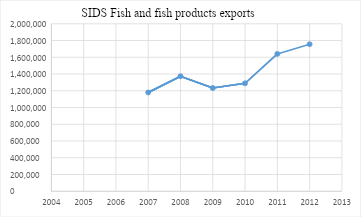
Figure 1. SIDS fish and fish products exports, 2007-2012. Source: data from(UNCTAD, 2016)
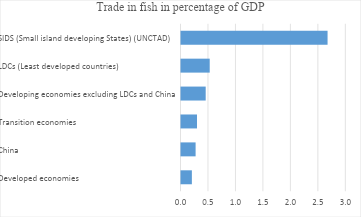
Figure 2. Global Fish Trade in 2013 Source: data from(UNCTAD, 2016)
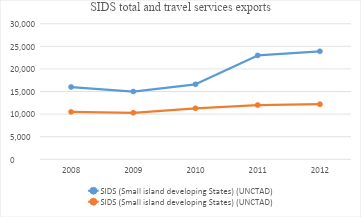
Figure 3. SIDS total and travel services exports, 2008-2012. Source: data from(UNCTAD, 2016)
According to the obtained and visualized data, the following can be seen. Economic Benefits: Achievements by 2030 must include the doubling of the small islands developing states (SIDS) and least developed countries (LDCs) economic benefits through marine resources through sustainable fishery, aquaculture and tourism. This is because fish and fish product consumption globally shows an increasing demand every year. Fish Trade Impact: Fish trade is an important driver of GDP growth for SIDS and LDCs since, for some countries, it can reach 10% of GDP, and, for others, it is the main animal protein source, accounting for up to 90% of such products. Growth Opportunities: There’s the ability for an increase in fish trade thanks to the possibility of fish being caught and salted by SIDS and coastal countries locally and/or regionally by implementing sustainable policies. Tourism Revenue: For most SIDS, tourism represents an important source of foreign exchange earnings, expressing as much as 20-50% of GDP and more than 30% of employment, with the travel services exports amounting to US $24 billion in 2012.
Ethical Perspective
The shortcoming towards target 14.7 has major ethical implications, particularly for higher-risk communities and future generations (Our World in Data, 2023). The abuse of marine resources without a guarantee of conservation leads to overfishing habitat destruction, and loss of biodiversity, thus undermining the livelihoods of coastal communities and indigenous people, which totally depend on the ocean for food and economic application. Besides, marine pollution and environmental decay have an extremely poor impact on social equality and vulnerable groups as well.
Moreover, not elevating the economic contributions to an improved sustainable marine resource usage will continue the chain of poverty and environment deterioration, thereby sabotaging endeavors to universalize sustainable development goals. Furthermore, through its ecological implication, it also denies the right of the coming generations to preserve a productive and healthy marine ecosystem.
At the end of the day, the moral obligation of attaining SDG 14 relates to conservation of the original worth, contribution to intergenerational equity and environmental inequalities. The major ethical principle we can uphold is stewardship, solidarity, and respect for biodiversity and ecosystem services, if we prioritize sustainable management and equitable distribution of marine resources.
References
Our world is in data. (2023, July 18). Conserve and sustainably use the oceans, seas and marine resources. Retrieved from ourworldindata: https://ourworldindata.org/sdgs/life-below-water#target-14-7-increase-the-economic-benefits-from-sustainable-use-of-marine-resources
UNCTAD. (2016). Target 14.7: Sustainable use of marine resources. Retrieved from stats.unctad: https://stats.unctad.org/Dgff2016/planet/goal14/target_14_7.html
World Economic Forum. (2022). SDG14 Financing Landscape Scan: Tracking Funds to Realize Sustainable Outcomes for the Ocean. White Paper June 2022. June, 27. www3.weforum.org
 write
write