Human anatomy comprises different tissues, organs, cells, and organ systems essential for life sustenance. Cellular harmony promotes the coordination between tissues to support organ system functionality. Muscle contraction supports movement by pulling the bones to facilitate support (Hermann et al., 2020). The integumentary system supports homeostasis, which is essential in improving internal balance. Muscular harmony and the nervous system are part of the supportive system in the body’s physiological activities. This article examines the cellular structure tissue integration, integumentary system, skeletal framework, nervous system, and muscular harmony. The human body operates in coordination, leading to the overall physiological function.
Part A: Cellular Harmony
The cells are part of life’s building blocks, each having a specific structure known as an organelle that performs different functions. The organelles contribute to the overall structure of the cell and its function in the organism’s physiology. The coordination of multiple tissues leads to interactions that form cellular communication. Hermann et al. (2020) state that endocrine communication involves communication between tissues, cells, and organs. Cellular communication facilitates homeostasis through internal balance (homeostasis) for proper response to environmental changes and physiological function.
Part B: Tissue Tapestry
The human body consists of four primary tissues: connective, muscular, nervous, and epithelial. Epithelial tissues form the protective barrier and facilitate the secretion and absorption of chloride and sodium ions (Hodge et al., 2022). Connective tissues connect with the different organs and tissues and provide structural support. Muscular tissues enhance. Movement through contraction. Hermann et al. (2022) argue that nervous tissues promote the conduct of electrical impulses, which is essential for cell coordination and communication. Tissue collaboration leads to the formation of organs that perform specific functions. A prime example is the dependence of the digestive system on epithelial tissues to foster coordination and muscular tissues for peristalsis. This illustrates the interdependence between tissues, organs, cells, and organ systems for physiological function.
Part C: The Body’s Outer Shield
The parts of the integumentary system comprise the skin, glands, nails, and hair, preventing physical and pathogen harm. The skin depends on the blood vessels and sweat glands to regulate temperature. The sweat glands, known as eccrine, aid in cooling the body, while blood vessels facilitate heat distribution (Hodge et al., 2022). The integumentary system regulates temperature, protection, and sensation to sustain internal balance. The nerve endings facilitate external stimuli, which helps maintain internal balance for optimal body function.
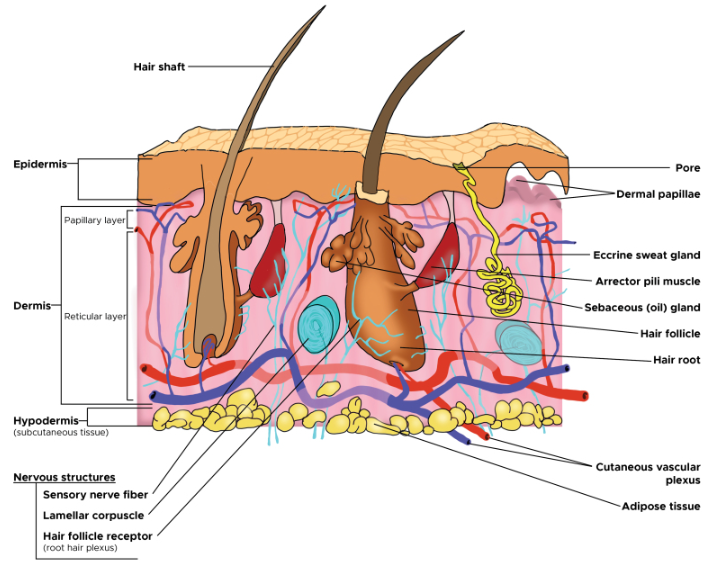
Figure 1: Human skin anatomy (Hodge et al., 2022)
Part D: Structural Framework
Thehuman body depends on the different bones for movement and support. The long bones, such as the femur, offer support to facilitate movement. The short bones, like the scapula, are essential in the body since they provide a surface for muscle attachment. The scapula provides the attachment for the ligaments to the coracoid process and clavicle (Cowan et al., 2023). Irregular bones, like the vertebrae, are essential since they protect internal organs and enhance spinal stability. There is a variance in the joint’s function and structure, which determines their movement. Hinge joints like the elbow allow extension and flexion of the body arm. The Ball-and-socket joints, such as the hip joint, enable movement in multiple planes. The structure of the joints determines the movement capability and ensures controlled motion and body efficiency.
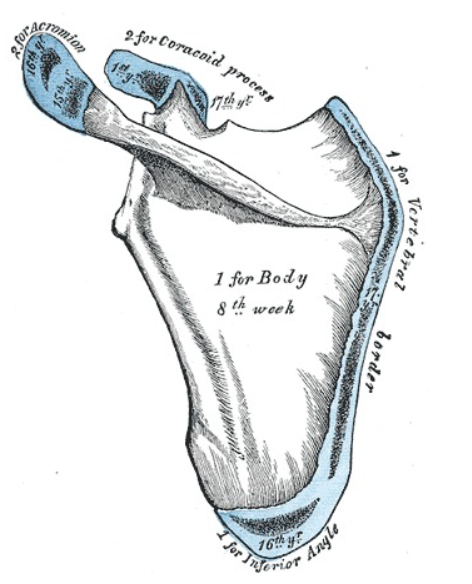
Figure 2: Anatomy of the Scapula (Cowan et al., 2023)
Part E: Muscular Harmony
Muscular harmony generates heat and facilitates the support posture and movement. The muscular system encompasses the skeletal muscles, which support voluntary movement and involuntary functions like cardiac muscle movement to sustain heartbeat/ contractions (Ripa, 2023). The muscles operate coordinatively, where the contraction of the agonist’s muscles starts movement while the relaxation of the antagonist’s muscles enables movement control (Koelewijn & Bogert, 2022). The coordination effort facilitates movement efficiency and ensures fluid lubrication. The balance between the muscle groups is pivotal in facilitating movement and overall body functioning.
Part F: Nervous System Network
The primary nervous system components are the peripheral nervous system (PNS) and the central nervous system (CNS), which coordinates body functions. The neurons convey electrochemical signals across the synapses using neurotransmitters (Hermann et al., 2020). Chemical communication in the nervous system is paramount in regulating and responding to external stimuli, adaptation, and overall body function.
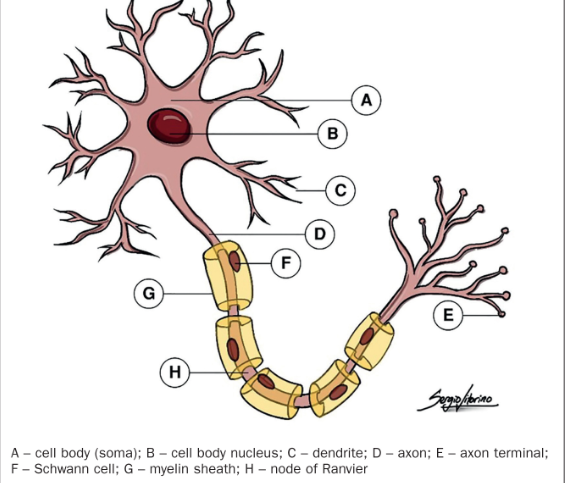
Figure 3: Neuron structure (Teixeira, 2024)
In summary, the human body operates through coordination, facilitating overall physiological functioning. The cells operate in coordination to facilitate the functioning of the organ system. The integumentary system contributes to homeostatic functions through the blood vessels and skin involvement in regulating heat and response to external stimuli. Muscle coordination with the joint structure and neural functions are vital in movement. The human body depends on coordinated functions for proper functioning.
References
Cowan, P. T., Mudreac, A., & Varacallo, M. (2023). Anatomy, back, scapula. https://www.ncbi.nlm.nih.gov/books/NBK531475/
Herrmann, M., Engelke, K., Ebert, R., Müller-Deubert, S., Rudert, M., Ziouti, F., … & Jakob, F. (2020). Interactions between muscle and bone—where physics meets biology. Biomolecules, 10(3), 432.https://www.mdpi.com/2218-273X/10/3/432#
Hodge, B. D., Sanvictores, T., & Brodell, R. T. (2022). Anatomy, skin, sweat glands. https://www.ncbi.nlm.nih.gov/books/NBK482278/
Koelewijn, A. D., & Van Den Bogert, A. J. (2022). Antagonistic co-contraction can minimize muscular effort in systems with uncertainty. PeerJ, 10, e13085.https://doi.org/10.7717%2Fpeerj.13085
Ripa, R., George, T., Shumway, K. R., & Sattar, Y. (2021). Physiology, cardiac muscle.https://www.ncbi.nlm.nih.gov/books/NBK572070/
Teixeira, L. (2024, February 29). The nervous system and associated disorders. British Journal of Nursing. https://www.britishjournalofnursing.com/content/clinical/the-nervous-system-and-associated-disorders
 write
write