Introduction
The phenomenon of sustainable entrepreneurship has been put forward as playing a significant role in using the platforms for much-needed social and environmental change, owing to the environmental challenges which are now global. The Zero Path initiative is an audacious pledge to go to zero-net greenhouse gas emissions by 2050 and pave the road towards a better ecological alternative (Das et al., 2023). This essay explores the complicated linkage of businesses following sustainable paradigms to the Path to Zero targets, shedding light on how entrepreneurs address political, social, environmental and cultural issues while providing solutions to the present sustainable business challenges. The essay highlights the factors and limitations of technology and innovation, public preferences and politics, and business operations, aiming to demonstrate the criticalities and tools available for succeeding in a sustainable business environment. This research will critically analyse the available theories, practices, and case studies to detect the master path using scientific approaches to align entrepreneurial pursuits with Path to Zero. Additionally, this essay concludes that the Path to Zero guarantees a very promising perspective of sustainability; however, to be able to succeed as a sustainable entrepreneur, one has to make sure to act competently in the multifaceted challenges that this reinventing factor represents and take advantage of the business opportunities that also come hand in hand with it.
Understanding Sustainable Entrepreneurship and the Path to Zero Goals
A global resolution, the Path to Zero initiative, is pushing for the end of zero net emissions by 2050. It is a holistic framework that provides solutions for the large spectrum of climate change and upholds planet Earth’s sustainability (Beckmann et al., 2023). This process is inspired by the scientific findings and the 2015 Paris Agreement, an international agreement on the urgent need to implement aggressive action to stop climate change. Through the implementation of the explicit goals of the institution and involving different partners, the Path to Zero initiative tries to bring forward the transition from traditional energy sources to renewable energy sources, decrease the community’s consumptive manner and introduce circular economic activities within it.
Sustainable entrepreneurship involves a system of principles prone to efficiency in extracting economic value and minimising environmental harm while promoting social welfare. Fundamental principles include a circular economy approach, renewable energy usage, higher resource efficiency and accountability, and green consumption esteem (Prokopowicz, 2020). Sustainable entrepreneurs introduce and keep these principles in their business’s operational and business models to accomplish the triple bottom line of economic, environmental and social sustainability.
Integrating universal environmental sustainability ideas inside the Path to Sustainable Future can be a significant milestone toward creating a sustainable future. Ideas like the circular economy, generation, and consumption that are responsible are the same as those of the Path to Zero campaign. When slurping these principles, businesses will eventually implement their declination of greenhouse gas emissions and thus will reduce the risk of climate change global threat. Furthermore, the Path to Zero initiative, which acts as a guide for the cooperation of businesses, guarantees that aligning their sustainability initiatives with global goals and strategic nature is achieved, and therefore, environmental sustainability efforts become collaborative and coherent.
Political Factors in Sustainable Entrepreneurship
Support systems hold sway over the effective functioning of a sound corporate operation that supports sustainability. Policies like carbon taxes, cap-and-trade mechanisms, and government subsidies for renewable energy technologies work in favour of the firms, offering them a supportive environment in which sustainable investments are encouraged (Chen et al., 2021). They accomplish this by internalising indirect costs and using financial instruments (e.g., green labels) to stimulate investments in cleaner technologies. For instance, carbon pricing tools force enterprises to reduce greenhouse gas emissions by imposing a fee on carbon pollution, which in turn leads to the adoption of energy efficiency practices on the part of companies alongside the adoption of a majority of renewable energy sources.
Whereas many supportive policies abound, political constraints can significantly hamper and limit sustainable entrepreneurship. Political instability, frequent leadership changes and uncomplicated regulations are among the factors that discourage businesses from introducing sustainable environmental solutions. Due to imprecise bureaucratic and prolonged administrative procedures, entrepreneurs may need help implementing sustainable projects and consequently experience delays and extra costs related to such activities. Besides, competition of political priorities and no agreement about environmental problems might lead to gaps in policies and policy inconsistencies, making it easier for firms to plan and run sustainable strategies as they want.
Through the presentation of case studies, entrepreneurs can get valid lessons as practical and actual examples of gaining political support and tackling political obstacles. For example, the German government’s political support of renewable energy measures through Energiewende is evident, and this environment’s breeding provides a chance for green businesses to flourish (Gross, 2023). Lastly, the refusal of identified automakers to accept government help continuously shows their compliance with the environmental policies, including that of Tesla, which is a sign of the political problem facing these environmentally-conscious companies. By studying these case studies, entrepreneurs take away various lessons in approaching policymakers, instigating supportive policies, and navigating political waters to optimise sustainable entrepreneurship programs effectively. The following figure showcases that the journey towards net zero starts with the willingness to gain certification as the mandatory milestone.
The pathway to net-zero
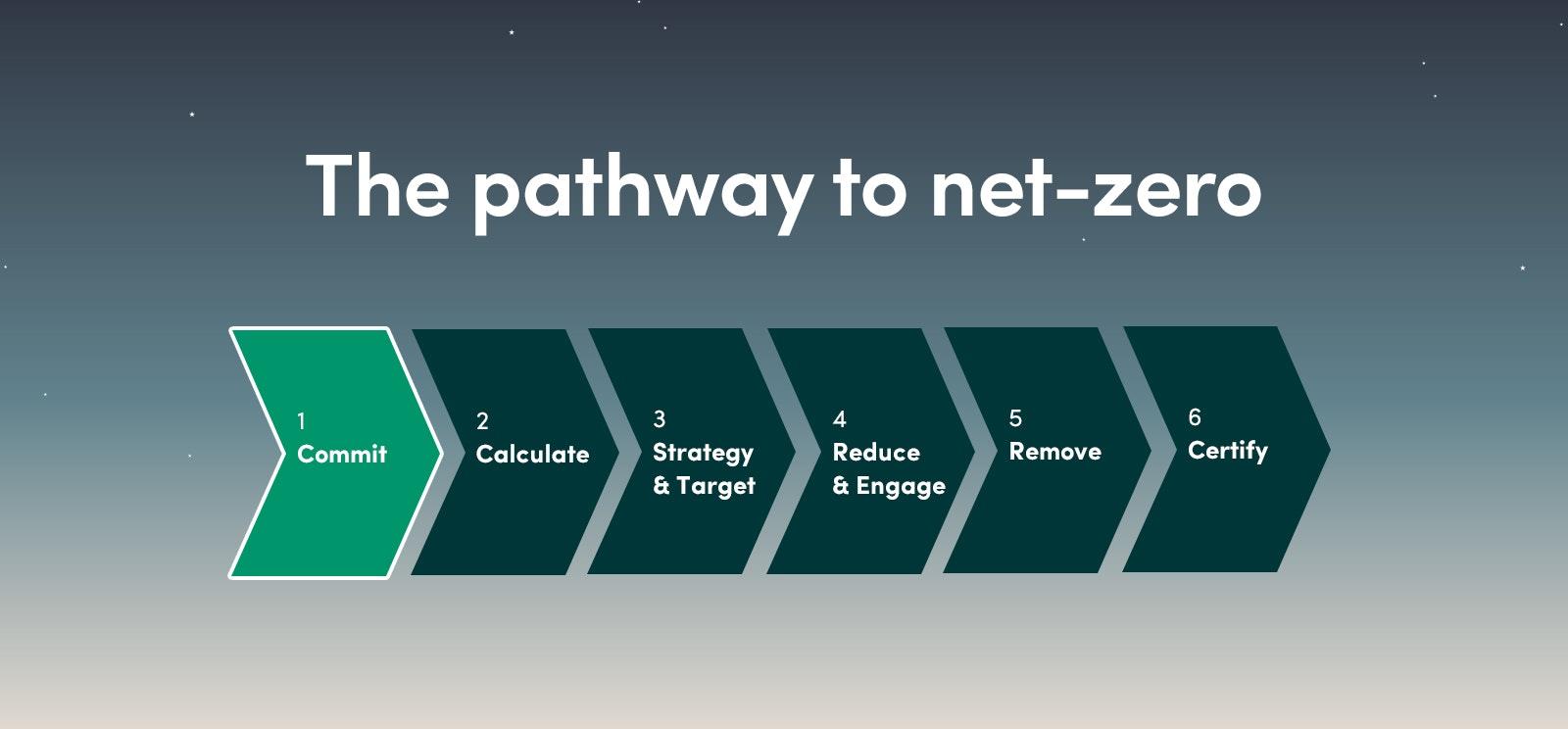
(Charting the Path to Net-Zero for Businesses, 2022)
Social Drivers and Constraints
Sustainable entrepreneurship faces external pressures from an ever-changing societal attitude. External factors like public expectations and demands shape the entrepreneurial landscape to which the business has to adjust. Such a trend is on the rise, and people are becoming more environmentally conscious and favouring products and services that are on the same page with their value of sustainability. Consumers have responded to environmental issues with a new, more enlightened awareness promoted through various means, such as the media and organisations advocating for a greener world (Ahmad et al., 2023). Companies that conduct their operations from a sustainability mindset will likely be in the lead and acquire more consumers in a market.
Entrepreneurs in sustainable entrepreneurship, however, need to navigate through social challenges and have the privilege of enjoying the opportunities that come with it. One such challenge is “greenwashing,” whereby companies can overstate or misrepresent their environmental attributes to benefit from the rising population, which considers sustainable goods and services (Alvoittu, 2022). This leads to losing consumers’ confidence and might pose a significant challenge to other legitimate and genuine sustainable businesses. On top of it, uneven distribution of green products and services in an economy due to the strata difference will also further the status quo of social inequality restrictions fertility adoption of sustainability practices.
Social factors and the exploitation of opportunities in sustainable entrepreneurship are the main channels of navigating them and acquiring the opportunities these issues can offer. For instance, advertising a company’s sustainability efforts through authenticity and transparency to build customers’ trust and credibility can be one of the first steps in advertising (.Kapitan, 2022). On the one hand, this is done by making specific environmental effects of offered products and providing services clear and being outspoken about the business’s regular practices and supply chains. Second, partnering with key stakeholders like NGOs, community groups, and like-minded companies will help achieve this as you reach more audiences. In the last place, separate companies will keep in mind socio-economic groups’ interests and preferences while doing business, which can create a vast market for sustainable products and services that, in the end, are appropriate for the whole community. By applying the above-identified strategies, entrepreneurs can successfully deal with societal dimensions and take advantage of the emerging business prospects related to the increasing need for sustainability.
Environmental Drivers and Constraints
The initiative aims at being Zero Path, developing audacious lines on the environment, most of all with the desire to cut greenhouse gas emissions. In this respect, the first aim is to switch these power sources to renewable energy options like solar, wind turbines, and geothermal energy. The initiative wants the world to be freed from fossil fuels, and the introduction of clean energy sources is targeted to lower carbon emissions and, therefore, reduce the effects of climatic change (Yi et al., 2023). Beyond that, The Road to Zero also stresses the paramount role of resource efficiency – not just in the production processes but also in waste reduction. An elaborated and comprehensive circular economy component that focuses on recycling, reusing and upcycling materials is vital to reducing environmental hazards and preserving precious resources for future generations.
Sustainable sourcing, production, and waste management plans are the pillars of the Resdot Zero CO2 Strategy to support the set objectives of the Path to Zero initiative (Singhal, 2023). The companies can design sustainability principles such as ethical sourcing of raw materials, agriculture-promoting water conservation, and collaboration with suppliers who comply with responsible forestry practices. In this stage, energy-efficient technological aspects like the incorporation of energy-saving equipment and the adoption of environmentally friendly technologies will be undertaken to bring down greenhouse gas emissions and minimise environmental damage. A vital step of the waste management process involves methods like recycling, take-back programs, and redesigning the products to make them easier to recycle. This way, we are closing the loop, reducing waste production and environmental impact.
Case studies are excellent sources of many lessons, enabling one to see eco-friendly achievements and the problems of entrepreneurs on their way to sustainability. Patagonia has a history of embracing eco-friendly sourcing and efficient waste management, such as repair and recycling facilities for its products and customers. However, all this is balanced on the entrepreneurs` side with challenges like access to eco-friendly resources and technologies, which are difficult to find in underdeveloped regions, especially places with fewer resources and infrastructure. Overcoming these challenges entails aligned approaches within society and partnerships across different lines to create a sensible system. Through such learning, one can make a successful way along the path of environmental sustainability only by turning setbacks into successes and, as a result, can contribute to achieving the Path to Zero goals.
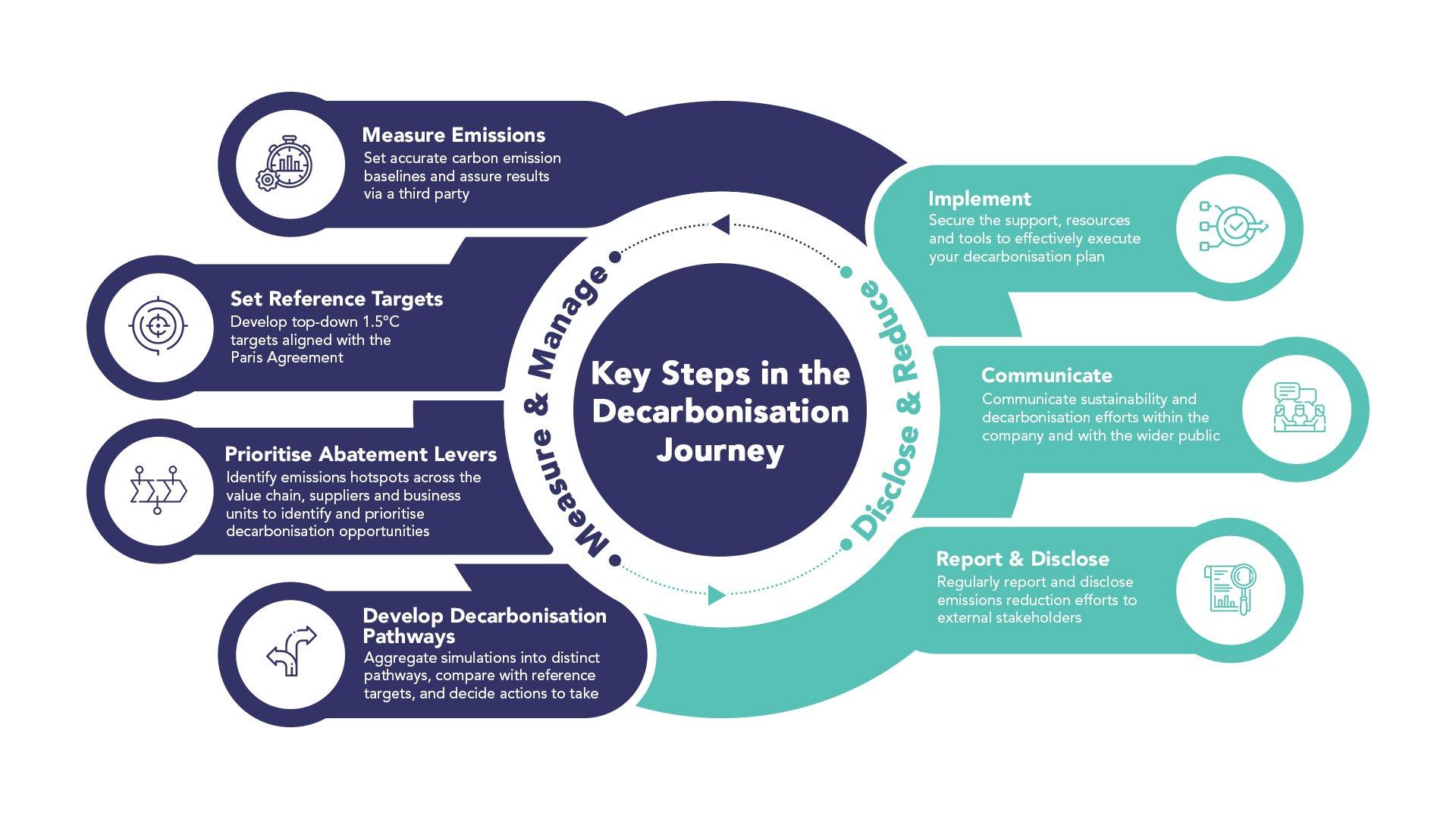
Key Steps to Decarbonisation
Cultural Influences on Sustainable Entrepreneurship
Culture is a crucial enabler of the formation of mindsets, instituted values, and behaviour patterns, which influence the structural pattern of green enterprise. The ecosystems of communities that attach importance to ecological welfare and societal well-being will be where sustainable business practices will most likely catch on. Some instances of indigenous cultures are the ones that hold high ecological wisdom and are extraordinarily connected to the land; those are the ones that can show modern man how to conserve our resources sustainably. Moreover, cultures that honour and cherish collaboration, collective action, and social responsibility can be suitable catalysts for promoting entrepreneurship as they engender cooperation between parties and use assets owned collectively (Wondaferew, 2021).
Although cultural practices may constitute a deep well of wisdom and ideas for green entrepreneurship, the reconciliation of traditional practices to the modern focus on sustainability goals can be daunting and complex. Traditional practices might be so widespread in cultural norms, rituals, and beliefs, which are only sometimes in line with the ambitious goals of sustainability on an abstract level. For instance, if the cultural heritage of a community primarily revolves around expressive consumerism or resource depletion, it will compete with the initiatives aiming at conservation and environmental protection. In addition, reluctance to change and fear of loss of identity can be major stumbling blocks to applying new sustainable practices more widely, and these effects are more visible in communities where local traditions are looked upon with deep respect.
Despite that barrier, cultural diversity is always more than just one chance to try new approaches to a sustainable business. Be it a mixed culture, entrepreneurs can gain a range of knowledge, perspectives, and ways to achieve sustainability that may require unfamiliarity with a specific culture. Collaboration of the community members who represent different cultural groups will enhance the thinking process, intercultural learning, and co-creation of the resultant solutions, which are both ecologically and culturally sustainable (Agusdinata, 2022). Effectively, the traditions of various people can help businesses acquire new markets and link with the consumer segments of various nationalities, whose demand for sustainable products and services will be expanded globally. Utilising cultural diversity as an asset for innovation and strength can allow entrepreneurs to unearth brand-new routes to environmental sustainability while maintaining cultural heritage-grounded values.
Implications for Enterprise Creation
The development of sustainable enterprises is dominated by certain vital factors that considerably impact the coming into life, growth, and ultimate success of environmentally and socially responsible businesses. The factors influencing the development and growth of sustainable green manufacturing sectors include government policy, consumer demand to buy green products, access to capital (money) and resources, technological innovations, and engagement of stakeholders. Regulatory frameworks become a significant engine driving an enterprising environment by creating rewards, setting criteria and enforcing environmental and social laws. Market demand deals with adopting sustainable practices by motivating businesses to prioritise environmental and social networking to attract consumers’ loyalty and increase market share (Aripin et al., 2023). Borrowing from financial institutions, utilising resources, and investing in sustainable technologies, materials, and practices are crucial for any entrepreneur dealing with environmental and social issues. R&D of new technologies often gives rise to fresh solutions to old problems. However, relationship building encompasses alliances, public and private bodies, non-governmental institutions and communities to systematically approach the sustainability problem and contribute to the system’s renovation.
Given that sustainability is a very dynamic term, it is essential to modify the standards for measuring success in a way that not only focuses on the financial measures but also covers the environmental and social impacts. Whether done intentionally or not, ecological harm involves businesses and technology. This argument supports the integration of economic, environmental, and social performance indicators (the triple bottom line approach), which evaluate the overall success of a business based on its economic, ecological and social contributions. Financial performance must be addressed. However, it needs to be rounded off by indicators like carbon emission, resource efficiency, social justice, and community involvement. The inclusion of environmental and community effects in evaluating the success of companies’ initiatives enables them to differentiate their level of sustainability and focus on areas that need addressing (Lu et al., 2020). Including open communication about environmental and social data and financials increases accountability and allows stakeholders to trust in sustainable corporation development. This develops transparency and reliability in the creation of green businesses.
Analysing the determinants that affect enterprise creation and the challenges and opportunities for entrepreneurs who want to build long-term businesses is critical to understanding rural economic development. Nevertheless, sustainability incorporation may face challenges such as going through a tortuous regulatory environment, attracting funding for sustainable investments, facing people’s and socioscientific barriers to sustainability, and competing in markets where a green economy is not predominant. Hence, to deal with these challenges, visionary entrepreneurs can apply the following policies: advocacy for supportive policies, collaboration with diverse stakeholders, innovation in sustainable technologies and business models, and differentiation through branding and marketing. In this respect, utilising these measures enables innovators to establish their startups on the path to success in the constantly changing green enterprise creation market. Also, it contributes to positive environmental and social impacts.
Conclusion
This paper examined sustainable entrepreneurship as an ongoing process that contributes to attaining the universal goals of zero-emission and non-violation of ecological stability. The speech has already touched upon and explored several reasons, or drivers, and the barriers or constraints in the political, social, cultural, and environmental spheres that inform the design of sustainable management choices. From supportive policies that intersect with others to cultural influences, each factor provides its own set of costs and opportunities to the forward-looking entrepreneur interested in sustainability (Yasir et al., 2021). Using our main ideas and case studies, we have dramatised the significance of unravelling these complexities to put the future on a sustainable path.
Amid a shift towards more sustainable business aims, collaboration and innovation are the backbone of their realisation. Entrepreneurs have to work with policymakers, the public, and stakeholders to campaign for laws that support businesses, promote clarity in management systems, and drive change as a system (Lüdeke‐Freund, 2020). Secondly, innovation is integral in determining new technologies, business modules, and solutions for environmental and social challenges. At the same time, it is fundamental to meet the needs of consumers. As attempts are made to bring collaboration and innovation together, entrepreneurs will uncover opportunities for sustainability and value additions to society and, simultaneously, to the environment.
At the moment of the final line, we know that to reach a sustainable future, we must implement the economic, social, and environmental conditions to do it properly. All levels of society (local, national, global) – governments, businesses, investors, customers and civil society – must be involved in breaching the barriers, spreading good practices, and attaining the Path goals. We can achieve this action-oriented goal by bringing together interests, exchanging know-how, and being responsive to the urgency of these challenges. Sustainable entrepreneurship and care for our planet will prevail with such collaborative action. Let us respond to this address for the change and bring together our efforts to create a sustainable and more equitable future for all.
References
Redirect Notice. (2024e). Google.com. https://www.google.com/url?sa=i&url=https%3A%2F%2Fwww.terrascope.com%2Fblog%2Fkey-steps-in-the-decarbonisation-journey-a-guide-for-companies&psig=AOvVaw3gQ1bJX-aiWl7VBcqHd48x&ust=1711580064457000&source=images&cd=vfe&opi=89978449&ved=0CBQQjhxqFwoTCMj6qOCCk4UDFQAAAAAdAAAAABAE
Das, A., & Ghosh, A. (2023). Vision Net Zero: A review of decarbonisation strategies to minimise climate risks of developing countries. Environment, Development and Sustainability, pp. 1–37.
Beckmann, M., Zöttl, G., Grimm, V., Becker, T., Schober, M., & Zipse, O. (2023). Setting the Course for Net Zero: Translating Climate Science into Political and Corporate Targets. In Road to Net Zero: Strategic Pathways for Sustainability-Driven Business Transformation (pp. 17-59). Cham: Springer International Publishing.
Prokopowicz, D. (2020). Implementation of the principles of sustainable economy development as a critical element of the pro-ecological transformation of the economy towards a green economy and circular economy. International Journal of New Economics and Social Sciences IJONESS, 11(1), 417-480.
Chen, W., Chen, J., & Ma, Y. (2021). Renewable energy investment and carbon emissions under cap-and-trade mechanisms. Journal of Cleaner Production, 278, 123341.
Gross, S. G. (2023). Energy and Power: Germany in the Age of Oil, Atoms, and Climate Change. Oxford University Press.
Wu, S. W., & Chiang, P. Y. (2023). Exploring the Mediating Effects of the Theory of Planned Behavior on the Relationships between Environmental Awareness, Green Advocacy, and Green Self-Efficacy on the Green Word-of-Mouth Intention. Sustainability, 15(16), 12127.
Alvoittu, A. (2022). The Effects of Greenwashing on Consumer Behavior.
Kapitan, S. (2022). Credibility vs. transparency in green marketing. In The Routledge Companion to Marketing and Society (pp. 223–237). Routledge.
Yi, S., Abbasi, K. R., Hussain, K., Albaker, A., & Alvarado, R. (2023). Environmental concerns in the United States: Can renewable energy, fossil fuel energy, and natural resources depletion help? Gondwana Research, 117, 41-55.
Singhal, N. (2023). Stakeholders sustainable development goals (SDGs) prioritisation. Business Strategy & Development, 6(4), 986–990.
Wondaferew, S. Z. (2021). Business, Environment, and Social Responsibility: A Case Study of Five Women Sustainable Business Entrepreneurs. The University of Wisconsin-Madison.
Agusdinata, D. B. (2022). The role of universities in SDGs solution co-creation and implementation: a human-centred design and shared-action learning process. Sustainability Science, 17(4), 1589-1604.
Aripin, Z., Ichwanudin, W., & Faisal, I. (2023). BRAND SUSTAINABILITY STRATEGY DEVELOPMENT: THE ROLE OF SOCIAL MEDIA MARKETING AND MARKETING MANAGEMENT. KRIEZ ACADEMY: Journal of development and community service, 1(1), 39-49.
Lu, J., Liang, M., Zhang, C., Rong, D., Guan, H., Mazeikaite, K., & Streimikis, J. (2021). Assessment of corporate social responsibility by addressing sustainable development goals. Corporate Social Responsibility and Environmental Management, 28(2), 686-703.
Yasir, N., Mahmood, N., Mehmood, H. S., Babar, M., Irfan, M., & Liren, A. (2021). Impact of environmental and social values and considering future consequences for developing a sustainable entrepreneurial intention. Sustainability, 13(5), 2648.
Lüdeke‐Freund, F. (2020). Sustainable entrepreneurship, innovation, and business models: Integrative framework and propositions for future research. Business Strategy and the Environment, 29(2), 665-681.
Charting the path to net-zero for businesses. (2022, August 21). Ecology. https://ecologi.com/articles/blog/charting-the-path-to-net-zero-for-businesses
 write
write