ABSTRACT
Introduction
The relationship between appetite, food preference, energy intake, and exercise is a common phenomenon, especially among professional athletes or individuals concerned with their body weight goals and working towards monitoring their food intake through diet to maintain body weight and size. In this study, a systematic review is going to be conducted on previous studies that have been done on the relationship between appetite, food preference, and energy intake related to exercise. The study will involve a set number of articles that will be reviewed for the results to be used for this study.
Objectives
This study aimed to identify the relationship between appetite, food preference, energy intake and exercise. Besides, the study investigated the factors that might influence individuals’ exercise performance in terms of appetite, food preference, and energy intake.
Methods
The study used randomized control trials as the primary source of data. The RCTs were sourced from different databases such as Google Scholar, PubMed and Science Direct, and the result was analyzed and interpreted in Jamovi, a statistical software for researching and analyzing data, especially meta-analyses like this one.
Results
The study identified 7 RCTs to meet the requirements for the research as outlined in the inclusion criteria section. The summarized findings of the RCTs were tabled in a study characteristics table.
Discussion and conclusion
Having studied the relationship between the domains for this research, there is a consensus that there is a direct connection between appetite, food preference, energy intake and exercise. Some of the factors found to be influencing these domains include psychological, cultural and behavioural factors.
The limitation of the study was that it needed to provide a definitive comparison among the domains under study in men and women. The study focused mainly on the relationship between the domains, with a general view that did not provide a detailed comparison between men and women.
INTRODUCTION
To get the gist of the sensitive dynamic between exercise, appetite and eating habits, and energy intake, it is critical to understand the well-being and health of diverse societies. Although a remarkable number of studies have investigated such links, there is still a necessity for a well-systematized review paper where researchers comprehensively assess the literature and mainly focus on women and men (Alkahtani et al., 2019, p. 34). As gender factors play a vital role in modifying fitness and dieting responses, it is the responsibility of the scientists to pay attention to the approaches so that the responses can be tracked with precision and the proper treatment methods can be followed for the correct gender for achieving the health goals.
The appetite suppression effect of exercising raises a common question, with some studies suggesting that acute exercise sessions can cause a temporary lack of appetite. On the other hand, exploring energy intake and appetite in chronic exercise, especially in female and male populations, is another facet that requires extensive study (Aragon, 2022, p. 27). Knowing the role exercising has in appetite regulation in males and females, sketching the roadmap for body weight management and maintaining healthy eating behaviours is essential.
In addition, exercise has a relationship to the food type that people require and is also among the areas of future research. Observing the discrepancy in food requirement factors, which compromises both genders, gives information on the gender-related mechanism of dietary behaviour and the sex factor. More importantly, this evidence-based awareness is needed for pillars of nutritional programs and enforcement of healthful eating patterns.
However, establishing the link between energy consumption and energy intake is as important as maximizing physical performance and weight. While exercise typically goes hand-in-hand with burning calories, one faces the risk of adjustments in the intake or energy amount, thus opposing one’s weight loss goals (Beaulieu et al., 2021, p. 65). Exploring how exercise modifies energy intake across gender lines can be a stringent indicator of gender-related metabolic alterations and contribute towards the making of individualized approaches to the energy balance problem.
With a higher dimension of the interactions, a systematic review is compulsory to consolidate the outcome of reliable studies to ensure the similarities and differences and the gaps in the literature. The exploration between exercise and appetite, food preference and energy intake in both men and women, particularly gender-based, the present review aims to offer an understanding that contributes to a comprehension of how physical activity controls dietary behaviours and the metabolism across genders (Blundell & Bellisle, 2023, p. 32). In summary, these findings will enable an intervention to subsequently be developed based on evidence to improve the mental health and well-being of various ethnic groups.
It is also important to note that every individual has energy requirements, which might influence their food intake and energy consumption (Burke et al., 2020, p. 42). The type of exercise activity someone determines the amount of energy the individual requires at an optimum level. The energy requirement for an individual is directly proportional to the amount of food someone takes. The physiological relationship between these concepts, as discussed above, depends on complex physiological processes involving several body systems. For example, children sometimes form a specific appetite from a young age, a phenomenon they can carry throughout their lifetime (Clegg & Godfrey, 2018, p. 17). Suppose such an individual is involved in an exercise or sports activity. In that case, the body has to make necessary adjustments to meet the energy requirements for that particular activity.
Another factor to consider is the relationship between different cultures, the food intake and the appetite of people from such cultures. Some cultures are known to be productive in terms of food security. These cultures have high agricultural productivity and never face problems such as lack of food, hunger, or famine (Blundell & Bellisle, 2023, p. 37). These communities have individuals with high appetite and energy expenditure and consumption, which might influence the general outcome of their exercise performance. On the other hand, communities from hunger-stricken regions might face the challenges of getting a decent meal. Assuming the exercise activities have to be maintained, the body has to develop mechanisms to help regulate energy consumption to conserve more energy for the exercise activities. Some of the responses to this phenomenon include low appetite to counteract the scenario of low food intake.
Despite the similarities and differences in energy consumption, different appetite levels, and different exercise activities, there are significant differences in all these factors about gender distribution. The importance and relevance of gender are greatly appreciated when it is brought into the picture. In general, men require more energy owing to the physiological makeup of their body with considerable musculature (Aragon, 2022, p. 32). A significant amount of energy is needed to develop the enormous musculature. In addition, most men are involved in generally strenuous activities besides the regular exercises they can do. This requires a considerable amount of energy to carry out their daily activities. In addition to daily physical activities, men who perform specific exercises or sports activities require more energy than those who do not participate in sporting activities and women in general. This energy requirement must be met by the food such individuals take, a phenomenon that their appetite can influence.
Rationale for the study
It is essential to understand the factors that influence energy requirements in men and women about exercise activity. This systemic review aims to provide more evidence and insight into the relationship between appetite and food intake, which can influence energy requirements and consumption in people undertaking exercise activities. There is also a need to understand the difference in appetite levels, food intake, and energy requirements in men and women, as well as some physiological factors that can be linked to these differences.
Aim of the study
Due to the growing and increasing advancement in sporting activities and exercise programs to improve health outcomes, there is a need to understand the requirements for meeting this need. This study aims to identify the relationship between exercise, appetite and food preference, which may influence energy intake and requirements in men and women. The study will also delve into the factors that affect the differences and similarities in energy intake in men and women, as well as their food preferences and levels of appetite.
Objectives
- To identify factors influencing food preference and appetite in individuals participating in sporting activities and exercise programs.
- To identify the differences in energy requirements for men and women about exercise programs.
- To identify the effects of not meeting energy requirements on exercise performance.
Study hypothesis
This study is designed to test whether food intake is influenced by appetite and the effects of vice versa on the energy requirements of individuals participating in exercise programs. As discussed earlier, several factors affect individuals’ food intake and energy requirements.
METHODOLOGY
Identifying clinical gap
Problems with diet and nutrition have posed great danger to individuals ranging from children to adults. There are several conditions associated with poor diet and other nutritional challenges. People undertaking specific exercise programs and sporting activities should be able to have a diet that meets their energy requirement for the intended exercise program (Costa et al., 2019, p. 87). Clinical and medical conditions related to poor food intake and low or high energy requirements necessitate a deeper insight into this problem. There is a need to understand more about the factors that influence energy requirements for individuals undertaking specific exercise activities. This research should give more information on what can be done to curb challenges faced by individuals in this category. Identifying this clinical gap is one of the major contributing and driving forces for conducting this study.
In addition to this clinical gap, there is a need to reduce the number of cases of conditions related to poor energy intake in athletes. The general concern of the healthcare system should aim to reduce the burden of the disease, which, in this case, is posed by problems related to food and appetite (Egan, 2017, p. 63). Through this research, the healthcare system will be able to develop strategies to help individuals with such problems more effectively.
Study selection criteria
This study was conducted on evidenced and published articles investigating the factors influencing energy intake in individuals undergoing exercise programs and how food preference and appetite influence their energy intake, requirement and consumption.
Inclusion criteria
A specific inclusion criterion was used to ensure the success of this study and to provide accurate results. Articles published in the last five years were given priority as they contain recently researched and updated information. Also, articles comparing energy intake in women and men were included to provide a comprehensive report on the differences in energy requirement and consumption in men and women. The articles selected included the relationship between food preference, appetite and energy intake as the primary search terms.
Exclusion criteria
- Articles older than five years
- Articles with a specific gender
- Articles missing at least two of the search terms provided.
Data sources and search terms used.
A detailed search was conducted to identify this study’s relevance to provide accurate results. Several databases were used to search the efficacy of this study. These databases include Google Scholar, Science Direct, PubMed and SpringerLink. These databases were used to provide relevant scholarly articles that are relevant and accepted universally for education and research purposes. The date limitation and range were selected for the last five years, an essential aspect of the inclusion criteria.
The search terms form the most critical component of a study. The search terms included ‘food preference’, ‘exercise’, ‘appetite’, ‘energy intake’, and ‘men and women’. These terms formed the basic foundation of the search. Other terms used to search more comprehensively included ‘factors influencing’ and ‘effects’. All these terms and joining words, such as ‘and’ and ‘or’, were used to form more comprehensive sentences for the search.
Data extracted
Due to the voluminous results from the various databases used for the search, vigorous scrutiny was done on the search results provided by the databases. The study on how food preference, appetite, and energy intake may influence the performance of athletes has been conducted in constant research. It is rich in research articles, which was necessary for the study. For this reason, more scrutiny was done to ensure only articles that strictly adhered to the inclusion requirements were selected. A background check was run on the data extracted to ensure they provided the information required for the study to be chosen. This was done to improve the study’s accuracy and eliminate unnecessary biases.
RESULTS
In this study, 126 articles were found after entering the keywords in the various databases. Seventy-six articles were sourced from Google Scholar, leading the search distribution by 60.3% of the total number of articles searched. The distribution of other databases is as follows: Science Direct resulted in 22 articles, and PubMed came third with 19 articles. SpringerLink gave the least number of sources, 9 in total. From the 126 total results for the search, 72 did not meet the inclusion criteria and hence were rendered irrelevant. The inclusion criterion was adhered to the latter to ensure accurate results in the study. The remaining 54 articles were scrutinized for the type of study, and after vigorous evaluation, 35 were found to be studies of different designs. The majority were not systemic studies and comprised majorly of textbooks and journals not under study. This could hinder the study results as the articles were not currently under review. Another 11 articles were removed for the following reasons: 7 appeared more than once in different searches, rendered similar. Five compared males and females, but in the context of children; hence, they were not suitable for the study as they could have brought in the aspect of conducting the study in children. The remaining seven articles were identified to meet the required criteria, having met all the desired characteristics and surpassed the expectations of the study after vigorous study. The seven articles were systematically reviewed and used to conduct the study.
PRISMA DIAGRAM
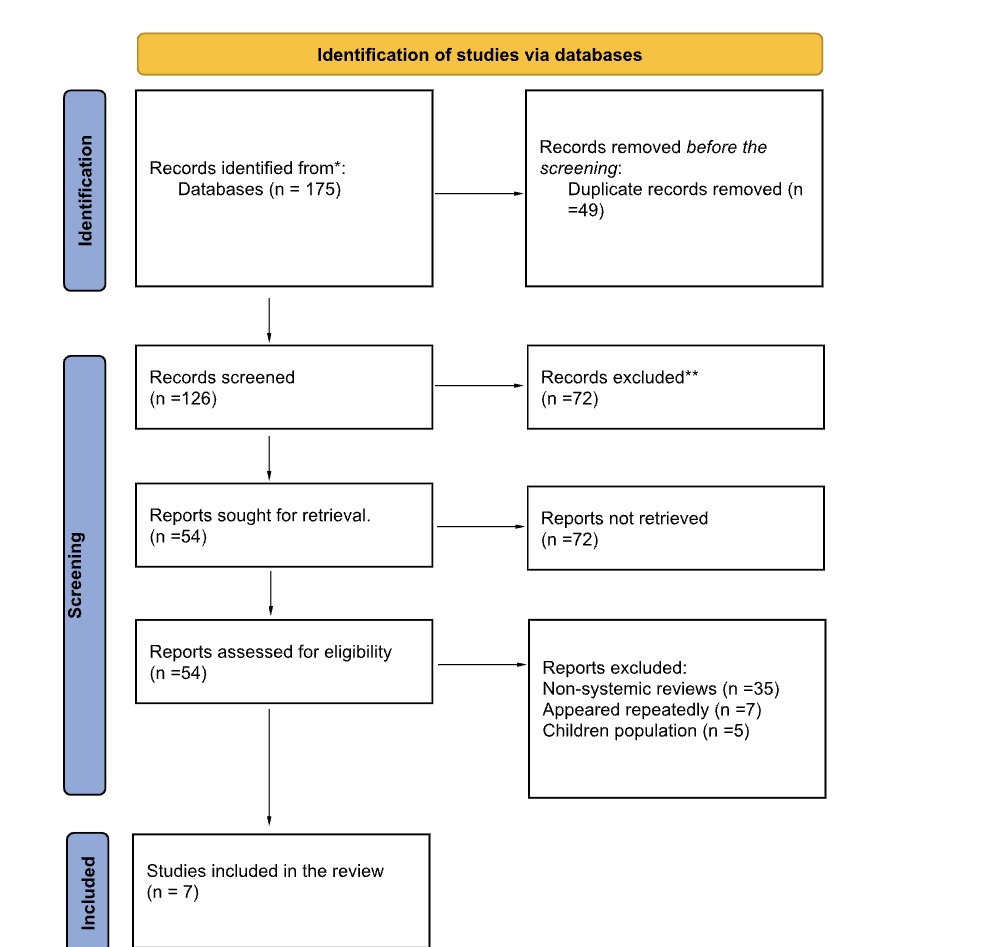
The diagram above illustrates a PRISMA diagram with a representation of the selection criteria for the study.
Study characteristic table
Having identified eight articles as the most suitable for the study, a summary was represented in a study characteristic table. The main features of the articles summarized in the table included the authors of the articles represented as in-text to allow for accommodation in the table. The design for each study comes in the second column to represent the number of participants and articles used to review that article. In the third column, there is a sample description of each article. This is the elaboration of the group in which the study was conducted. In the fourth column, the key findings of the articles are outlined. This contains a summary of what the articles found concerning their studies. The last and fifth columns are the summary and conclusion of the studies. This column gives the outcome of each of the eight studies’ findings.
| Author (s) | Study design | Sample description | Key findings | Summary/ conclusion |
| Clegg & Godfrey (2018) | RCT N= 90 | Appetite and general food preferences can be influenced by physical activity. | There is no substantial evidence to show that exercise programs attenuate the reduction of one’s appetite and energy consumption. | |
| Kristine et al. (2021) | Systemic review N= 48 | Population with weight variations was used as a control population | Energy intake varies in different body weights | Obese may participate in various exercises without fearing an increase in their appetite. |
| Johnson et al. (2021) | RCT N=21 | The younger population was compared to the older population, both men and women. | Ageing may be associated with a decrease in energy and appetite | Acute small resistance exercises may suppress appetite in adults |
| Panissa et al (2024) | RCT N=17 | N=11 focused resistance training N= isolated resistance training | Different levels of exercise may influence appetite and energy intake | Acute resistance training favours a reduction in appetite |
| Janiczak et al. (2023) | Systematic review N= 24 | Athletes are monitored for their nutrition | Factors such as nutrition influence dietary intake | Different interventions can be used to influence dietary intake |
| Moore et al. (2023) | Randomized counterbalanced crossover N=14 | A control group is monitored against individuals with obesity | Additional sweet foods such as snacks contribute to higher calorie intake. | Extra calorie intake may influence an individual’s appetite |
| Purcell et al., (2023) | RCT n=21 | The identified sample is studied for the relationship between diet and weight gain | Appetite and diet intake influence behaviours to reduce obesity | Effects of the hormones have a significant influence on appetite, which causes weight gain in athletes |
Table 1: characteristic table for the studies
Quality assessment
A quality assessment was done for the study, and various domains were checked. The domains included as part of the quality assessment included the publication date. All the articles used for the study met this domain, with 100% of the studies (n=7) published in the last five years. The study included (RCT n=4) and systematic review (n=3). The percentage distribution in the types of study used is in the ratio of 4:3, with RCT comprising 57.1% and systematic reviews registering 42.9%. This is recorded as a high-quality index in the quality assessment table. The age distribution met the requirement for the study, with all the participants being above the age of 25, which is ideal for being categorized as adults. Gender distribution was an essential domain as there was a need to compare energy intake in women and women. This domain can be considered high quality.
| Reference | Date of publication | Type of study (RCT/systemic review) | Age distribution | Gender distribution | Total |
| Clegg & Godfrey (2018) | Low | High | High | low | Medium |
| Kristine et al. (2021) | High | High | High | High | High |
| Johnson et al. (2021) | High | High | High | High | High |
| Panissa et al (2024) | high | High | High | Low | High |
| Janiczak et al. (2023) | High | High | High | High | High |
| Moore et al. (2023) | high | high | low | high | High |
| Purcell et al., (2023) | High | high | high | high | high |
Table 2. A table representing quality assessment for the study
Results outcome
The articles selected for the study had one common goal: to investigate various aspects of the relationship between appetite, exercise, food preference, and energy intake in males and males. Four of the articles had their studies focusing on exercise’s influence on appetite, food intake, and preference. There have been various studies on the relationship between exercise and the type of food athletes take and whether the kind of exercise someone does may influence their individual appetite and food preference. These articles included both men and women and compared the differences in the type of exercise concerning their food preferences and appetite. Out of the four articles, 3 conducted the research purely on professional athletes. The rationale for conducting the study on professional athletes is that most athletes have their diet monitored and, most times, are on specific diets. In these athletes, nutrition is a significant concern as the management of their clubs and games is mandated to monitor their performance. These studies were suitable for the review as they have detailed and accurate information regarding the food intake of athletes and the relationship between the type of diet they have and their energy consumption.
Three studies focused on regular exercise programs but incorporated the aspect of the relationship between food preference and energy intake. The studies investigated the effect of regular exercise, such as acute resistance, on an individual’s appetite and food intake. The variation in age and gender was negligible as they all conducted the study on adult males and males. Out of the three trials, one focused on the difference in the influence of exercise on diet.
The trials were based on different parts of the world. The authors assumed that exercise activity at an optimum level is similar for most individuals and is not affected or influenced by different geographical setups. The geographical location of the study area was not a significant area of concern since there is no direct relationship between food preference, appetite, and energy consumption. Of the seven trials used, none was a clinical situation. It is, therefore, essential to note that 100% of the participants were in good health and responded appropriately during the data collection process. The use of people with poor health has, in most cases, been linked to biases and inaccurate data. Some studies argue that several patients would not give honest answers because of their privacy or fatigue and pain. This is possible and enough to distort the data’s accuracy.
The table below represents the distribution of trials selected with their measures of tendencies.
| Total number of trials | Excluded trials | Available trials | Trials not retrieved | Trials retrieved | |||||||
|---|---|---|---|---|---|---|---|---|---|---|---|
| N | 7 | 7 | 7 | 7 | 7 | ||||||
| Missing | 0 | 0 | 0 | 0 | 0 | ||||||
| Mean | 1085 | 769 | 37.0 | 192 | 87.1 | ||||||
| Median | 346 | 278 | 21 | 37 | 29 | ||||||
| Sum | 7592 | 5381 | 259 | 1342 | 610 | ||||||
| Standard deviation | 1588 | 1147 | 27.4 | 316 | 117 | ||||||
| Variance | 2.52e+6 | 1.32e+6 | 749 | 99775 | 13659 | ||||||
| Minimum | 137 | 68 | 14 | 26 | 19 | ||||||
| Maximum | 4561 | 3280 | 90 | 894 | 339 | ||||||
Table 3. A summary of the distribution of the studies used.
DISCUSSION
The relationship between exercise, food preference, appetite and energy intake is a broad topic that has been under research for a long time. This systemic review uses seven trials with different results for the study. These trials have similar interests, that is, investigating the relationship between appetite, food preference, energy in-text, and exercise in men and women, together with other topics related to diet complications, such as obesity and nutritional deficiencies. The results of these trials are detailed and point towards different aspects of the relationship between these concepts.
Energy intake and exercise
Energy balance is the basis for building fat or losing weight. This balance is whether you’re getting more energy from food and beverages than you can use up in your basal metabolic rate (the energy your body needs for normal functions), how much of the energy you expend during physical activities, and how much of the energy you spend on digestion, absorption, and metabolism of nutrients. All these affect the energy (calories) you need daily. People who exert a higher activity level burn more calories because their body compensates for the energy they have already spent (Gulsin et al., 2020, p. 43). The relationship between energy intake is described in the studies in detail. Some of the findings include a consensus that a definitive amount is required to undertake any particular exercise. It is common knowledge that is gotten from foods people eat. The differences in the studies are negligible as they point to the same concept that food is required for energy intake.
Supporting or using physical activity results in precisely the energy expenditure required—this form of exercise’s kind, size, and level point out the energy release. For example, light exercises like jogging, lifting, or swimming consume more calories than a passive lifestyle. One of the most vital aspects of weight management is the link between the effectiveness of physical exercises and how energy intake is involved. People must have a calorie deficit to lose weight by consuming fewer calories or working out more (Janiczak et al., 2023, p. 72). The calorie deficit is obtained by either reducing calorie intake or increasing the level of physical activity. However, for those aiming to gain weight, a quantity of calories that are more than the recommended amount of consumption is recommended. In one of the trials, a study was done on the impact of appetite, exercise, and weight gain. The results of the study show that obese people can participate in any form of exercise while maintaining their appetite without having the fear of gaining weight.
Food preference and exercise.
It is highly personal as to what your food preferences are and how the exercise level influences that. Diet patterns are influenced greatly by the individual’s food preferences, and to retain them, individuals have to understand the profound influence of eating behaviour on their health. Psychological factors- taste preferences, food cravings, emotional eating, and stress tied to food intake- significantly impact human eating habits (Johnson et al., 2021, p. 39). Such variables determine eating decisions and can be synchronized with the exercises in their advent, ultimately impacting motivation, commitment and general well-being. In the trials used for the study, a more significant percentage describes the individual’s food preference as directly linked to personal psychological and cultural factors. Personalizing food consumption based on particular tastes and body characteristics can be significantly beneficial for exercise and adaptation to training. People in sporting and health-conscious communities, including athletes and fitness enthusiasts, may have preferences or limitations of dietary type (Joo et al., 2019, p. 27). Social and cultural factors, including familial cultures, cultural customs, economic status, and peer pressure, customarily control the tastes of dishes. These things, in fact, interfere with dietary intake and healthy eating practices, thereby implying the risk of one’s failure to observe a regular exercise routine and sustain a wholesome way of life. Food Preference determines that excess calories from food have to be burnt through the basal metabolic rate, physical activity and body auxiliary metabolism in order for the body to remain in a state of balance. Individuals may find it easier to keep themselves within normal weight ranges and to achieve their fitness targets if they enjoy what they eat (Koehler & Drenowatz, 2022, p. 53). This can make the entire process more enjoyable, thus facilitating the maintenance of diet recommendations and the sustenance of healthy eating behaviour.
Proof of evidence
The trials used for the study show that it met the threshold required to ascertain a direct relationship between exercise, food preference, and energy intake in individuals undertaking sports activities. The seven trials prove beyond reasonable doubt that food preference is influenced by social and cultural factors, a phenomenon that has a direct impact on energy intake in sports people.
This study’s findings align with previous studies on the relationship between these three domains. It is important to note that all seven trials have a common foundational consensus that energy intake is influenced by the amount and type of food an individual takes. From the energy intake, the physiological response to energy expenditure is controlled by the many complexes of the body to ensure there is enough supply of energy to skeletal muscles to allow a person to undertake a particular exercise.
Limitation of evidence
The study, having been successfully conducted, was found to have few limitations if not for the elaborative comparison between the relationship of these domains in women. The general discussion focused more on the relationship between energy intake, appetite, and food preference, giving less attention to the difference in this relationship between women and men. However, most studies recorded that there is no significant difference in these relationships apart from the aspect of energy intake, which is attributed to the fact that men have bigger skeletal muscles and hence require a considerable amount of energy to run the muscle activities such as the muscles.
CONCLUSION
In conclusion, the complex interactions among exercise, appetite, food preference, and energy intake reveal how the human nutritional and health sciences remain intricate. This phenomenon, which is subject to change and is multifaceted, depends on physiological, psychological, social, and environmental factors (Younossi et al., 2021, p. 127). The bodywork components are synergistic, providing users with a transparent platform so they can confidently make the right choices that would be in their overall good health and high workout efficiency.
Preference for food, which affects people`s likes and dislikes in what they eat, is also shaped by tastes due to cultural practices and diets and thus influences choices of diet and the overall nutritional intake. Things involving the fact that food preference and exercise target integration can be helpful for people as they make more intelligent food options and work towards their fitness goals (Ros, 2019, p. 81). Personalized nutrition is a process that individualizes diets so that sports activities provide the necessary nutrients and body-building and aid recovery time.
Energy submittal, equilibrium between calorie uptake and loss, is moderately associated with physical activities and dietary habits. Sustainable physical activity levels can be attained by energy balance, and it can be a tool to promote optimal health. when managed properly, it can help maintain a healthy body weight.
Considering the synergy between exercise, hunger, the impression of food, and energy consumption, the role of instruction, awareness, and behaviour approach is vital (Roche et al., 2024, p. 61). Promoting mindful eating skills, facilitating the attainment of food literacy knowledge, and developing a fun, beneficial workout and nutrition plan will boost people’s ability to make solid daily decisions and reap the long-term effects. Consulting with a healthcare expert or a registered dietitian will help provide what is appropriate for the individual due to personalized advice tailored to specific needs and preferences.
In sum, applying the comprehensive approach to nutrition and physical training, which considers the complicated connection between the physiological, psychological and environmental factors, will upgrade the individual’s ability to achieve longevity, health and happiness (Purcell et al., 2023 p. 45). Through this comprehension of the association and unity of exercise, appetite, food preference, and energy intake, people can create a healthy environment with the support of both physical and mental well-being to live healthy, fulfilling, wholesome lifestyles.
References
Alkahtani, S., Aldayel, A., & Hopkins, M. (2019). Effects of acute eccentric exercise on appetite-related hormones and food preferences in men. American Journal of Men’s Health, 13(4), 155798831986158. https://doi.org/10.1177/1557988319861587
Aragon, A. (2022). Flexible dieting: A science-based, reality-tested method for achieving and maintaining your optimal L physique, performance & health. Victory Belt Publishing.
Beaulieu, K., Blundell, J. E., Van Baak, M. A., Battista, F., Busetto, L., Carraça, E. V., Dicker, D., Encantado, J., Ermolao, A., Farpour‐Lambert, N., Pramono, A., Woodward, E., Bellicha, A., & Oppert, J. (2021). Effect of exercise training interventions on energy intake and appetite control in adults with overweight or obesity: A systematic review and meta‐analysis. Obesity Reviews, 22(S4). https://doi.org/10.1111/obr.13251
Blundell, J. E., & Bellisle, F. (2023). Satiation, satiety and the control of food intake: Theory and practice. Elsevier.
Burke, L. M., Whitfield, J., Heikura, I. A., Ross, M. L., Tee, N., Forbes, S. F., Hall, R., McKay, A. K., Wallett, A. M., & Sharma, A. P. (2020). Adaptation to a low-carbohydrate, high-fat diet is rapid but impairs endurance, exercise metabolism, and performance despite enhanced glycogen availability. The Journal of Physiology, 599(3), 771-790. https://doi.org/10.1113/jp280221
Clegg, M., & Godfrey, A. (2018). The relationship between physical activity, appetite and energy intake in older adults: A systematic review. Appetite, 128, 145-151. https://doi.org/10.1016/j.appet.2018.05.139
Costa, A., Silva, C., & Oliveira, A. (2019). Food neophobia and its association with food preferences and dietary intake of adults. Nutrition & Dietetics, 77(5), 542-549. https://doi.org/10.1111/1747-0080.12587
Egan, B. (2017). Faculty opinions recommend that a low-carbohydrate, high-fat diet impairs the exercise economy and negates the performance benefit from intensified training in elite race walkers. Faculty Opinions – Post-Publication Peer Review of the Biomedical Literature. https://doi.org/10.3410/f.727142939.793529644
Gulsin, G. S., Swarbrick, D. J., Athithan, L., Brady, E. M., Henson, J., Baldry, E., Argyridou, S., Jaicim, N. B., Squire, G., Walters, Y., Marsh, A., McAdam, J., Parke, K. S., Biglands, J. D., Yates, T., Khunti, K., Davies, M. J., & McCann, G. P. (2020). Effects of low-energy diet or exercise on cardiovascular function in working-age adults with type 2 diabetes: A prospective, randomized, open-label, blinded end point trial. Diabetes Care, 43(6), 1300-1310. https://doi.org/10.2337/dc20-0129
Janiczak, A., Alcock, R., Forsyth, A., & Trakman, G. L. (2023). A systematic review of interventions targeting modifiable factors that impact dietary intake in athletes. British Journal of Nutrition, 131(2), 229-247. https://doi.org/10.1017/s0007114523001769
Johnson, K. O., Mistry, N., Holliday, A., & Ispoglou, T. (2021). The effects of an acute resistance exercise about on appetite and energy intake in healthy older adults. Appetite, 164, 105271. https://doi.org/10.1016/j.appet.2021.105271
Joo, J., Williamson, S. A., Vazquez, A. I., Fernandez, J. R., & Bray, M. S. (2019). The influence of 15-week exercise training on dietary patterns among young adults. International Journal of Obesity, 43(9), 1681-1690. https://doi.org/10.1038/s41366-018-0299-3
Koehler, K., & Drenowatz, C. (2022). Understanding the interaction between physical activity and diet for the promotion of health and fitness. Frontiers Media SA.
Meule, A. (2023). Assessment of eating behaviour. Hogrefe Publishing GmbH.
Moore, H., Siroux, J., Pereira, B., Miguet, M., Fillon, A., Dionnet, C., Julian, V., Duclos, M., Boirie, Y., Finlayson, G., Isacco, L., & Thivel, D. (2023). The energy content of meals with a similar macronutrient distribution may have a greater impact on appetite sensations than food preferences in obese adolescents: A secondary analysis. Appetite, 191, 107063. https://doi.org/10.1016/j.appet.2023.107063
Oustric, P., Thiel, D., Dalton, M., Beaulieu, K., Gibbons, C., Hopkins, M., Blundell, J., & Finlayson, G. (2020). Measuring food preference and reward: Application and cross-cultural adaptation of the Leeds food preference questionnaire in human experimental research. Food Quality and Preference, 80, 103824. https://doi.org/10.1016/j.foodqual.2019.103824
Panissa, V. L., Cardoso, L. K., Rossi, P. A., Fukuda, D. H., & Rossi, F. E. (2024). The impact of acute and chronic resistance training on appetite and energy intake: A scoping review examining resistance exercise and comparisons with other exercise modalities. Appetite, 193, 107155. https://doi.org/10.1016/j.appet.2023.107155
Purcell, S. A., Melanson, E. L., Afghahi, A., Borges, V. F., Sinelli, I., & Cornier, M. (2023). The effects of resistance exercise on appetite sensations, appetite-related hormones and energy intake in hormone receptor-positive breast cancer survivors. Appetite, 182, 106426. https://doi.org/10.1016/j.appet.2022.106426
Review for “Effects of oral semaglutide on energy intake, food preference, appetite, control of eating and body weight in subjects with type 2 diabetes”. (2020). https://doi.org/10.1111/dom.14255/v1/review2
Roche, H. M., Macdonald, I. A., Schols, A. M., & Lanham-New, S. A. (2024). Nutrition and metabolism. John Wiley & Sons.
Ros, E. (2019). PREDIMED plus trial – energy-restricted Mediterranean diet plus exercise and metabolic health. Endocrine Abstracts. https://doi.org/10.1530/endoabs.63.s20.3
Younossi, Z. M., Corey, K. E., & Lim, J. K. (2021). AGA clinical practice update on lifestyle modification using diet and exercise to achieve weight loss in managing nonalcoholic fatty liver disease: Expert review. Gastroenterology, 160(3), 912-918. https://doi.org/10.1053/j.gastro.2020.11.05
 write
write